
Back to Arizona
Arizona Instruction Permit Practice Test — Class G Teen / Class D Adult
Full test preview Question 1 of 30
0 answered 30 remaining
Passing target: 80% (24/30)
Observation, Speed & SpaceStandalone practice
When rain, darkness, heavy traffic, or a blocked view increases risk, what should happen to following distance?
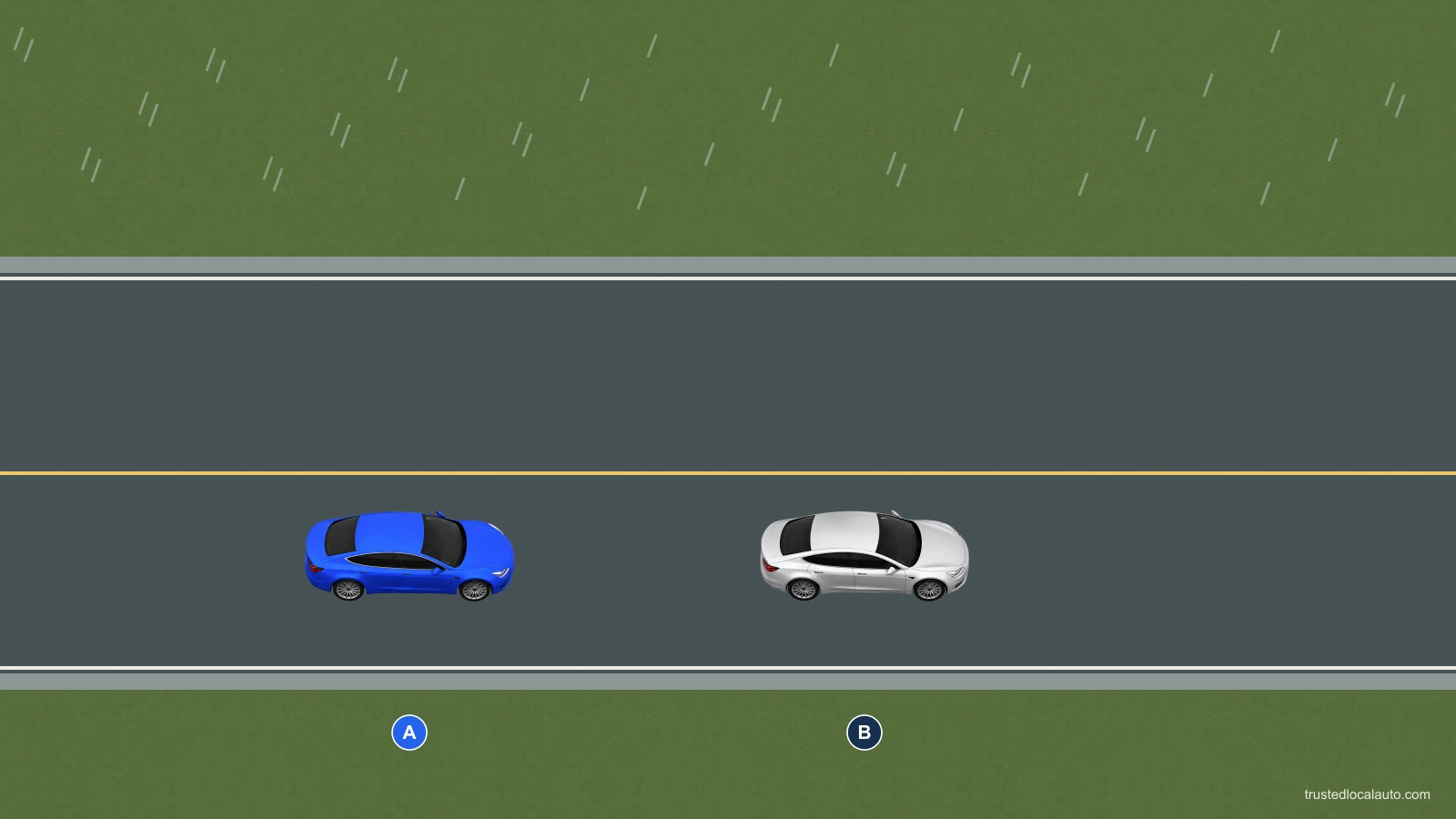
Blue A follows silver B in the eastbound lane on a wet two-way road. Both cars are centered in their lane. Rain and the wet surface indicate reduced grip. The pictured gap does not establish a time interval.
Correct answer: Increase it beyond the basic three-second cushion.
Why
More hazardous conditions call for a larger space cushion because perception, traction, and stopping can all be affected.
Verified against Arizona Driver License Manual · Extra space in poor conditions · p. 25, 40
Report a question issueContinue learning
Related Arizona questions
Why should a driver reduce speed when headlights illuminate only a short distance ahead?To reduce last-second decisions in ordinary city driving, how far ahead should a driver generally scan?Even with a green light, what should a driver check before entering an intersection?The posted limit is 45 mph, but blowing dust sharply reduces visibility. What speed is lawful and safe?What is a safe response when another driver follows too closely?Which factors make total stopping distance longer?