
Practice question, Question 1 of 40
Passing target: 80% (32/40)
At an ordinary railroad crossing with no applicable stop exemption, which vehicle should you expect to stop even when no train is immediately visible?
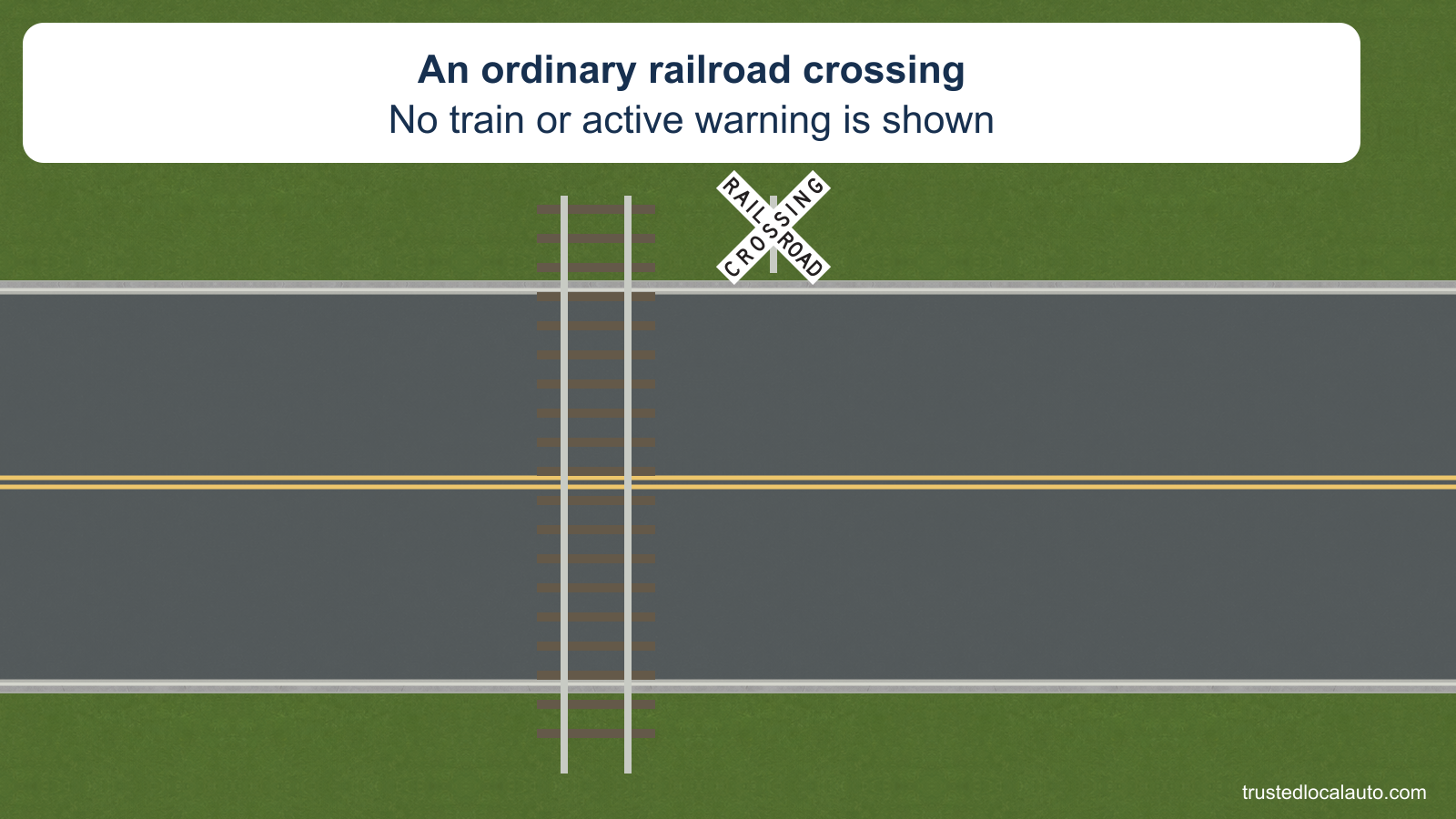
Correct answer: A passenger bus or a truck with a hazardous-materials placard.
Why
A bus carrying passengers and vehicles carrying specified hazardous materials must generally stop 15 to 50 feet before the nearest rail, check for trains, and cross only when safe. Statutory exceptions apply, including qualifying traffic control or authorized exempt crossings. Stay ready to stop behind these vehicles.
Verified against California Driver's Handbook · Hazardous loads at railroads · p. 56
Is this question correct and clear?
Continue learning
Related California questions
- What is the maximum speed within 100 feet of an uncontrolled railroad crossing when the driver cannot see 400 feet in both directions?
- A railroad crossing has no gates, warning signals or flagger. You cannot see 400 feet along the tracks in both directions. A special maximum speed applies as you near the crossing. Which pair of values is correct?
- You drive car C on an undivided road with one lane in each direction. Ahead, school bus B has stopped in the other lane, facing you. Its red lights flash while children cross. What must you do?
- You near a railroad crossing that has no gates, warning signals or flagger. Bushes let you see only about 350 feet along the tracks in each direction. What is your maximum speed within 100 feet of the crossing?
- When should a driver begin crossing railroad tracks?
- Children are outside a school, and some of them cross the road. No other speed limit is posted, so the school-area limit of 25 mph applies. What is the maximum distance from the school at which this limit applies?