
Back to Connecticut
Connecticut Class D Knowledge Test
Full test preview Question 1 of 25
0 answered 25 remaining
Passing target: 80% (20/25)
Traffic Signals & Road MarkingsStandalone practice
You want to pass an ordinary moving car, and no special exception applies. A solid yellow line is beside a dashed yellow line. Which side may cross to pass when otherwise safe?
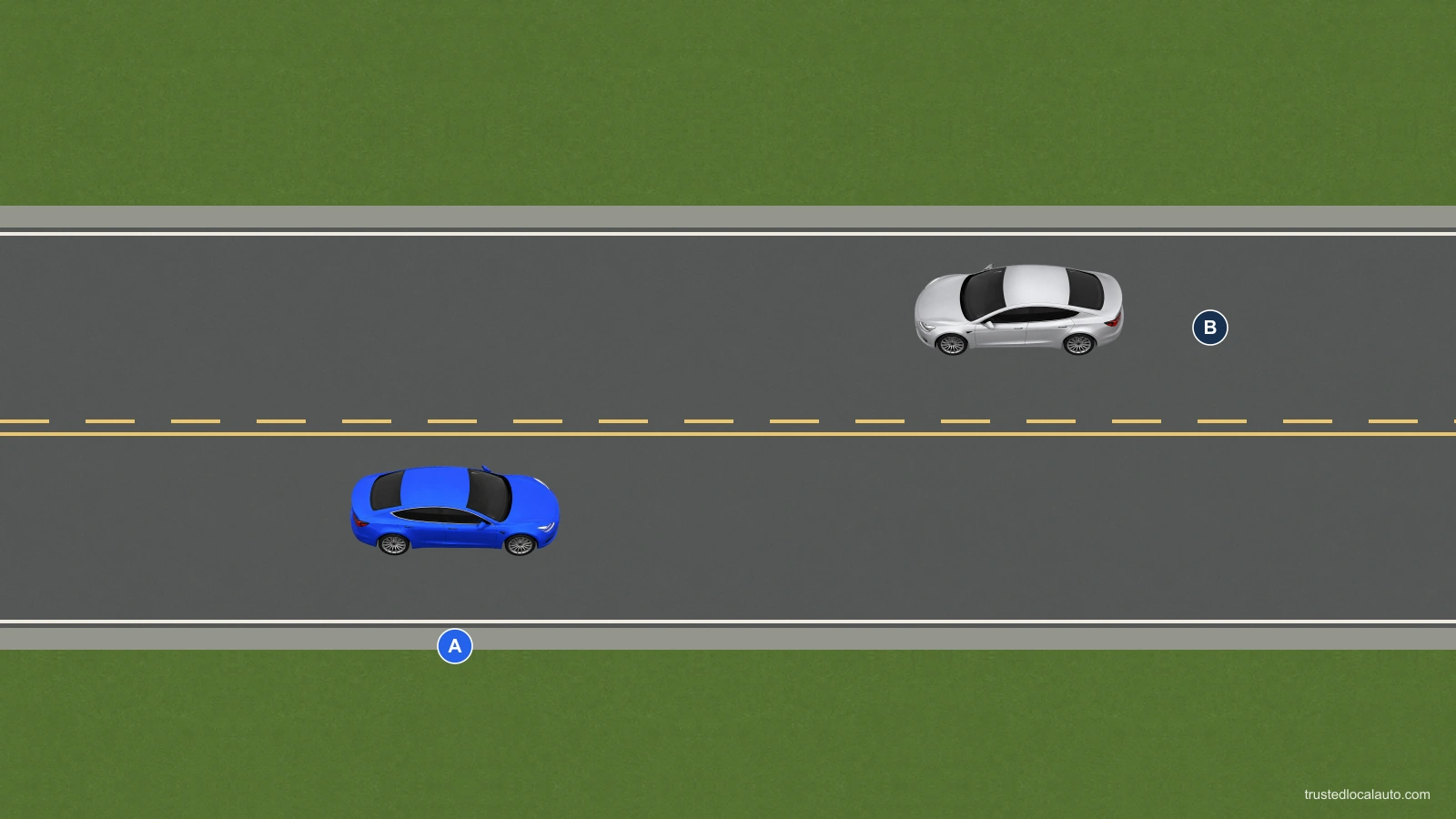
Blue A and silver B face opposite directions on a two-lane road. The yellow center marking is solid on A’s side and broken on B’s side.
Correct answer: Traffic on the side of the dashed line
Why
Traffic on the dashed-line side may cross to pass when the entire movement is safe and otherwise lawful. The solid-line side may not make this ordinary pass. Connecticut separately permits certain safe passes of bicycles, obstructions and other listed cases; those exceptions do not permit a conflict with oncoming traffic.
Verified against Connecticut Driver's Manual · Solid and dashed yellow center line · p. 46
Report a question issueContinue learning
Related Connecticut questions
What does a dashed white line between lanes traveling in the same direction generally mean?How should you respond to a flashing red traffic signal?What does a flashing yellow traffic signal require?Your lane displays a green left arrow, but a pedestrian is lawfully still in the crosswalk you would cross. What should you do?A lane is marked HOV and its sign requires at least two people per vehicle during the displayed hours. You are driving alone during those hours and have no applicable exemption. May you use it?When may a driver turn right at a steady red light in Connecticut?