
Practice question, Question 1 of 40
Passing target: 80% (32/40)
When rain, darkness, heavy traffic, or a blocked view increases risk, what should happen to following distance?
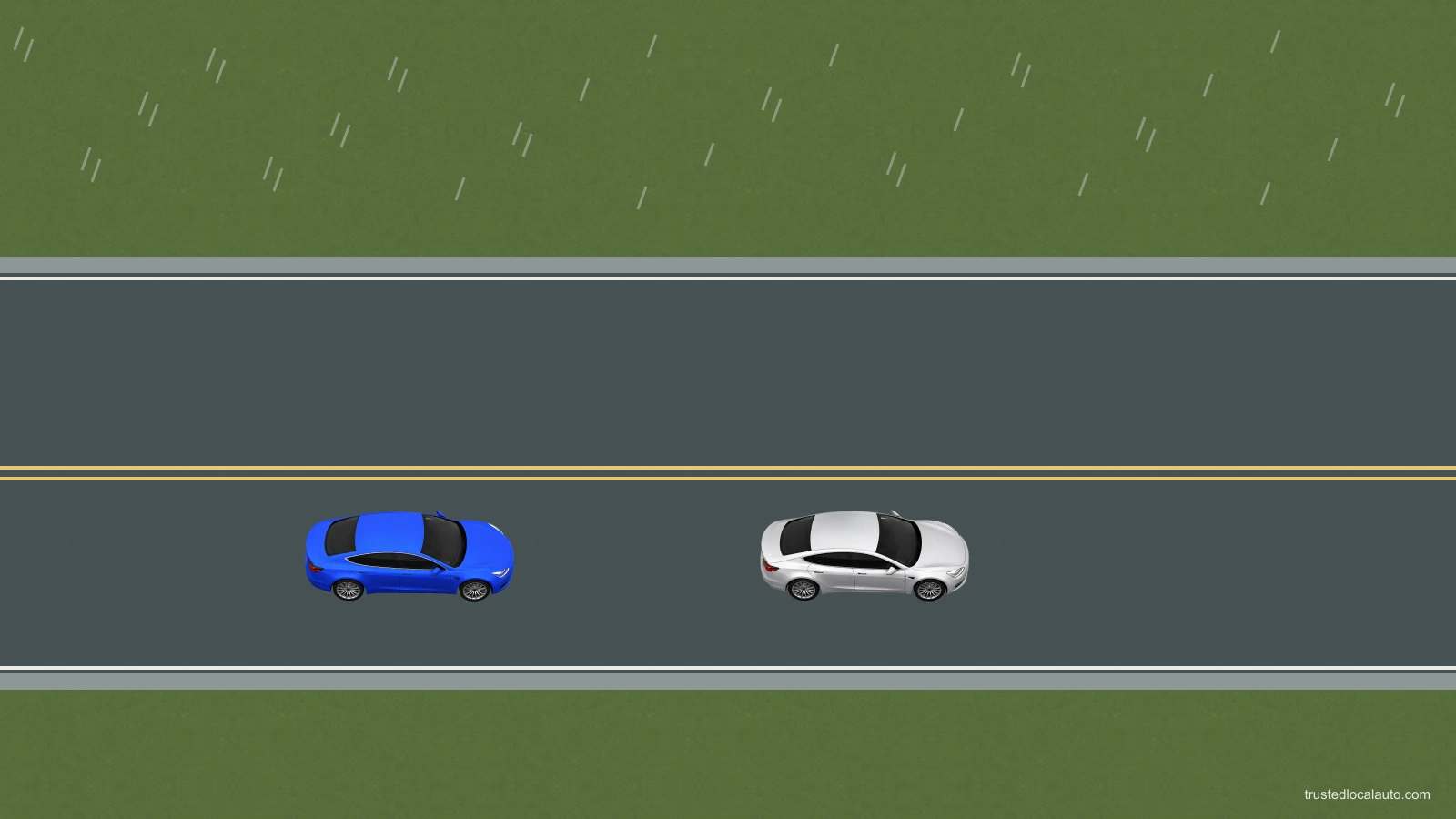
Correct answer: Increase it to at least four seconds.
Why
Increase following space when traction, visibility, traffic or the view ahead is worse. The guide uses at least four seconds in adverse conditions and says more may be needed. Do not treat four seconds as safe in every storm. Slow down as needed and keep a distance that is reasonable and prudent for actual conditions.
Verified against Louisiana Class D & E Driver's Guide · Following distance · p. 70, 71, 79, 106
Is this question correct and clear?
Continue learning
Related Louisiana questions
- At night in heavy rain, you approach a sharp curve. Below the yellow curve warning sign, a yellow plaque reads 35 MPH. Which statement is correct?
- You drive on an ordinary road, not an interstate, in daylight. The pavement is dry, traffic is light and your view is clear. Which basic following interval does the guide give for these conditions?
- The Louisiana guide gives one following interval for favorable conditions and another for rain, darkness, heavy traffic or a blocked view. Which pair of guide figures is correct?
- Why should a driver reduce speed when headlights illuminate only a short distance ahead?
- How far ahead along your planned path does the Louisiana guide tell you to look?
- To reduce last-second decisions, how far ahead should a driver ideally scan?