
Practice question, Question 1 of 40
Passing target: 80% (32/40)
For an ordinary passenger car moving on a highway in daylight, when does insufficient light require the headlights and taillights to be on?
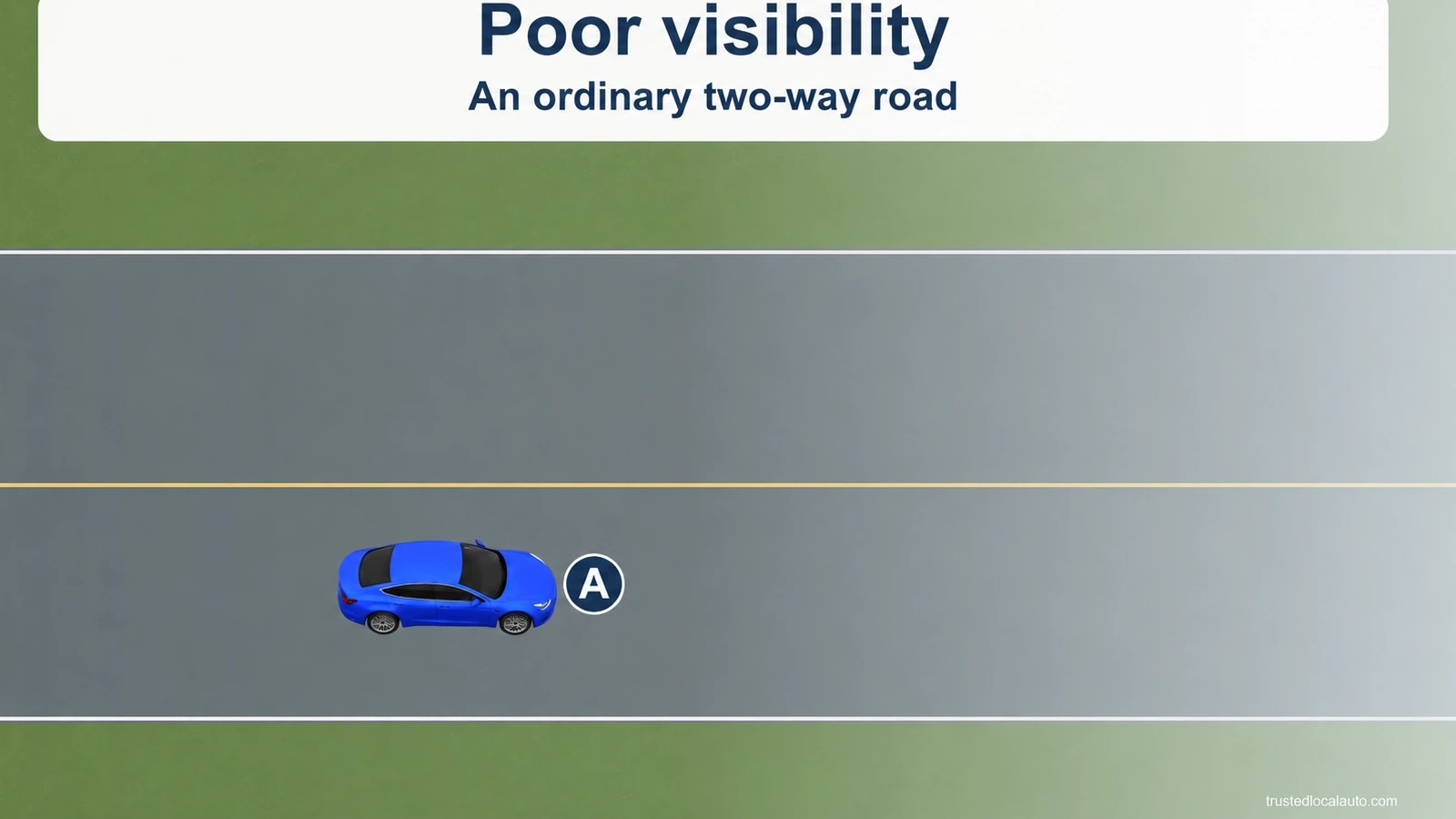
Correct answer: When a person is not clearly visible at 150 metres.
Why
For an ordinary passenger car, use the required headlights and taillights when light is insufficient to see a person clearly at 150 metres. The MPI Driver's Handbook gives a shorter distance (visibility reduced to 60 metres); lights on at 150 metres meet both. They are also required during the nighttime half-hour window. In fog or snow, use low beams, reduce speed and leave more room.
Verified against Vehicle Equipment, Safety and Inspection Regulation, M.R. 31/2019 · Sections 5.2(2) to (3) and 1.1 (headlamps)
Is this question correct and clear?
Continue learning
Related Manitoba questions
- A vehicle fire is too large to control with a small extinguisher. What should you do?
- Before driving a frost-covered passenger car, what should you do?
- You drive at night with your high beams on. An oncoming vehicle is about 300 metres away. You must dim before the oncoming vehicle comes within what distance?
- A downed power line touches your car. There is no fire, and no other danger forces you out. What should you do?
- In a vehicle without anti-lock brakes, what is threshold braking?
- A downed power line touches your vehicle and a fire forces you to leave. How should you exit?