
Back to Nova Scotia
Nova Scotia Class 7 Practice Test
Full test preview Question 1 of 40
0 answered 40 remaining
Passing target: 16 correct signs and 16 correct rules
Weather, Visibility & EmergenciesStandalone practice
When does poor visibility require headlights and rear lamps in Nova Scotia?
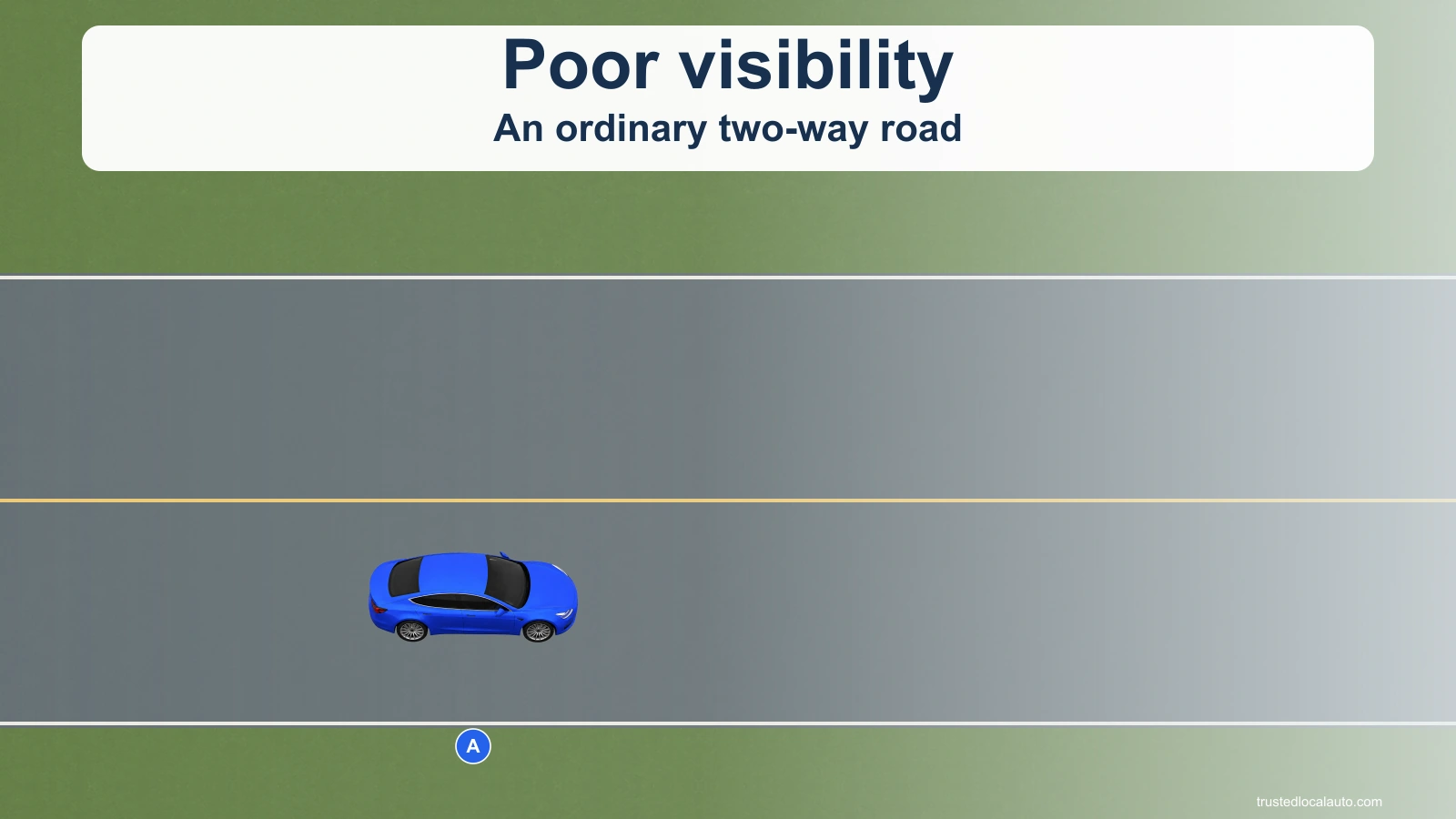
Blue car A travels on an ordinary two-way road in reduced visibility. The haze is illustrative and gives no measured sight distance.
Correct answer: When a person 300 metres ahead cannot be clearly seen.
Why
Turn on the headlights and rear lamps when a person cannot be clearly seen 300 metres ahead because of low light or atmospheric conditions such as fog, rain or snow. Daytime running lights or parking lights alone are not a substitute. Use low beams in fog or falling precipitation to reduce reflected glare.
Verified against Nova Scotia Driver’s Handbook, chapter-4 · Safety · p. 8
Report a question issueContinue learning
Related Nova Scotia questions
When must a driver dim high beams for other traffic?Does four-wheel drive shorten braking distance on a slippery road?If you must drive during a snowstorm, which combination helps maintain visibility and control?The service-brake pedal becomes soft and does not slow the vehicle because hydraulic pressure appears to have failed. What initial action does the handbook recommend?What windshield condition should be corrected before driving?How often should a driver plan rest stops on a long highway trip?