
Practice question, Question 1 of 35
Passing target: 80% (28/35)
You drive on a two-lane road. The only center marking is a single broken yellow line. What does this line tell you?
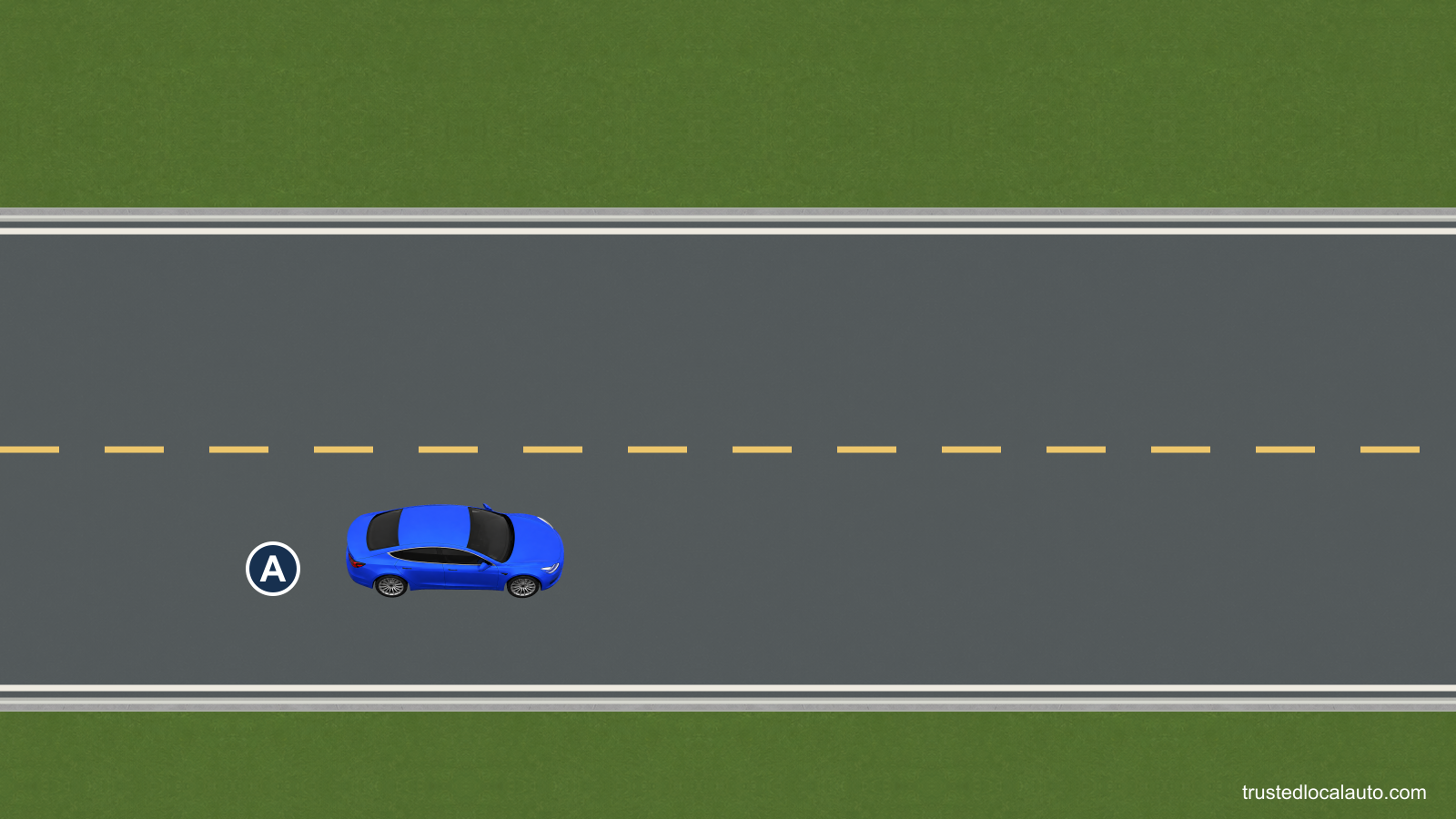
Correct answer: Traffic goes both ways, and drivers in either direction may pass when safe.
Why
Yellow markings separate traffic that moves in opposite directions or mark the left edge of a roadway. Even where passing is allowed, you need a clear view of oncoming traffic and enough room to finish before a no-passing zone. Do not pass on a hill or curve that blocks your view, or when you are near an intersection or railroad crossing.
Verified against Oregon Driver Manual · Yellow pavement markings · p. 30, 40
Is this question correct and clear?
Continue learning
Related Oregon questions
- On a street with two lanes going your way, a broken white line separates your lane from the lane on your left. You want to move into the left lane. What does this line allow?
- On a two-lane road, a center marking lets drivers in one direction cross the center line to pass when it is safe. Drivers in the other direction may not cross it to pass. Which center marking gives this rule?
- On a freeway, the line between your lane and the next lane changes from a broken line to short, closely spaced white dots as you near an exit. What does this tell you?
- Near a tunnel entrance, two solid white lines separate your lane from the lane on your left. Both lanes go the same way. What does this marking mean?
- The traffic signal over the intersection ahead shows a flashing yellow light for your direction. You plan to go straight. What should you do?
- You drive beside a painted median with double yellow lines on both sides. It has no diagonal stripes inside it. A driveway is on the far side of the median, and you want to turn left into it. Which statement is correct?