
Practice question, Question 1 of 40
Passing target: 75% in each of the three areas
The road is clear and conditions are good. For a normal expressway exit with a deceleration lane, where should the driver do most of the slowing?
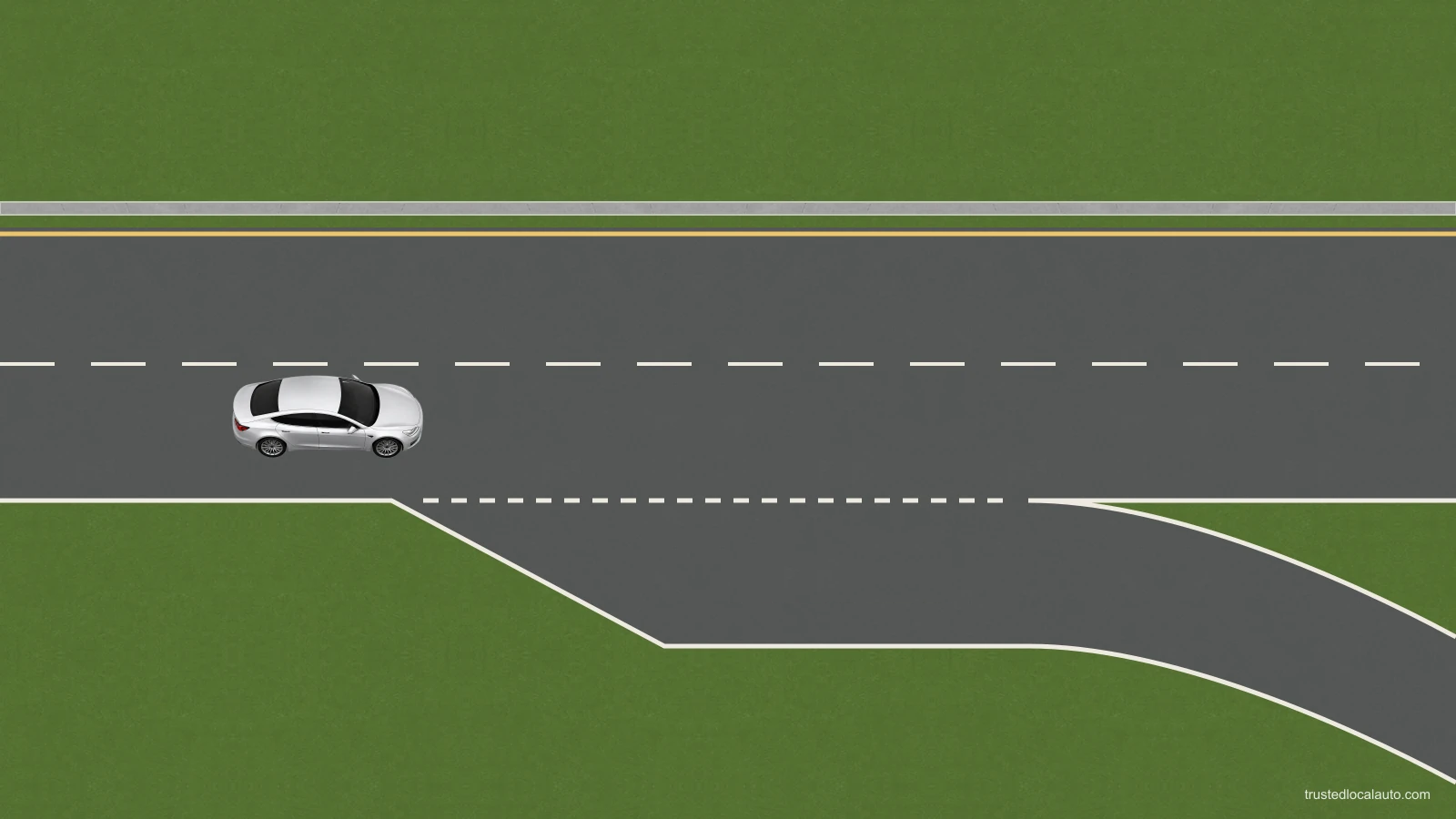
Correct answer: In the deceleration lane, before the ramp’s curve.
Why
Plan the exit, signal and check traffic before moving into the deceleration lane. For a normal exit in these conditions, brake gradually after entering that lane and reduce speed before the ramp curve. Obstructions, congestion or poor traction may require earlier slowing; traffic safety takes priority over the normal sequence.
Verified against Driving a Passenger Vehicle (SAAQ), English 2023 edition · Freeways and high-speed roads
Is this question correct and clear?
Continue learning
Related Quebec questions
- Traffic is moving steadily on the expressway. How should the entering driver use a clear acceleration lane?
- A person on an ordinary bicycle wants to ride on the wide paved shoulder of an expressway exit lane to reach a local road. The cyclist will not enter the main lanes. Is this permitted?
- Your car is stopped on an expressway shoulder after a breakdown. There is no fire or immediate collision threat. What does SAAQ advise while waiting for help?
- A driver wants to check directions. The car would be fully on the right shoulder of an expressway, with the hazard lights on and the driver inside, for a short stop. There is no emergency, and no sign authorizes a stop. Is the stop permitted?
- What is the main benefit of checking expressway exit signs well before the exit?
- Car A is in an acceleration lane, about to enter an expressway. Car B is in the expressway lane beside it. If A moves over now, B must brake sharply to avoid a collision. Which rule decides who must yield?