
Alaska Instruction Permit Knowledge topic
Alaska Instruction Permit Knowledge Weather, Visibility & Emergencies
Handle darkness, poor weather, loss of traction, breakdowns, collisions and emergencies.
14 questions, free with an account. 5 of them are hard. Each one has its answer, an explanation and its official source.
- 6 picture questions
- 8 text questions
- 5 of them hard
6 picture questions
Questions in this topic
Select a question to answer it. The answer and the explanation show after you answer.
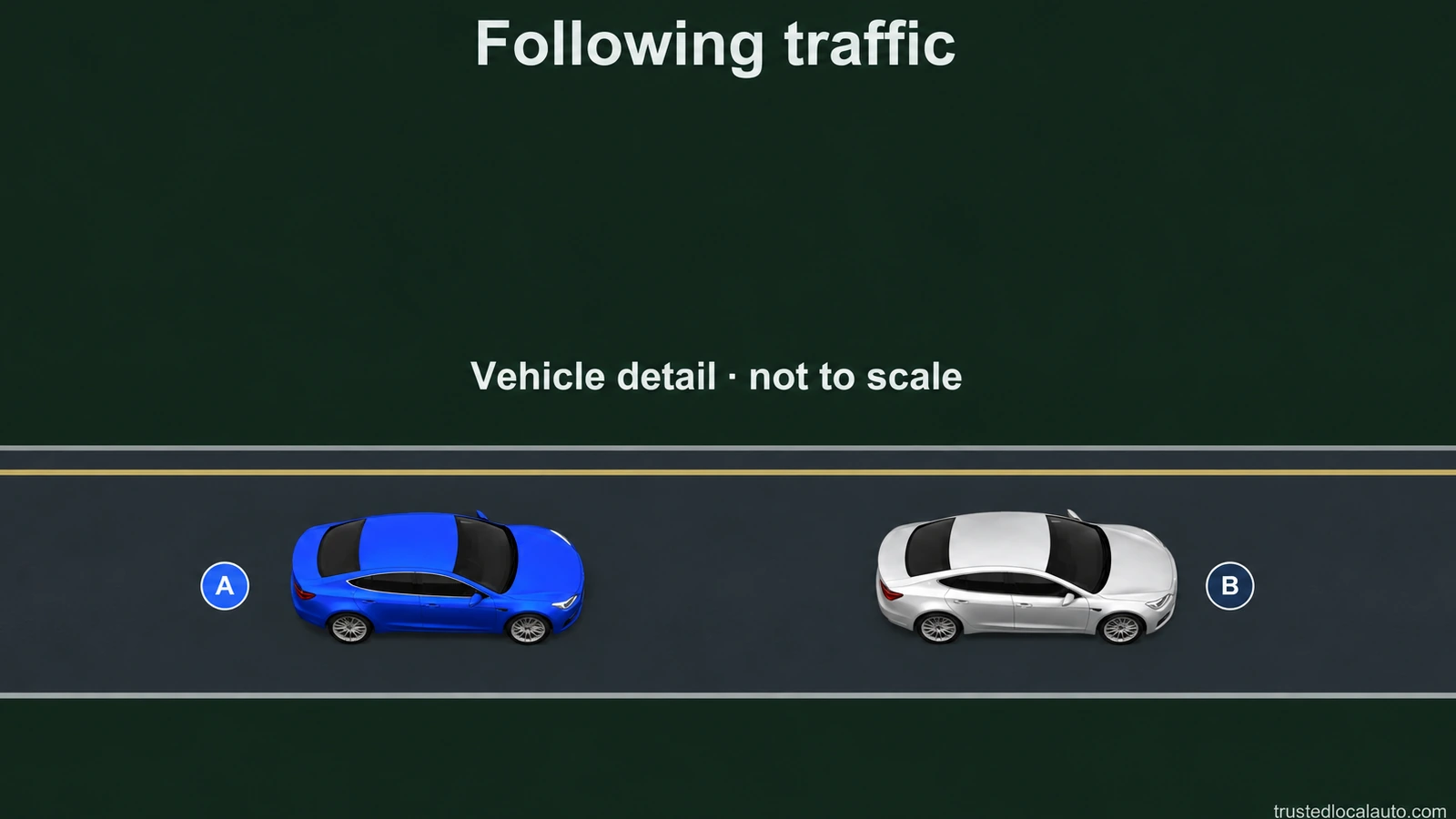 Dim high beams when followingAt night you approach another vehicle from behind. At what distance must you first stop using high beams?Try this question
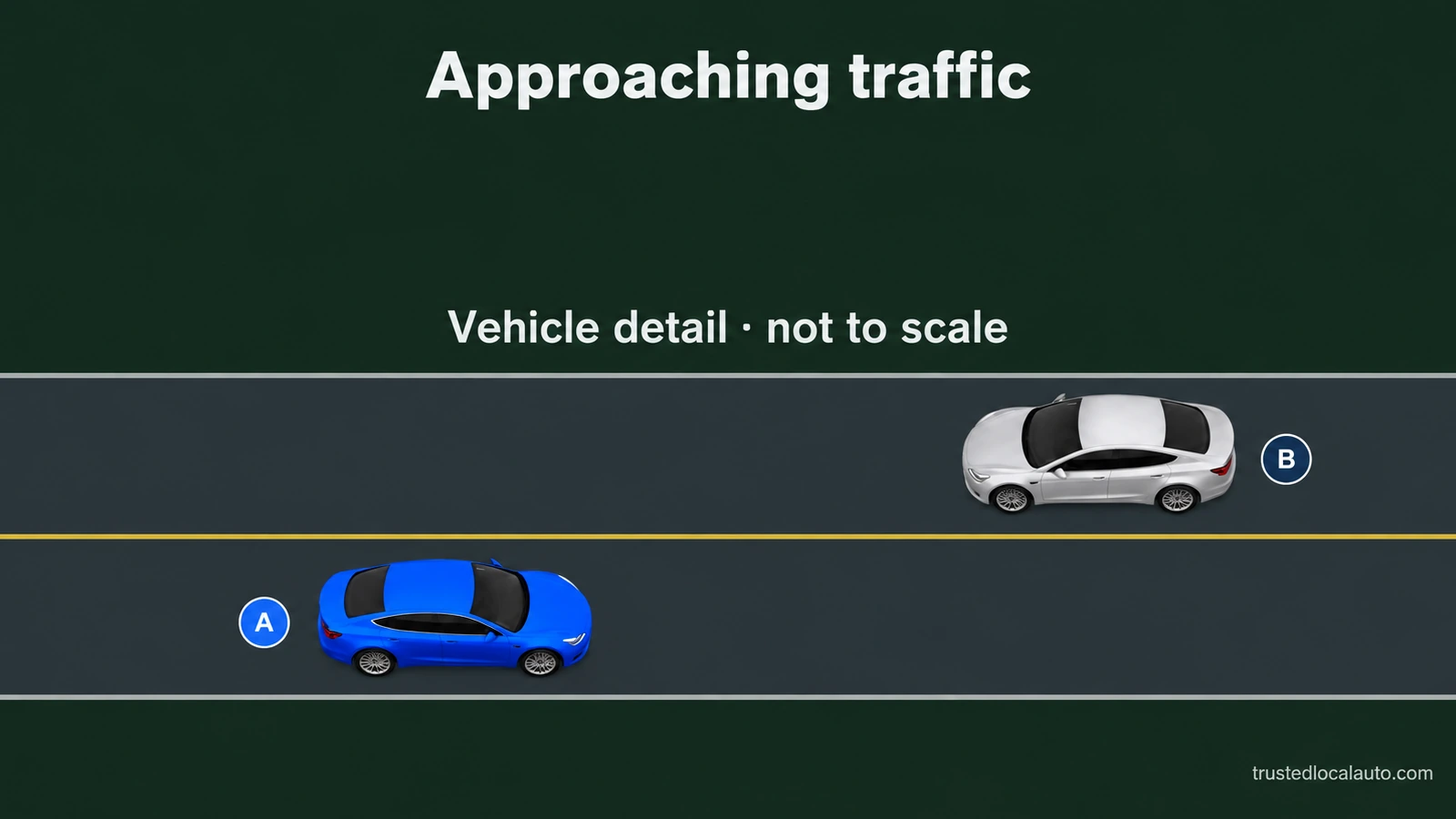 Dimming for oncoming trafficHow close to an oncoming vehicle must high beams be dimmed?Try this question
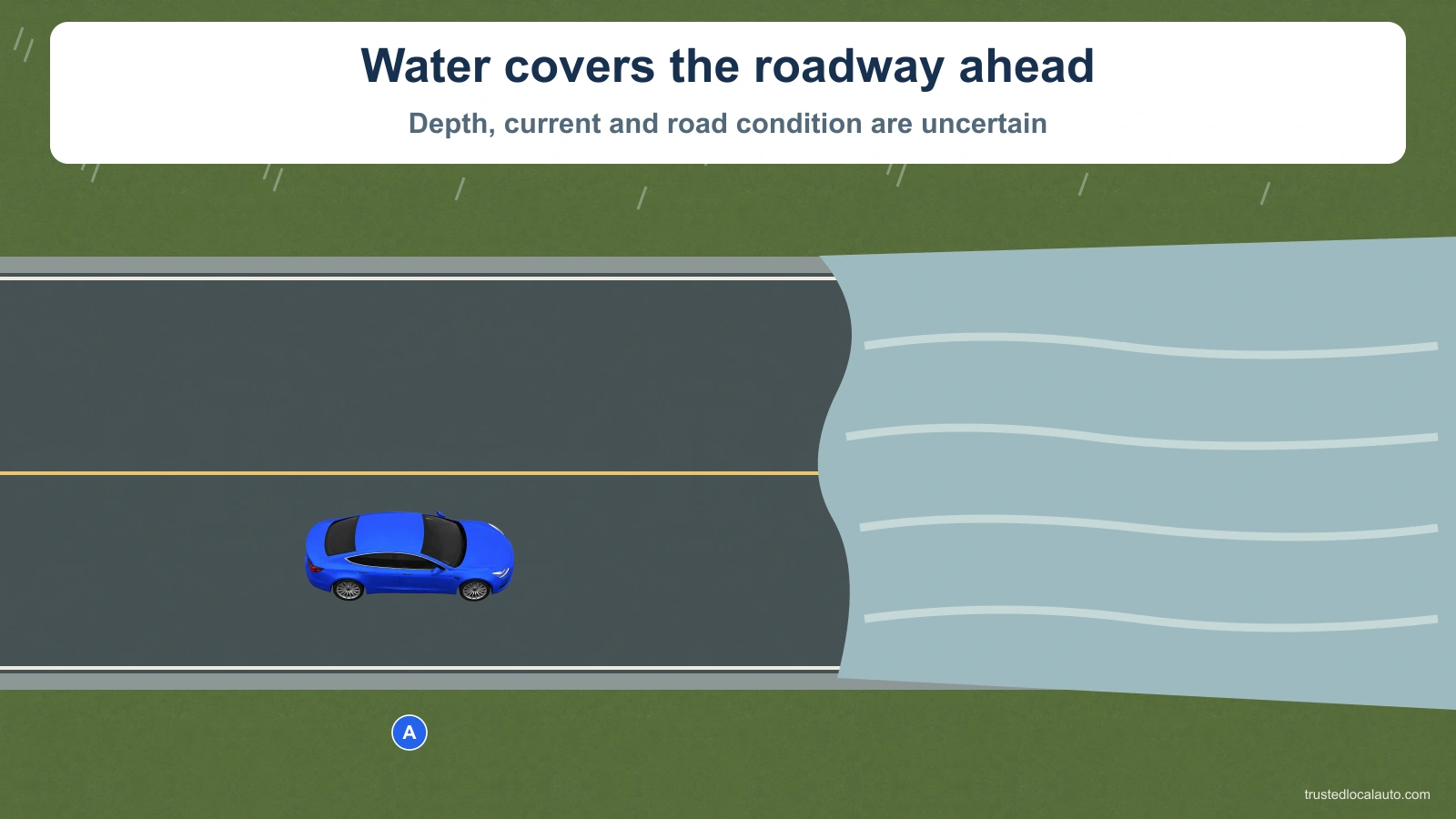 Flooded roadway decisionWater covers the road and its depth or current is uncertain. What should a driver do?Try this question
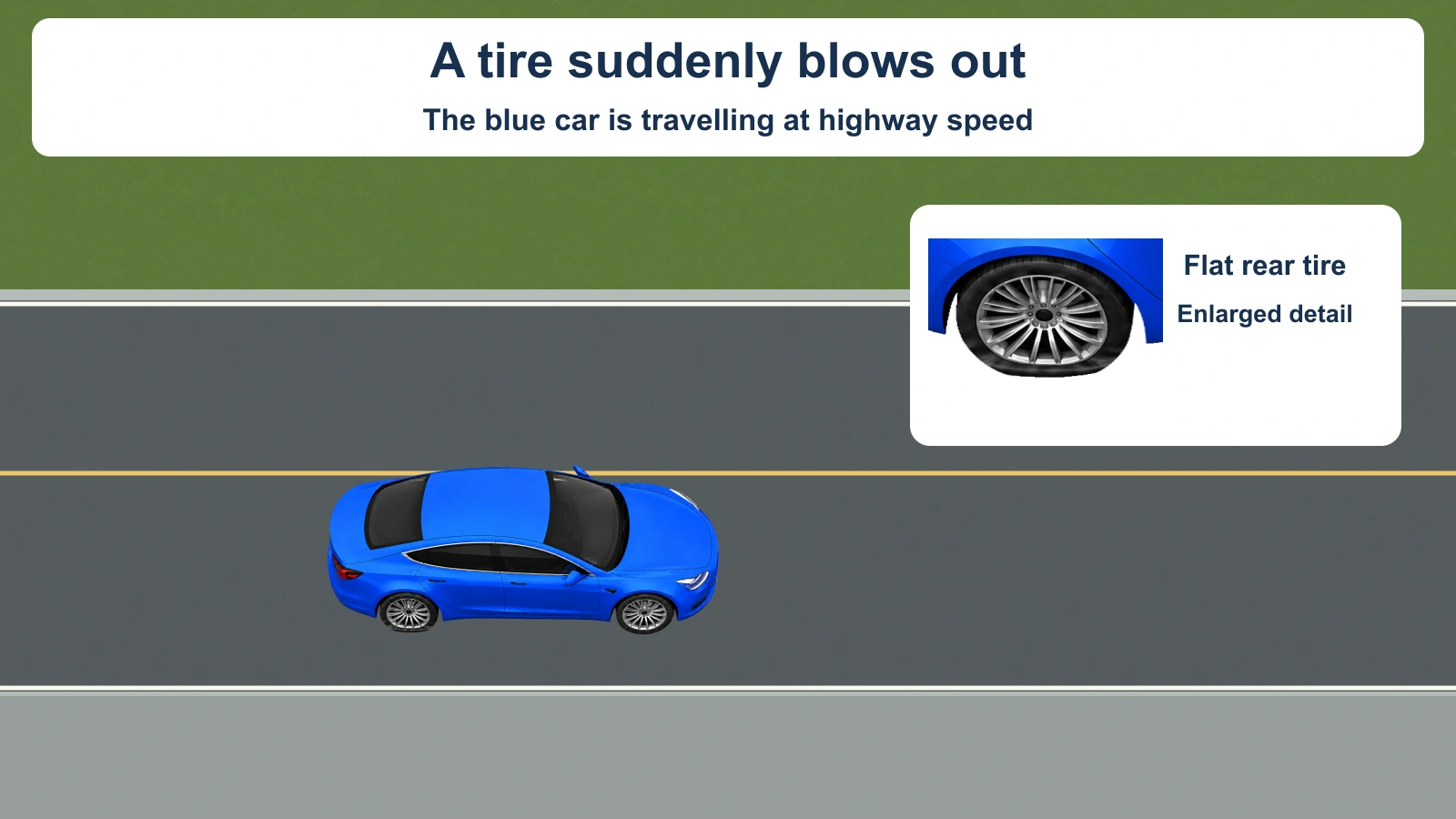 Handling a tire blowoutA tire blows out at highway speed. What should the driver do?Try this question
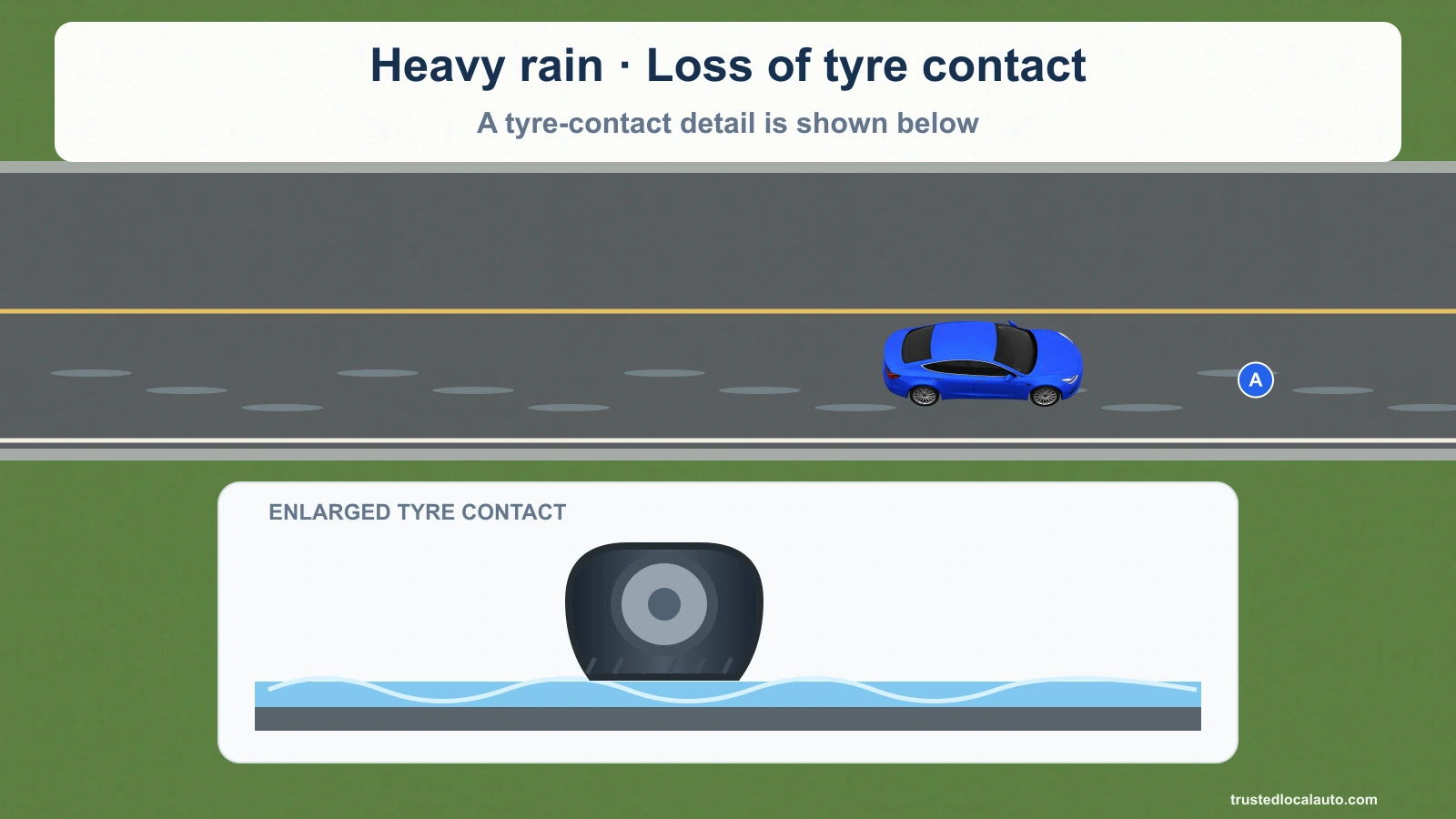 Hydroplaning responseOn a straight wet road, an automatic-transmission car starts to hydroplane and steering feels light. What should the driver do?Try this question
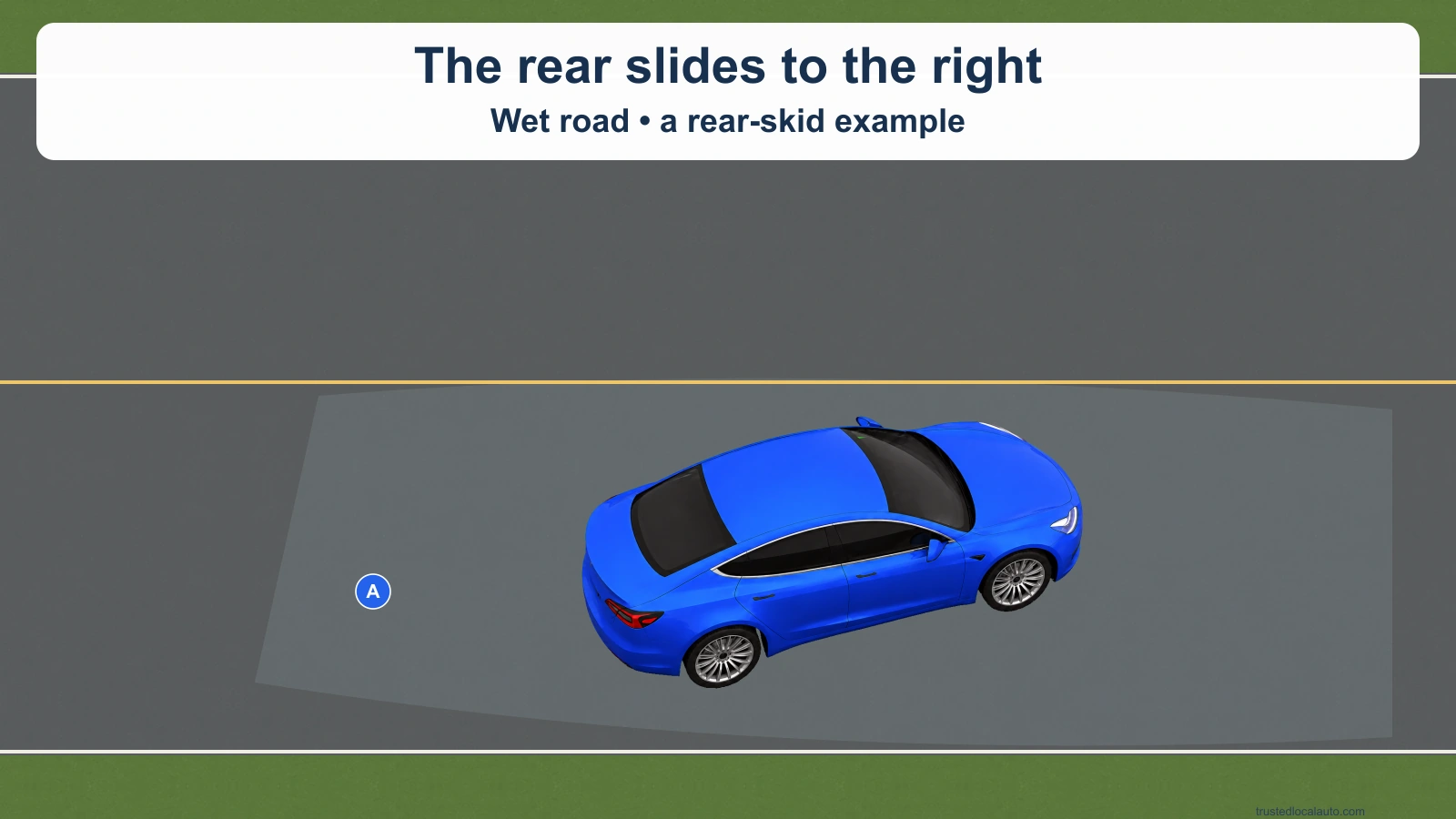 Recovering from a rear-wheel skidIf the rear of a vehicle begins sliding sideways, where should the driver look and steer?Try this question
8 text questions
More questions in this topic
- What combination is safest when a road may be icy?
- A moose appears near the roadway. What is the safest response?
- When must a driver use headlights in Alaska?
- In the daytime, Alaska requires headlights when light or weather conditions keep people and vehicles from being clearly visible at a set distance. Which statement about that distance is correct? Hard
- At night your high beams are on, and a vehicle comes toward you in the opposite lane. Which statement about Alaska's dimming rule is correct? Hard
- At night you drive with high beams on and come up behind another vehicle in your lane. Which statement about Alaska's dimming rule is correct? Hard
- It is a clear, sunny day. You drive on a designated traffic safety corridor, and you can see people and vehicles clearly far beyond 1,000 feet. Which statement about your headlights is correct? Hard
- At night you drive with high beams on a divided highway that has a wide median. An oncoming vehicle approaches on the other roadway. Which statement is correct? Hard
Alaska Instruction Permit Knowledge
More Instruction Permit Knowledge topics
Road rules · 12 topics
- Licensing & Test Readiness16 questions
- Traffic Signals & Road Markings16 questions
- Observation, Speed & Space14 questions
- Intersections & Right-of-Way12 questions
- Turns, Lanes, Passing & Merging12 questions
- Parking, Reversing & Roadside Stops13 questions
- Sharing the Road11 questions
- Freeways & High-Speed Roads10 questions
- School Zones, Railways & Work Areas29 questions
- Weather, Visibility & Emergencies14 questions · This topic
- Vehicle Safety, Documents & Towing16 questions
- Safe & Responsible Driving15 questions
Each question page shows the answer, the explanation and the official source of the question.