
Arkansas Class D Knowledge topic
Arkansas Class D Knowledge Weather, Visibility & Emergencies
Handle darkness, poor weather, loss of traction, breakdowns, collisions and emergencies.
18 questions, free with an account. 6 of them are hard. Each one has its answer, an explanation and its official source.
- 4 picture questions
- 14 text questions
- 6 of them hard
4 picture questions
Questions in this topic
Select a question to answer it. The answer and the explanation show after you answer.
 Headlights in fogWhich headlights should a driver use in fog?Try this question
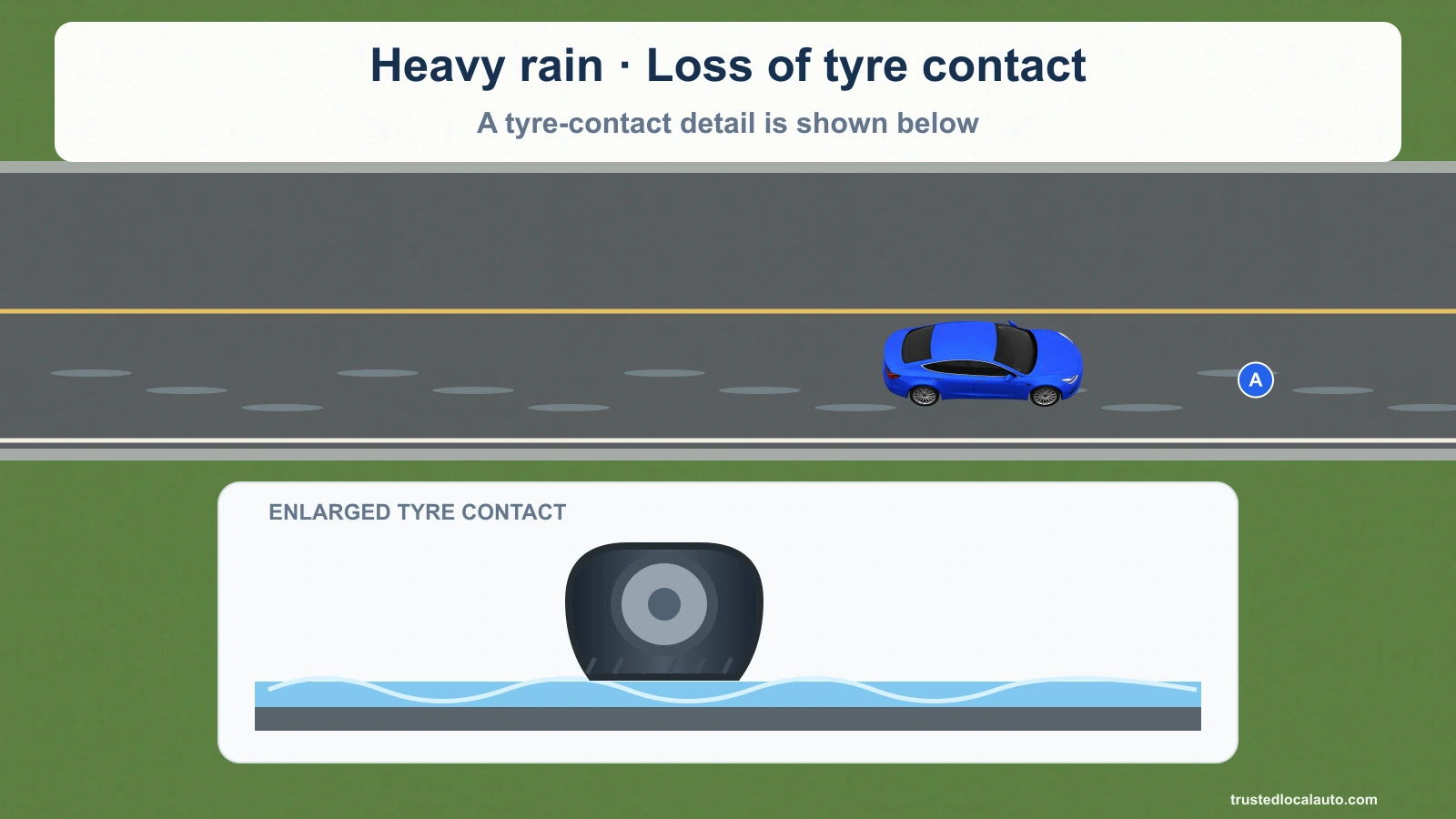 Recovering from hydroplaningWhat should a driver do if the tires begin to hydroplane?Try this question
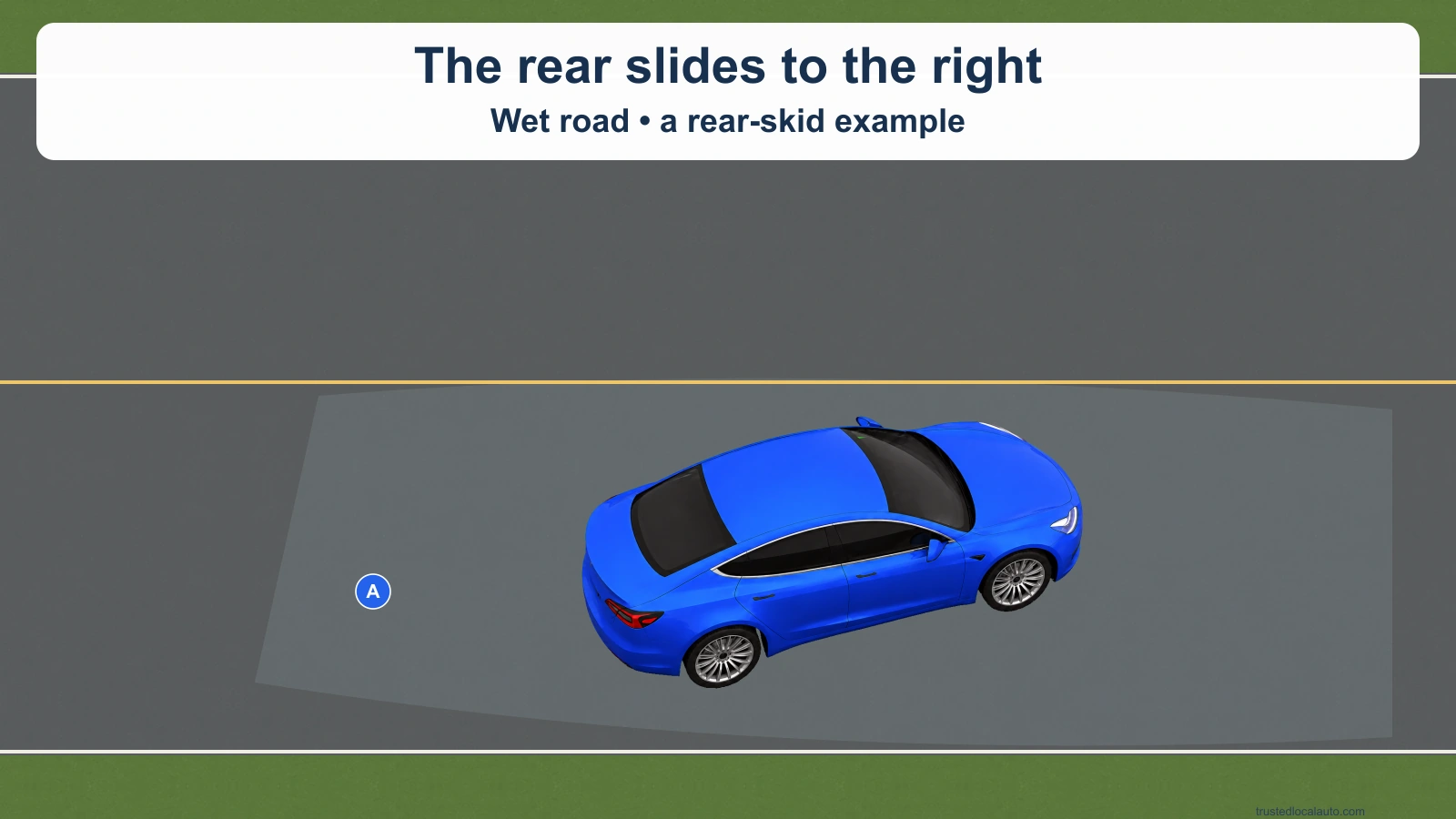 Steering through a skidIf the rear of a vehicle begins to skid, where should the driver steer?Try this question
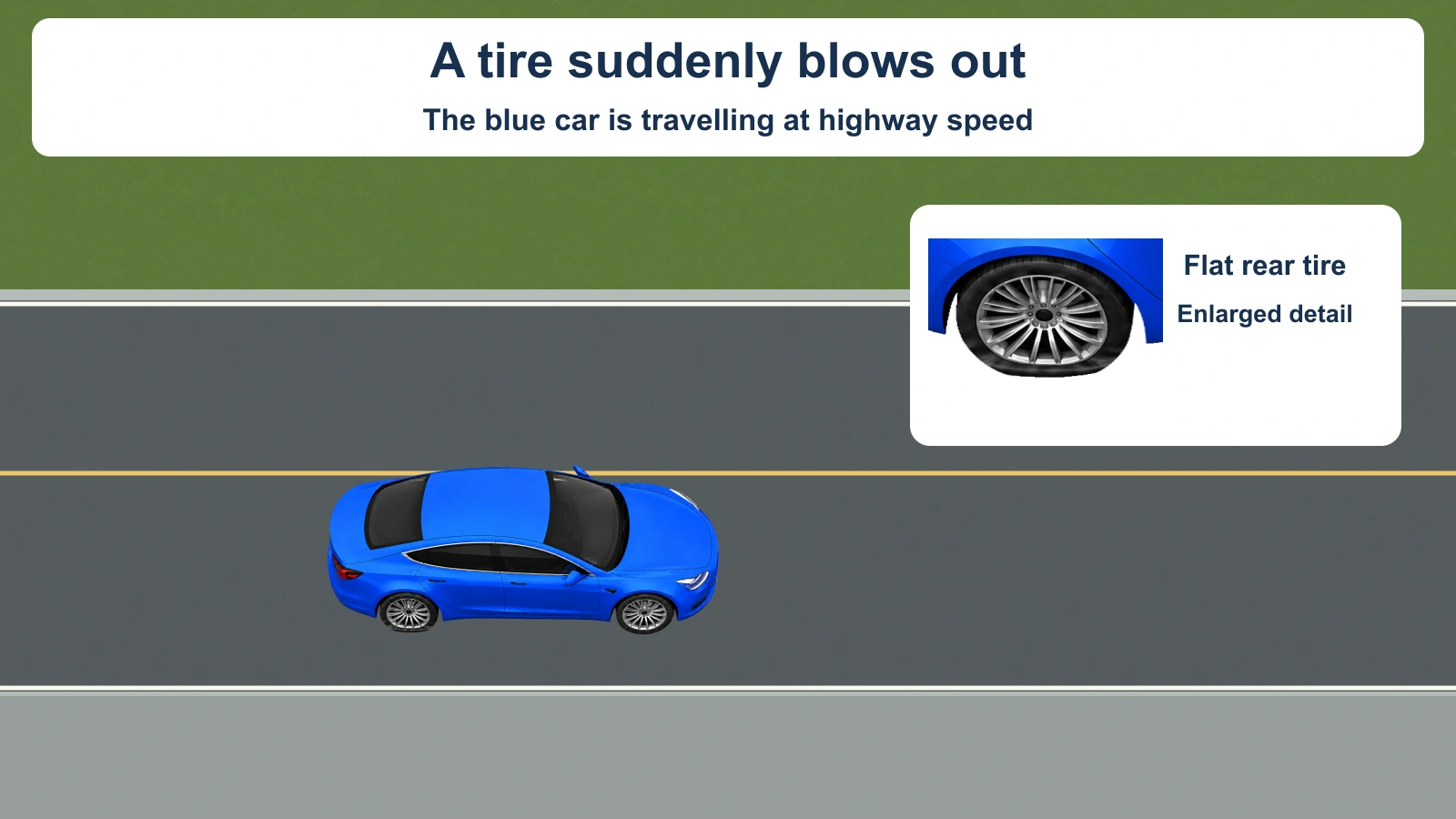 Tire blowout responseA tire suddenly blows out at highway speed. What should the driver do?Try this question
14 text questions
More questions in this topic
- How should a driver use anti-lock brakes during a hard emergency stop?
- The brake pedal suddenly stops slowing the vehicle. What should the driver try first?
- Both headlights stop working while you are driving at night. What is the safest response?
- Rain makes it necessary to use the windshield wipers during daylight. What should you do with the lights?
- When should you change from high beams to low beams around other vehicles?
- How should a driver adjust speed on a road covered with packed snow?
- The accelerator is stuck and the engine keeps racing. What should you do?
- Besides using headlights when wipers are needed, when must an Arkansas driver use them?
- Which statement about Arkansas headlight rules is NOT correct? Hard
- Your car has anti-lock brakes (ABS), and the brakes work normally. A hazard ahead makes you stop as quickly as you can. How should you brake? Hard
- Arkansas gives two distances at which you change from high beams to low beams: one for an oncoming vehicle and one for a vehicle that you follow. Which pair is correct? Hard
- At night on a road with no streetlights, your high beams are on. An oncoming vehicle is 400 feet away. The vehicle that you follow is 300 feet ahead of you. Which statement is correct? Hard
- Think only of the time-of-day rule for headlights in Arkansas. In the morning, when does the required period end? Hard
- You drive on a road that is covered with packed snow. By about how much should you cut your normal dry-road speed? Hard
Arkansas Class D Knowledge
More Class D Knowledge topics
Road rules · 12 topics
- Licensing & Test Readiness13 questions
- Traffic Signals & Road Markings15 questions
- Observation, Speed & Space15 questions
- Intersections & Right-of-Way16 questions
- Turns, Lanes, Passing & Merging12 questions
- Parking, Reversing & Roadside Stops14 questions
- Sharing the Road15 questions
- Freeways & High-Speed Roads12 questions
- School Zones, Railways & Work Areas32 questions
- Weather, Visibility & Emergencies18 questions · This topic
- Vehicle Safety, Documents & Towing12 questions
- Safe & Responsible Driving26 questions
Each question page shows the answer, the explanation and the official source of the question.