
Kansas Class C Written topic
Kansas Class C Written Weather, Visibility & Emergencies
Handle darkness, poor weather, loss of traction, breakdowns, collisions and emergencies.
32 questions, free with an account. 9 of them are hard. Each one has its answer, an explanation and its official source.
- 8 picture questions
- 24 text questions
- 9 of them hard
8 picture questions
Questions in this topic
Select a question to answer it. The answer and the explanation show after you answer.
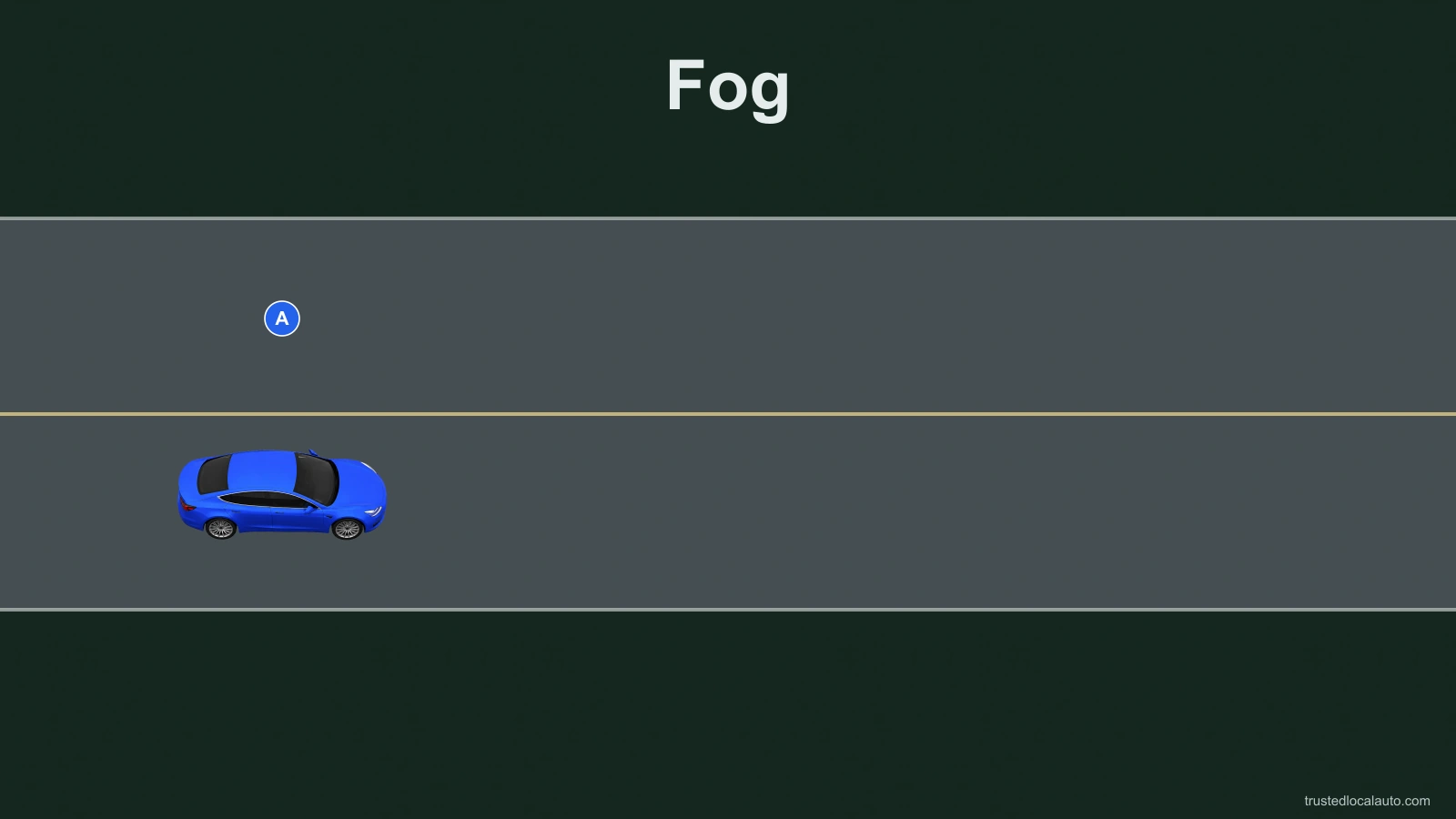 Headlights in fogWhich headlights should a driver use in fog?Try this question
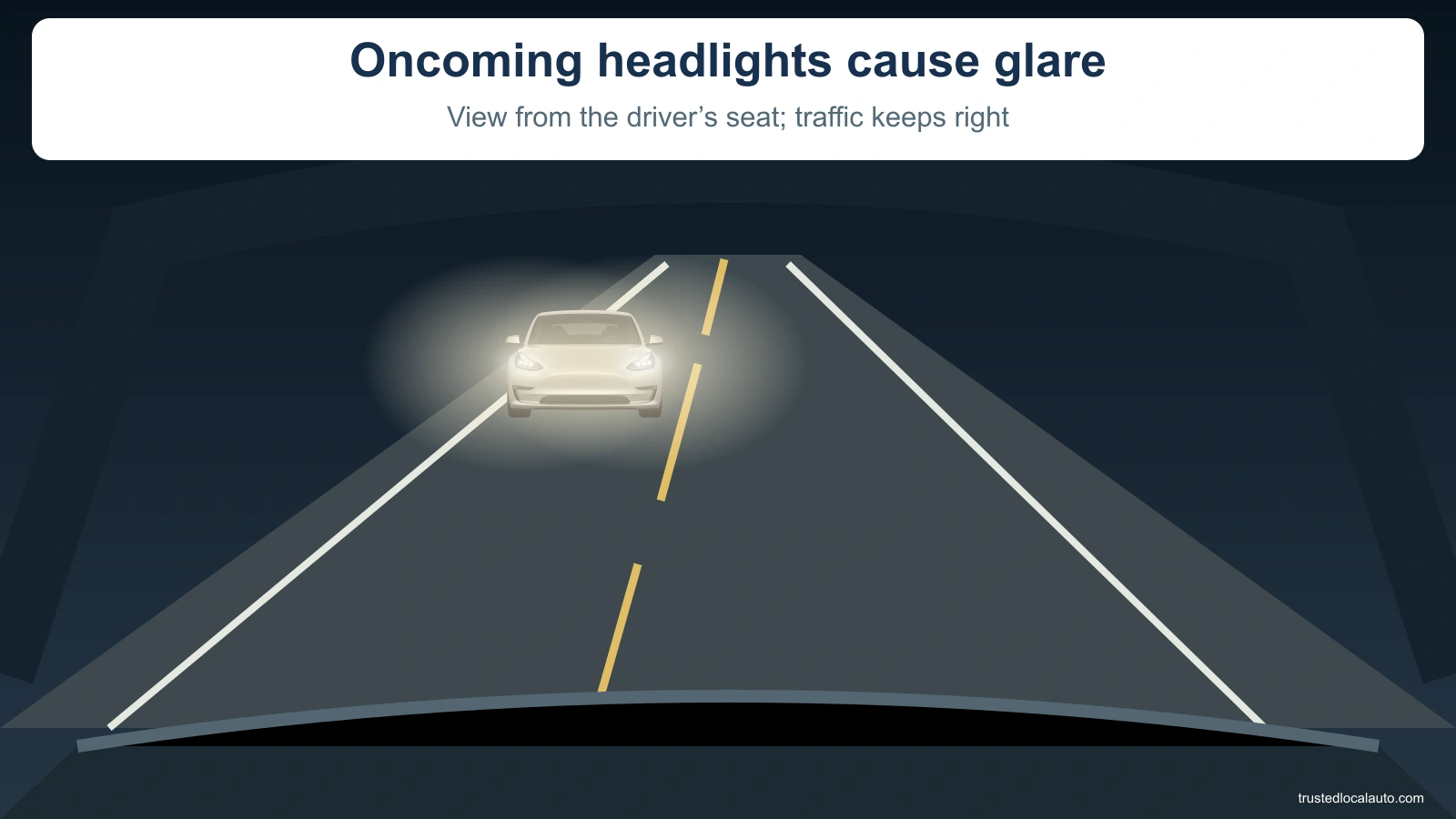 Oncoming headlight glare at nightAn oncoming vehicle’s bright headlights make it hard to see. Where should you direct your gaze while maintaining your lane?Try this question
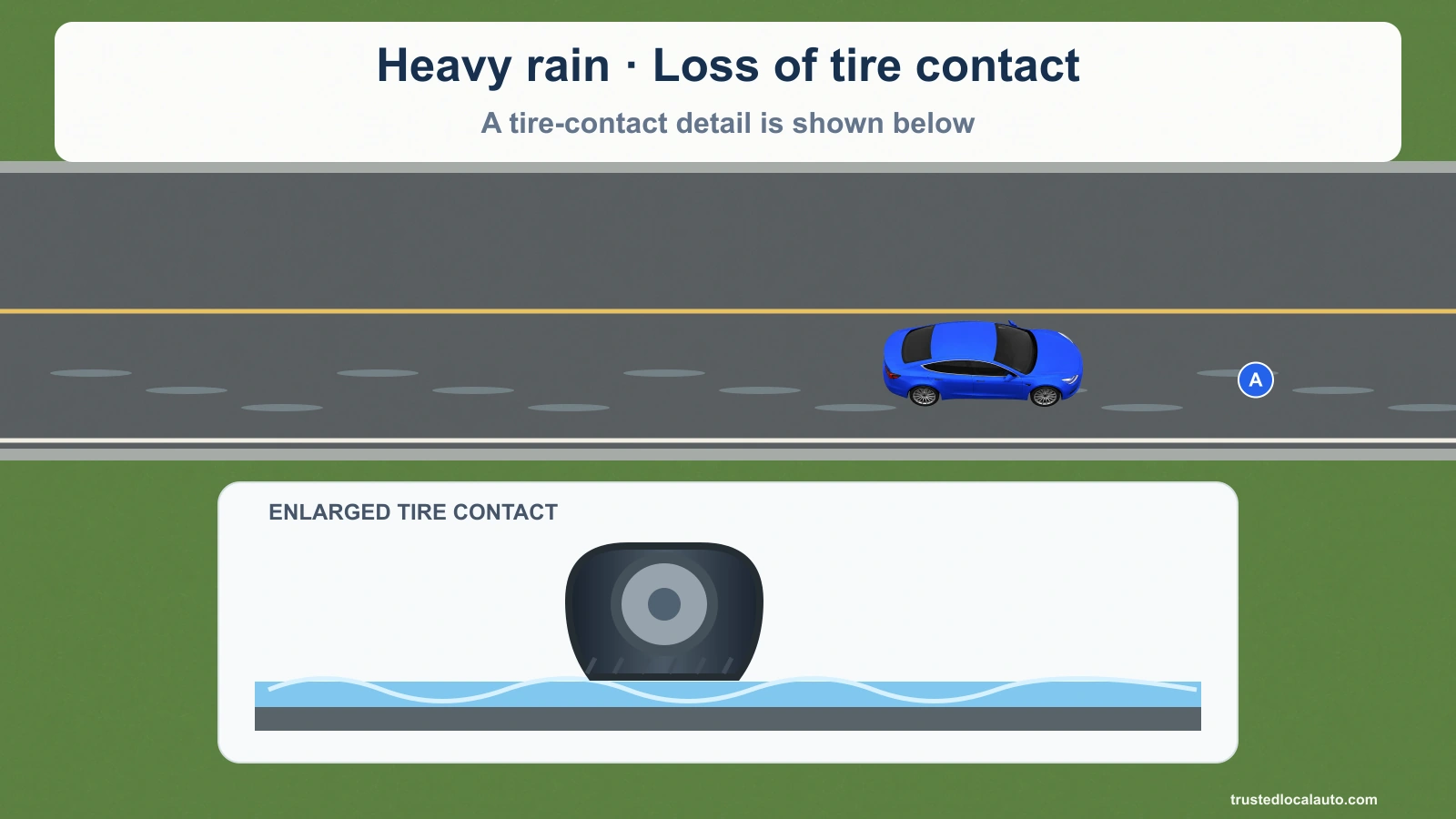 Recovering from hydroplaningAn ordinary automatic-transmission car begins to hydroplane. Which initial speed-control response is appropriate?Try this question
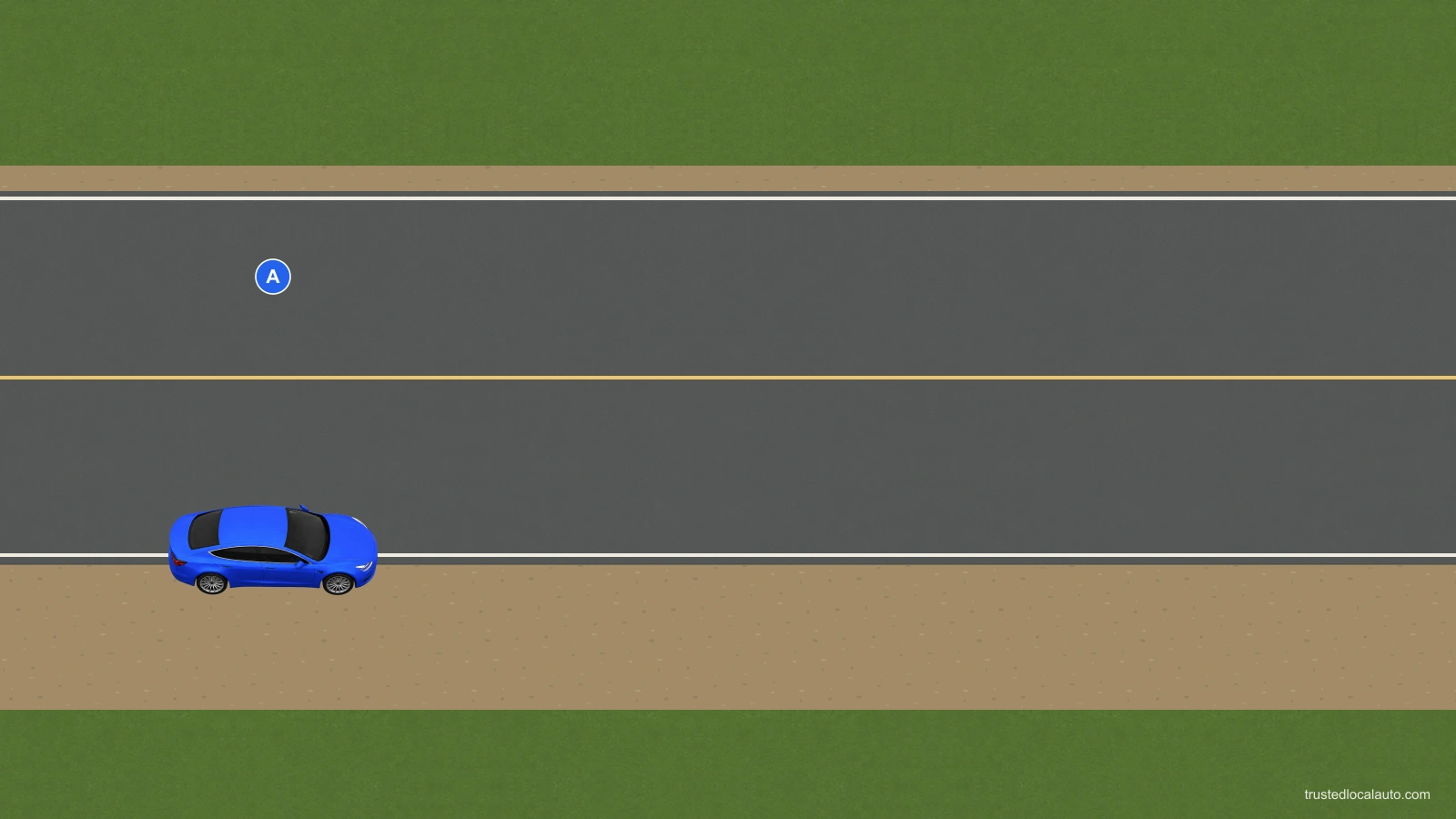 Returning after a pavement-edge drop-offYour right wheels leave the pavement onto a lower shoulder. What should you do before returning to the road?Try this question
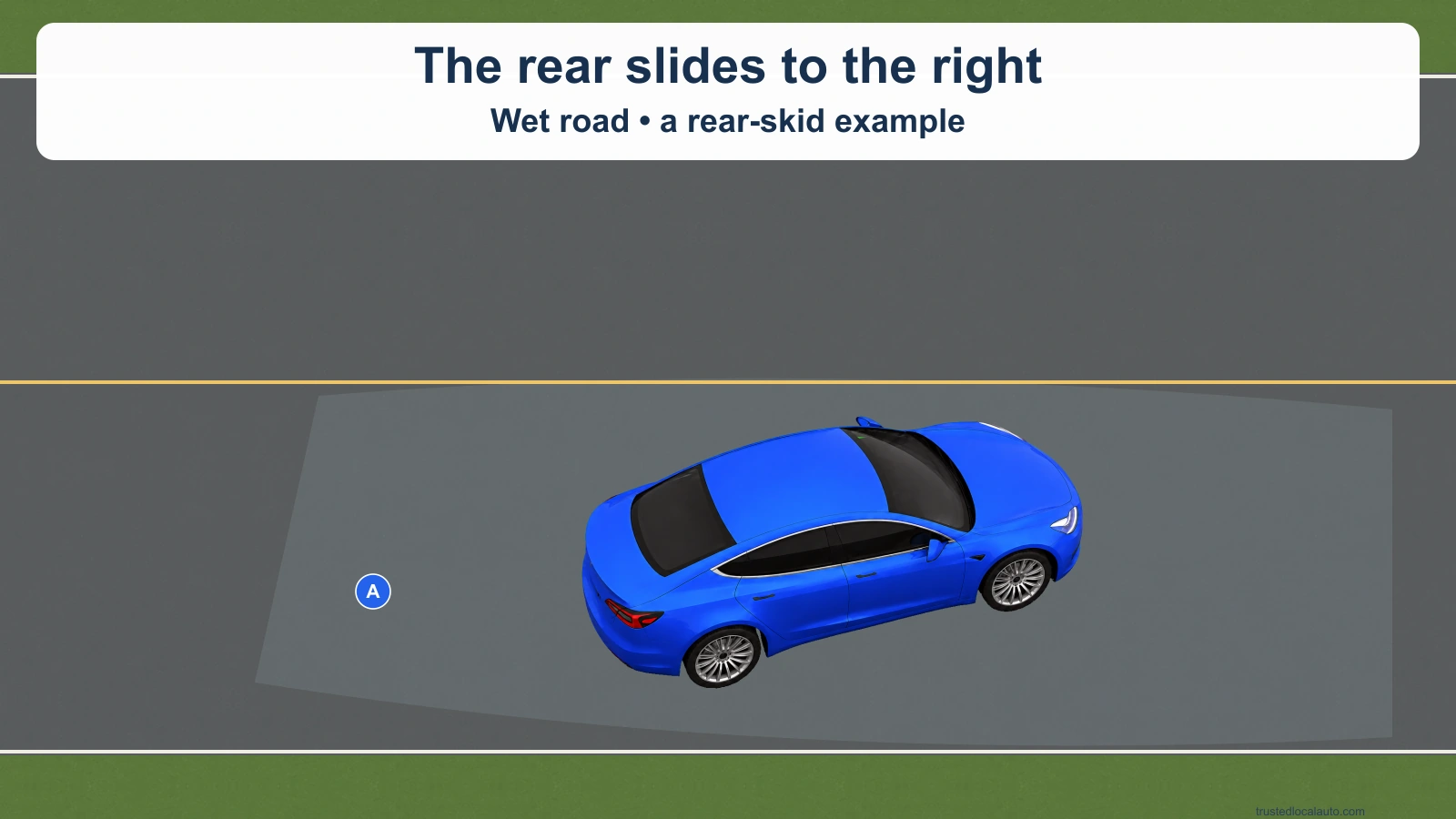 Steering through a skidIf the rear of a vehicle begins to skid, where should the driver steer?Try this question
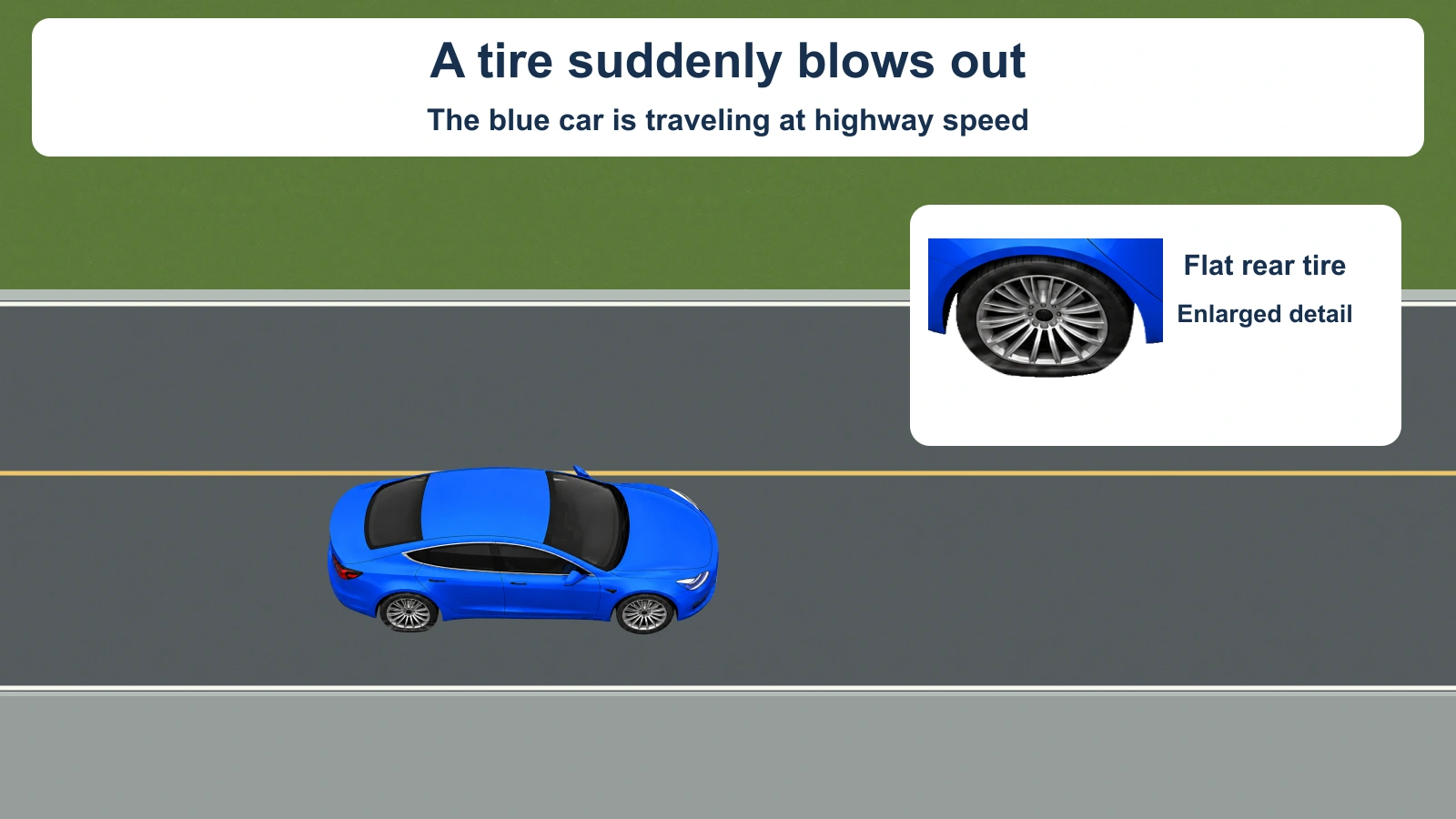 Tire blowout responseA tire suddenly blows out at highway speed. What should the driver do?Try this question
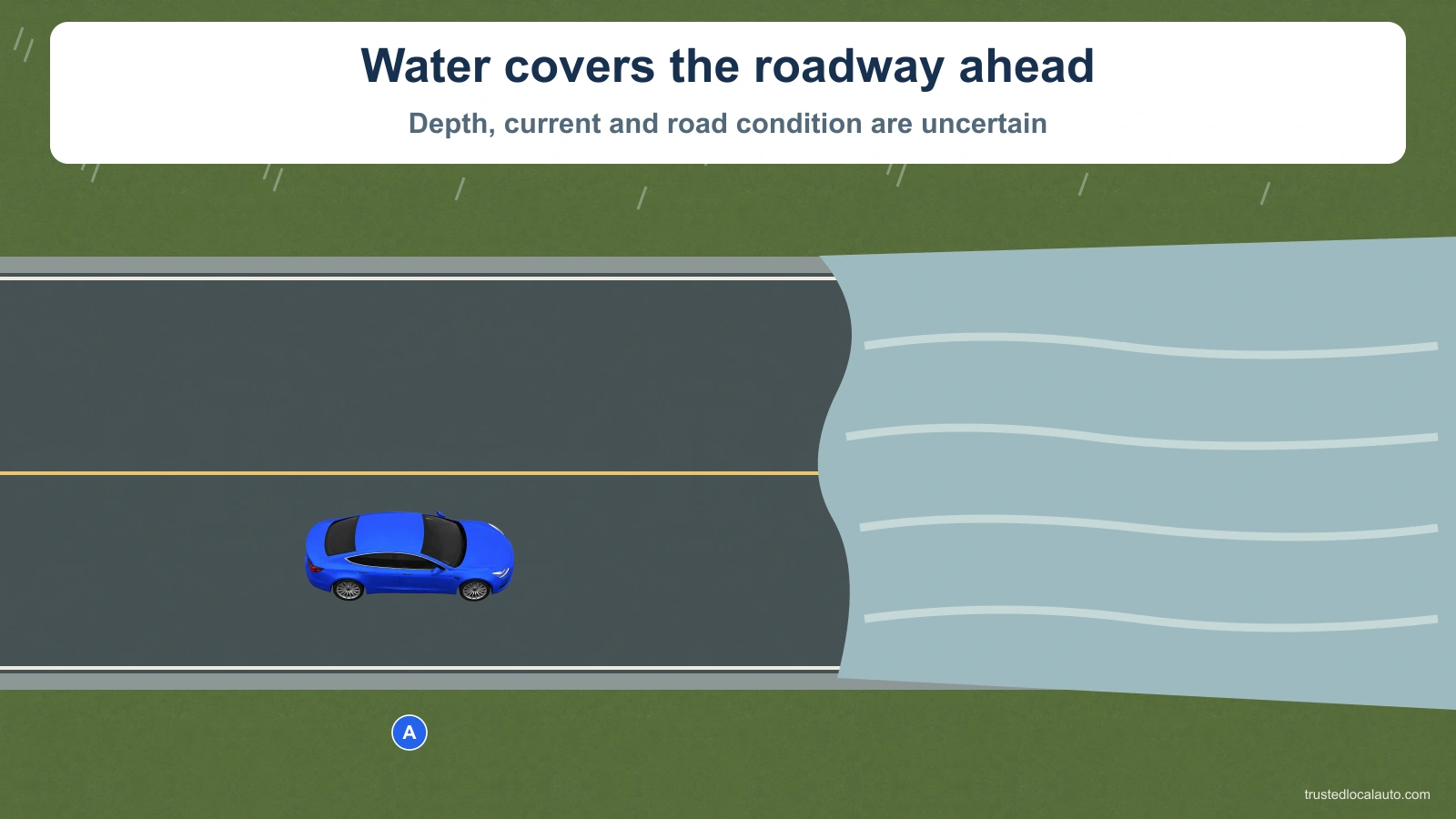 Water covering the roadFloodwater covers the roadway ahead and you cannot determine its depth or the condition underneath. What should you do?Try this question
- Hydroplaning in an automatic car HardYou drive an ordinary automatic-transmission car on a wet road, and it begins to hydroplane. What should you do first to control your speed?Try this question
24 text questions
More questions in this topic
- How should a driver use anti-lock brakes during a hard emergency stop?
- The accelerator remains stuck down while the car is moving. What response does the handbook recommend?
- The temperature gauge shows that the engine is overheating. Which response is appropriate?
- A deer is beside the roadway ahead but has not entered your lane. What is the safest response?
- The temperature is near freezing and the road looks mostly clear. What should you expect at a bridge or overpass?
- A sharp curve is approaching and your current speed is too high for it. When should you make the main speed reduction?
- Before driving after a Kansas snow or ice storm, which preparation best protects visibility?
- You approach an oncoming car at night with high beams on. By what distance must you use a beam distribution that avoids dazzling its driver?
- You leave a paved road for loose gravel. What adjustment is appropriate?
- A car without ABS has locked its wheels during hard braking. What should the driver do to regain steering control?
- The engine shuts off while the car is moving. The steering suddenly feels heavier. What should you do?
- The service brakes fail to respond. If attempts to restore hydraulic pressure do not work, how should a conventional parking brake be used to help stop?
- Both headlights stop working while you are driving at night. What is the safest response?
- Rain requires continuous use of the windshield wipers. It is daytime. What does Kansas require?
- Rain starts after a long dry spell. Which driving adjustment is appropriate?
- You are stranded in severe cold and do not know a safe, nearby route to help. What is the safer plan?
- It is daytime. Rain requires continuous use of your windshield wipers, but people and vehicles can be seen clearly at more than 1,000 feet. Which statement is correct? Hard
- At night, Kansas sets two distances for high beams. Oncoming vehicle: the distance within which you must use a lower beam. Vehicle you follow: the distance within which you must not use the uppermost beam. Which pair gives the exact distances? Hard
- You drive at night on a dark road with your high beams on. No vehicle is ahead of you in your lane. An oncoming car is now 400 feet away. Which statement is correct? Hard
- Which statement about Kansas headlight rules is NOT correct? Hard
- Your car does not have anti-lock brakes (ABS). During hard braking, the wheels lock. What should you do to get steering control back? Hard
- Your right wheels drop off the pavement onto a lower shoulder. Heavy traffic moves close beside you in the next lane, and vehicles keep coming. What should you do? Hard
- While you drive, the service brakes of your car fail to respond. The car has a conventional parking brake. Which order of actions does the handbook describe? Hard
- You are stranded in your car in severe cold. You do not know a safe, nearby route to help. Which statement is correct? Hard
Kansas Class C Written
More Class C Written topics
Road rules · 12 topics
- Licensing & Test Readiness20 questions
- Traffic Signals & Road Markings22 questions
- Observation, Speed & Space15 questions
- Intersections & Right-of-Way15 questions
- Turns, Lanes, Passing & Merging22 questions
- Parking, Reversing & Roadside Stops19 questions
- Sharing the Road19 questions
- Freeways & High-Speed Roads11 questions
- School Zones, Railways & Work Areas31 questions
- Weather, Visibility & Emergencies32 questions · This topic
- Vehicle Safety, Documents & Towing21 questions
- Safe & Responsible Driving24 questions
Each question page shows the answer, the explanation and the official source of the question.