
Practice question, Question 1 of 30
Passing target: 80% (24/30)
You are driving a car on a two-lane road in a no-passing zone. A bicyclist ahead rides in the same direction near the right edge and is not signaling a turn. If you stay in your lane, you will pass with about 2 feet of space. The oncoming lane is clear far ahead. What does Minnesota law allow?
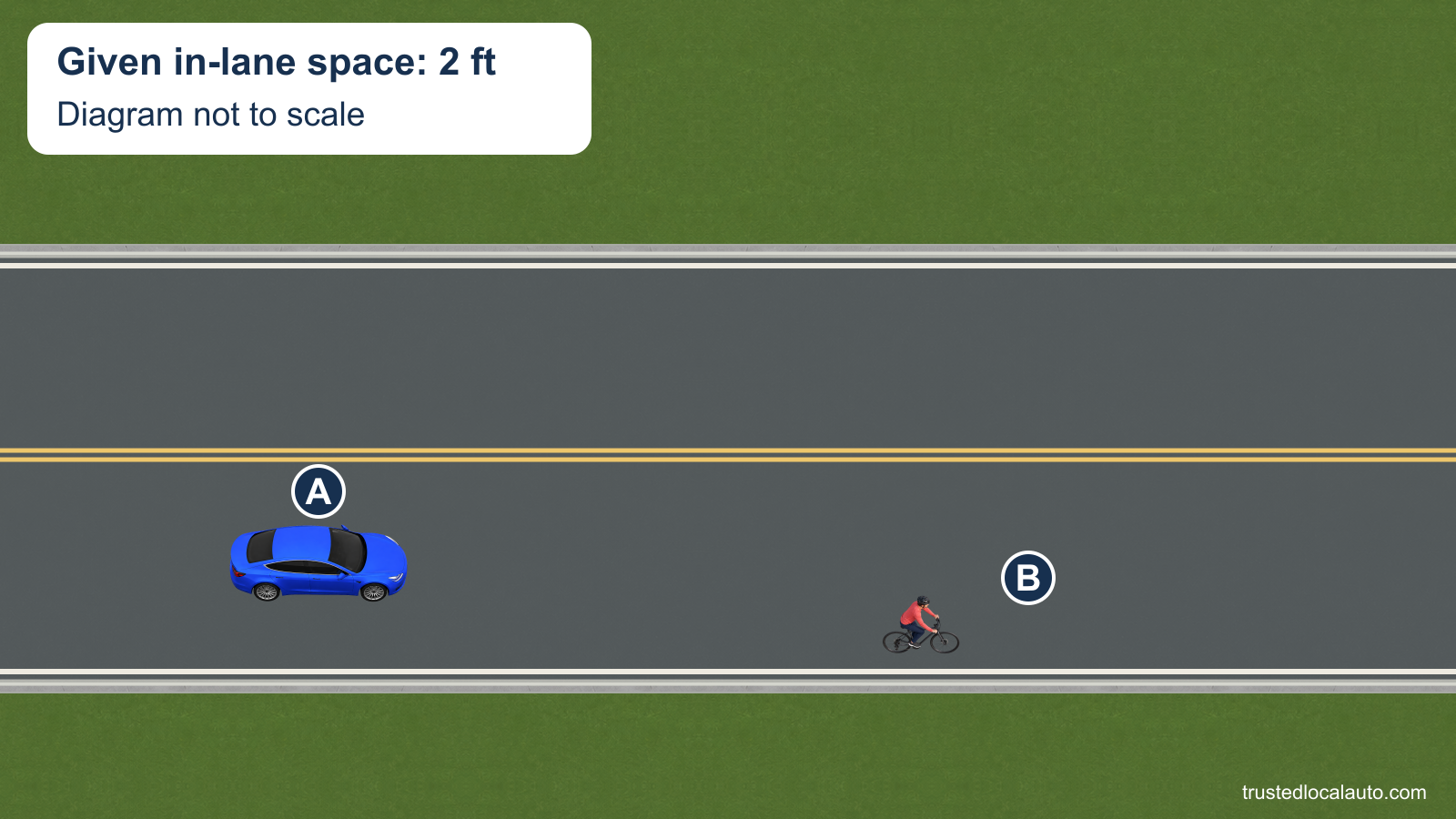
Correct answer: Cross the center line when it is safe, and pass with at least 3 feet of space
Why
Wind from a passing car, a gust or a pothole can make a bicyclist wobble, so a close pass is dangerous. In a no-passing zone, the law requires a space of at least 3 feet or half the width of your vehicle, whichever is more, or a full move into the other lane. Do not pass when the bicyclist is turning left or signaling a left turn.
Verified against Minnesota Driver's Manual · Passing a bicyclist · p. 51
Is this question correct and clear?
Continue learning
Related Minnesota questions
- A fire hose with no cover or ramp lies across the street ahead of you. It looks flat, and no firefighter is near your car. When may you drive over it?
- A fire truck with its lights and siren on passes you on its way to a fire. When you drive on, you are behind it on the same road. What is the closest that you may legally follow it?
- You are driving on a two-way road. A fire truck with flashing red lights and a siren comes up behind you, and you can hear more sirens farther back. What should you do?
- You drive on a two-way road. A fire truck with flashing red lights and a siren comes up behind you, and you can hear more sirens farther back. What does the law require?
- You drive on a divided highway. A raised median separates your roadway from the roadway for the other direction. On the other roadway, a fire truck with flashing red lights and a siren comes toward you. Which statement is correct?
- A fire truck with its lights and siren on passes you on its way to a fire. You then drive on behind it on the same road, about 400 feet back. Which statement is correct?