
Practice question, Question 1 of 25
Passing target: 80% (20/25)
On a two-lane, two-way road, the center line has a broken yellow line on your side and a solid yellow line on the other side. What does this mean?
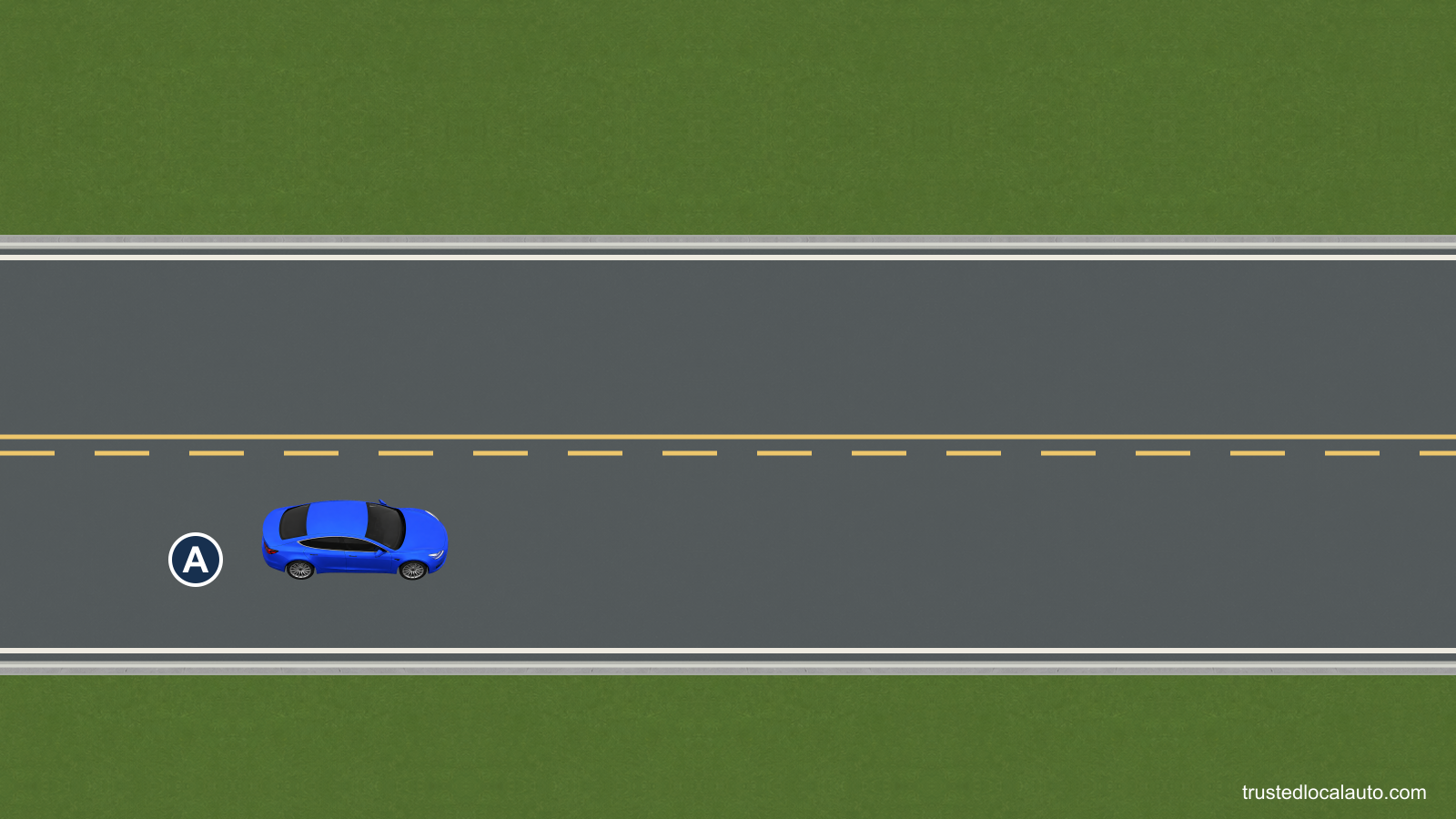
Correct answer: You may pass when it is safe, because the broken line is on your side.
Why
A broken yellow line on your side permits a pass, but it does not make every pass safe. Before you move left, make sure the oncoming lane is clear far enough ahead to finish the pass, and do not pass near a hill crest or curve that blocks your view or within 100 feet of an intersection or railroad crossing. Finish the pass before the line on your side becomes solid.
Verified against Official Nevada Driver Handbook · Highway markings · p. 32
Is this question correct and clear?
Continue learning
Related Nevada questions
- You drive on a street with two lanes going your way. A broken white line separates them, and the lane to your left is clear. What may you do?
- You drive on a road with a two-way center left-turn lane. The driveway where you will turn left is about 300 feet ahead. Which statement is correct?
- You plan to turn left into a store driveway from a road with a center lane marked for left turns in both directions. What is the longest distance that you may drive in the center lane before you make the turn?
- A road has a two-way center left-turn lane. What is the longest distance you may drive in it before you turn left off the road, and after you turn left into it from a driveway, before you merge?
- The center of a two-way road is marked with two solid yellow lines. A slow car is ahead of you. What do the lines mean for passing it?
- Late at night, the signal at an intersection flashes red in your direction and yellow for the cross street. What must you do?