
Practice question, Question 1 of 50
Passing target: 80% (40/50)
You are driving on a road with a broken yellow line just to the left of your lane and a broken white line just to the right of your lane. What do these lines tell you?
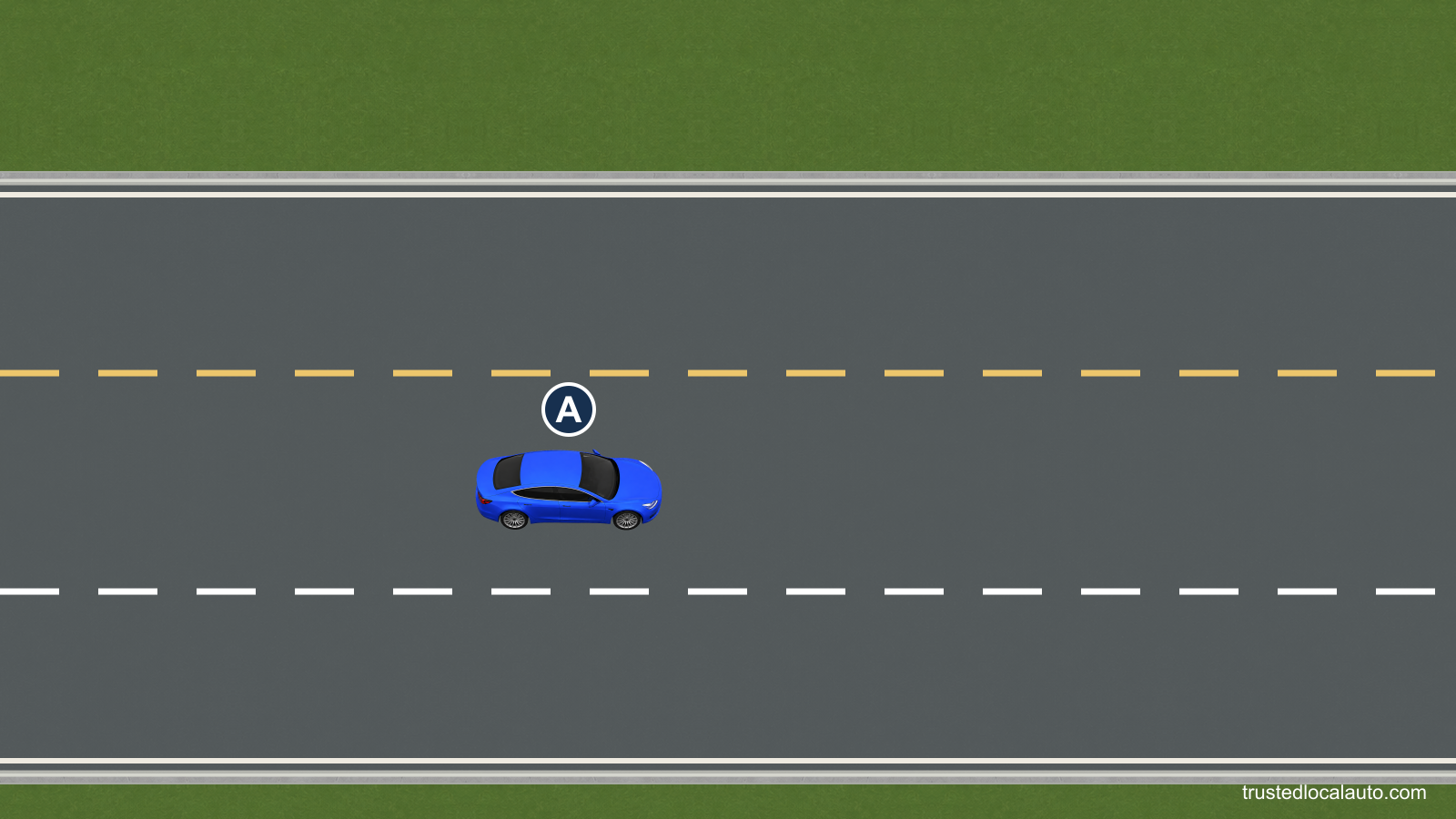
Correct answer: Oncoming traffic is left of the yellow line; traffic going your way is right of the white.
Why
The pattern of each line also matters: a broken line may be crossed to pass or change lanes when it is safe, and a solid line on your side means do not cross it. White lines also show the edges of the road, and edge lines separate the travel lane from the shoulder. Markings on the road carry the same legal weight as signs and signals.
Verified against New Jersey Driver Manual · Road Markings · p. 218, 219
Is this question correct and clear?
Continue learning
Related New Jersey questions
- A storm has cut the power, and the traffic signal at the next intersection is dark. A police officer stands in the intersection and holds up a hand toward you while the cross traffic goes through. What must you do?
- A storm has cut the power. At the next intersection, none of the traffic signal's lights are working, and no officer is directing traffic. What should you do?
- Late at night, you have made a complete stop at a traffic signal that is flashing red for your direction. The cross street has a flashing yellow signal, and a car on that street is close to the intersection. What should you do next?
- You approach an intersection where a single signal light is flashing yellow for your direction. What does it require?
- Your traffic light is green, but a police officer standing in the intersection holds up a hand for you to stop. What should you do?
- On a rural highway at night, your tires suddenly rumble and the steering wheel shakes as you drive over a set of raised strips across your lane. What should you do?