
Practice question, Question 1 of 20
Passing target: 70% (14/20)
Sam drives on a two-lane road. A car behind him moves into the oncoming lane to pass, and a truck is coming toward them farther ahead. Sam presses the gas a little so that the pass will end sooner. Which statement about Sam's action is correct?
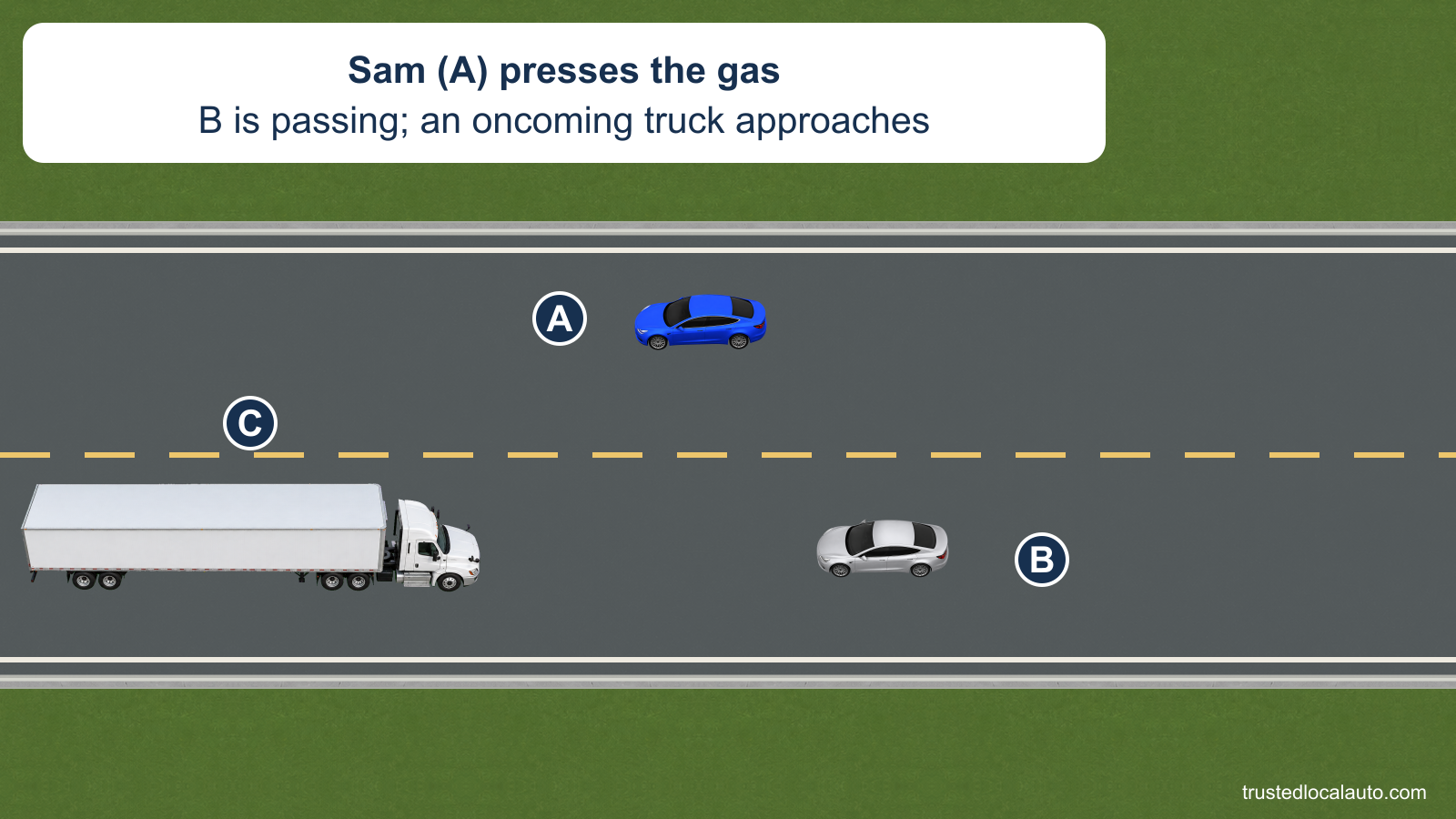
Correct answer: It is wrong: he must not speed up until the other car has completely passed him
Why
When another vehicle passes you on the left, ease off the gas slightly and keep to the center of your lane. When the car is safely back in the lane ahead of you, return to your normal speed. Help the pass end safely even if you think the other driver should not pass, because a crash with the oncoming truck can involve you too.
Verified against New York State Driver's Manual · Being Passed · p. 40
Is this question correct and clear?
Continue learning
Related New York questions
- Driver A plans a right turn into a parking lot. She turns on her signal about 40 feet before the entrance, as she begins to brake. Did she follow New York's signal rule?
- You drive on a two-lane road, and it is legal and safe to pass the car ahead. Your mirrors show that the left lane is clear. What should you do before you move into the left lane?
- You need to turn around on a narrow two-way street, and no sign prohibits it. You decide to make a three-point turn. What is the first step?
- On a two-lane road with one lane in each direction, the car ahead signals left and waits for oncoming traffic before it turns. There is enough room for your car on the road surface to its right. Which statement is correct?
- On a two-lane road, you think about passing a slow car. You judge that an oncoming car would be about 150 feet away when you get back into your lane. Which statement is correct?
- The turn signal lights of Dana's car do not work. She plans a right turn, and about 40 feet before the turn she holds her left arm out of the window, bent up at the elbow. Which statement is correct?