
Back to Ontario
Ontario G1 Practice Test
Full test preview Question 1 of 40
0 answered 40 remaining
Passing target: 16 correct signs and 16 correct rules (TLA practice targets)
Pavement markings and pedestrian crossoversStandalone practice
When a solid yellow line is drawn next to a broken yellow line on a two-way road, what does it mean?
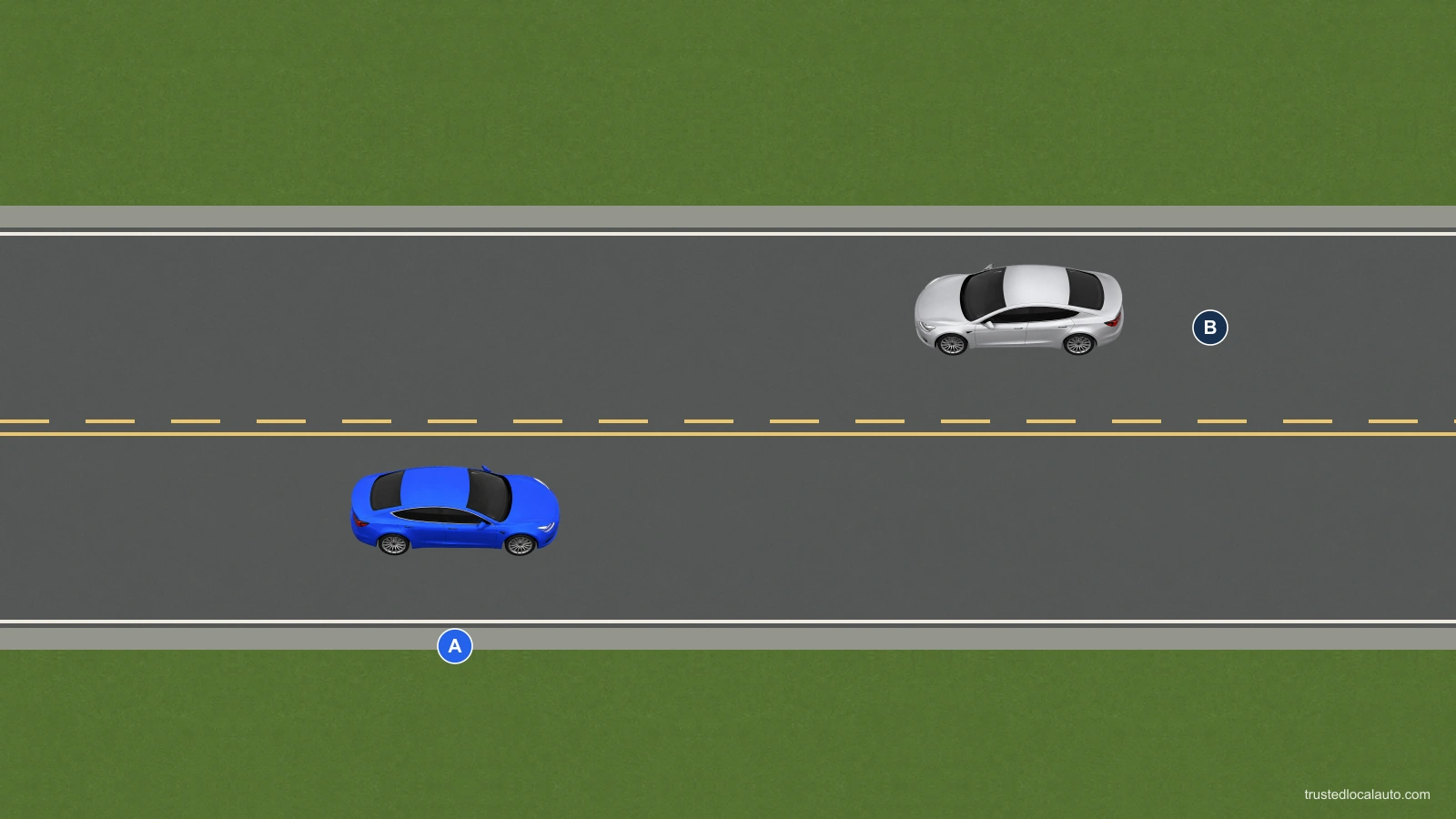
Blue A and silver B face opposite directions on a two-lane road. The yellow centre marking is solid on A’s side and broken on B’s side.
Correct answer: Drivers on the broken-line side may pass if safe
Why
If the broken line is on your side, you may pass if it is safe. If the solid line is on your side, you must not pass.
Verified against The Official Ministry of Transportation (MTO) Driver’s Handbook · Pavement markings and pedestrian crossovers · p. 137, 140
Report a question issueContinue learning
Related Ontario questions
What is this shared centre lane, marked with opposite white arrows, used for?When driving in a lane designated by a solid white line, what does the line indicate?When entering an HOV (High Occupancy Vehicle) lane, what pavement markings indicate that it is legal to cross into the lane?What does a diamond-shaped marking painted on a highway lane indicate?Can you park where your vehicle would block a crosswalk or pedestrian crossing?At a pedestrian crossover (identified by specific signs, overhead lights, and road markings), when are you legally allowed to proceed after a pedestrian crosses?