
Back to Prince Edward Island
Prince Edward Island Class 7 Practice Test
Full test preview Question 1 of 40
0 answered 40 remaining
Passing target: 80% (32/40)
Weather Visibility EmergenciesStandalone practice
At night, your stopping distance would extend beyond the road you can see in your headlights. What should you do?
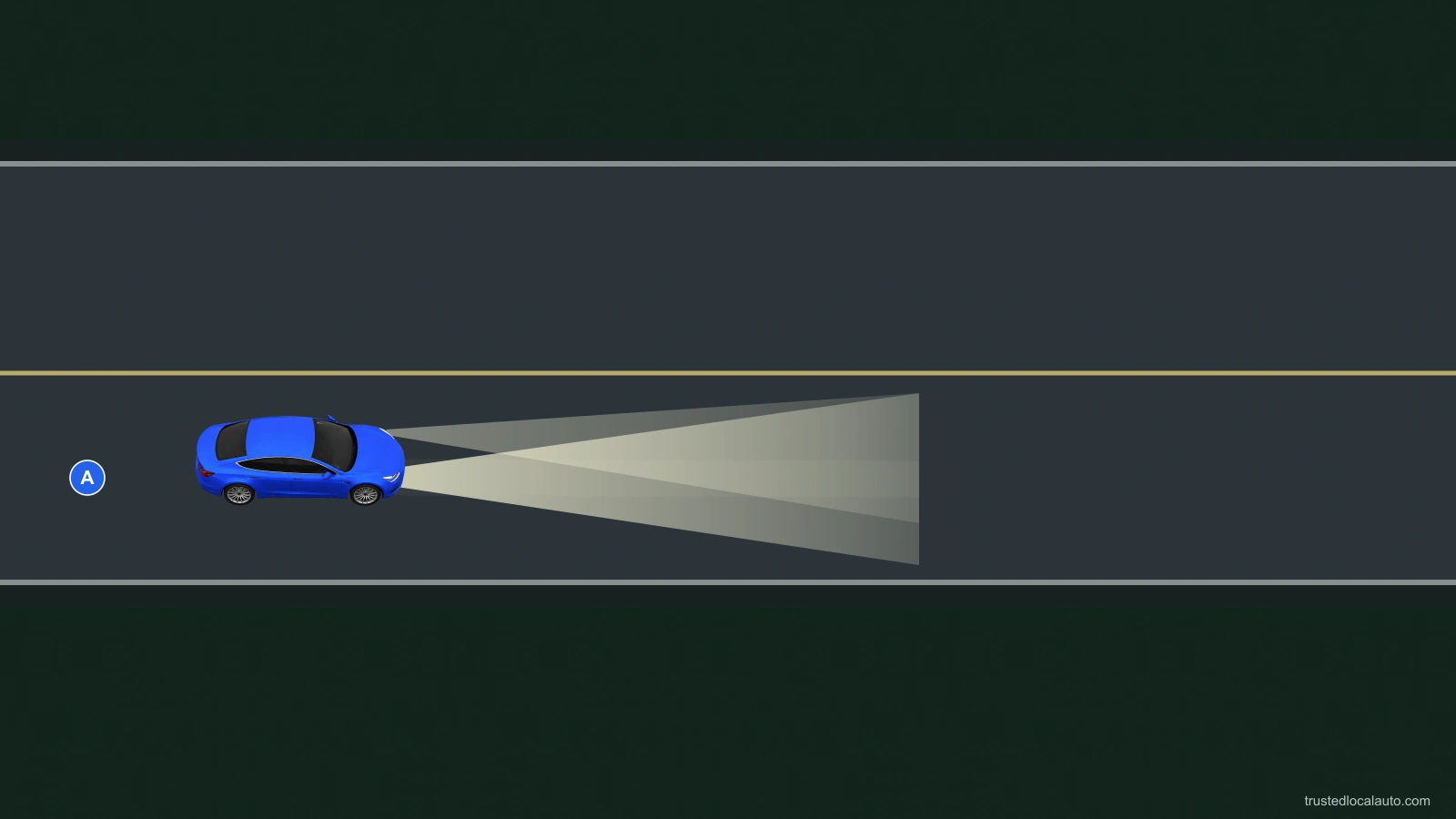
A blue car travels on an unlit two-way road with a limited area ahead illuminated by its headlights.
Correct answer: Reduce speed so you can stop within the distance you can see
Why
Slow down before you run out of visible stopping space. Total stopping distance includes the distance travelled while you notice and react, as well as braking. The comparison drawing illustrates overdriving the headlights; it does not prescribe a speed or a fixed headlight range.
Verified against Prince Edward Island Driver's Handbook · Speed, Space and Driving Skills · p. 125
Report a question issueContinue learning
Related P.E.I. questions
Near freezing, which road area deserves extra caution even if it looks only wet?Condensation inside your windows is interfering with your view before a journey. What should you do?Car A has broken down and is already safely stopped clear of moving traffic. Which light setting warns others about the temporary hazard?On a straight wet road, car A begins to hydroplane as water separates the tires from the pavement. What should the driver do?Car A is following B at night within 60 metres and is not overtaking. Why should A use low beams?On a wet road, acceleration causes the rear of car A to slide to the right. What should the driver do?