
Practice question, Question 1 of 30
Passing target: 80% (24/30)
You drive on a one-way street with two lanes. A broken white line separates your lane from the lane on your left. You want to move into the left lane. What does this line tell you?
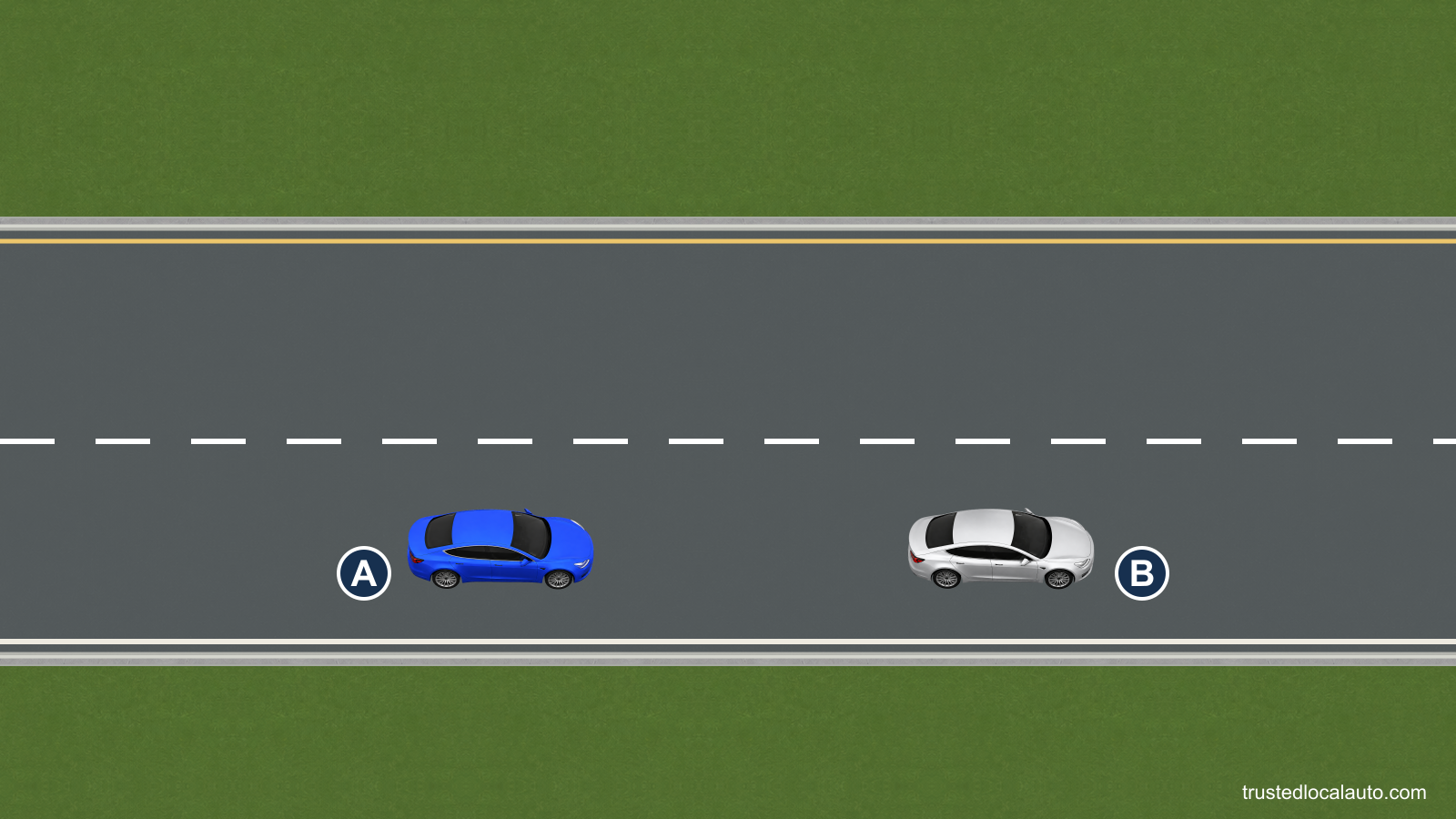
Correct answer: Both lanes carry traffic your way, and you may cross the line when a lane change is safe.
Why
White lines separate lanes of traffic that move in the same direction, and yellow lines separate traffic that moves in opposite directions. A broken line may be crossed, but the lane change must still be safe: check your mirrors, look over your shoulder and signal first (SDCL 32-26-6). Pavement markings are official traffic control devices, so drivers must obey them (SDCL 32-28-10).
Verified against South Dakota Driver License Manual · Pavement markings · p. 36, 45
Is this question correct and clear?
Continue learning
Related South Dakota questions
- A storm has cut the power, and the traffic signal at your intersection is completely dark. No officer is directing traffic. What must you do?
- On a two-lane highway, the center line is two solid yellow lines. The car ahead of you goes 10 mph below the limit, and the oncoming lane is clear for a long way. What should you do?
- At night on a rural highway, the signal at the next intersection flashes red in your direction. You see no other vehicle. What must you do?
- You wait in a left-turn lane. The signal for your lane shows a flashing yellow arrow that points left, and oncoming traffic has a green light. What may you do?
- You wait in a left-turn lane. What does a flashing yellow left arrow on the signal for your lane mean?
- At an intersection, the signal that faces you shows a round yellow light that flashes on and off. What should you do?