
Practice question, Question 1 of 40
Passing target: 85% (34/40)
In a one-lane work zone, a flagger turns the paddle from SLOW to STOP as you arrive. You see no oncoming traffic in the open lane. What must you do?
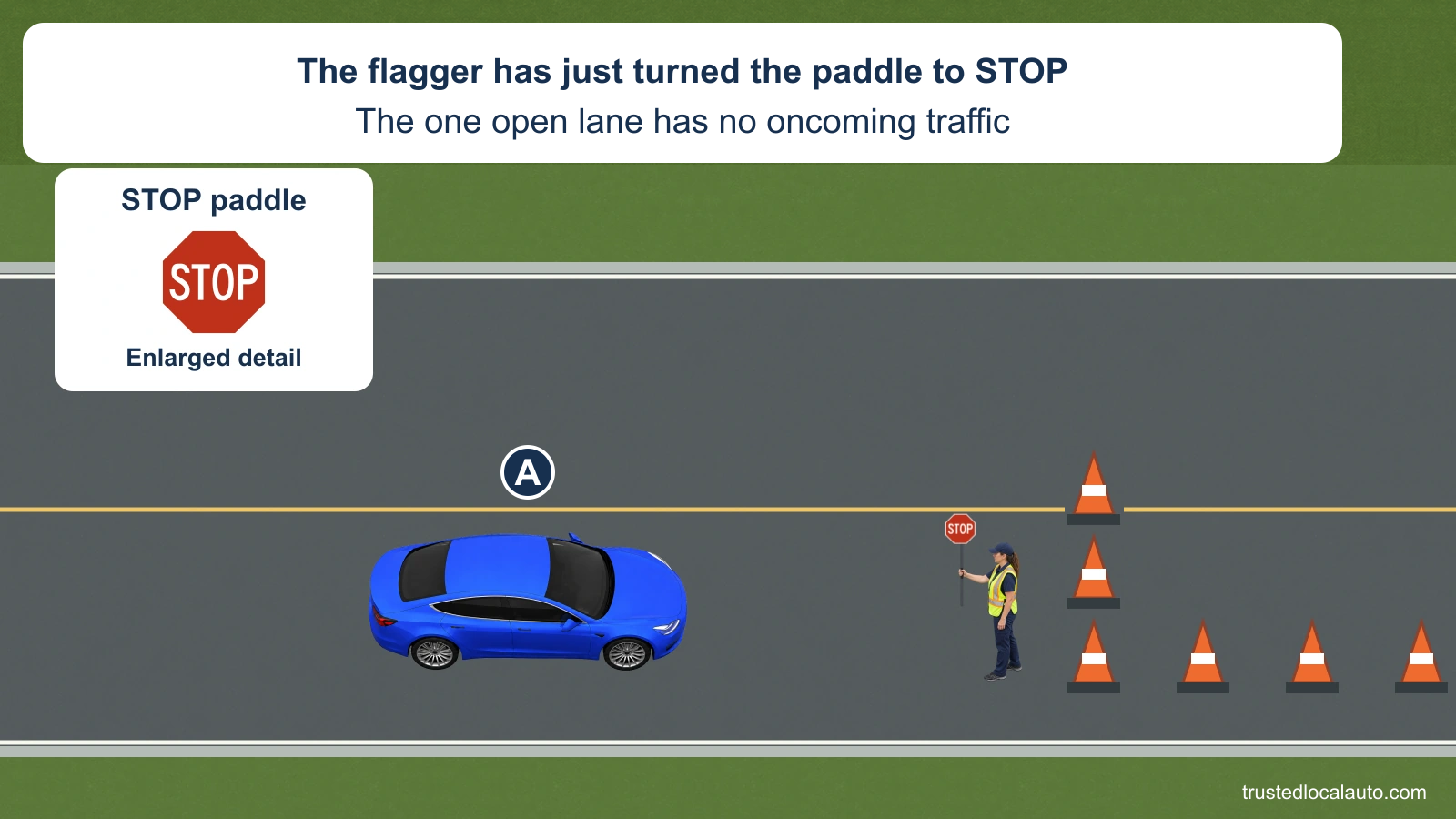
Correct answer: Stop and stay stopped until the flagger signals you to go
Why
Flaggers are work-zone workers, usually in orange or yellow vests or in yellow-green shirts or jackets. They control traffic with STOP/SLOW paddles or red flags, often where one lane must carry traffic in both directions. A flagger can see workers, equipment and oncoming cars that you cannot see, so wait for the signal to go even when the road looks clear.
Verified against Virginia Driver's Manual · Stopping · p. 17, 12
Is this question correct and clear?
Continue learning
Related Virginia questions
- You are stopped at a railroad crossing with two tracks. The red lights flash. A freight train passes on the near track, and the lights keep flashing after it is gone. What should you do?
- Your car stalls on a railroad crossing, and you see a train coming toward the crossing. What should you do?
- You drive on a road with a 45 mph limit. You pass a school crossing sign with blinking lights, and no other speed limit is posted for the school zone. What is the maximum speed between the school signs?
- You wait at a railroad crossing with two tracks. A train has just passed, and the red lights still flash. No train is in sight now. Which statement is correct?
- You are about 300 feet from a railroad crossing. The lights begin to flash, and the gate arm starts to come down. You have plenty of room to stop. What should you do?
- You drive on a highway with a 55 mph speed limit. You enter a highway work zone. Signs show a 45 mph work-zone speed limit, and workers are beside your lane. The road is dry and traffic is light. What is the highest speed at which you can legally drive?