
Practice question, Question 1 of 30
Passing target: 80% (24/30)
On a cold winter morning, the road looks dry and clear. You are about to cross a bridge. What should you expect?
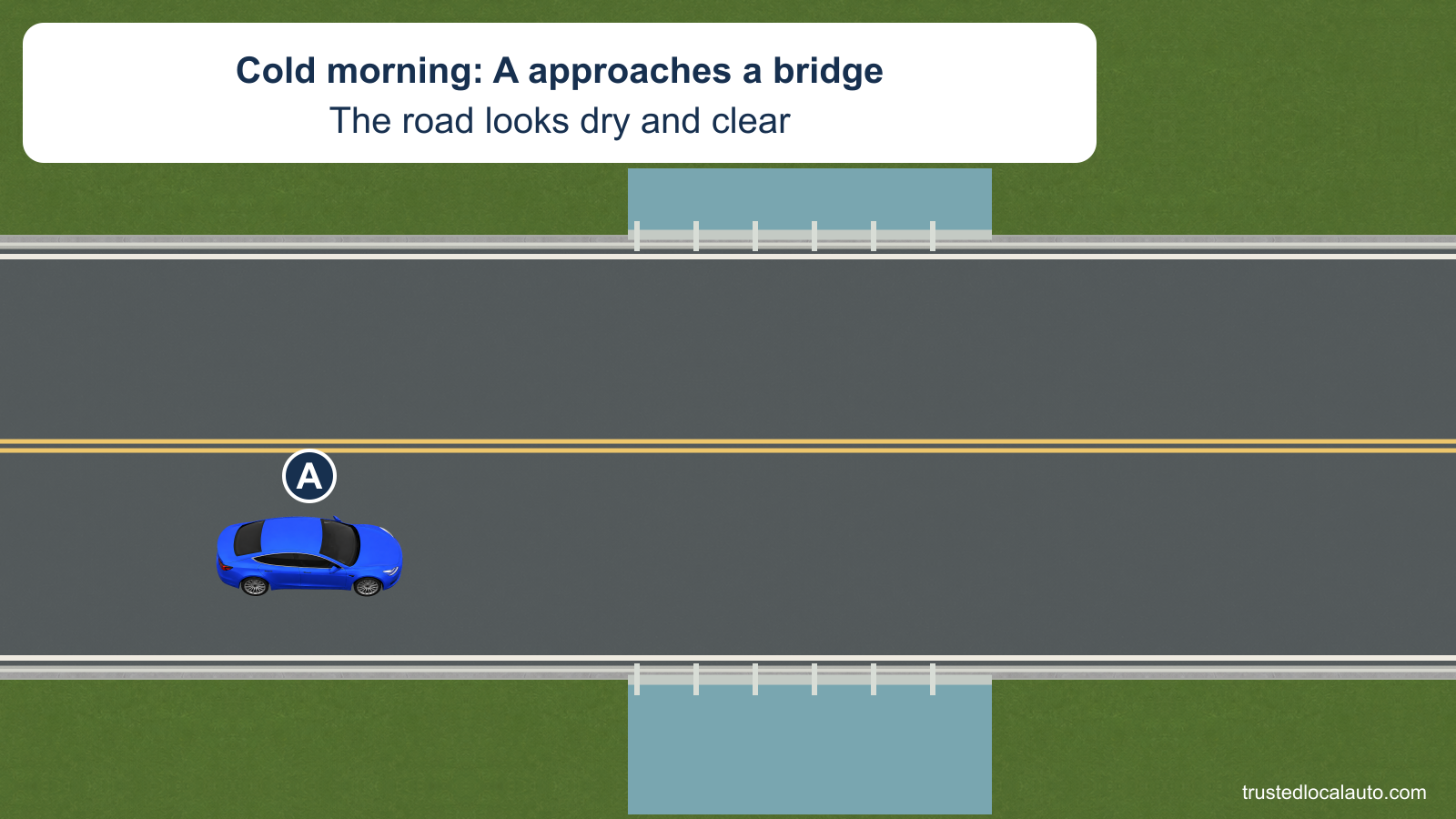
Correct answer: The bridge may have ice on it even though the rest of the road is clear.
Why
Bridges and overpasses can have ice or snow when all other pavement is clear, so slow down before you reach them and avoid sudden braking or steering on them. On snow or ice, a stop can take as much as 12 times the normal distance on dry pavement. Brake gently and smoothly, and release the brakes at the first sign that the wheels slip.
Verified against West Virginia Driver's Licensing Handbook · Snow and Sleet · p. 73, 74
Is this question correct and clear?
Continue learning
Related West Virginia questions
- Smoke and small flames come from under the hood of your car. You have pulled off the road and turned off the ignition, but the fire starts to grow. How far must everyone move from the car?
- While you drive, the engine temperature warning light comes on, and steam rises from under the hood. What should you do?
- The West Virginia handbook gives two depths of moving water on a flooded road. Which pair of depths is correct?
- On an icy road, you follow a pickup truck. The truck passes a signpost, and you reach the same post 5 seconds later. Which statement is correct?
- You drive on packed snow behind another car. Which statement is correct?
- On a dark, cloudy afternoon, the light is poor, but there is no fog, smoke or rain. You can see other vehicles clearly only about 450 feet ahead. Which statement is correct?