
Back to Connecticut
Connecticut Class D Knowledge Test
Full test preview Question 1 of 25
0 answered 25 remaining
Passing target: 80% (20/25)
Turns, Lanes, Passing & MergingStandalone practice
Where should you normally begin a right turn?
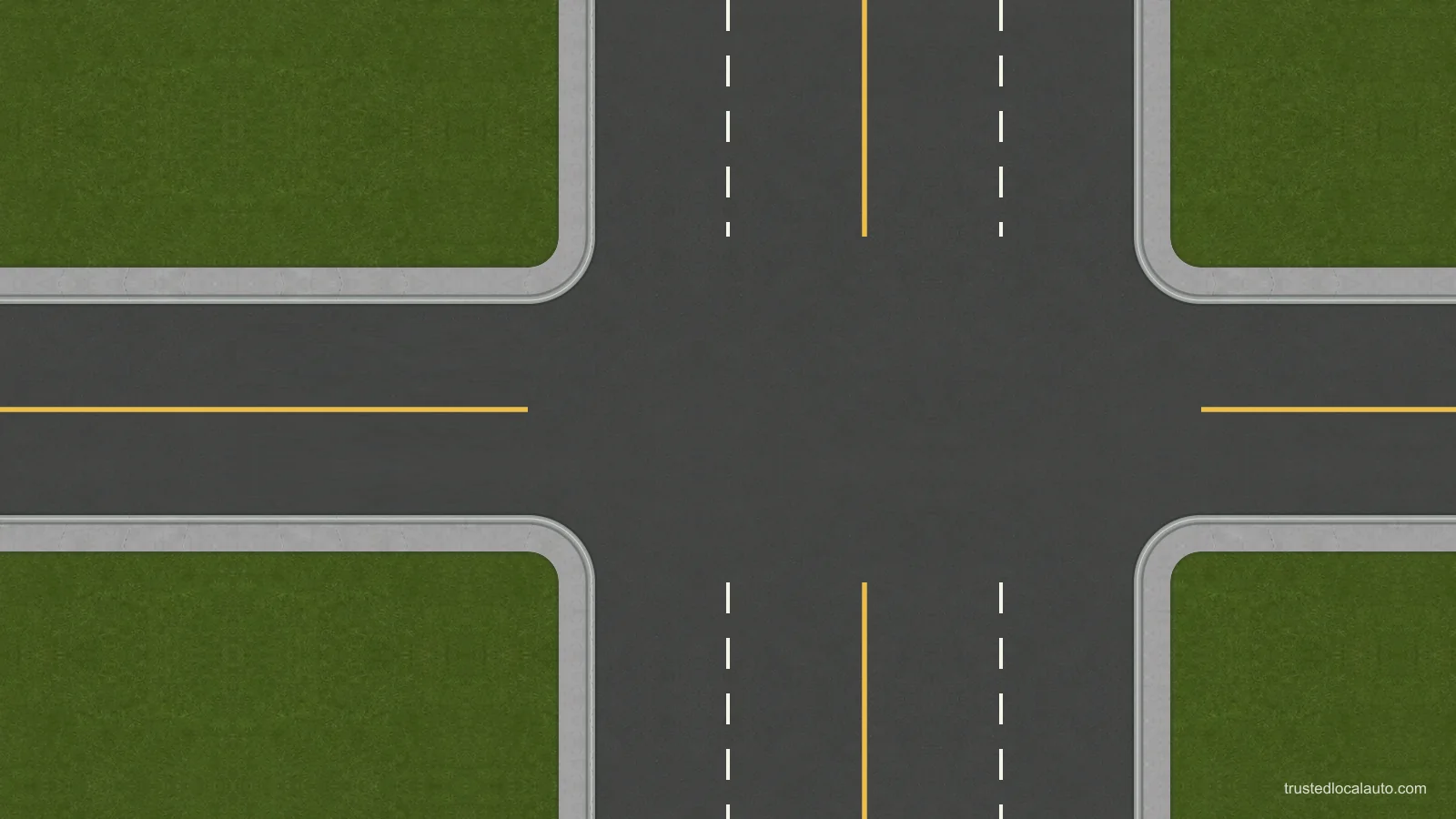
An empty two-way approach meets a crossing road with two lanes in each direction. Curbs and lane markings are visible; no car or turn path is shown.
Correct answer: As close as practical to the right curb
Why
Approach and make a right turn as close as practicable to the right curb or edge, unless signs or lane markings direct otherwise. Check for pedestrians and bicyclists on the right. Do not swing left first or cut off a bicyclist you have just passed.
Verified against Connecticut Driver's Manual · Right-turn approach lane · p. 25
Report a question issueContinue learning
Related Connecticut questions
Another vehicle is lawfully passing you. What should you do?A bicycle is ahead where a solid yellow no-passing line applies. What is required before you use Connecticut’s bicycle-passing exception?After passing another vehicle on the left, when may you return to the right lane?A driver uses the left arm to give a hand signal, with the arm bent upward. What movement does this signal indicate?On a two-way road, where should you normally position your vehicle before a left turn?A vehicle ahead signals a left turn. There is enough safe space in a lawful traveled lane to its right, without using the ordinary shoulder. May you pass on the right?