
Back to Minnesota
Minnesota Class D Knowledge Practice Test
Full test preview Question 1 of 30
0 answered 30 remaining
Passing target: 80% (24/30)
Weather, Visibility & EmergenciesStandalone practice
At 10 a.m., you drive into thick fog. You can see only about 300 feet ahead. How should you use your lights?
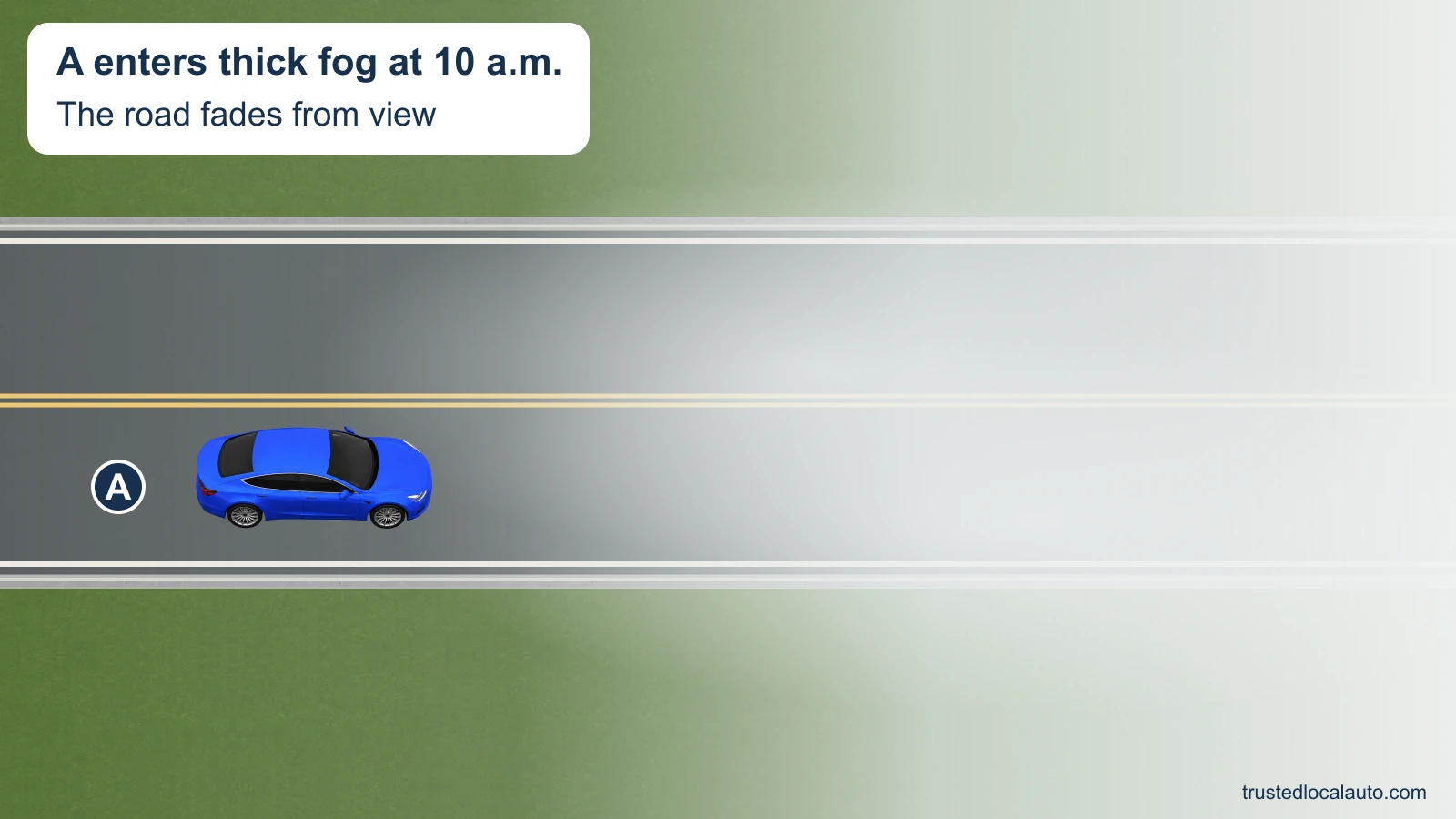
A enters thick daytime fog on a two-lane road. Markings fade ahead, and no headlight beam or stopping response is selected.
Correct answer: Turn on your headlights on low beam, and slow down so that you can stop within your view.
Why
In fog or heavy rain, reduce your speed, increase your following distance and be ready to stop. Headlights also let other drivers see your car sooner, even in daylight. If the fog gets so thick that you have no safe view ahead, leave the road and stop until you can see better.
Verified against Minnesota Driver's Manual · Driving in heavy rain or fog · p. 86, 26
Report a question issueContinue learning
Related Minnesota questions
You press the brake pedal, and it suddenly sinks all the way to the floor. The car does not slow down. What should you try first?You sit in a parked car with the engine running and the windows closed. You suddenly feel tired and dizzy, and you have a headache. What should you do?After an overnight snowfall, you scrape a clear patch on the windshield and on the driver's window. Snow and ice still cover the hood, the other windows, the headlights and the taillights. What should you clear before you drive?You are driving on a rural highway at 55 mph with cruise control on. Freezing drizzle starts, and the road surface begins to look wet and shiny. What should you do?The car ahead of you stops suddenly. You press the brake pedal hard in your car, which has anti-lock brakes (ABS). The pedal pulses under your foot, and you hear a grinding sound. What should you do?On a snowy two-lane highway, you come up behind a snowplow that spreads sand and throws up a cloud of snow. What should you do?