
Practice question, Question 1 of 25
Passing target: 80% (20/25)
You enter a freeway work zone. Traffic is still moving, but the lanes are narrower and the pavement is rough. How should you set your following distance?
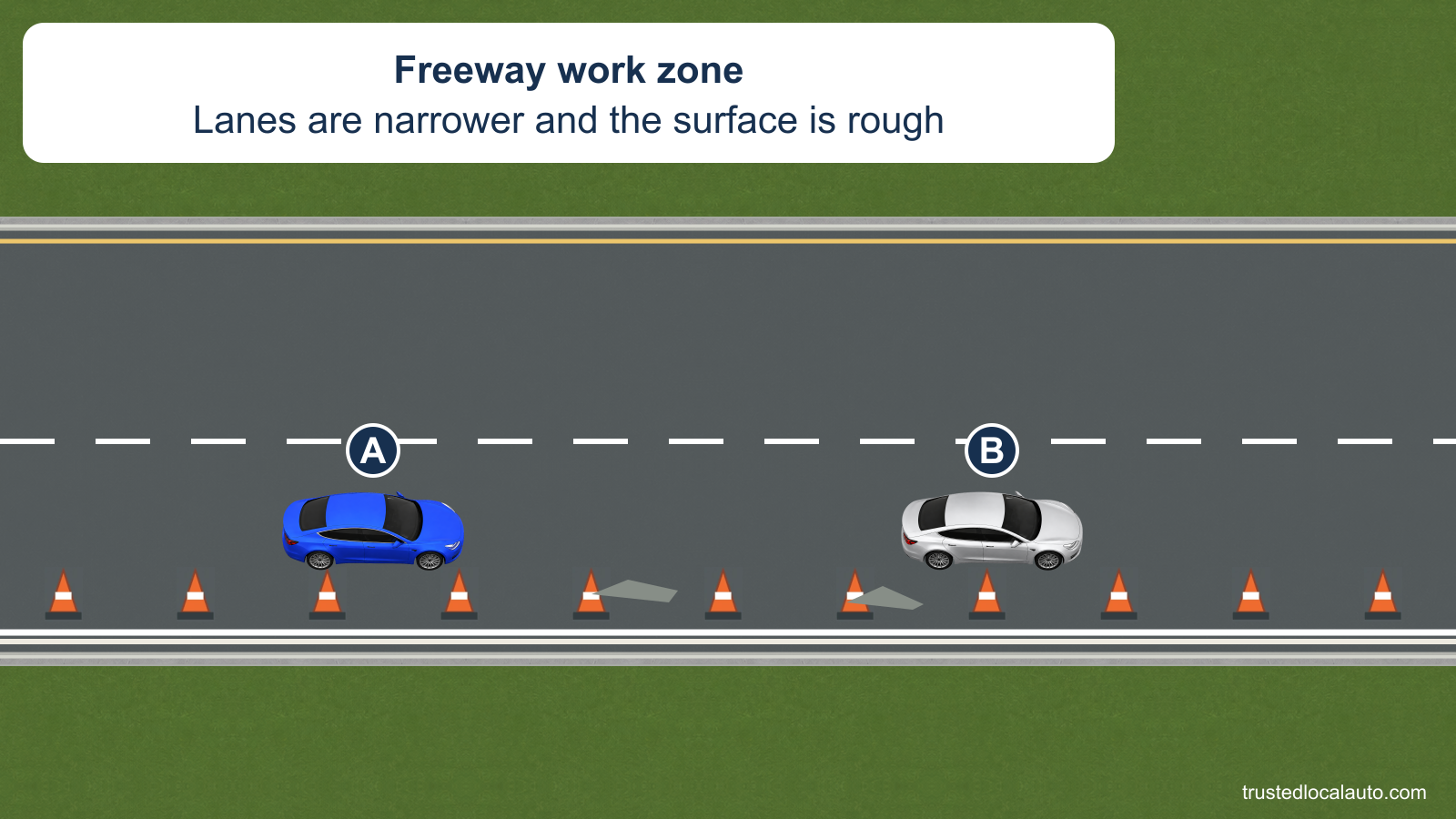
Correct answer: Leave more space than usual, because traffic ahead can stop suddenly in a work zone.
Why
Work zones combine narrow lanes, rough surfaces, equipment and people who work close to traffic, and visibility can be poor, especially at night. Nevada law requires you to slow down when special hazards exist, and the penalty for speeding can be doubled in a work zone. If you are short of time, plan another route instead of rushing through.
Verified against Official Nevada Driver Handbook · Highway Work Zones · p. 60
Is this question correct and clear?
Continue learning
Related Nevada questions
- You drive on a divided highway with a raised median between the two directions of travel. On the other side of the median, a school bus stops with its red lights flashing. Which drivers must stop for the bus?
- Your car stalls on a railroad crossing and will not restart. No train is in sight yet. What should you do first?
- A barricade and a ROAD CLOSED sign block a highway. The pavement past it looks dry and clear, and there is room to drive around the end of the barricade. What should you do?
- What does this sign tell you?
- Orange signs show that the right lane is closed ahead for road work. You are in the right lane, and traffic in the left lane is moving. What should you do?
- In a work zone, a flagger holds up a STOP paddle. You see no workers or equipment on the road ahead. What must you do?