
Newfoundland and Labrador Class 5I topic
Newfoundland and Labrador Class 5I Weather, Visibility & Emergencies
Handle darkness, poor weather, loss of traction, breakdowns, collisions and emergencies.
21 questions, free with an account. 6 of them are hard. Each one has its answer, an explanation and its official source.
- 5 picture questions
- 16 text questions
- 6 of them hard
5 picture questions
Questions in this topic
Select a question to answer it. The answer and the explanation show after you answer.
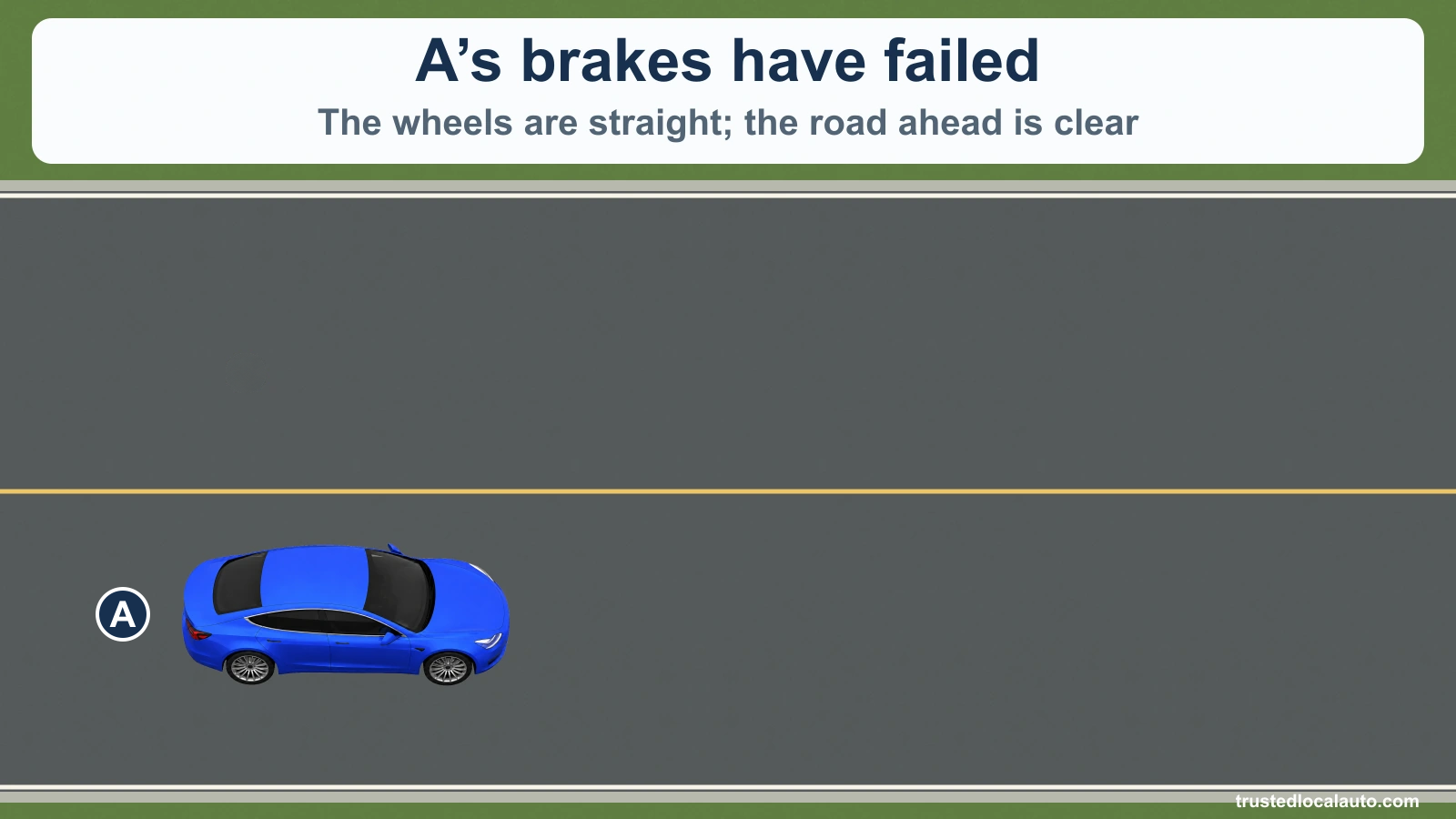 Brake FailureThe brakes have failed while the wheels are straight and the road ahead is clear. What can help bring the vehicle to a controlled stop?Try this question
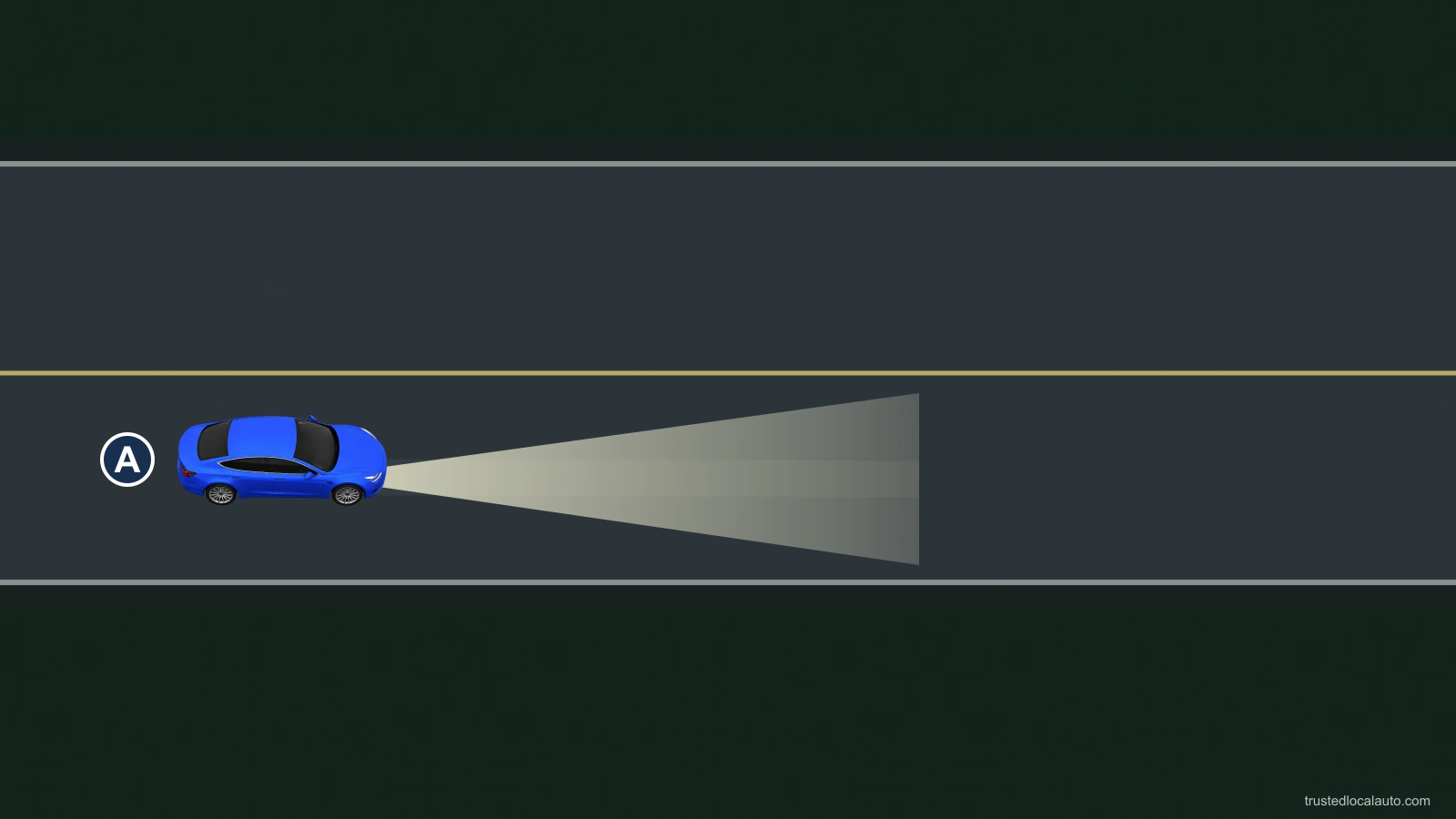 Overdrive HeadlightsWhat does it mean to overdrive your headlights?Try this question
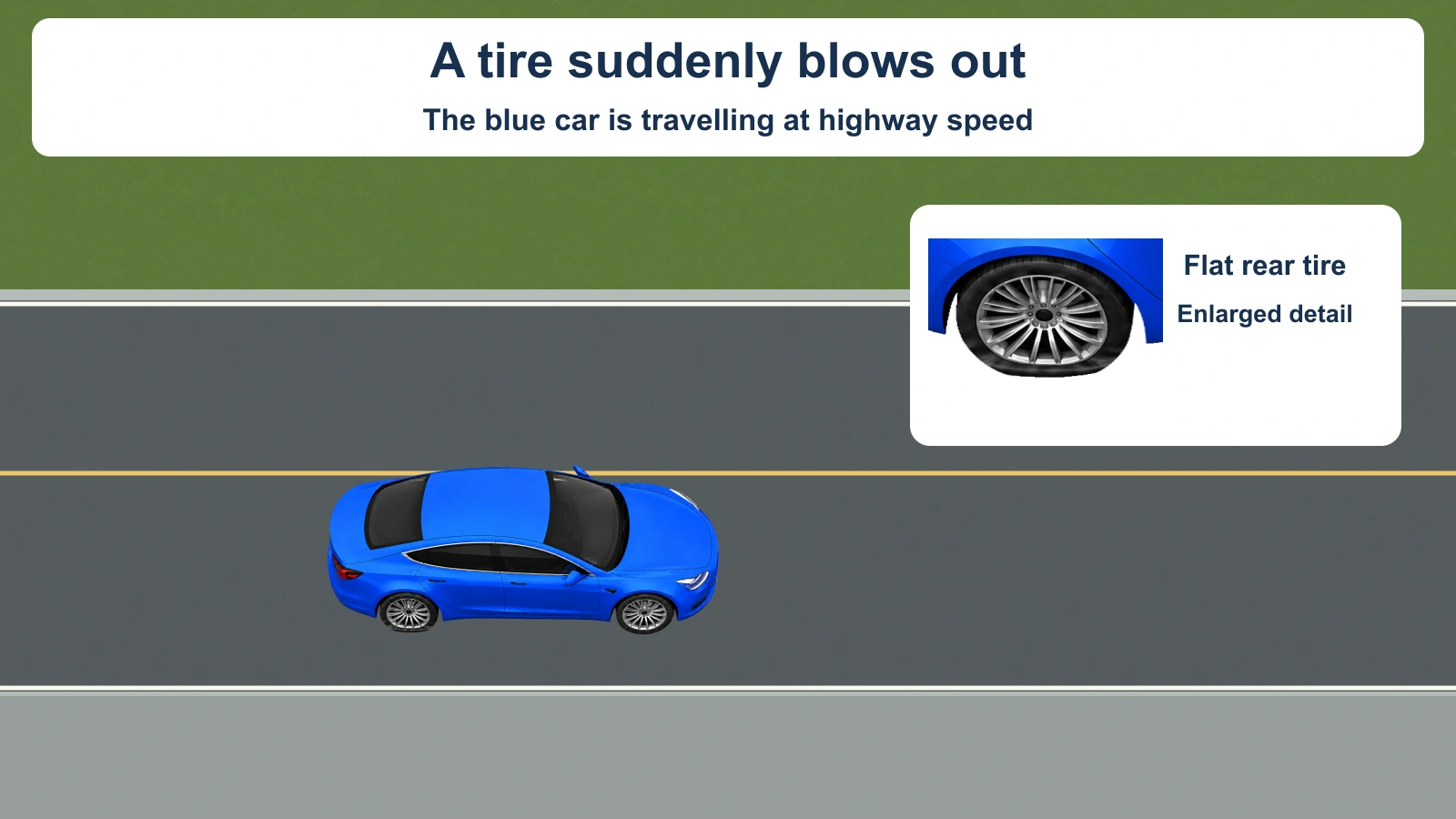 Tire BlowoutWhat should a driver do during a tire blowout?Try this question
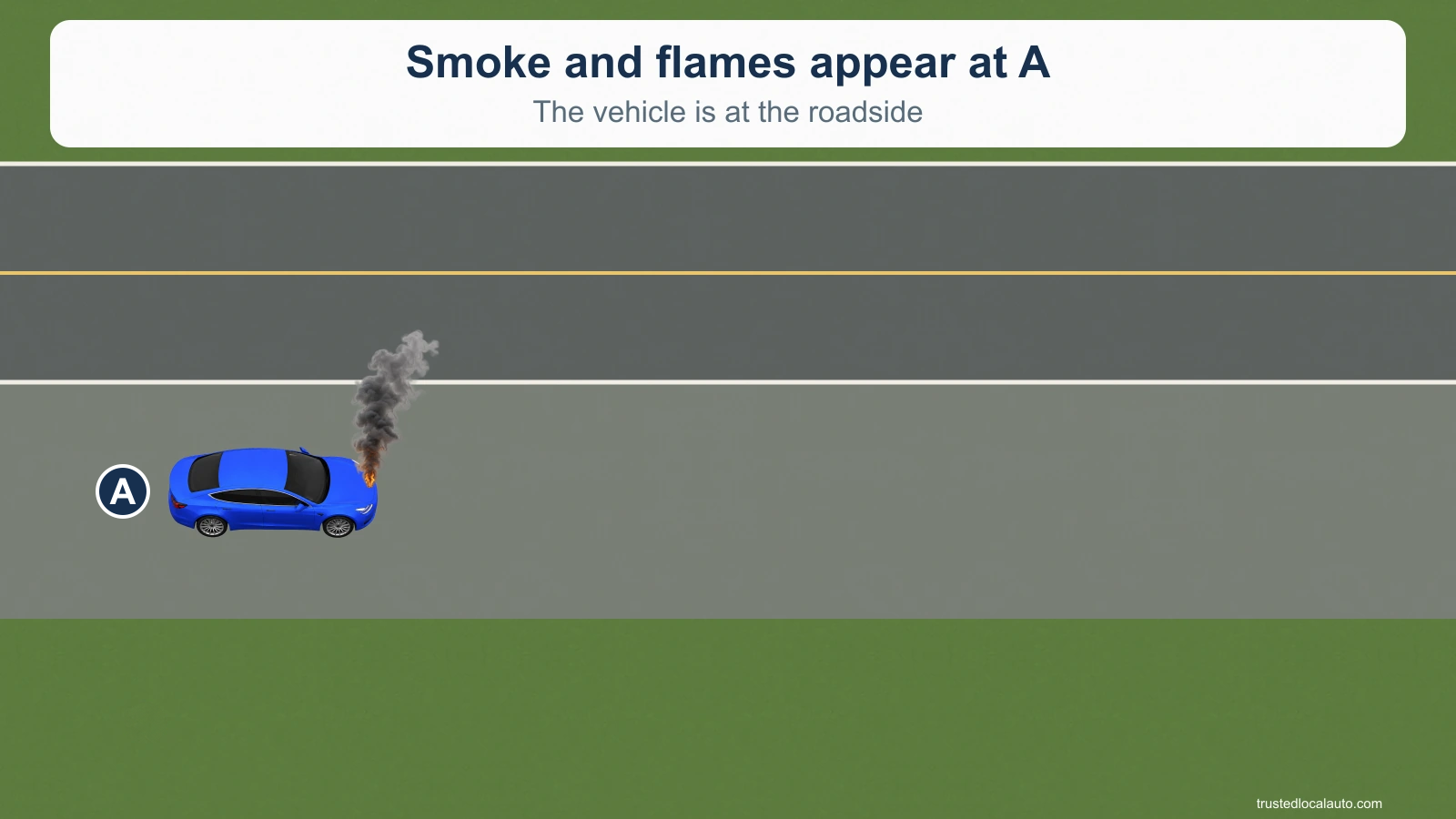 Vehicle FireA vehicle has stopped safely and smoke or flames indicate a fire. What should the occupants do?Try this question
- Failed brakes: what helps you stop HardYour brakes have failed. The wheels are straight and the road ahead is clear. What can help bring the car to a controlled stop?Try this question
16 text questions
More questions in this topic
- If you arrive first to help at a collision scene, where should you stop your vehicle?
- What is the first principle for handling a driving emergency?
- Why should a driver carry basic emergency supplies on a longer trip?
- When should high beams be dimmed for other traffic?
- If hard braking locks wheels on a vehicle without ABS, what should the driver do?
- What should a driver do first in a power skid?
- How should a driver adapt to heavy rain?
- What helps reduce ejection risk in a rollover?
- Which choice helps prevent a single-vehicle run-off-road collision?
- What is a sound way to prepare for a long trip?
- What tire setup improves balanced handling in severe winter conditions?
- Your car has working anti-lock brakes (ABS). In an emergency on a wet road, you must brake hard. How should you use the brake pedal? Hard
- At night on a two-lane road where passing is permitted, you come up behind a slower car. No vehicle comes toward you. You signal, move out, and overtake and pass the car. Which statement about your headlights is correct? Hard
- For a long trip, the handbook gives two numbers: the most hours to drive in one day, and how often to take a break. Which pair matches its advice? Hard
- At night, your high beams are on. The law sets one distance for an oncoming vehicle and one for a vehicle you follow. Within these distances, you must use low beams. Which pair of distances is correct? Hard
- On a slippery road, your car goes into a power skid: the drive wheels spin and the car starts to slide. What should you do first? Hard
Newfoundland and Labrador Class 5I
More Class 5I topics
Road rules · 11 topics
- Licensing & Test Readiness34 questions
- Observation, Speed & Space13 questions
- Intersections & Right-of-Way9 questions
- Turns, Lanes, Passing & Merging13 questions
- Parking, Reversing & Roadside Stops9 questions
- Sharing the Road10 questions
- Freeways & High-Speed Roads9 questions
- School Zones, Railways & Work Areas1 question
- Weather, Visibility & Emergencies21 questions · This topic
- Vehicle Safety, Documents & Towing16 questions
- Safe & Responsible Driving17 questions
Road signs · 1 topic
Each question page shows the answer, the explanation and the official source of the question.