
Back to Ontario
Ontario G1 Practice Test
Full test preview Question 1 of 40
0 answered 40 remaining
Passing target: 16 correct signs and 16 correct rules (TLA practice targets)
Turns, roundabouts, reversing and turning aroundStandalone practice
What is the proper hand signal to indicate that you are slowing down or stopping?
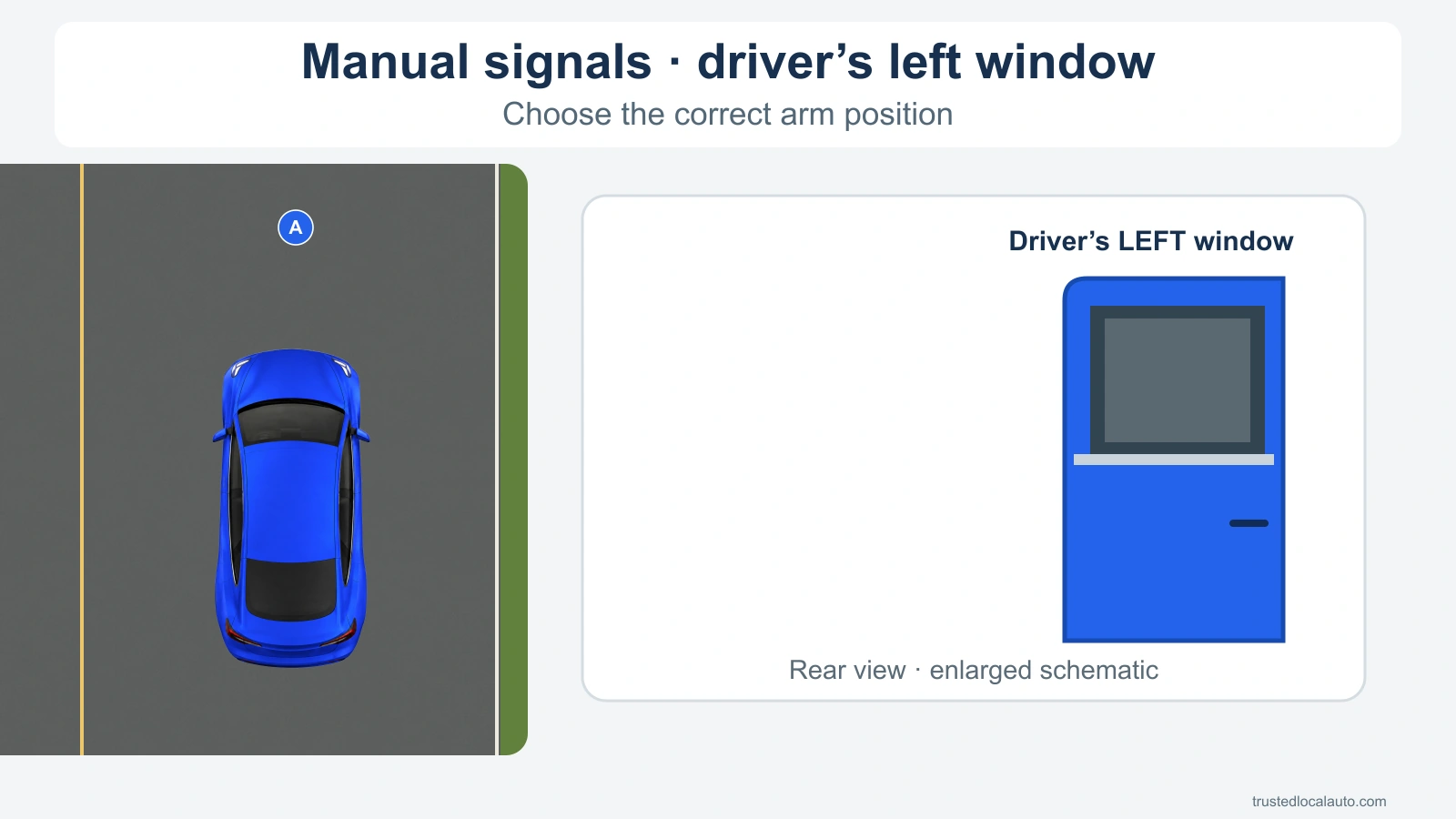
A north-facing blue car on an ordinary two-way road. A separate labelled enlargement locates the driver’s left window, viewed from behind; no manual signal is shown yet.
Correct answer: Left arm out, bent downward at the elbow.
Why
Extending your left arm out the window and pointing it downward indicates to other drivers that you are slowing down or coming to a stop.
Verified against The Official Ministry of Transportation (MTO) Driver’s Handbook · Stop, yield and regulatory signs · p. 107, 114
Report a question issueContinue learning
Related Ontario questions
After entering a multi-lane roundabout, what should you do?When approaching a multi-lane roundabout, which rule applies regarding right-of-way?You are behind a motorcycle or bicycle that is turning left at an intersection. What should you do?According to the MTO handbook, how far should you be able to see in both directions before making a U-turn at an otherwise permitted location?What should you do as you leave a roundabout?When making a left turn from a two-way street onto another two-way street, where should your vehicle begin its turn?