
Back to Ontario
Ontario G1 Practice Test
Full test preview Question 1 of 40
0 answered 40 remaining
Passing target: 16 correct signs and 16 correct rules (TLA practice targets)
Night, weather, skids, vehicle failures and collisionsStandalone practice
When driving in heavy rain, your tires may ride on top of a thin layer of water. This is called 'hydroplaning.' If this happens, you should:
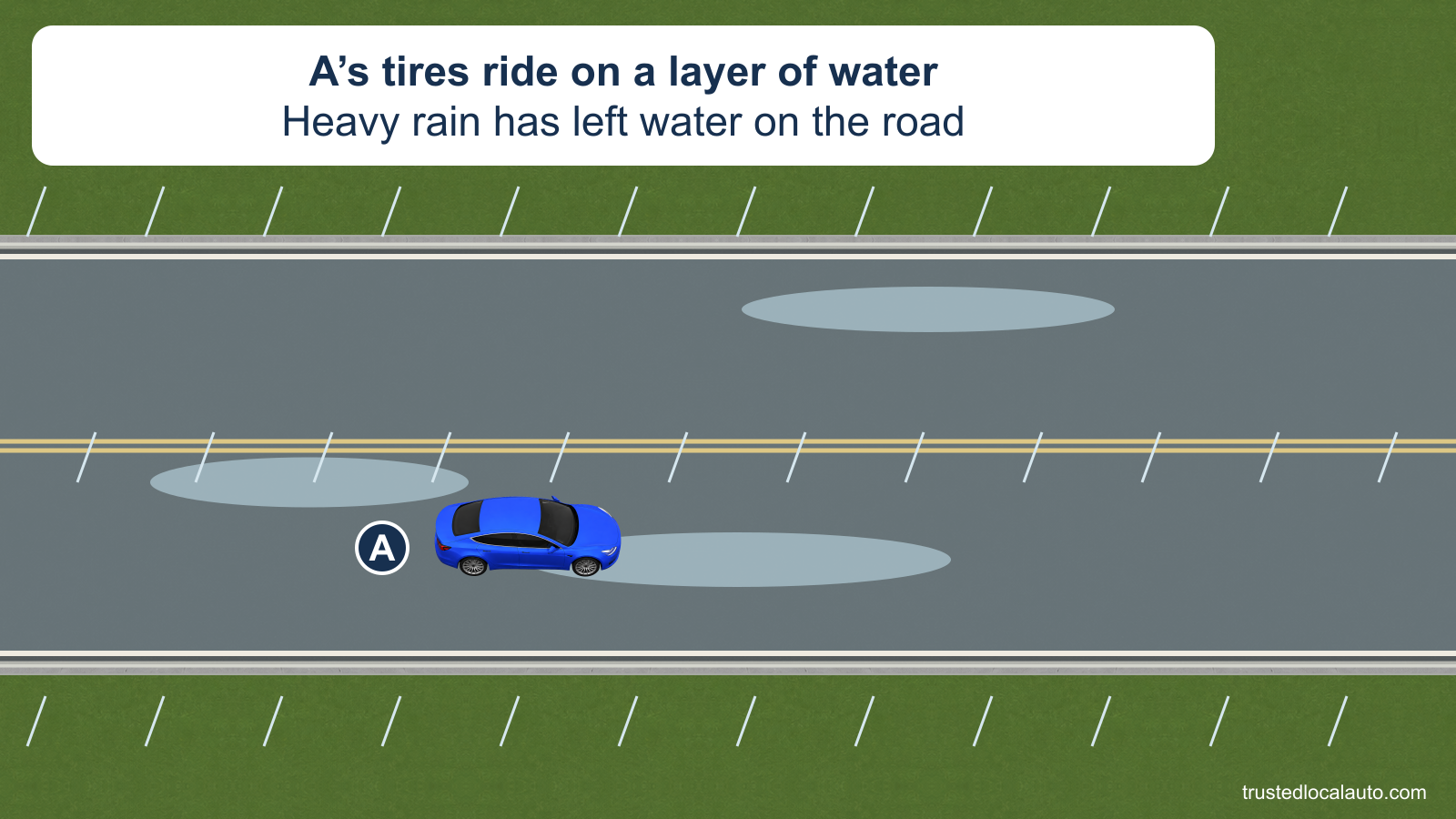
Blue A travels to the right on a wet two-way road in heavy rain. Pools of water are visible. No recovery path or pedal action appears.
Correct answer: Ease off the gas and steer where you want to go.
Why
Hydroplaning causes a complete loss of traction. You should ease your foot off the gas, avoid hard braking, and steer smoothly until the tires regain contact with the road.
Verified against The Official Ministry of Transportation (MTO) Driver’s Handbook · Night, weather, skids, vehicle failures and collisions · p. 93, 103
Report a question issueContinue learning
Related Ontario questions
Before driving, how should you position an adjustable head restraint to help reduce the risk of whiplash in a rear-end collision?A deer suddenly enters your lane and you cannot stop before reaching it. What should you do immediately?When approaching an oncoming vehicle at night, when must you switch your headlights from high beams to low beams?You are in the right lane of a highway with two lanes in your direction. An ambulance is stopped on the right shoulder at a collision scene, with red lights flashing. What should you do?Aside from the time of day, under what visibility condition must you turn on your headlights?If you become stranded in severe winter weather, what is the safest choice?