
Practice question, Question 1 of 40
Passing target: 75% in each of the three areas
The road is wet and visibility is reduced. Compared with good conditions, what should the blue car's driver do with the following gap?
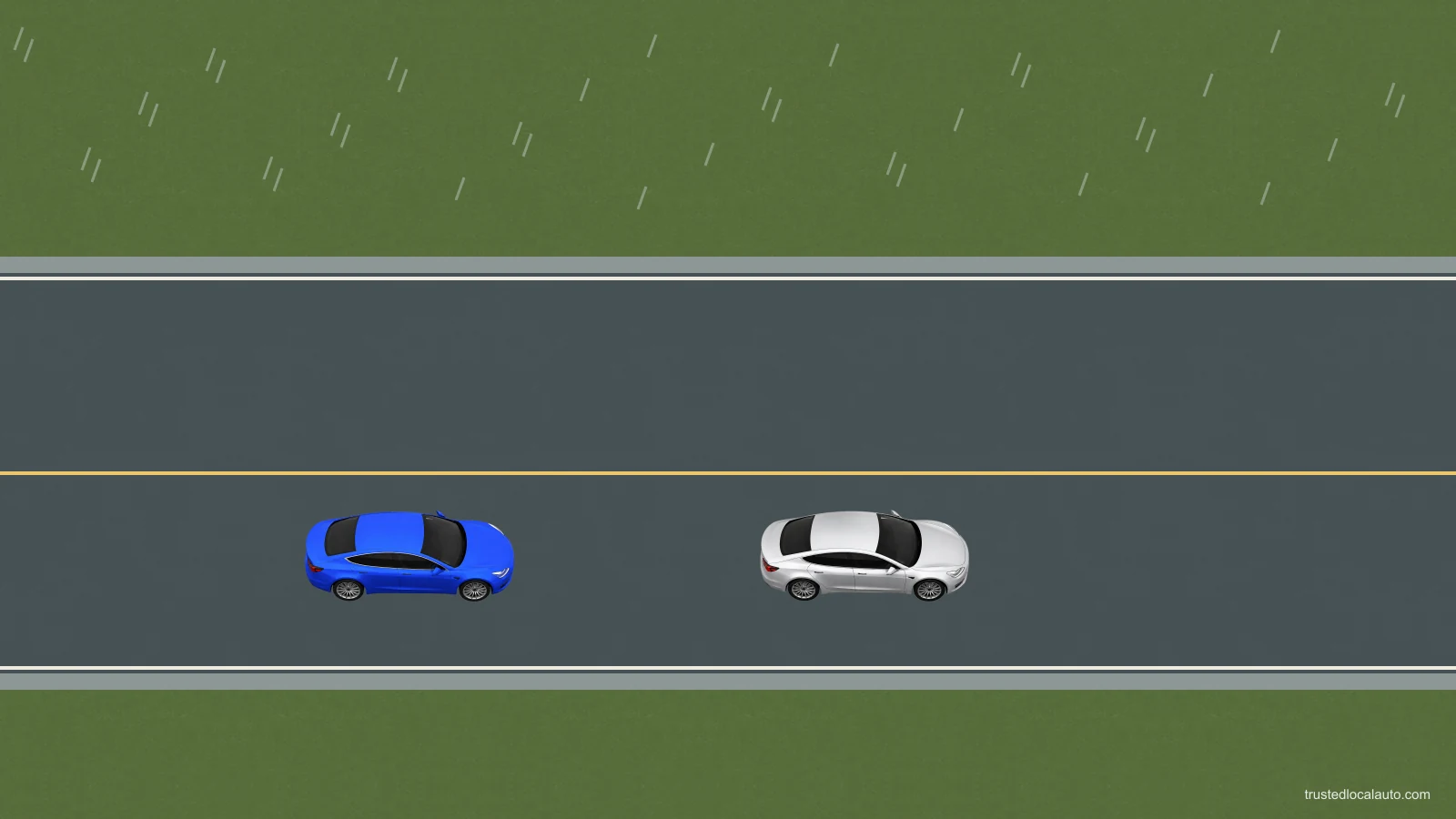
Correct answer: Increase it to allow more time to see, react and stop.
Why
Poor visibility and reduced tire grip are reasons to slow down and leave more time and space ahead. A larger gap helps you detect braking sooner and respond more smoothly. Increase it as conditions worsen; do not treat one fixed interval as sufficient for every wet, snowy or icy road.
Verified against Driving a Passenger Vehicle · Observation, speed and space · p. 124, 125, 127
Is this question correct and clear?
Continue learning
Related Quebec questions
- What should you remember about the windshield pillars when checking an intersection?
- The blue car's driver wants to move into the lane on the left. After checking the mirrors, what additional check is needed before moving?
- What message do a vehicle's brake lights give road users behind it?
- When should you activate the turn signal for a planned turn or lane change?
- A developing hazard ahead may require you to stop. What does the driving technique called covering the brake involve?
- A developing hazard ahead may require you to stop. You decide to cover the brake. What do you do with your foot?