
Quebec Class 5 topic
Quebec Class 5 Observation, Speed & Space
Build safe scanning, speed choice, following distance, hazard awareness and communication habits.
27 questions, free with an account. 7 of them are hard. Each one has its answer, an explanation and its official source.
- 6 picture questions
- 21 text questions
- 7 of them hard
6 picture questions
Questions in this topic
Select a question to answer it. The answer and the explanation show after you answer.
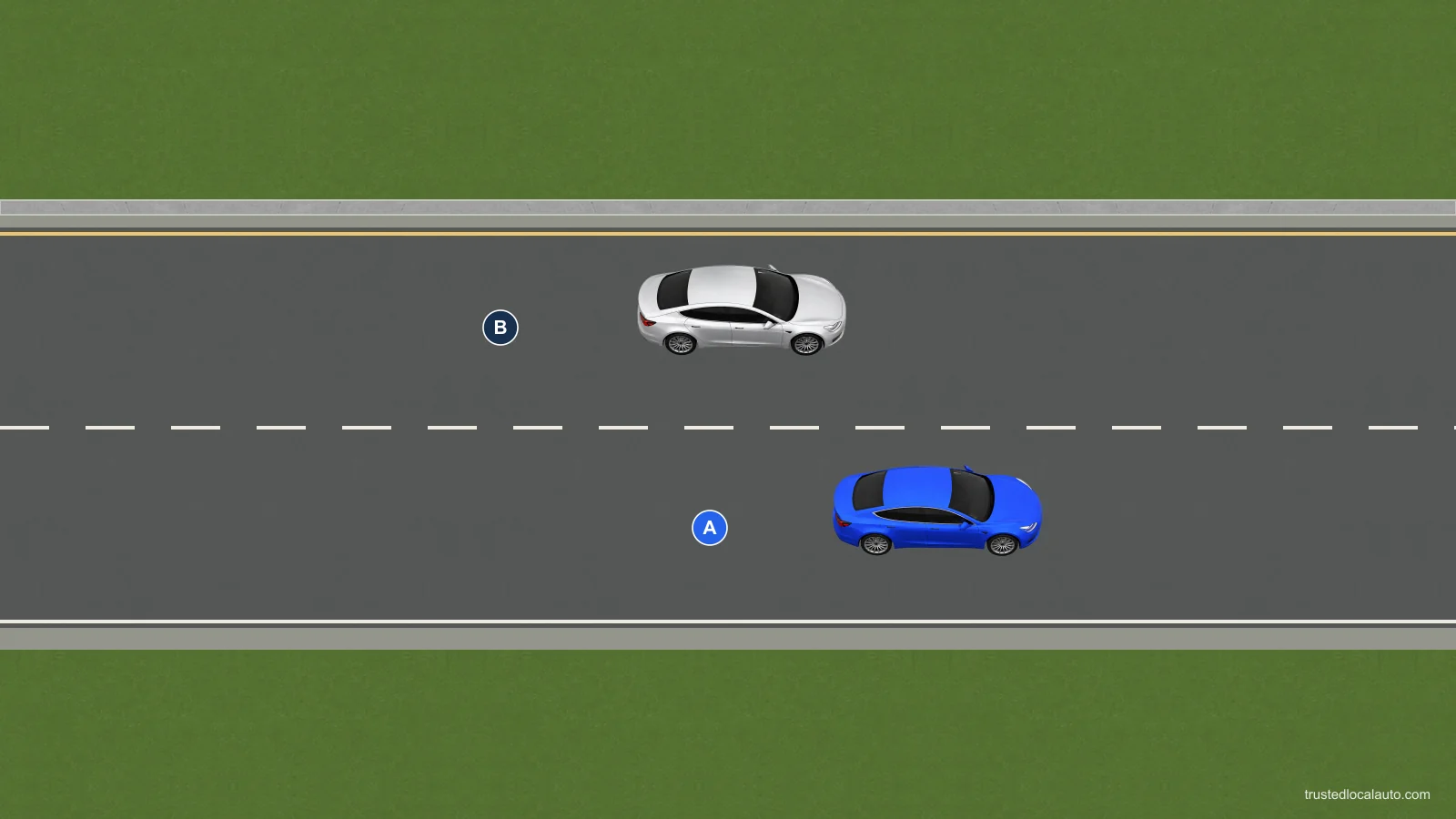 Before Moving to Another LaneThe blue car's driver wants to move into the lane on the left. After checking the mirrors, what additional check is needed before moving?Try this question
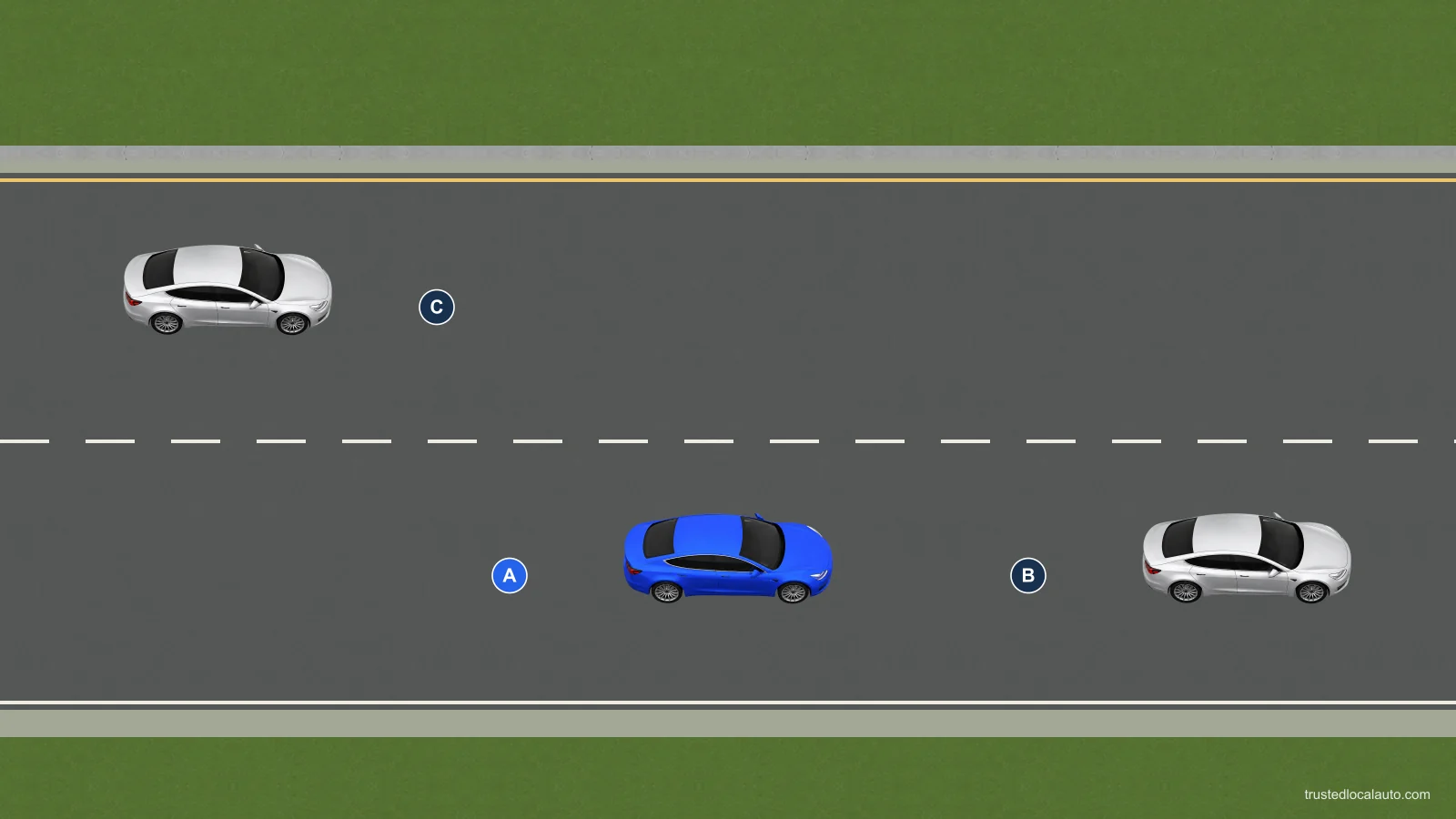 Space Around Your VehicleWhy should you keep track of open space around your vehicle as traffic changes?Try this question
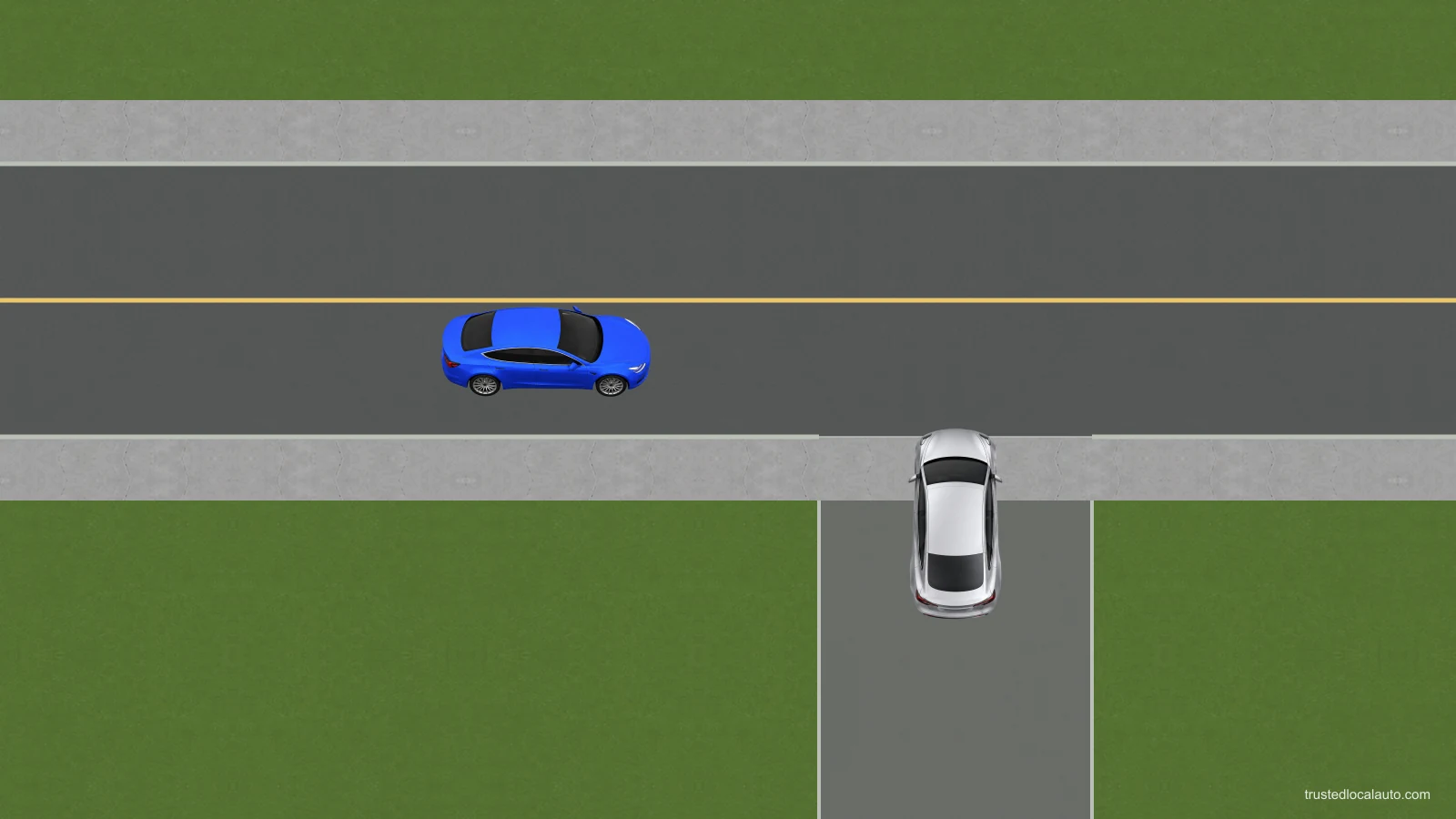 Communicating with the HornA driver emerging from a driveway may not have seen the approaching blue car. Which use of the horn is appropriate?Try this question
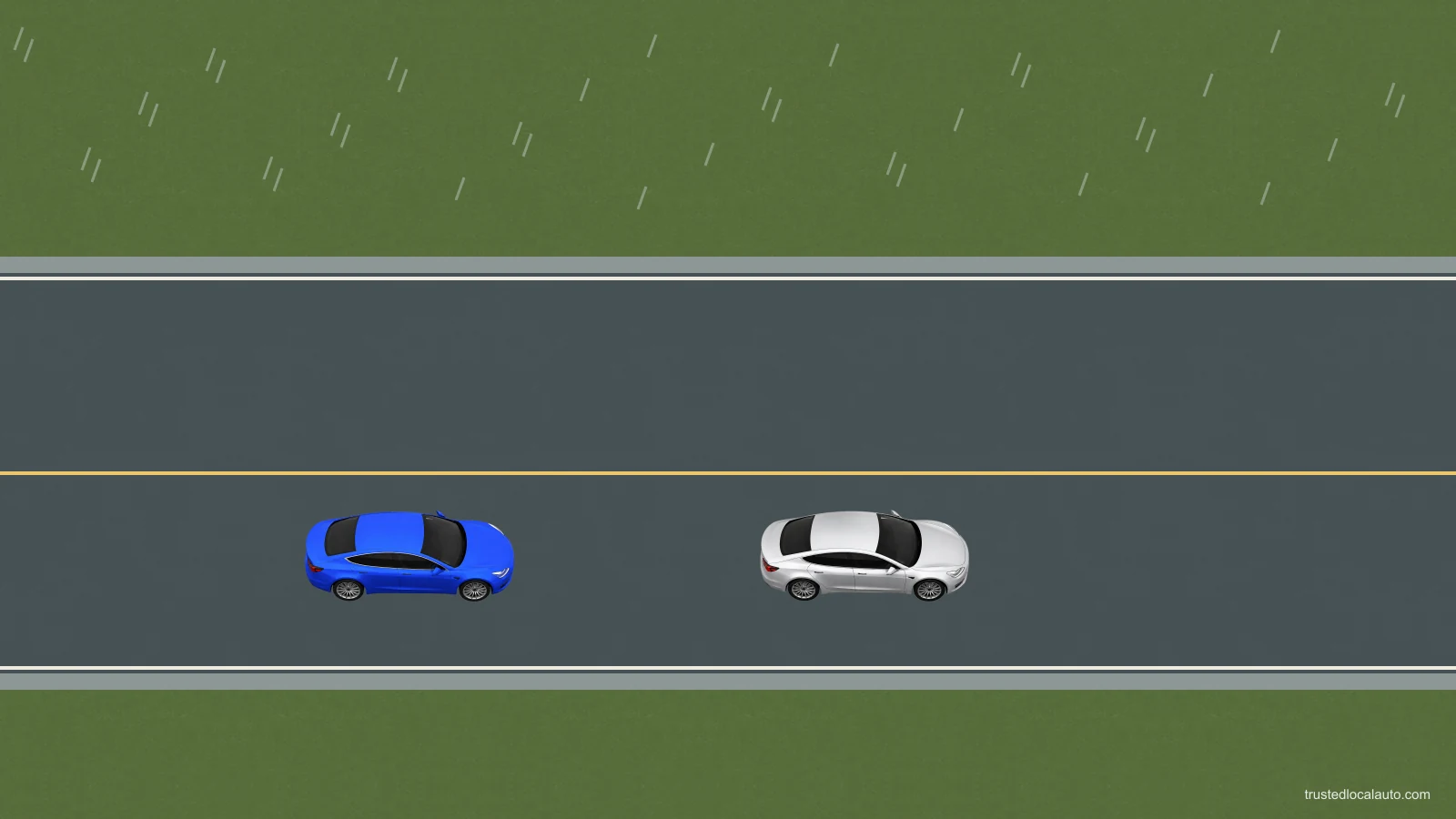 Following Traffic in RainThe road is wet and visibility is reduced. Compared with good conditions, what should the blue car's driver do with the following gap?Try this question
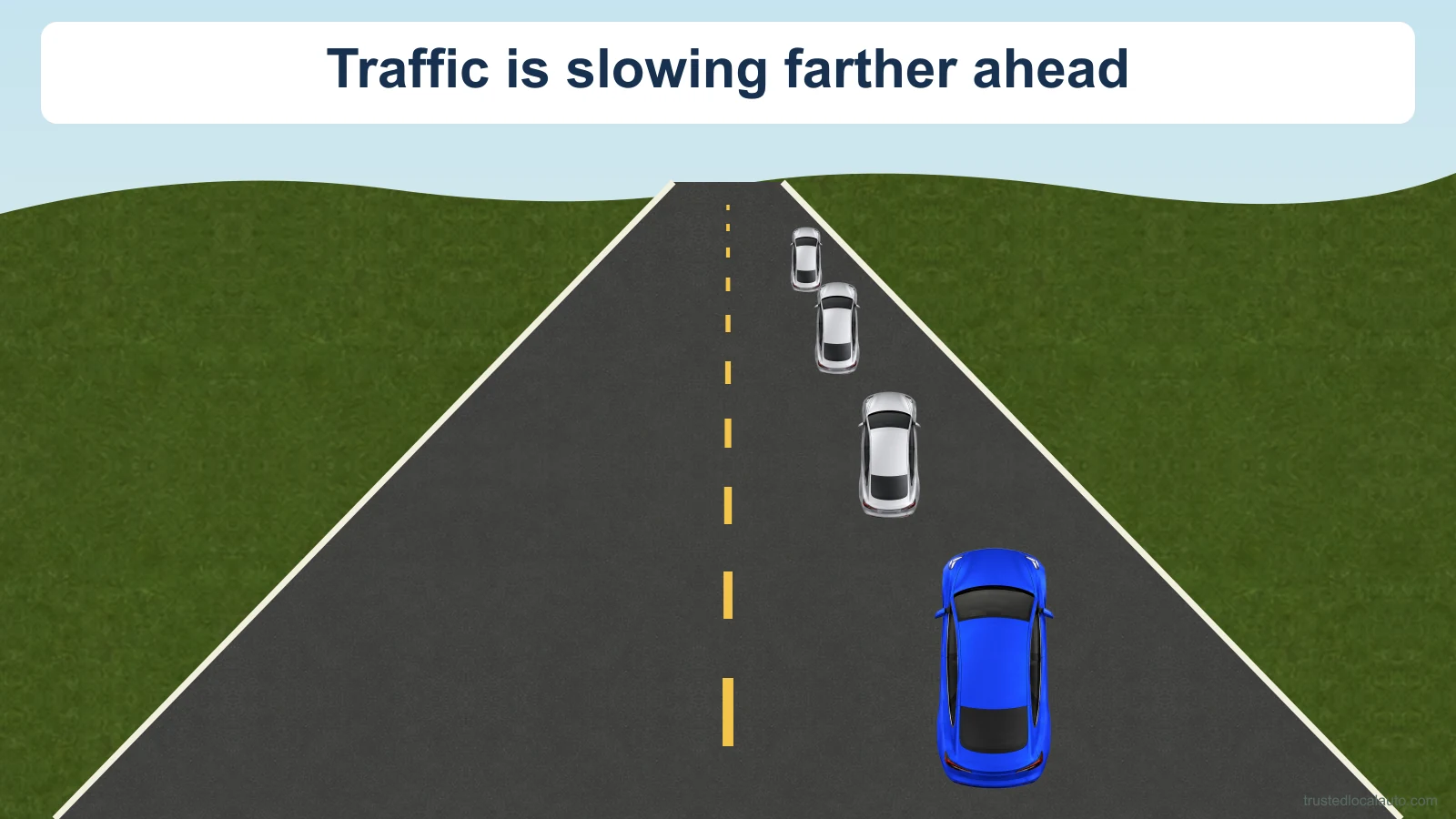 Reading the Road AheadTraffic is slowing well ahead of the blue car. Why should its driver look beyond the nearest vehicle?Try this question
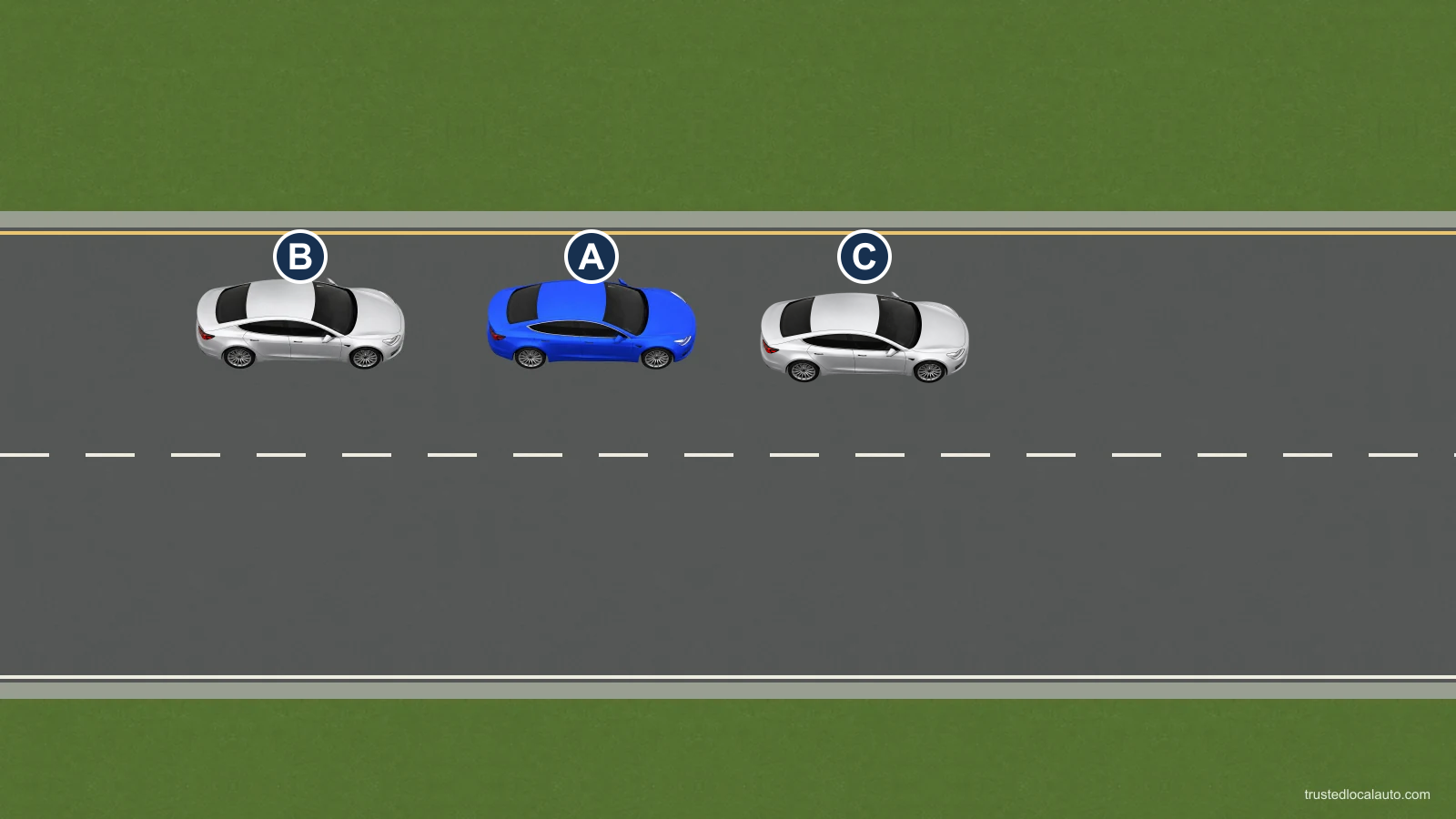 When a Driver Follows CloselyAnother driver is following your vehicle too closely. Which response gives you a safer margin?Try this question
21 text questions
More questions in this topic
- What should you remember about the windshield pillars when checking an intersection?
- What message do a vehicle's brake lights give road users behind it?
- When should you activate the turn signal for a planned turn or lane change?
- A developing hazard ahead may require you to stop. What does the driving technique called covering the brake involve?
- Why is a following gap often measured in seconds rather than one fixed distance in metres?
- Besides lighting the road, how can using appropriate low-beam headlights help as daylight fades?
- Why should you check your mirrors regularly, including before slowing, stopping or changing direction?
- Which sequence does SAAQ teach for responding to a changing driving situation?
- The posted speed limit has not changed, but rain has reduced visibility and made the road slippery. What should you do?
- While scanning a busy road, which information deserves your attention for safe driving?
- For the same vehicle mass, what happens to kinetic energy when speed doubles?
- When stopped in a queue, why should you leave space between your vehicle and the one ahead?
- Which three parts make up the total stopping distance described by SAAQ?
- What is the best way to anticipate what another road user may do next?
- A developing hazard ahead may require you to stop. You decide to cover the brake. What do you do with your foot? Hard
- A driver measures the following gap in seconds, not as a fixed distance in metres. Which statement is correct? Hard
- The same car, with the same mass, speeds up from 50 km/h to 100 km/h. What happens to its kinetic energy? Hard
- Which statement about total stopping distance is NOT correct? Hard
- You are stopped in a queue behind another vehicle. About how much space does SAAQ recommend between your vehicle and the one ahead? Hard
- For one vehicle with the same mass, which statement about speed and energy is NOT correct? Hard
- Two side roads on the right are close together. You will turn right at the second one. When should you switch on your right turn signal? Hard
Quebec Class 5
More Class 5 topics
Road rules · 11 topics
- Licensing & Test Readiness30 questions
- Observation, Speed & Space27 questions · This topic
- Intersections & Right-of-Way26 questions
- Turns, Lanes, Passing & Merging26 questions
- Parking, Reversing & Roadside Stops27 questions
- Sharing the Road28 questions
- Freeways & High-Speed Roads28 questions
- School Zones, Railways & Work Areas28 questions
- Weather, Visibility & Emergencies26 questions
- Vehicle Safety, Documents & Towing28 questions
- Safe & Responsible Driving29 questions
Each question page shows the answer, the explanation and the official source of the question.