
Practice question, Question 1 of 50
Passing target: 80% (40/50)
At night, the rented moving truck that you drive (96 inches wide) breaks down in its lane on a two-lane rural highway. It will be there for more than 10 minutes. You turn on the hazard lights and put one reflector beside the truck toward the nearest traffic. Where do the next warning devices go?
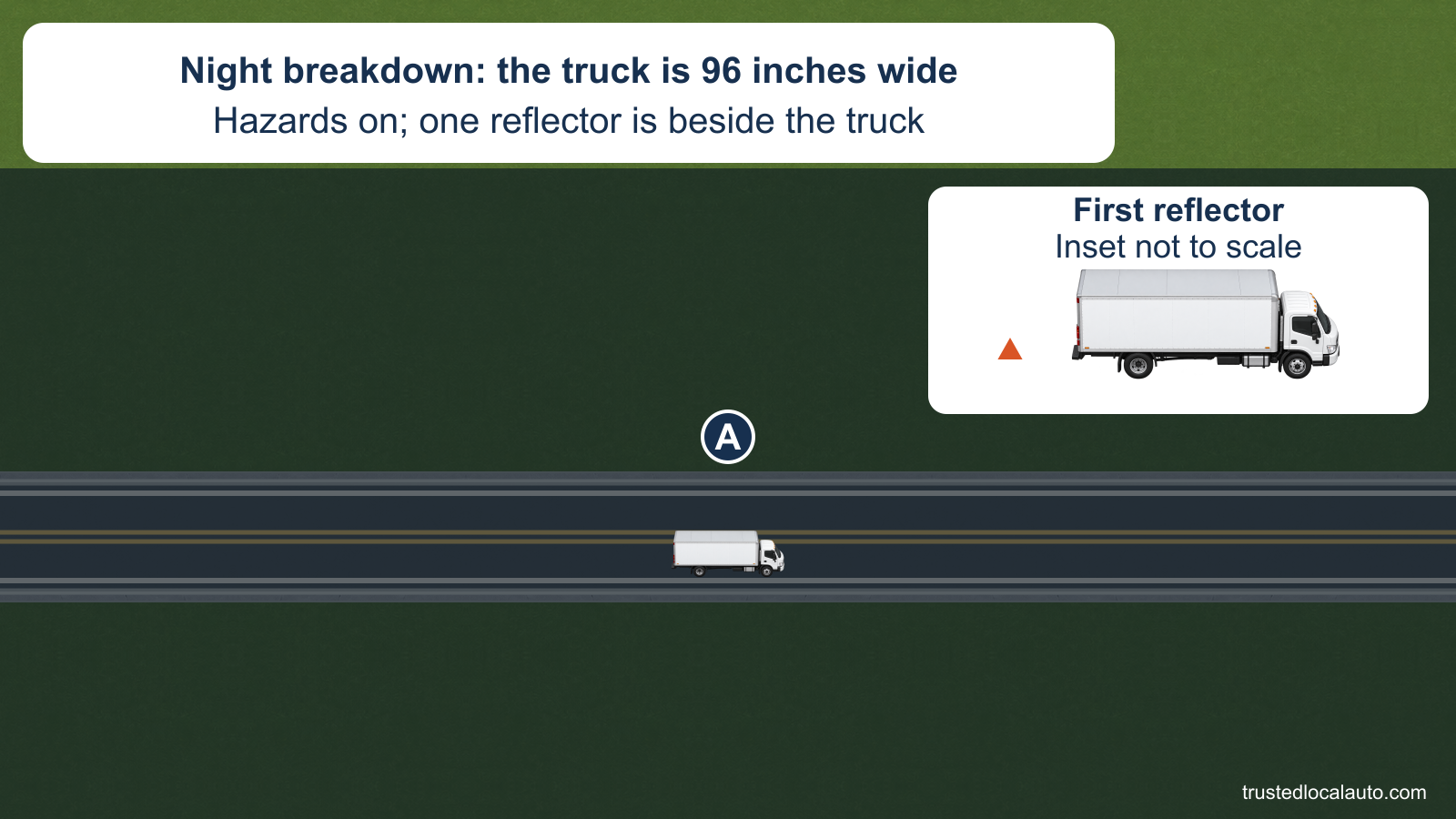
Correct answer: About 100 feet ahead and 100 feet behind the truck, in the center of your lane
Why
Many crashes happen because drivers do not see a stopped vehicle until it is too late. The same rules apply to trucks, buses and trailers that are 80 inches or more wide or 30 feet or more long. Near a curve or hilltop, place the device in that direction far enough back to give good warning, but not more than 500 feet away. If the vehicle is completely off the road, put the devices on the shoulder near the edge of the road.
Verified against Utah Driver Handbook · Section 16: Towing - Placement of Warning Devices · p. 103
Is this question correct and clear?
Continue learning
Related Utah questions
- When you start your car for a trip, the red brake warning light stays on, and the brake pedal feels softer than usual. What should you do?
- You adjust the driver's seat before a trip. The steering wheel has an air bag. How should you sit?
- You drive your 7-year-old nephew, who is 58 inches tall, to school. What does Utah law require for him?
- You drive your 7-year-old nephew to a park. He is 50 inches tall. Which Utah rule applies to him?
- You drive your 7-year-old niece to school. She is exactly 57 inches tall. Which statement about Utah law is correct?
- Your new car has blind-spot warning and lane-keeping assistance. You want to change lanes on the freeway, and the blind-spot warning light is off. What should you do?