
Alberta Class 7 topic
Alberta Class 7 Observation, Speed & Space
Build safe scanning, speed choice, following distance, hazard awareness and communication habits.
44 questions, free with an account. 13 of them are hard. Each one has its answer, an explanation and its official source.
- 1 picture question
- 7 situation questions
- 36 text questions
- 13 of them hard
1 picture question
Pictures in this topic
Select a question to answer it. The answer and the explanation show after you answer.
7 situation questions
Situations on the road
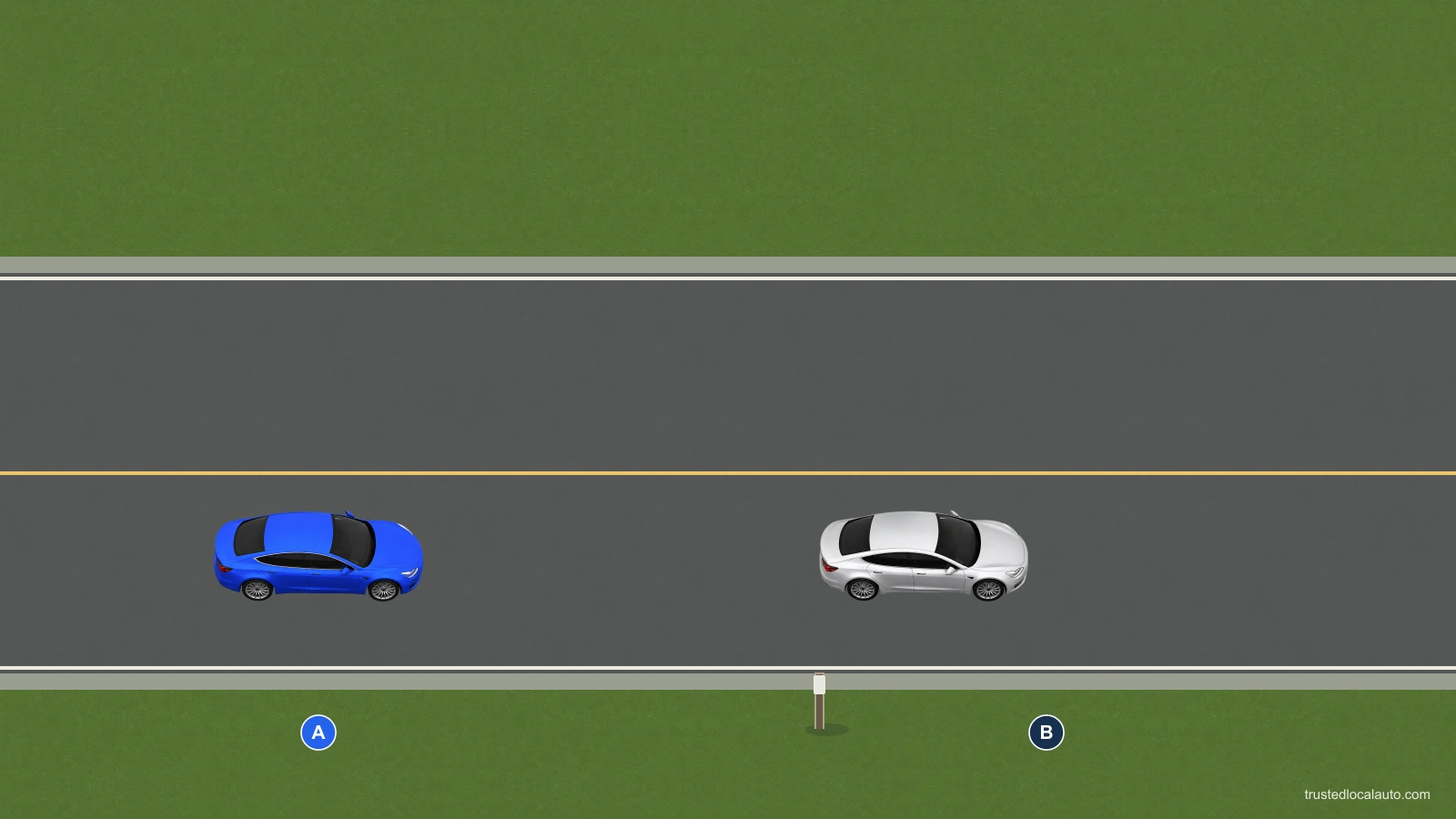 Normal passenger-car following intervalFor an ordinary passenger car in normal road and weather conditions, what minimum following time does Alberta’s guide recommend?Try this question
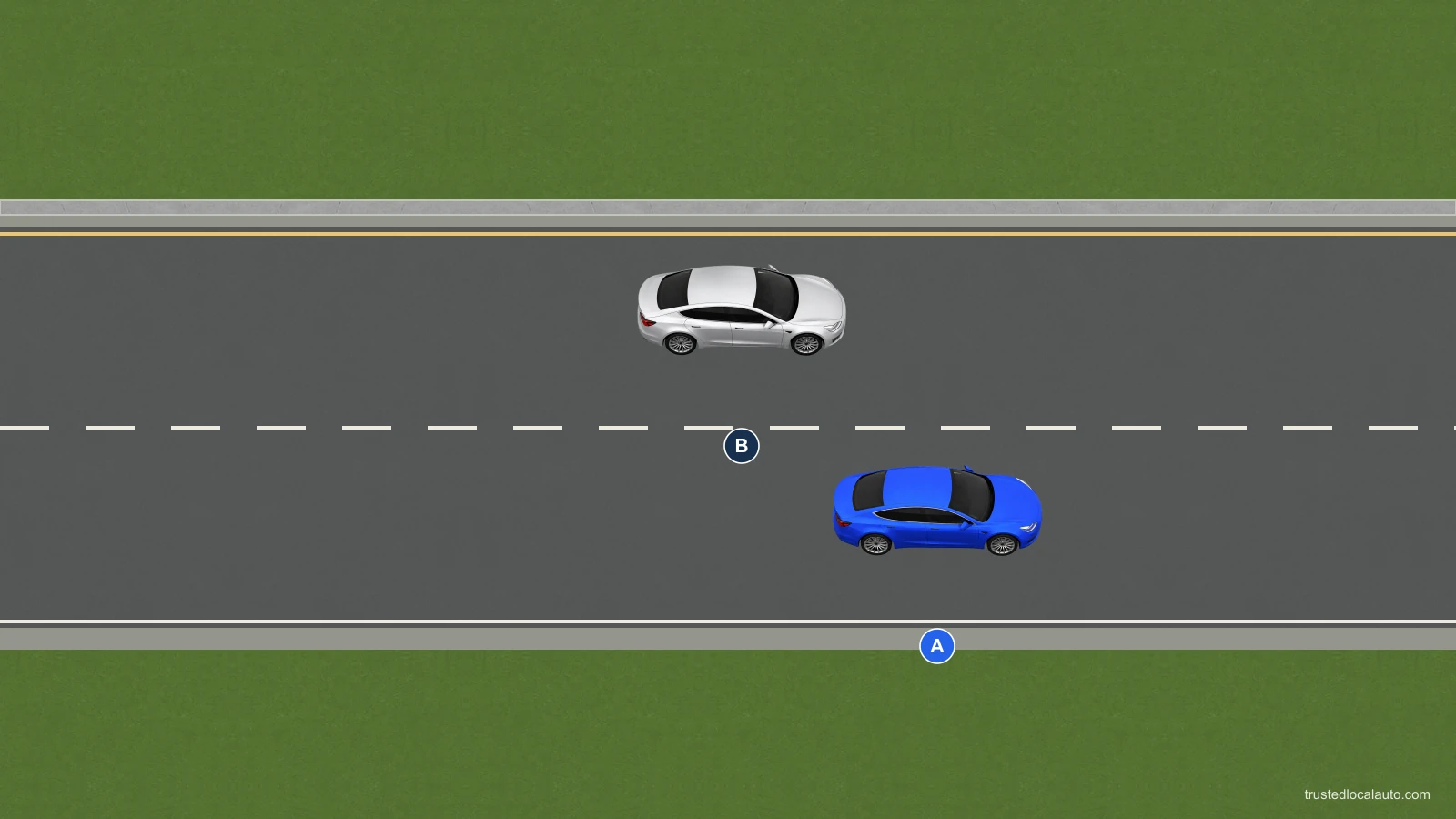 Mirror Blind SpotsIn a car with rear side windows, how should you check that the path is clear before you change lanes?Try this question
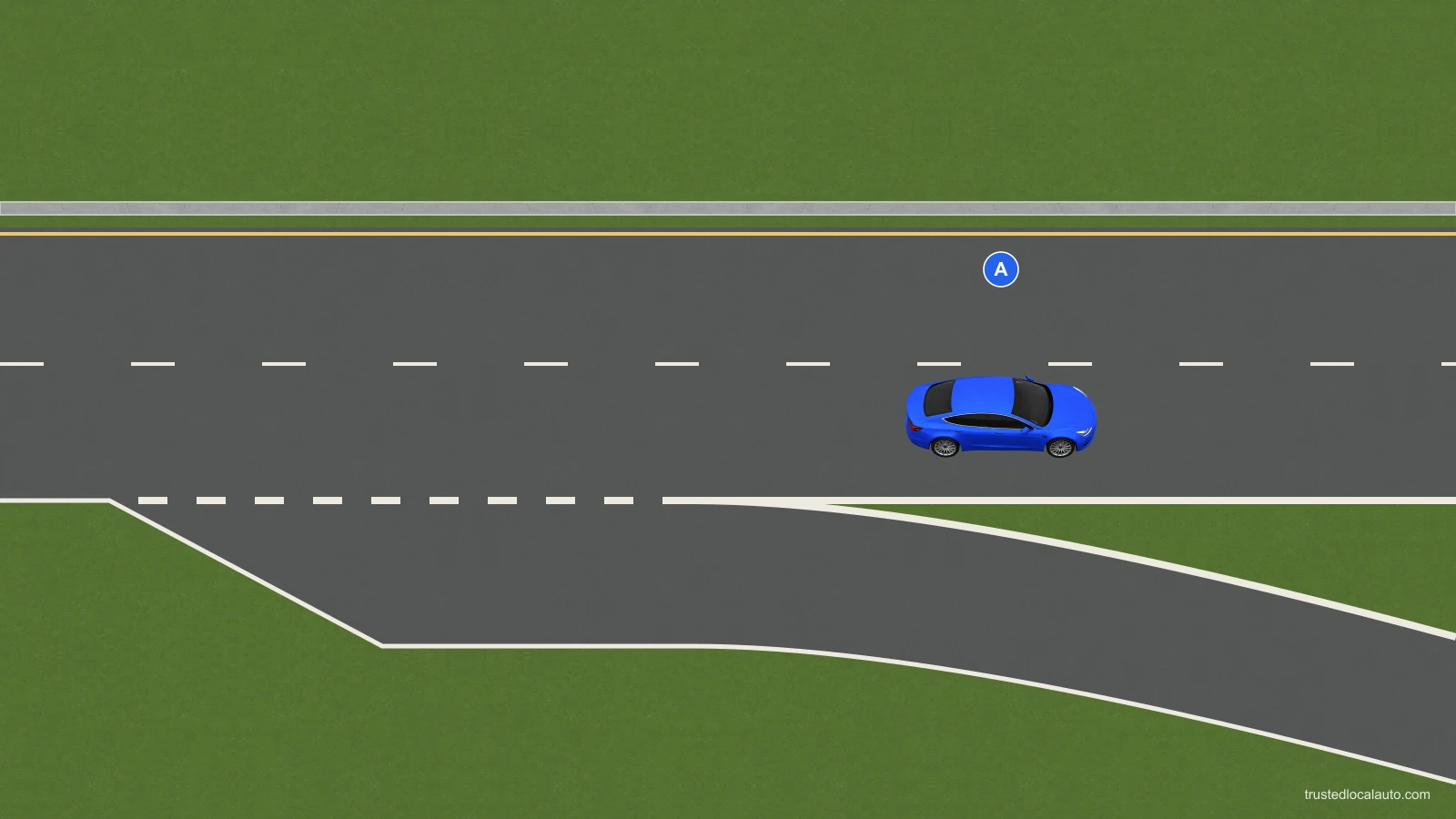 A missed turn or exitWhat should a driver do after missing a turn or exit?Try this question
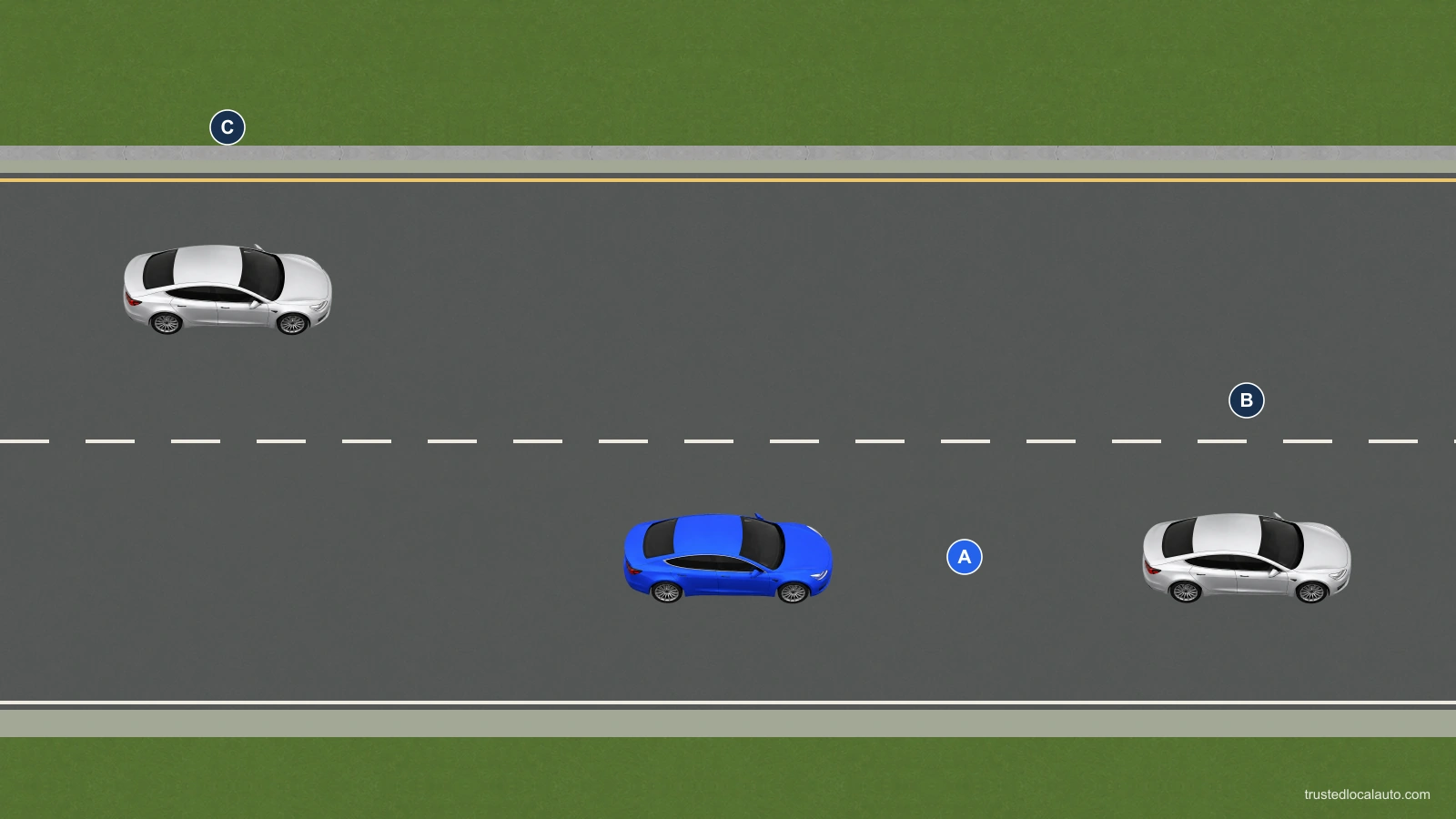 Space CushionWhat is the purpose of a space cushion?Try this question
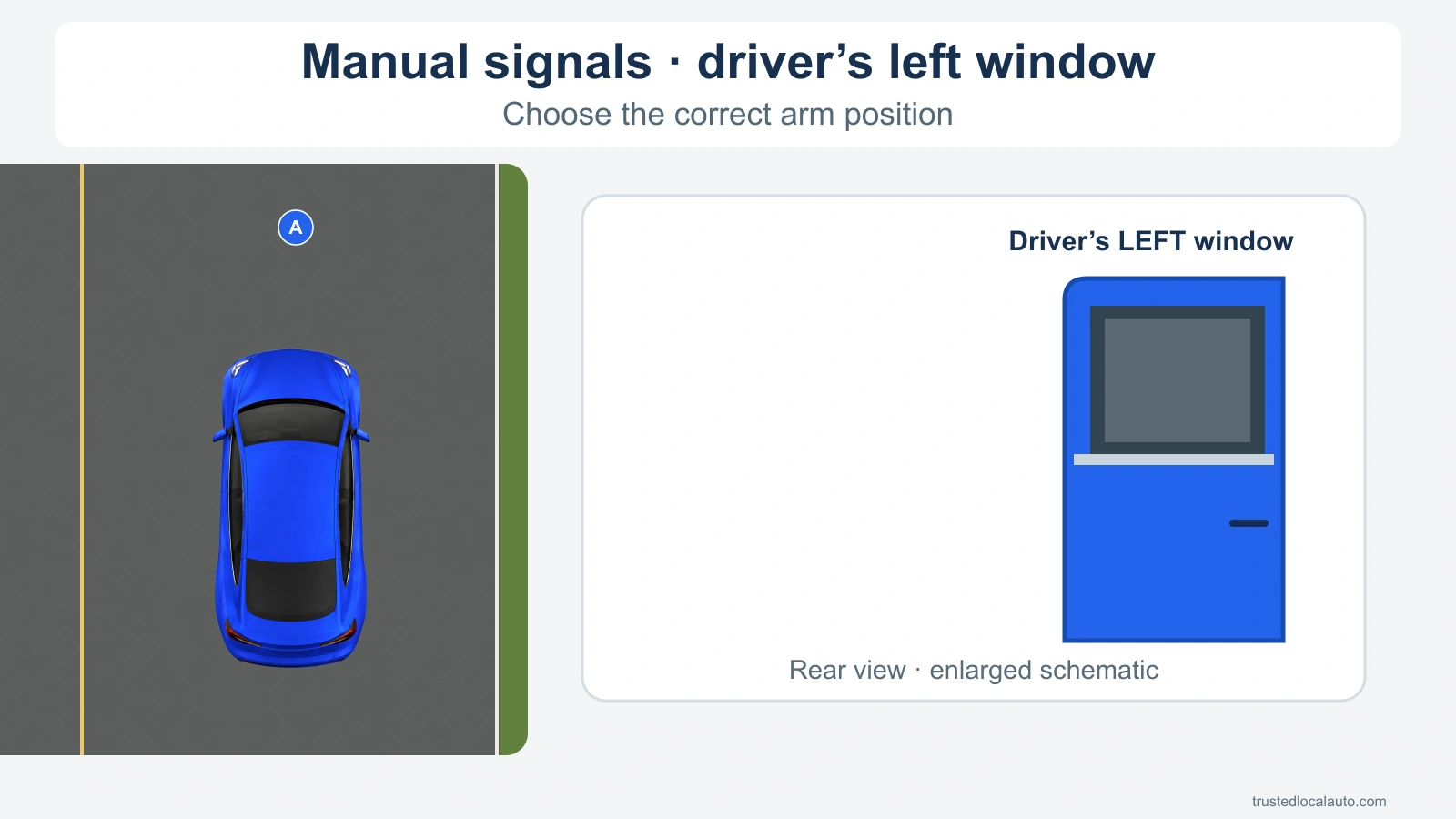 Hand Signal Left TurnWhich hand signal from the driver’s left window indicates a motor vehicle’s left turn?Try this question
- Hand Signal Right TurnWhich hand signal from the driver’s left window indicates a motor vehicle’s right turn?Try this question
- Hand Signal Slow StopWhich hand signal from the driver’s left window indicates slowing or stopping?Try this question
36 text questions
More questions in this topic
- If a vehicle begins to skid in a curve, what should the driver generally do?
- In a vehicle with a manual transmission, what can help control speed on a long, steep downhill grade?
- As a driver approaches the crest of a hill on a two-way road, what should they do?
- Where should a driver look while travelling through a curve?
- Why is passing into the oncoming lane unsafe when a curve blocks the view ahead?
- Why is passing into the oncoming lane near a hillcrest with a blocked view dangerous?
- When should a driver reduce speed for a curve?
- If you are driving a large vehicle such as a motor home, what minimum following time does Alberta’s guide recommend?
- When stopped behind another vehicle, how much room should you leave?
- Before moving away from the curb, what should a driver do?
- Which is a variable driving hazard?
- How often should a driver normally glance in the rear-view mirrors?
- What visual lead time does Alberta’s guide recommend as a rural scanning minimum?
- What visual lead time does Alberta’s guide recommend as an urban scanning minimum?
- When should a driver signal a turn or lane change?
- Which conditions can increase braking distance?
- What happens during a driver's perception time?
- What is reaction distance?
- Why should a driver accelerate smoothly?
- In a vehicle without anti-lock brakes (ABS), what is threshold braking?
- What makes up total stopping distance?
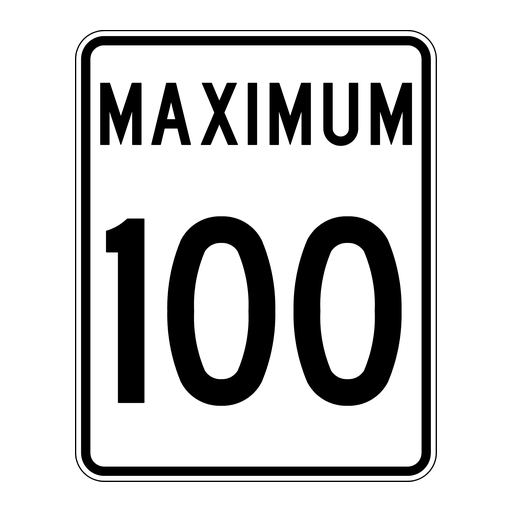
- What is the general maximum on a rural roadway under a municipal district’s control when no different limit applies?
- What is Alberta’s general urban maximum when no different provincial-highway, municipal or posted limit applies?
- You drive on a two-way road and approach the crest of a hill. You cannot see the road beyond the crest. Where should you position your car? Hard
- You drive a car with a manual transmission. Ahead is a long, steep downhill grade. What should you do to help control your speed on the descent? Hard
- In normal road and weather conditions, what minimum following times does Alberta's guide recommend when you drive an ordinary passenger car and when you drive a large vehicle such as a motor home? Hard
- Your car is parked at the left curb of a one-way road. Traffic passes on your right. You are ready to move away from the curb. What should you do? Hard
- You checked your mirrors 4 seconds ago. Now you see a hazard ahead and must slow down. Which statement is correct? Hard
- Alberta's guide gives one driving time as about 8 to 12 seconds. Which time is it? Hard
- You drive in a city. Alberta's guide recommends a minimum visual lead time: how far ahead, in seconds, you look. What is that minimum? Hard
- Alberta's guide gives a minimum visual lead time: how far ahead, in seconds, you should look. Which pair of minimums is correct? Hard
- You give hand signals with your left arm from the driver's left window of a motor vehicle. Which pair of signals is correct? Hard
- Your car has no anti-lock brakes (ABS). You must make a hard stop for a hazard ahead, and the wheels lock. What should you do with the brake pedal? Hard
- Total stopping distance has three stages. Which description matches reaction distance? Hard
- No different speed limit is posted or established. Which pair gives Alberta's general maximum speeds for a rural roadway under a municipal district's control and for a rural provincial highway? Hard
- When no different limit applies, Alberta sets a general maximum speed of 80 km/h on one kind of road. Which road is it? Hard
Alberta Class 7
More Class 7 topics
Road rules · 12 topics
- Licensing & Test Readiness52 questions
- Traffic Signals & Road Markings32 questions
- Observation, Speed & Space44 questions · This topic
- Intersections & Right-of-Way26 questions
- Turns, Lanes, Passing & Merging46 questions
- Parking, Reversing & Roadside Stops30 questions
- Sharing the Road51 questions
- Freeways & High-Speed Roads5 questions
- School Zones, Railways & Work Areas33 questions
- Weather, Visibility & Emergencies45 questions
- Vehicle Safety, Documents & Towing66 questions
- Safe & Responsible Driving65 questions
Each question page shows the answer, the explanation and the official source of the question.