
Indiana Operator's Knowledge topic
Indiana Operator's Knowledge Weather, Visibility & Emergencies
Handle darkness, poor weather, loss of traction, breakdowns, collisions and emergencies.
20 questions, free with an account. 6 of them are hard. Each one has its answer, an explanation and its official source.
- 6 picture questions
- 14 text questions
- 6 of them hard
6 picture questions
Questions in this topic
Select a question to answer it. The answer and the explanation show after you answer.
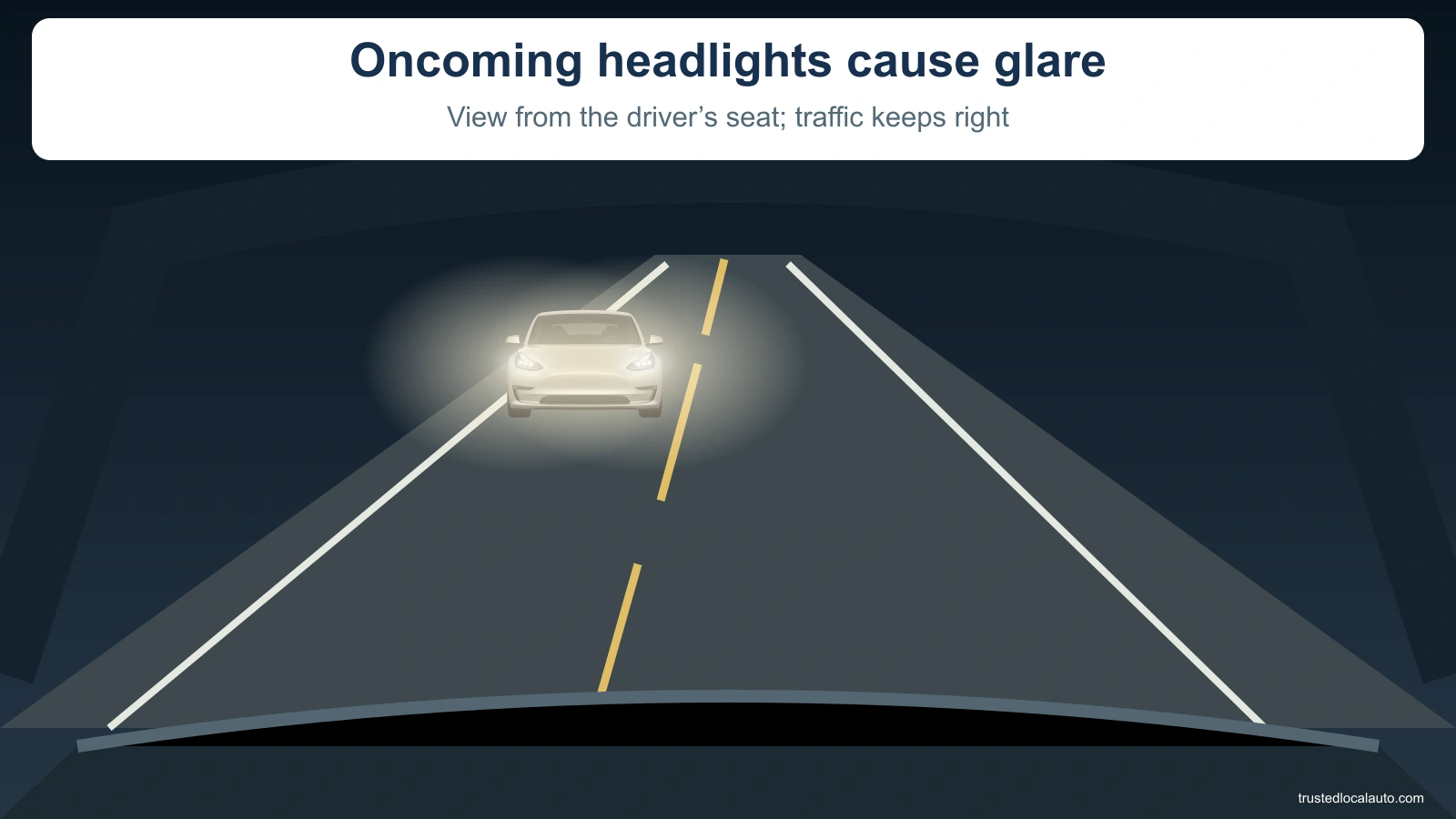 Glare from oncoming headlightsOncoming headlights cause glare. Where should a driver look?Try this question
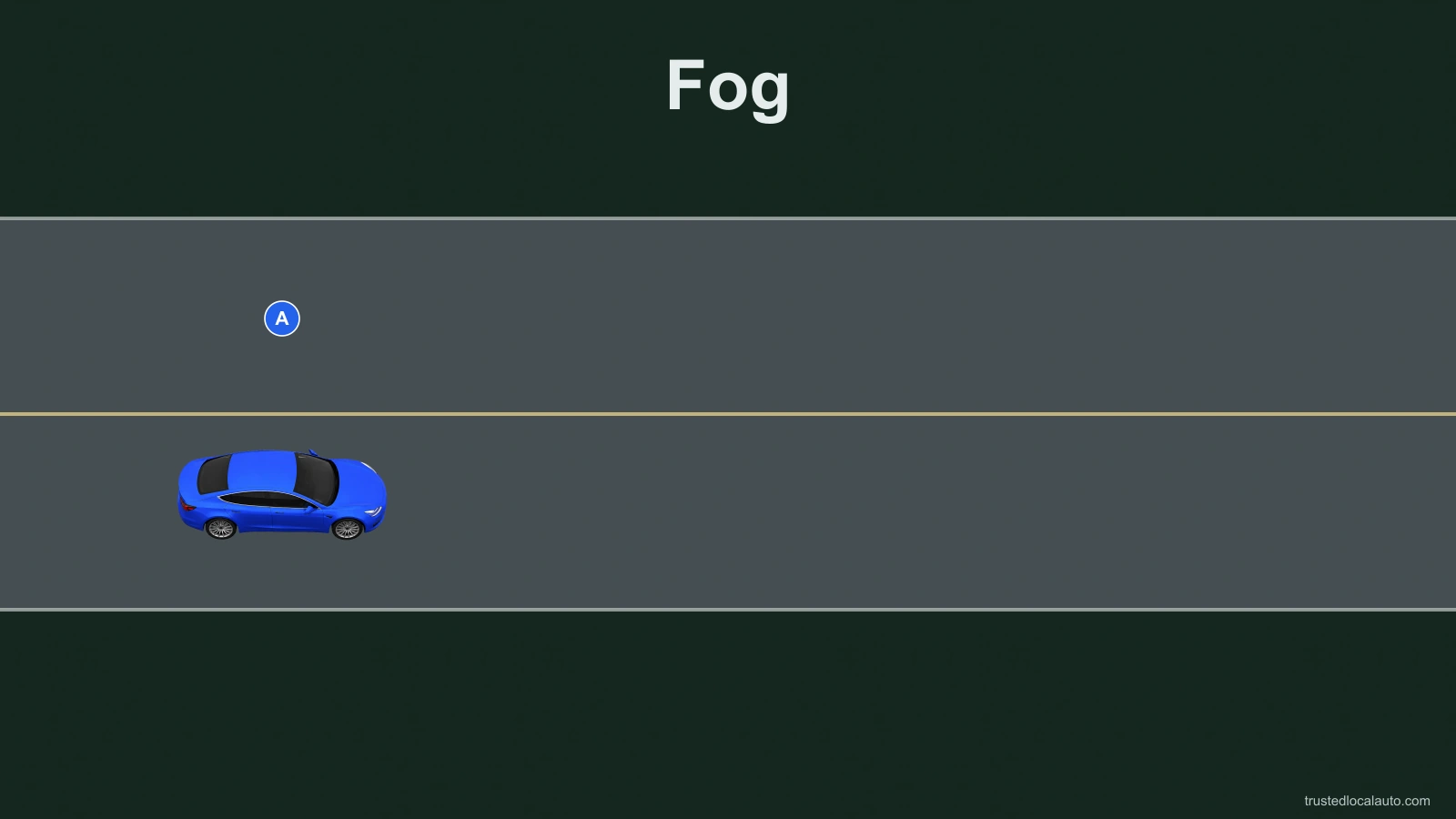 Headlights in fogWhich headlights usually improve visibility in fog?Try this question
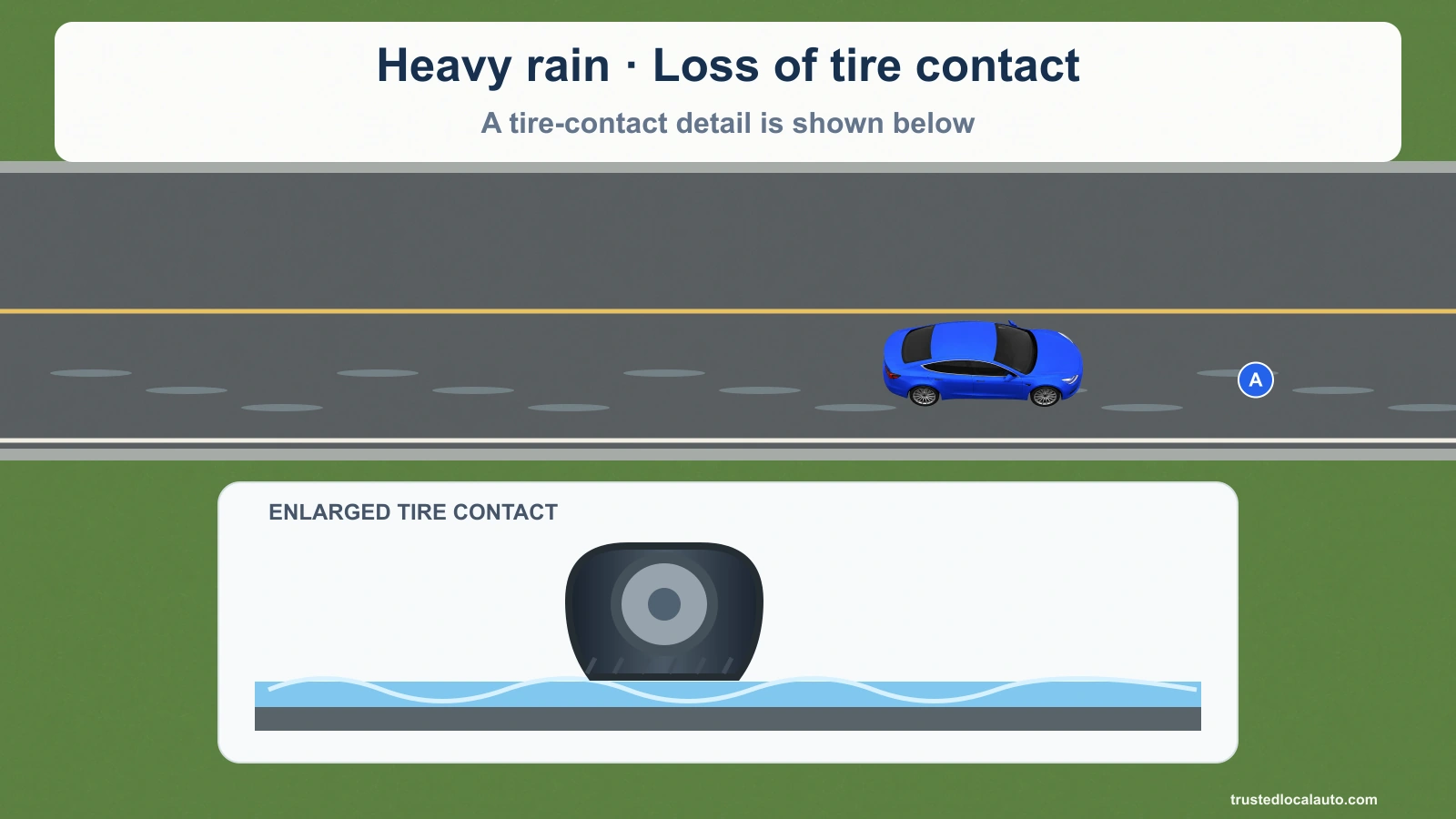 Hydroplaning responseA vehicle begins to hydroplane. What should the driver do?Try this question
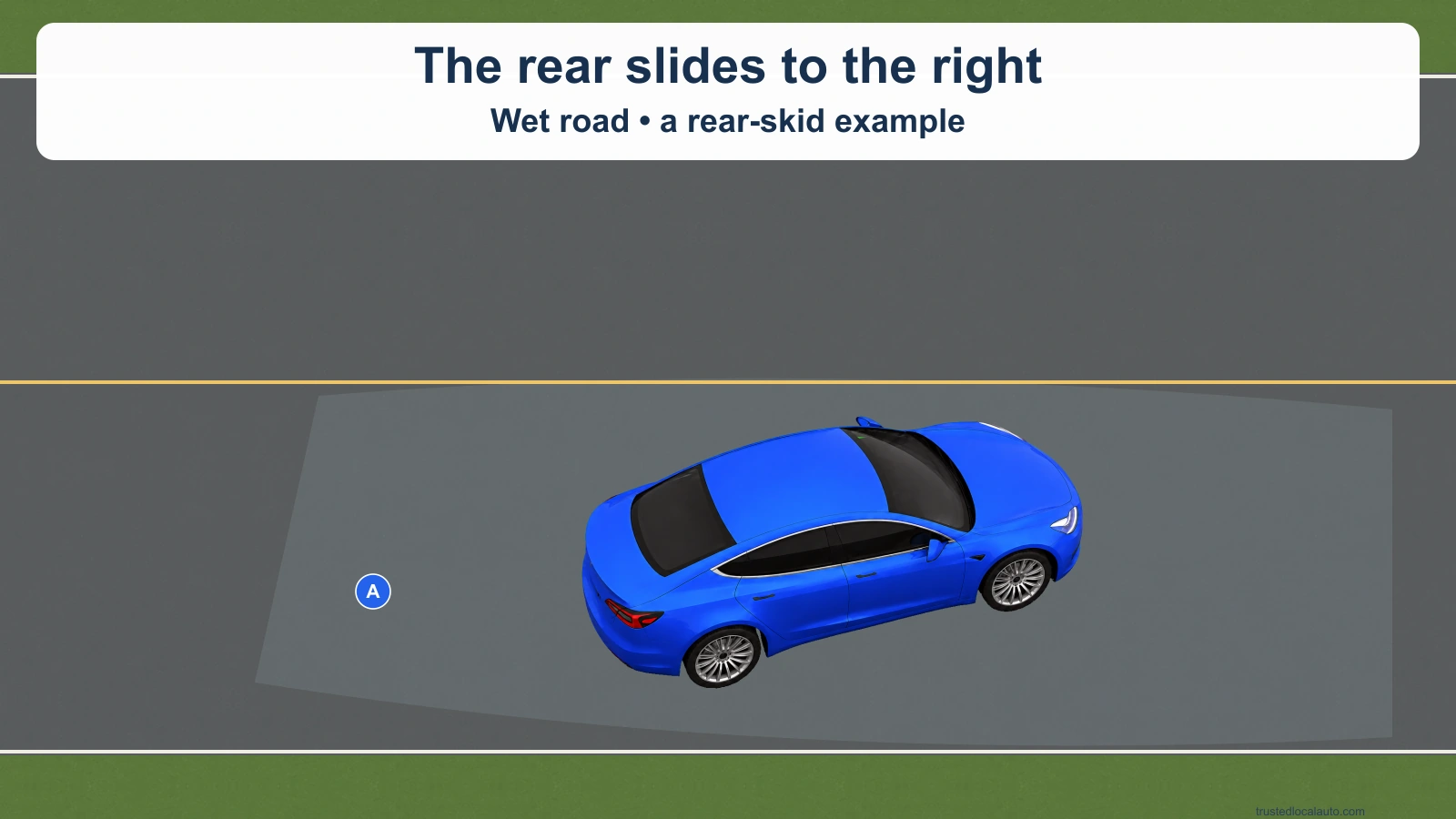 Rear-wheel skid recoveryThe rear wheels lose traction and the rear of your car slides right. What controlled steering response helps correct this skid?Try this question
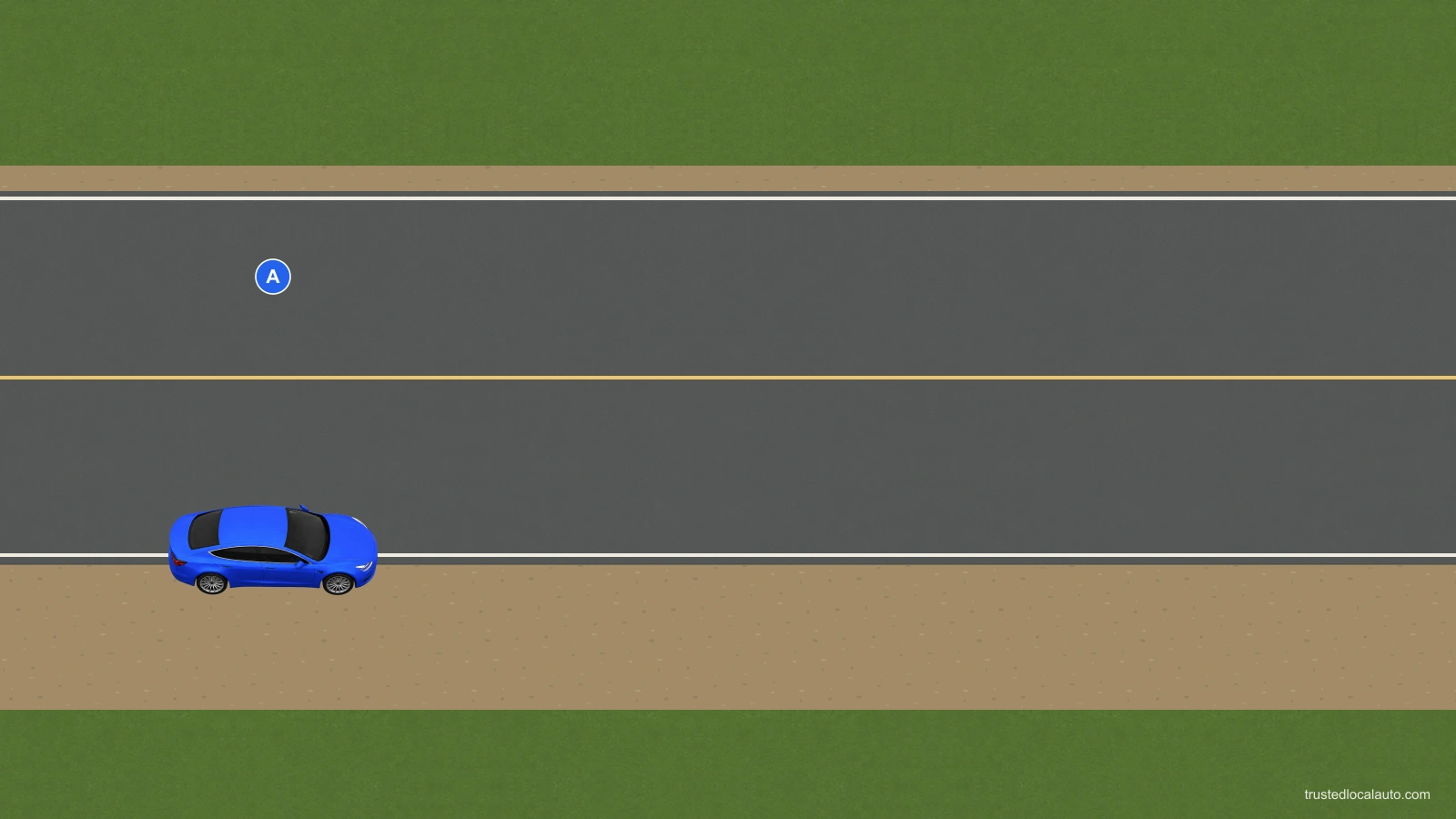 Shoulder drop-off recoveryYour right wheels drop onto a lower shoulder. What is the safest initial response?Try this question
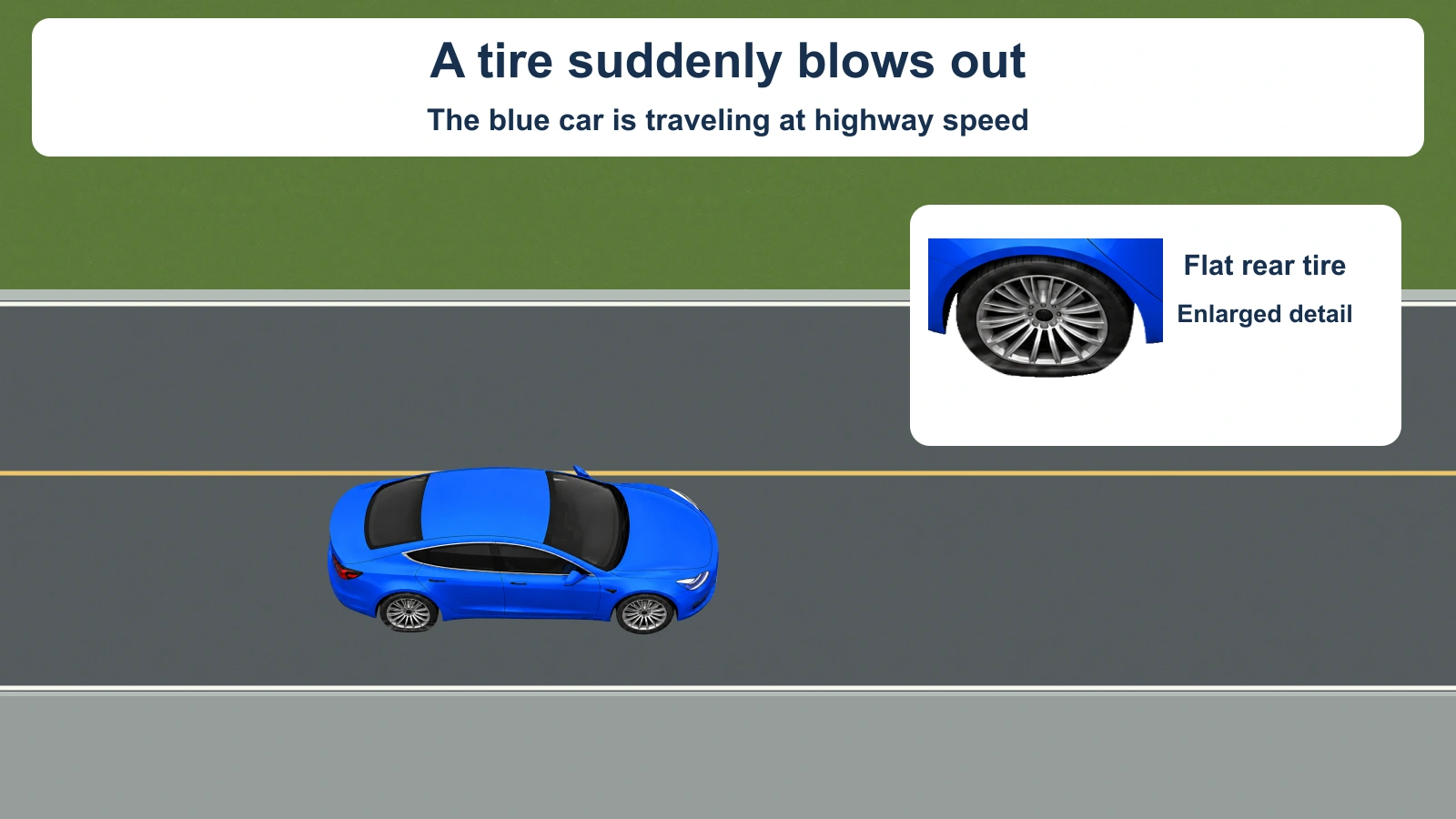 Tire blowout responseA tire suddenly blows out while you are driving. What should you do first?Try this question
14 text questions
More questions in this topic
- You have ample space to make a planned stop on an icy road. How should you begin braking?
- Near freezing temperatures, why should you use extra caution on a bridge even if the approaching roadway looks clear?
- Why can pavement be especially slippery when rain first begins?
- Floodwater covers the road and a road-closed barrier blocks the approach. What should you do?
- You leave a paved road for a loose gravel road. What adjustment is safest?
- Within what distance of an oncoming vehicle must you change from high to low beams?
- Which condition requires an ordinary Indiana driver to use vehicle lights even during daytime?
- Heavy rain or fog makes forward travel impossible to see safely. What should the driver do?
- The temperature is near freezing. The road before a bridge looks clear and dry. Which statement is correct? Hard
- In the daytime, the law requires vehicle lights when light or weather conditions prevent a clear view of persons and vehicles a set distance ahead. What is that distance? Hard
- At night, you must change from high to low beams within a set distance of other vehicles. Which pair of distances is correct? Hard
- At night on a two-lane road, your high beams are on and no vehicle is ahead of you in your lane. An oncoming car is about 400 feet away, and its driver has not flashed the headlights. Which statement is correct? Hard
- On a wet road, the rear wheels lose traction and the rear of your car slides to the left. Which steering response helps correct this skid? Hard
- It is noon on a two-lane highway. Heavy snow falls, and you can see vehicles only about 300 feet ahead. Your trip will last about two hours. Which statement is correct? Hard
Indiana Operator's Knowledge
More Operator's Knowledge topics
Road rules · 12 topics
- Licensing & Test Readiness27 questions
- Traffic Signals & Road Markings27 questions
- Observation, Speed & Space14 questions
- Intersections & Right-of-Way16 questions
- Turns, Lanes, Passing & Merging17 questions
- Parking, Reversing & Roadside Stops14 questions
- Sharing the Road18 questions
- Freeways & High-Speed Roads12 questions
- School Zones, Railways & Work Areas36 questions
- Weather, Visibility & Emergencies20 questions · This topic
- Vehicle Safety, Documents & Towing15 questions
- Safe & Responsible Driving25 questions
Each question page shows the answer, the explanation and the official source of the question.