
Massachusetts Class D Learner's Permit topic
Massachusetts Class D Learner's Permit Sharing the Road
Drive safely around pedestrians, cyclists, buses, trucks, motorcycles and emergency vehicles.
20 questions, free with an account. 7 of them are hard. Each one has its answer, an explanation and its official source.
- 6 picture questions
- 14 text questions
- 7 of them hard
6 picture questions
Questions in this topic
Select a question to answer it. The answer and the explanation show after you answer.
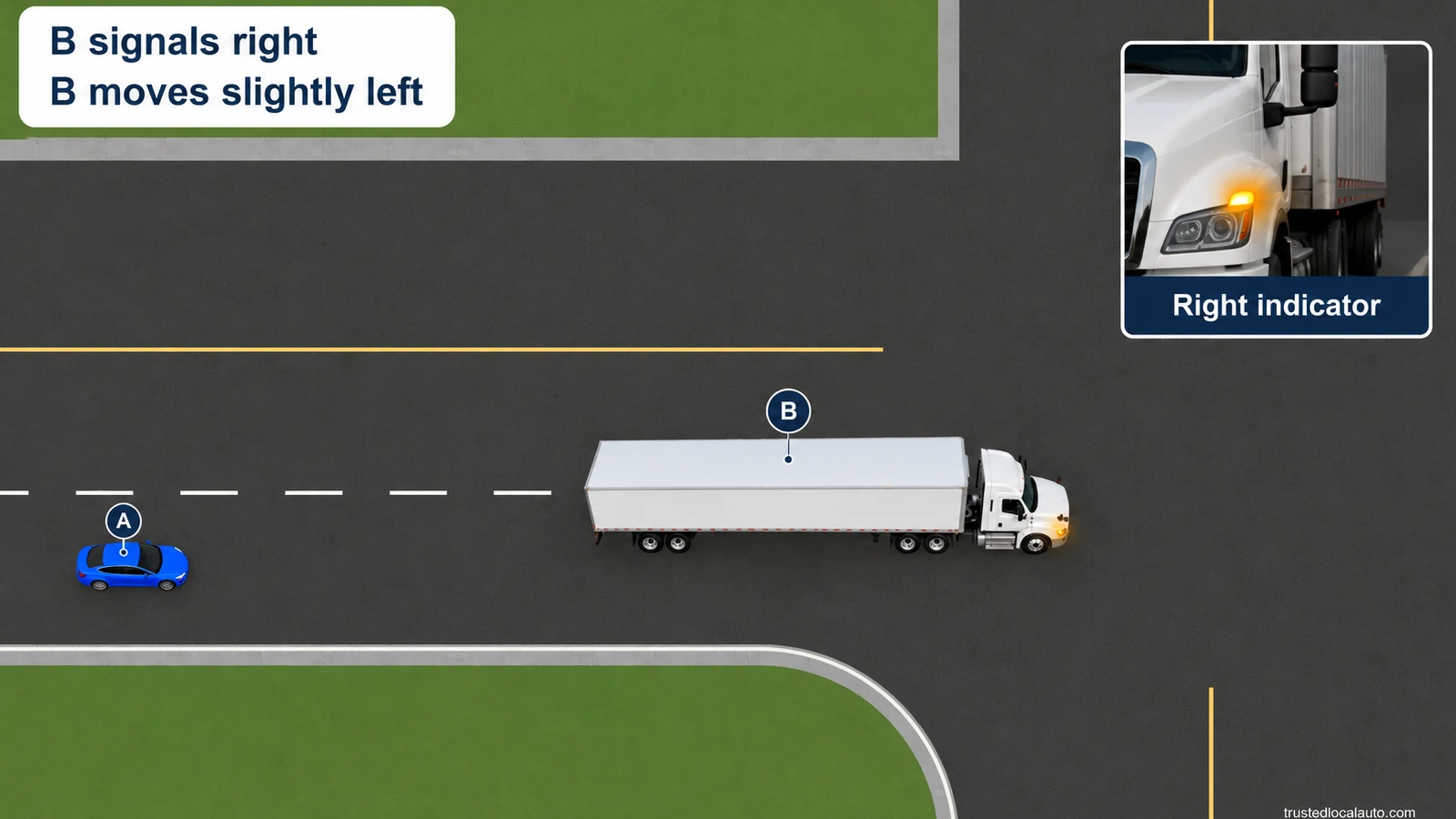 A truck preparing to turnA truck ahead signals right and moves slightly left to make room for its turn. What should you do?Try this question
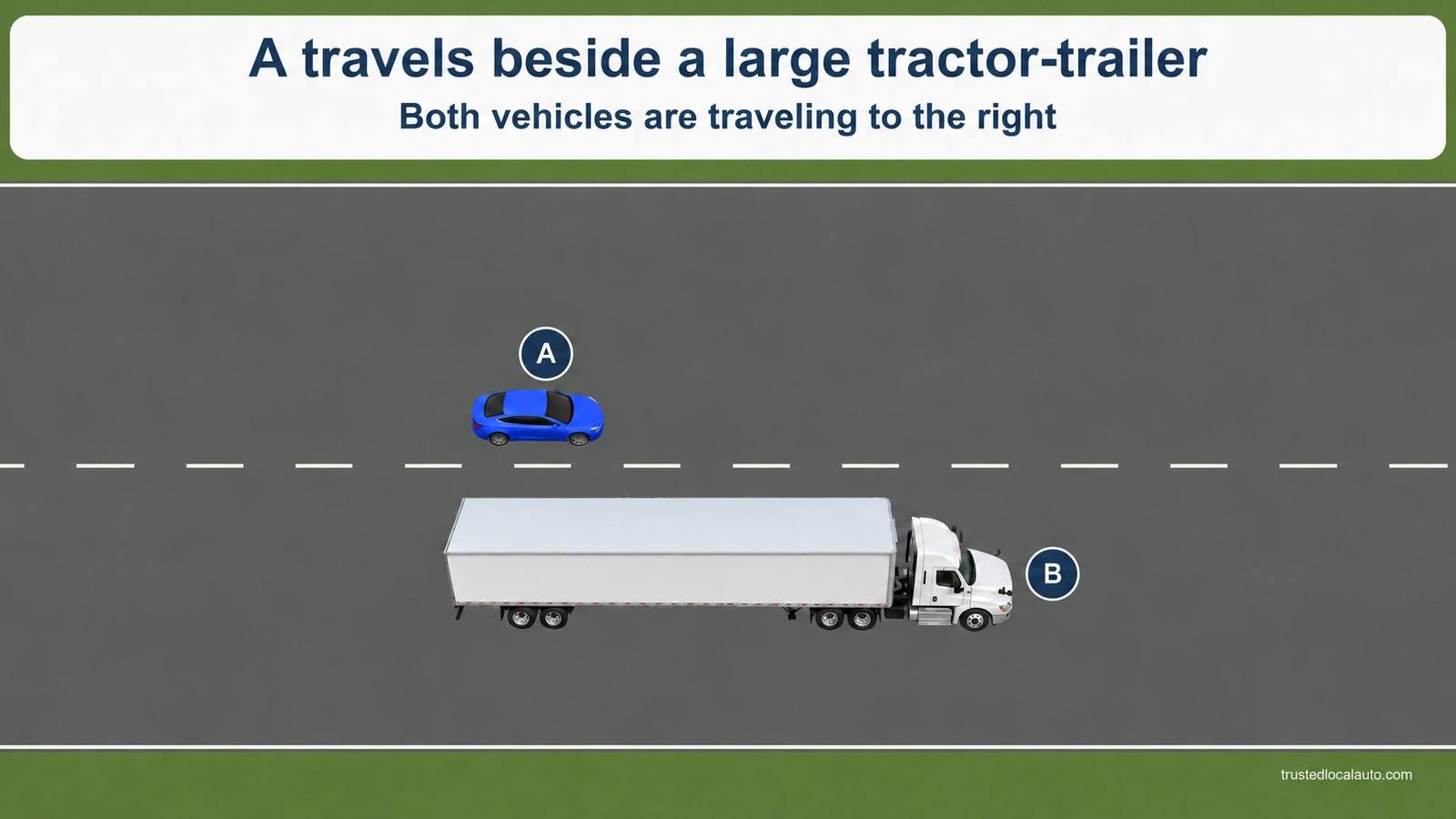 Lingering near a large truckWhy should a driver avoid lingering beside or directly behind a large truck?Try this question
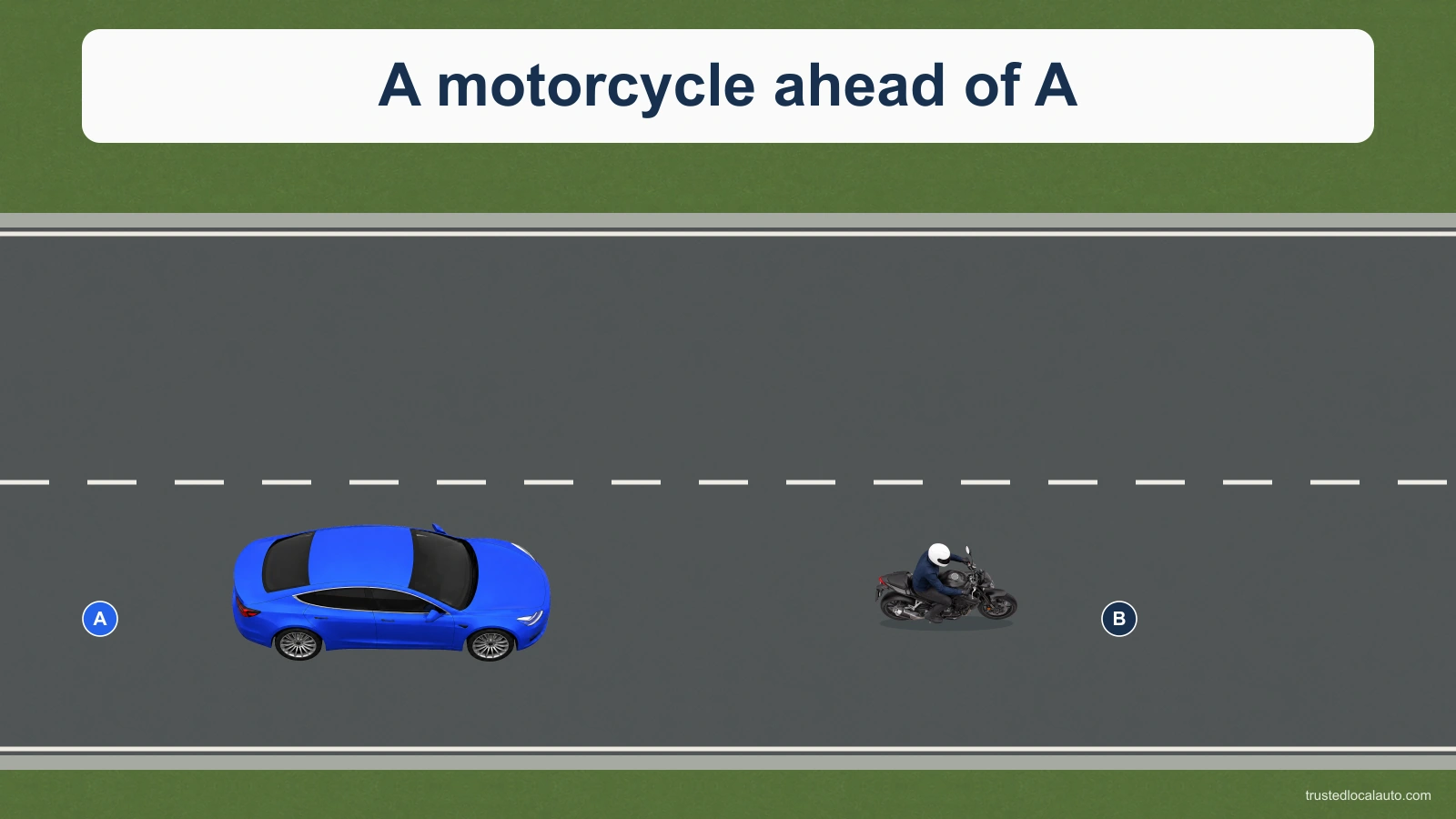 Motorcycle lane useHow should a driver treat a motorcycle traveling in a traffic lane?Try this question
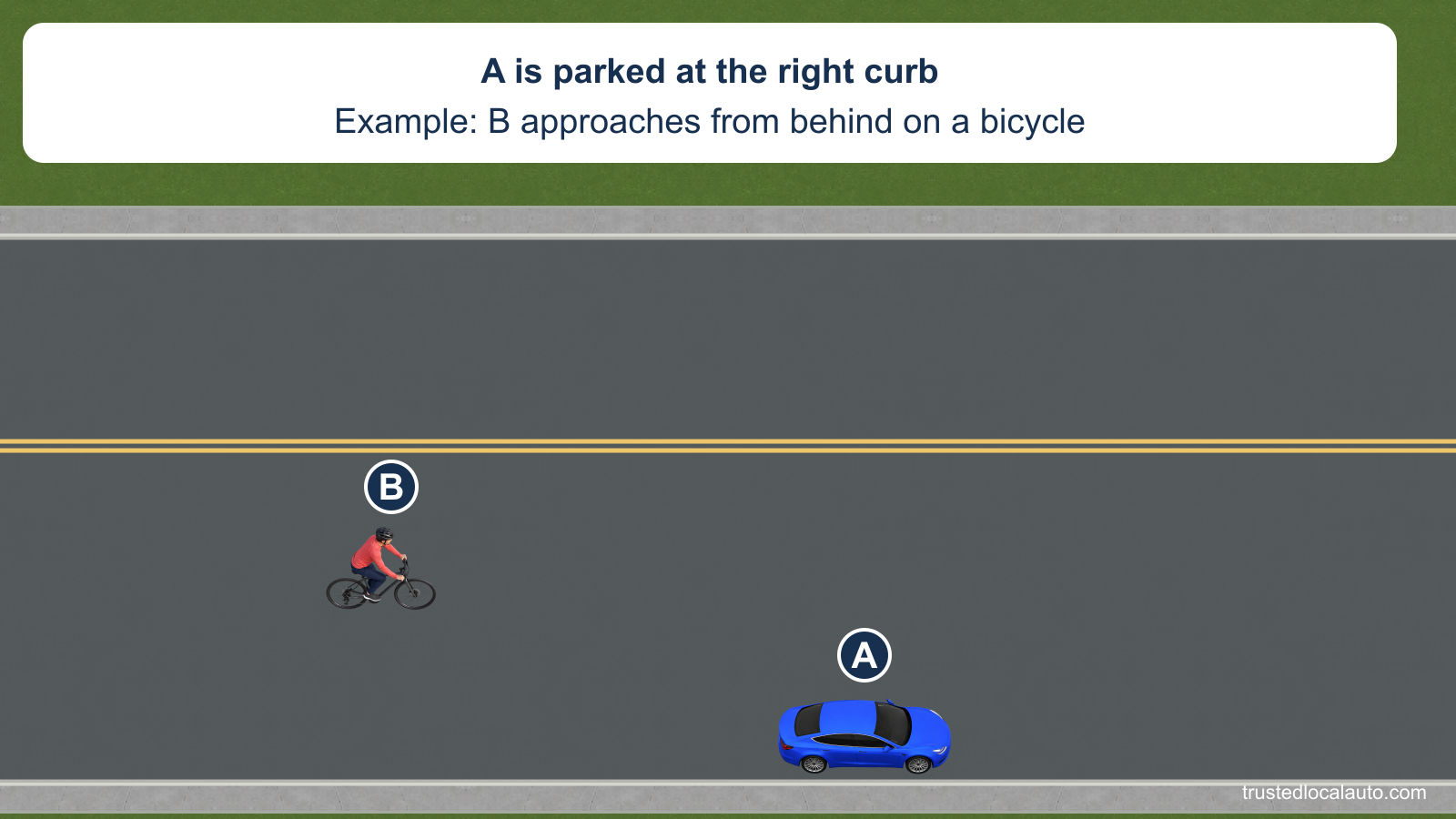 Opening the traffic-side doorYou are parked beside a roadway used by bicyclists. What should you do before opening the traffic-side door?Try this question
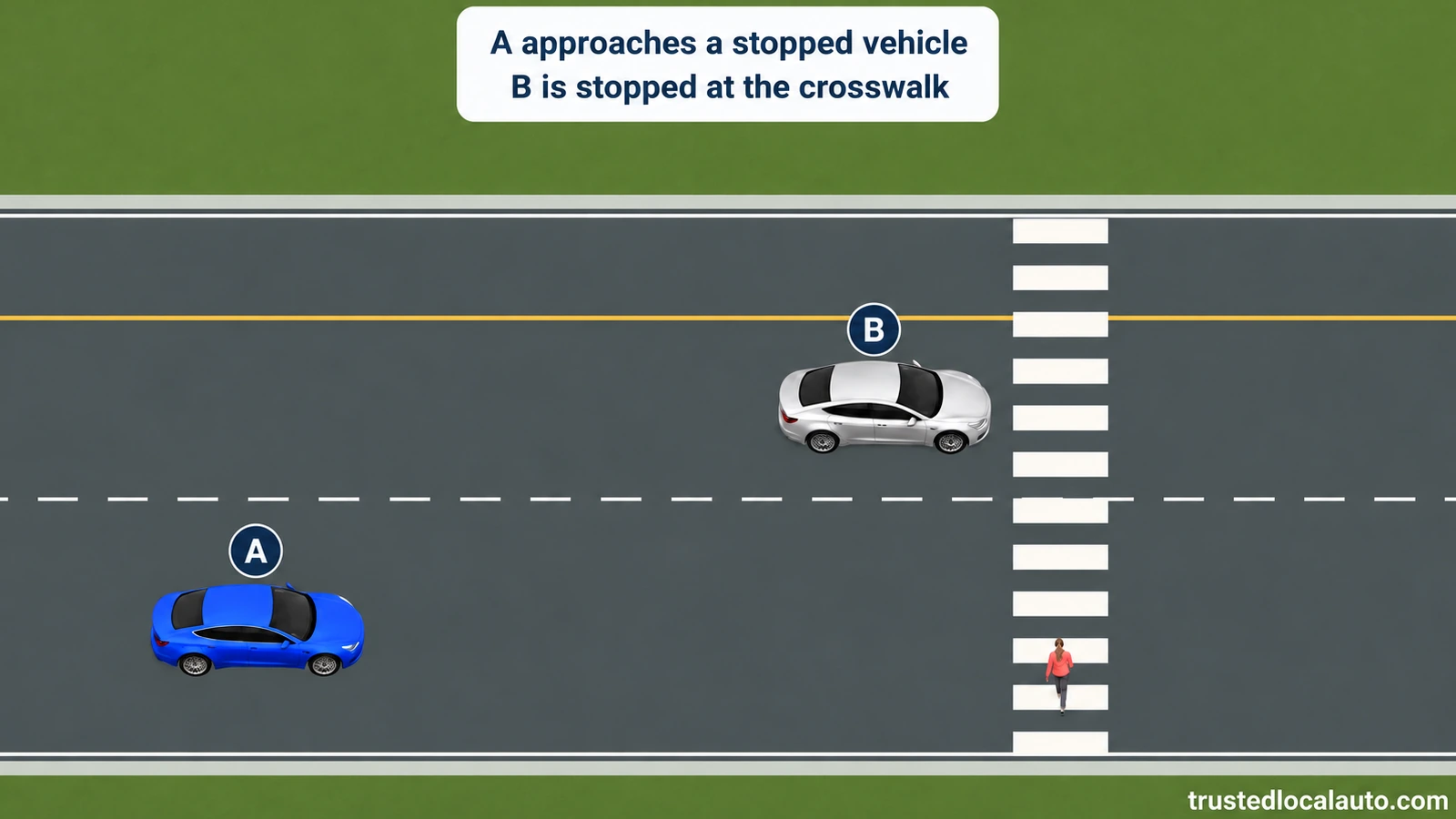 Pedestrian in a crosswalkThere are no operating traffic signals. A pedestrian is crossing a marked crosswalk on your half of the roadway. What must you do?Try this question
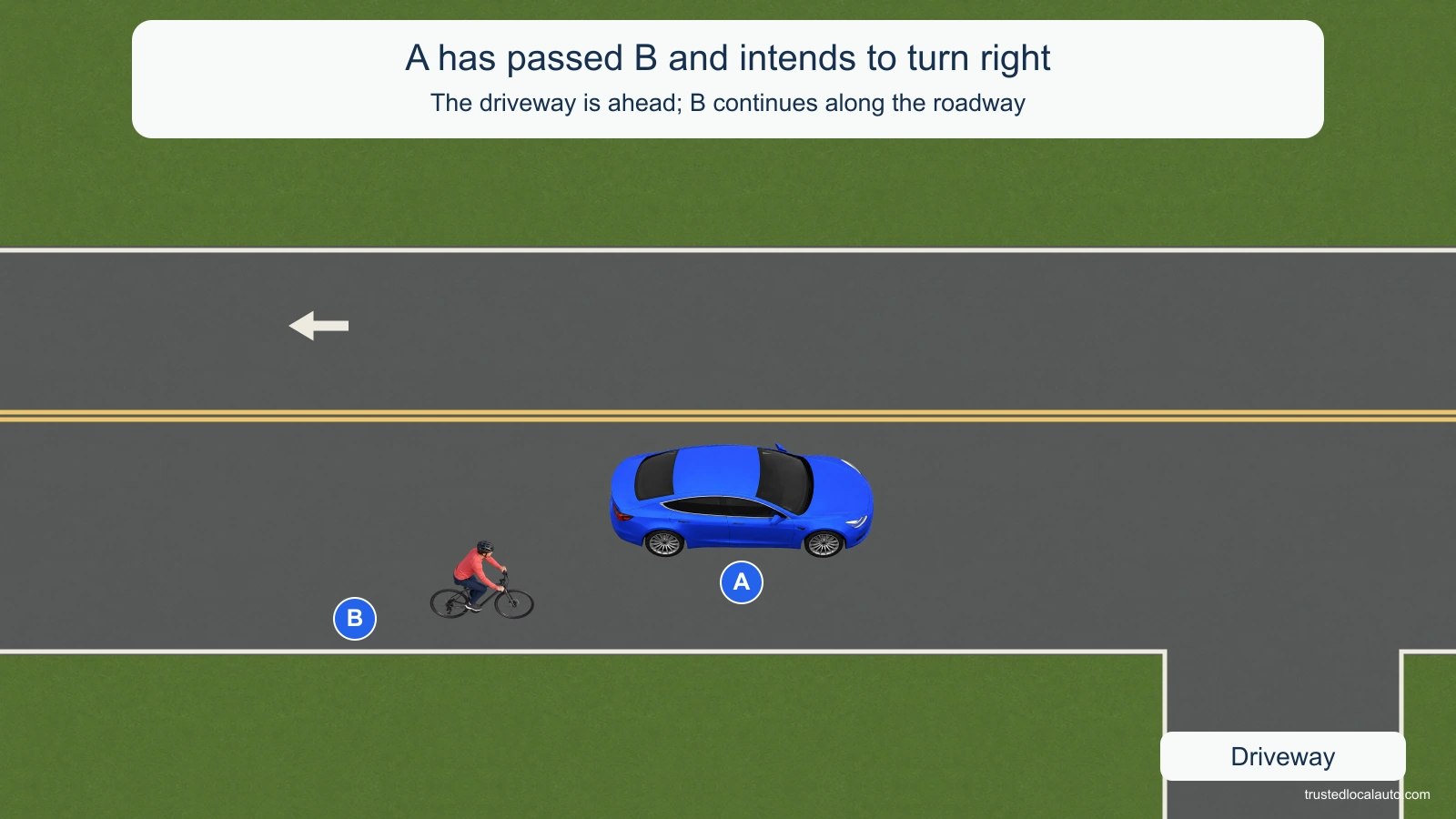 Turning right near a bicyclistYou have just passed a bicyclist and want to turn right into a driveway. What must you confirm before turning?Try this question
14 text questions
More questions in this topic
- What rights and duties generally apply to a person riding a bicycle on a public way?
- How many bicyclists may generally ride side by side?
- In good conditions, what minimum following interval does the Massachusetts handbook recommend behind a motorcycle?
- A horse you are passing is frightened, and its rider signals you to stop. What does Massachusetts law require?
- Which age group of bicycle operators and passengers is covered by Massachusetts’ helmet requirement, subject to the protected enclosed-trailer exception?
- A bicyclist ahead cannot be passed with four feet of clearance inside your lane. May you use the adjacent lane, crossing the centerline if necessary?
- A blind pedestrian using a white cane is crossing the street. What must a driver do?
- A 3-year-old child rides as a passenger in an enclosed bicycle trailer. The trailer adequately protects the child's head in a crash. Which statement about the Massachusetts helmet rule is correct? Hard
- A bicycle rider is 16 years old and rides on a public street in Massachusetts. Which statement is correct? Hard
- On a two-lane road with double solid yellow center lines, a bicyclist is ahead. You cannot pass with four feet of clearance inside your lane. The other lane is clear far ahead. May you cross the center line to pass the rider? Hard
- A bicyclist is ahead on a two-lane road. You cannot pass with four feet of clearance inside your lane. An oncoming car is close, and its driver would have to brake if you moved into its lane. What should you do? Hard
- In good conditions, you follow a motorcycle. What minimum following interval does the Massachusetts handbook give? Hard
- In good conditions and moderate traffic, the Massachusetts handbook gives a minimum following guide behind a car and behind a motorcycle. Which pair is correct? Hard
- You approach a marked crosswalk with no traffic signals. A pedestrian is crossing toward your side. The pedestrian is still on the other half of the road, 6 feet from your half. What must you do? Hard
Massachusetts Class D Learner's Permit
More Class D Learner's Permit topics
Road rules · 12 topics
- Licensing & Test Readiness25 questions
- Traffic Signals & Road Markings27 questions
- Observation, Speed & Space16 questions
- Intersections & Right-of-Way15 questions
- Turns, Lanes, Passing & Merging20 questions
- Parking, Reversing & Roadside Stops15 questions
- Sharing the Road20 questions · This topic
- Freeways & High-Speed Roads13 questions
- School Zones, Railways & Work Areas30 questions
- Weather, Visibility & Emergencies19 questions
- Vehicle Safety, Documents & Towing16 questions
- Safe & Responsible Driving24 questions
Each question page shows the answer, the explanation and the official source of the question.