
Practice question, Question 1 of 40
Passing target: 75% in each of the three areas
In the ordinary situation shown, an ordinary car ahead is continuing straight. No special passing exception applies. On which side should you pass when it is legal and safe?
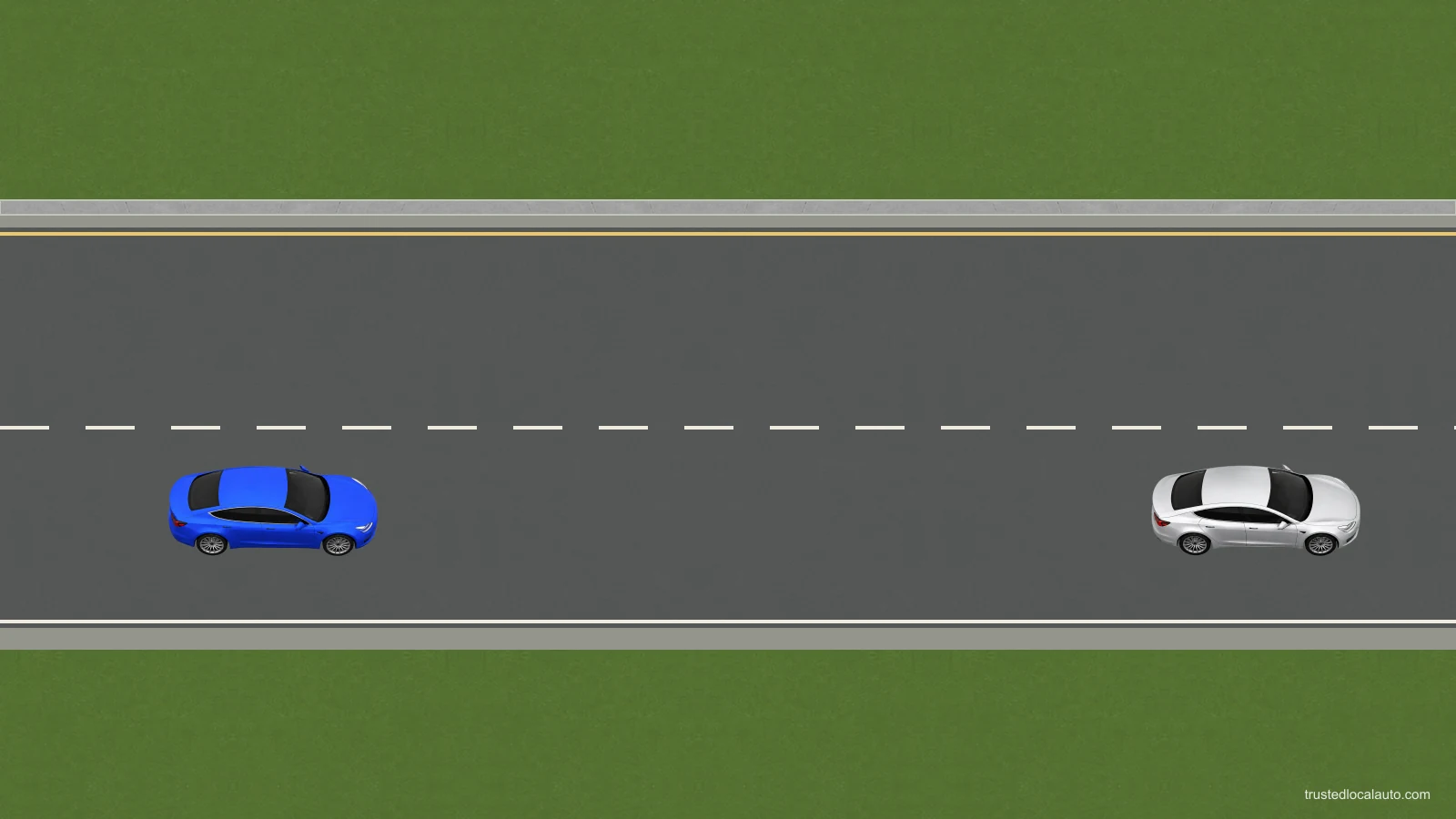
Correct answer: On the left
Why
Ordinarily, pass on the left. First check that signs and markings permit the manoeuvre, that the lane is clear over enough distance, and that nobody behind has already begun or signalled a pass. Signal, check the blind spot and stay within the speed limit. Québec has specific exceptions for passing on the right, such as passing a vehicle turning left, but you must not use the shoulder to pass.
Verified against Driver’s Handbook (SAAQ), English 2018 edition · Turns, lanes, passing and merging · p. 226, 227, 229
Is this question correct and clear?
Continue learning
Related Quebec questions
- Another driver is passing you in an ordinary, lawful pass on a two-way road. Which statement is correct?
- Another driver is passing you in an ordinary lawful passing situation. How should you respond?
- For an ordinary passenger car, what determines whether you may use a reserved lane at a particular time?
- On a road with one lane in your direction, the car ahead has stopped to turn left. There is enough room to pass on its right without driving on the shoulder. Which statement is correct?
- You continue straight on a two-way road. Your through lane moves slowly. The centre lane, designated for left turns in both directions, is empty. What should you do?
- You intend to continue straight on a two-way road. Your through lane is moving slowly, and an empty centre lane is designated for left turns in both directions. What should you do?