
Connecticut Class D Knowledge topic
Connecticut Class D Knowledge Parking, Reversing & Roadside Stops
Practise safe parking, backing, turnarounds and stopping beside the road.
15 questions, free with an account. 5 of them are hard. Each one has its answer, an explanation and its official source.
- 7 picture questions
- 8 text questions
- 5 of them hard
7 picture questions
Questions in this topic
Select a question to answer it. The answer and the explanation show after you answer.
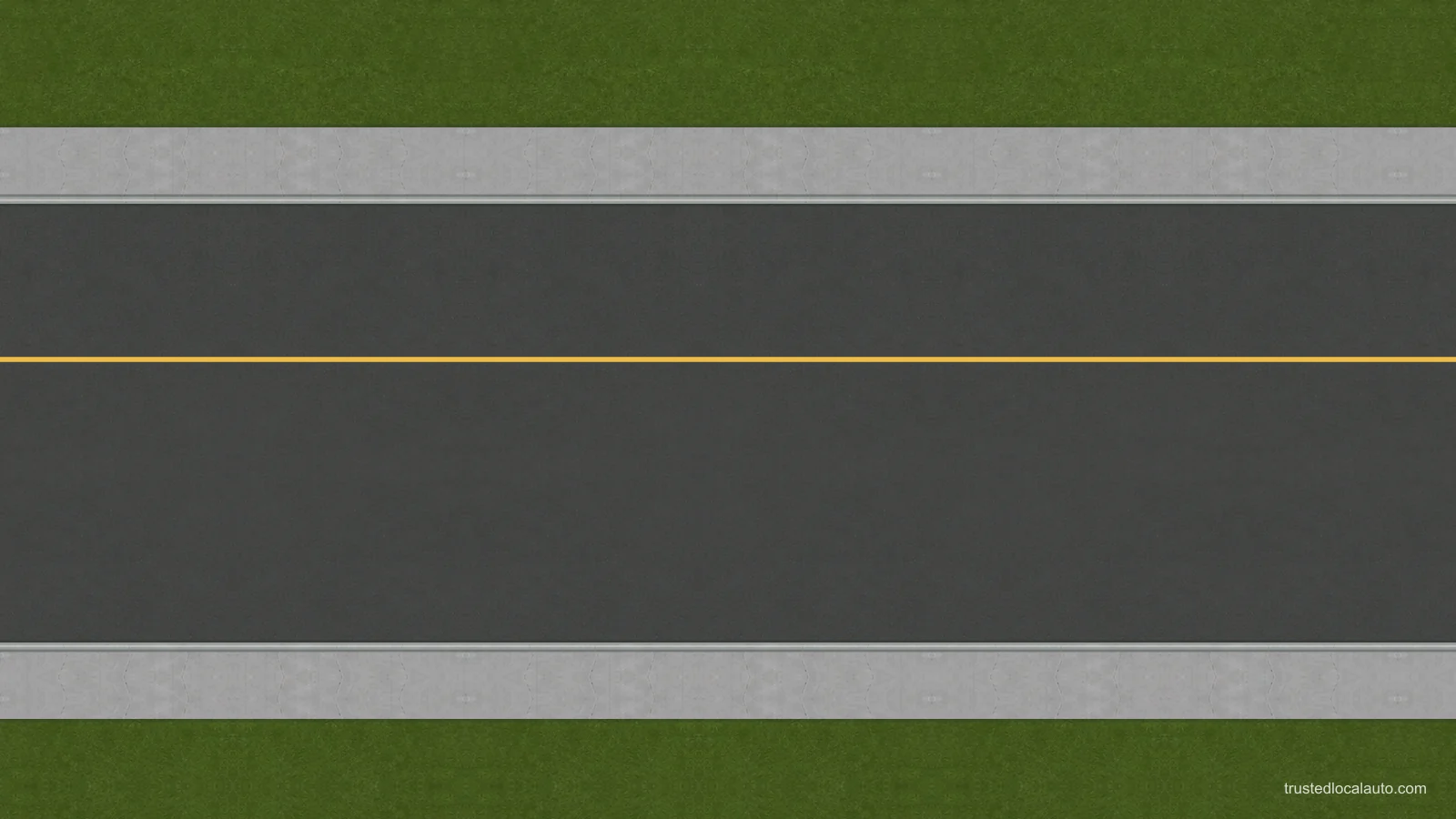 Curb parking positionWhen safety permits ordinary parking beside a right-hand curb, with no bikeway or buffer between the parking lane and curb, where should the right wheels be?Try this question
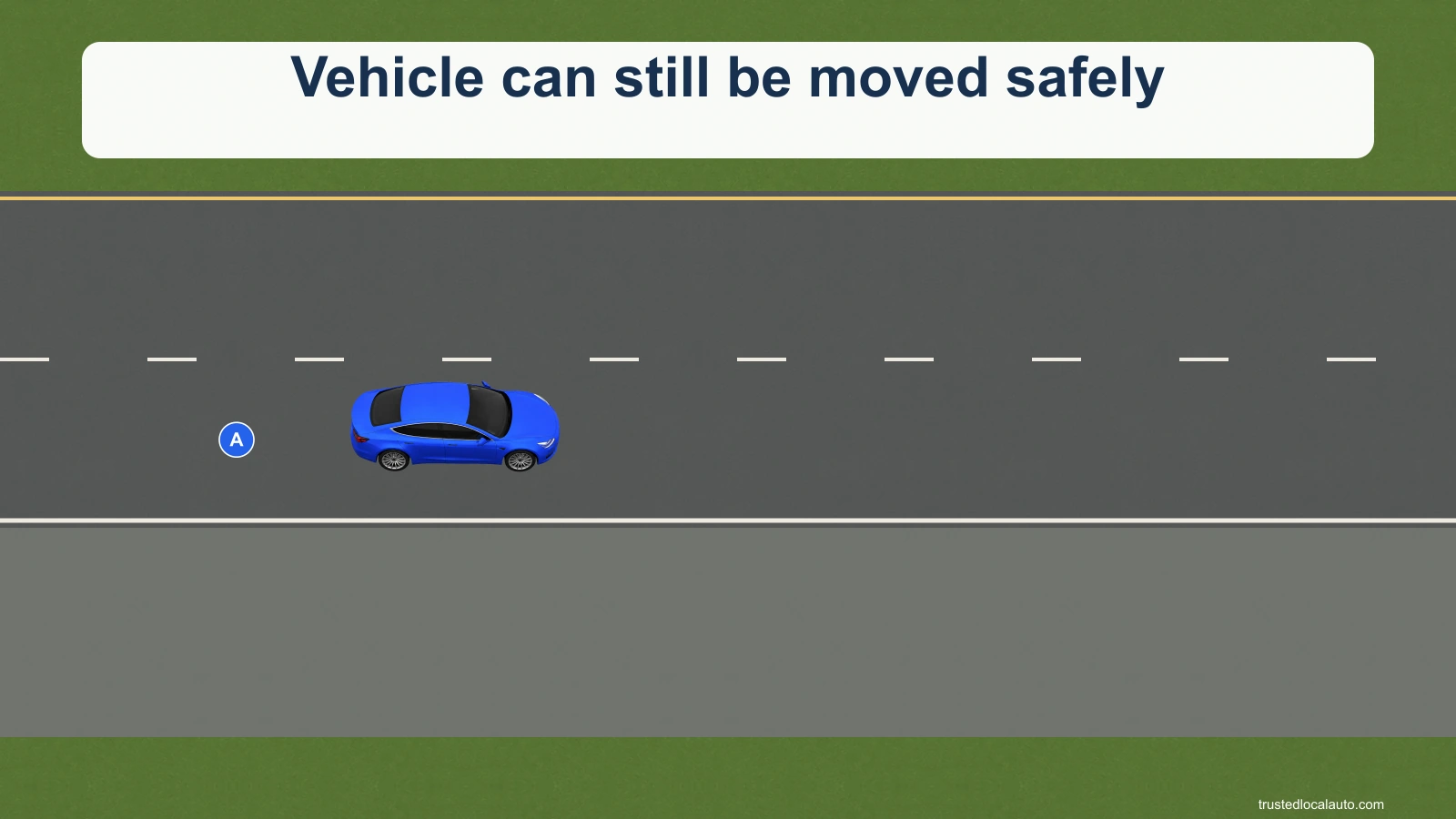 Movable car after a damage-only crashAfter a property-damage-only crash on a limited-access highway, your vehicle can be moved without further injury or damage. What must you do with it?Try this question
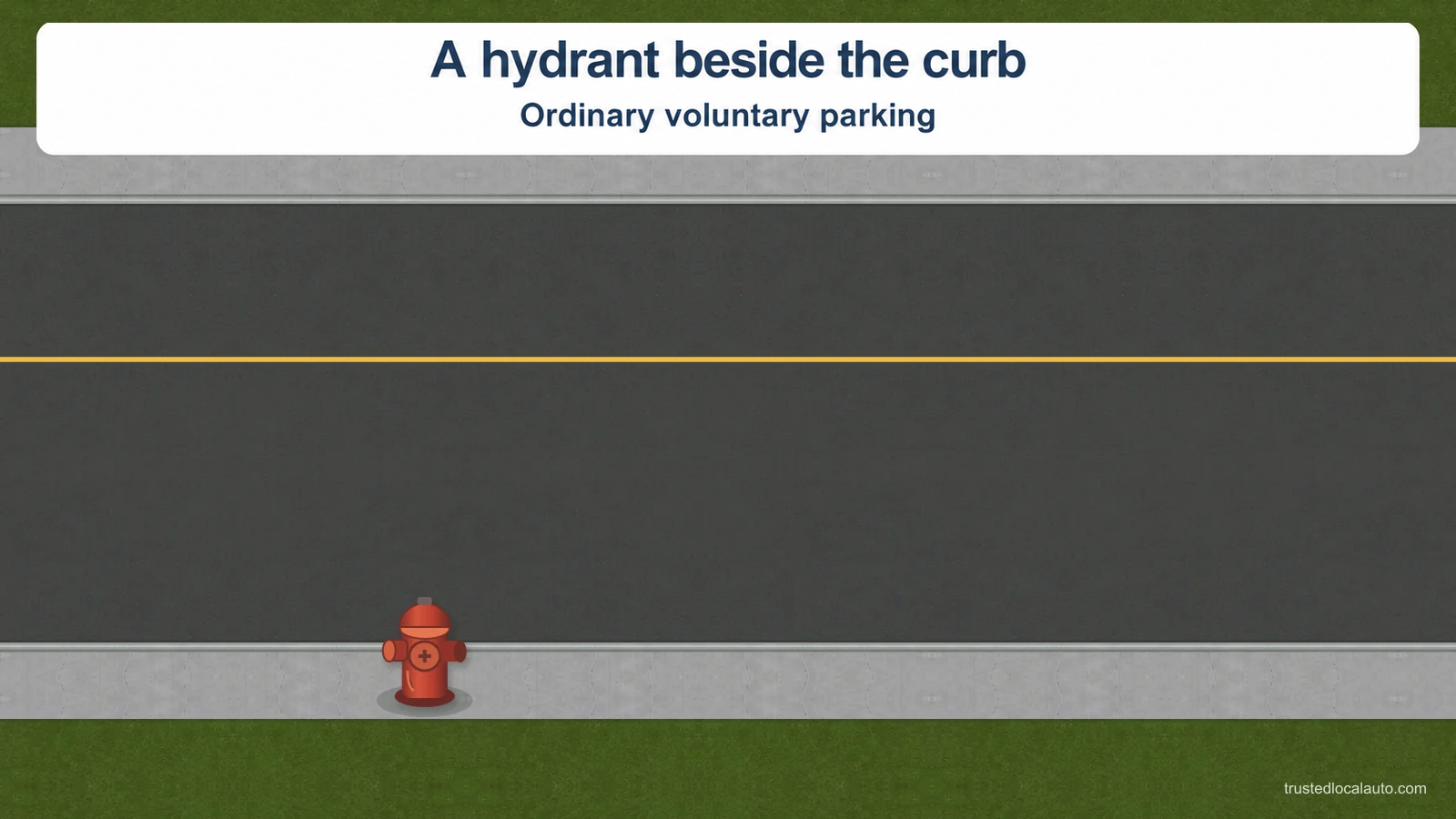 Fire-hydrant clearanceDuring ordinary voluntary parking where Connecticut’s general hydrant rule applies, how far must your vehicle stay from a fire hydrant?Try this question
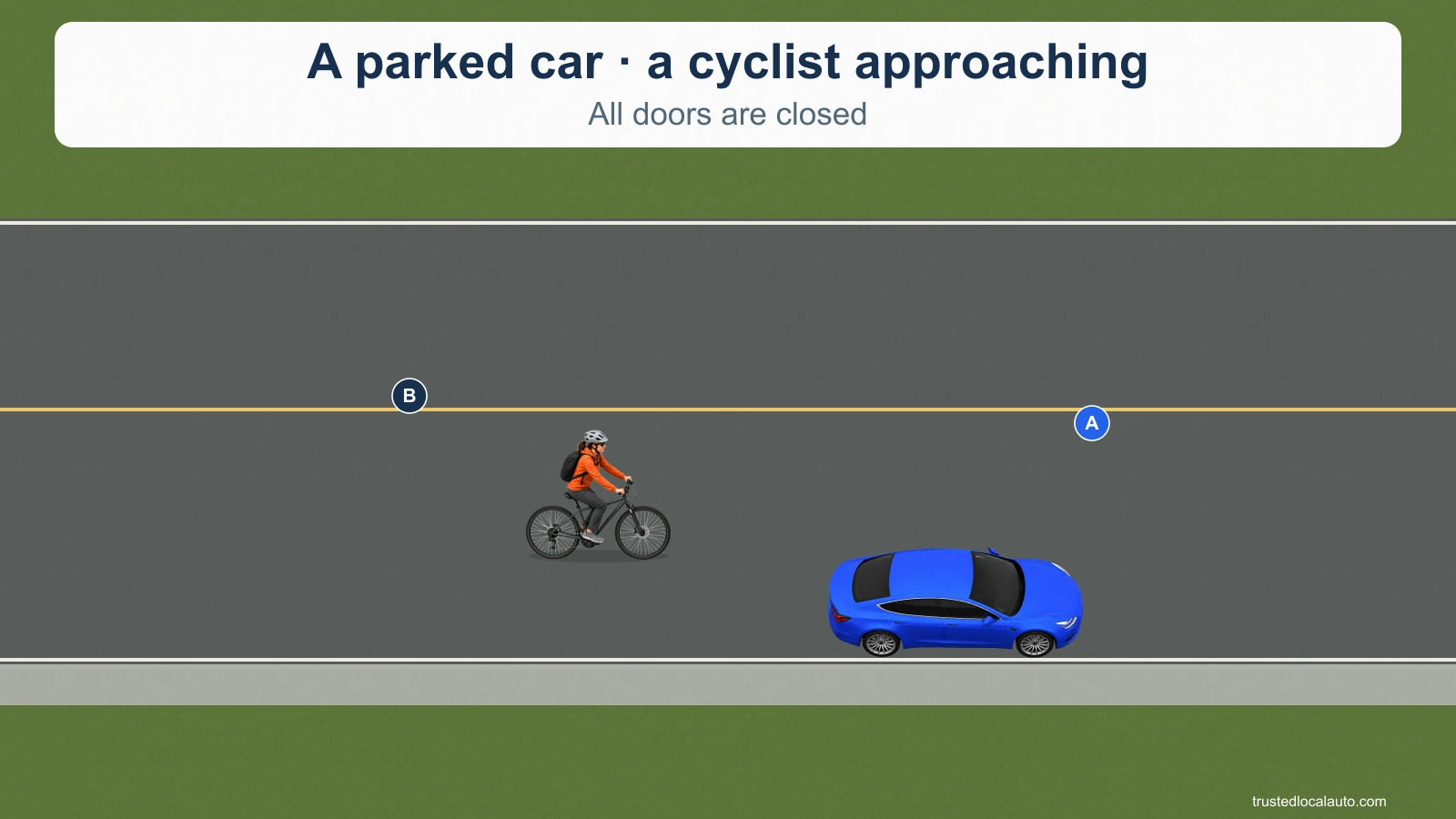 Opening a door beside trafficYou have parked beside the right curb. Before opening the traffic-side door as a cyclist approaches from behind, what should you do?Try this question
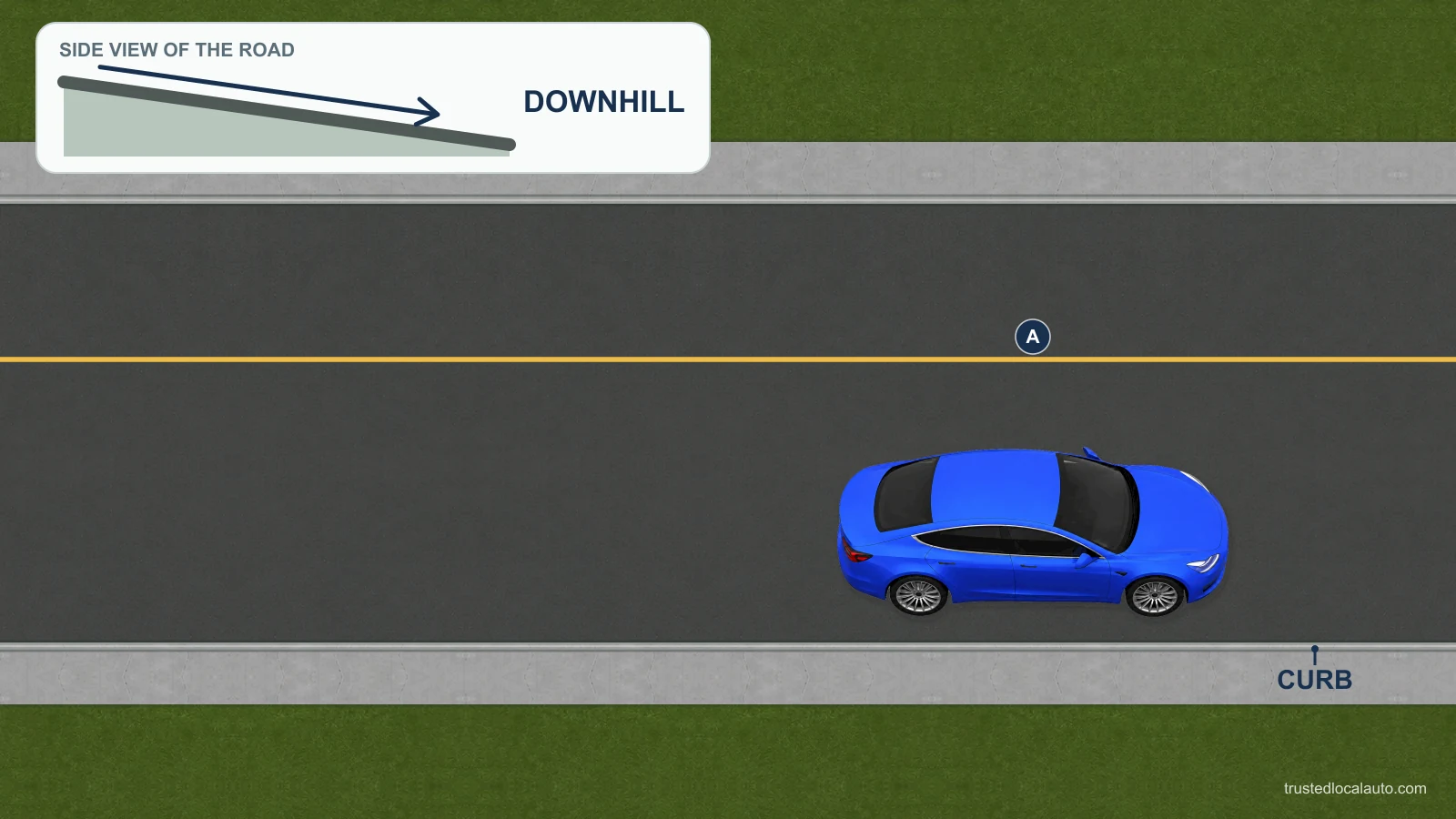 Parking downhill with a curbYou park facing downhill beside the right curb. How should you secure the vehicle against rolling?Try this question
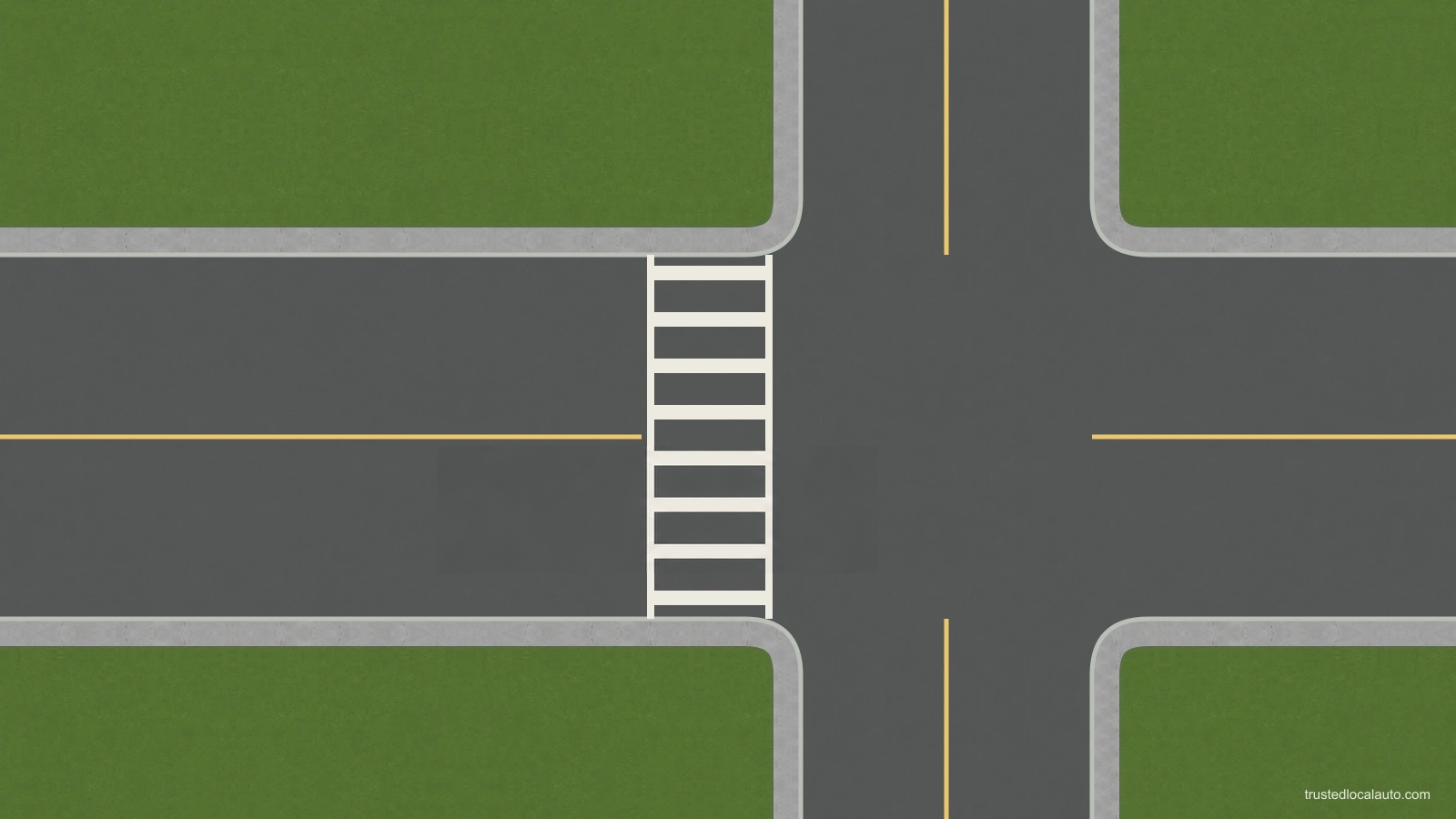 Places that must remain clearWhich location must not be used as an ordinary parking space?Try this question
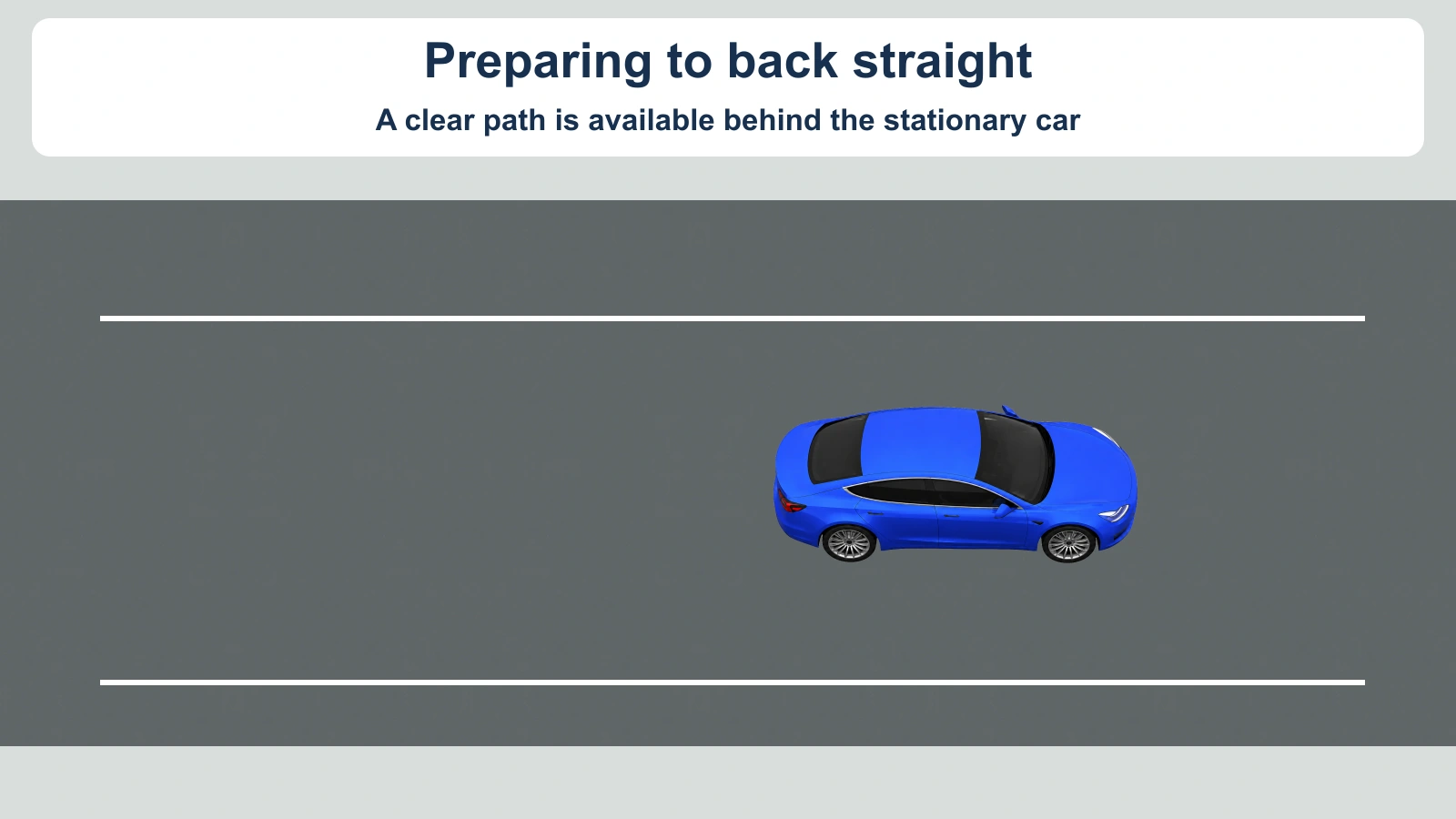 Safe backing checkBefore backing from a parking space, what should you do?Try this question
8 text questions
More questions in this topic
- Who may use a parking space reserved by an accessible-parking sign?
- Under Connecticut’s general parking rule, with no qualifying curb extension, available marked space or other exception, how far must you stay from an intersection or the approach to a marked crosswalk?
- What must happen before pulling away from a curb or parked position?
- Safety permits ordinary parking beside a right-hand curb. A marked bikeway with a buffer lies between the parking lane and the curb. Which rule applies to the right-hand wheels? Hard
- You park near an intersection. At the corner there is a curb extension at least as wide as the parking lane. There is no marked parking space, and no officer or local rule gives other directions. Which statement is correct? Hard
- You park beside the curb with 8 feet between your car and a fire hydrant. This is ordinary parking, and no sign, officer or local rule gives other directions. Which statement is correct? Hard
- You park on the approach to a YIELD sign. There is no curb extension and no marked parking space, and no officer or local rule gives other directions. What is the minimum clearance between your car and the YIELD sign? Hard
- Under Connecticut's ordinary parking rules, which parking clearance has a minimum of 10 feet? Hard
Connecticut Class D Knowledge
More Class D Knowledge topics
Road rules · 12 topics
- Licensing & Test Readiness19 questions
- Traffic Signals & Road Markings18 questions
- Observation, Speed & Space11 questions
- Intersections & Right-of-Way14 questions
- Turns, Lanes, Passing & Merging19 questions
- Parking, Reversing & Roadside Stops15 questions · This topic
- Sharing the Road23 questions
- Freeways & High-Speed Roads10 questions
- School Zones, Railways & Work Areas30 questions
- Weather, Visibility & Emergencies18 questions
- Vehicle Safety, Documents & Towing21 questions
- Safe & Responsible Driving19 questions
Each question page shows the answer, the explanation and the official source of the question.