
Connecticut Class D Knowledge topic
Connecticut Class D Knowledge Weather, Visibility & Emergencies
Handle darkness, poor weather, loss of traction, breakdowns, collisions and emergencies.
18 questions, free with an account. 6 of them are hard. Each one has its answer, an explanation and its official source.
- 3 picture questions
- 15 text questions
- 6 of them hard
3 picture questions
Questions in this topic
Select a question to answer it. The answer and the explanation show after you answer.
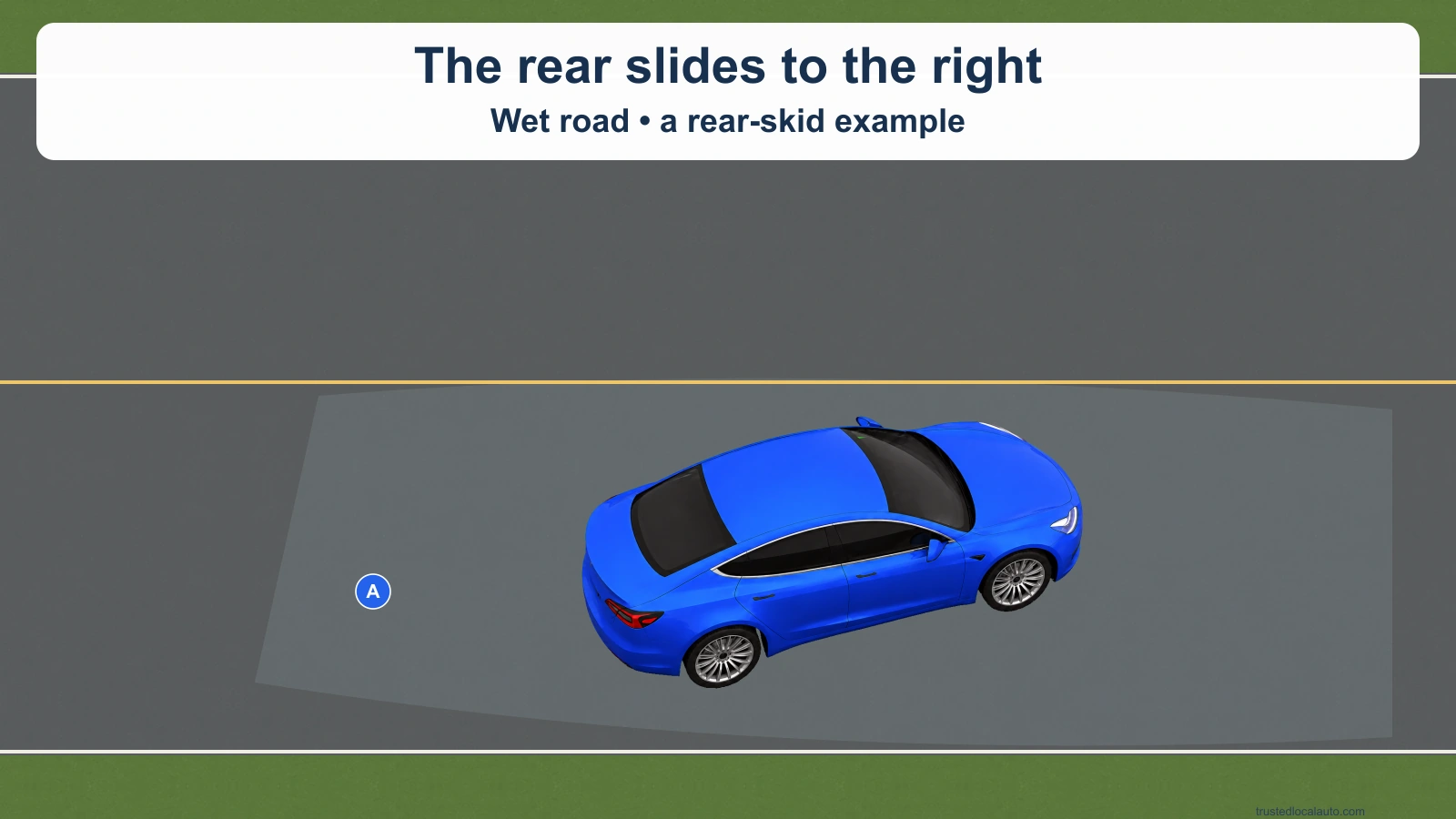 Correcting a rear-wheel skidThe rear of your vehicle begins sliding. Where should you look and steer?Try this question
 Driving in fogWhich headlight setting is usually best in fog?Try this question
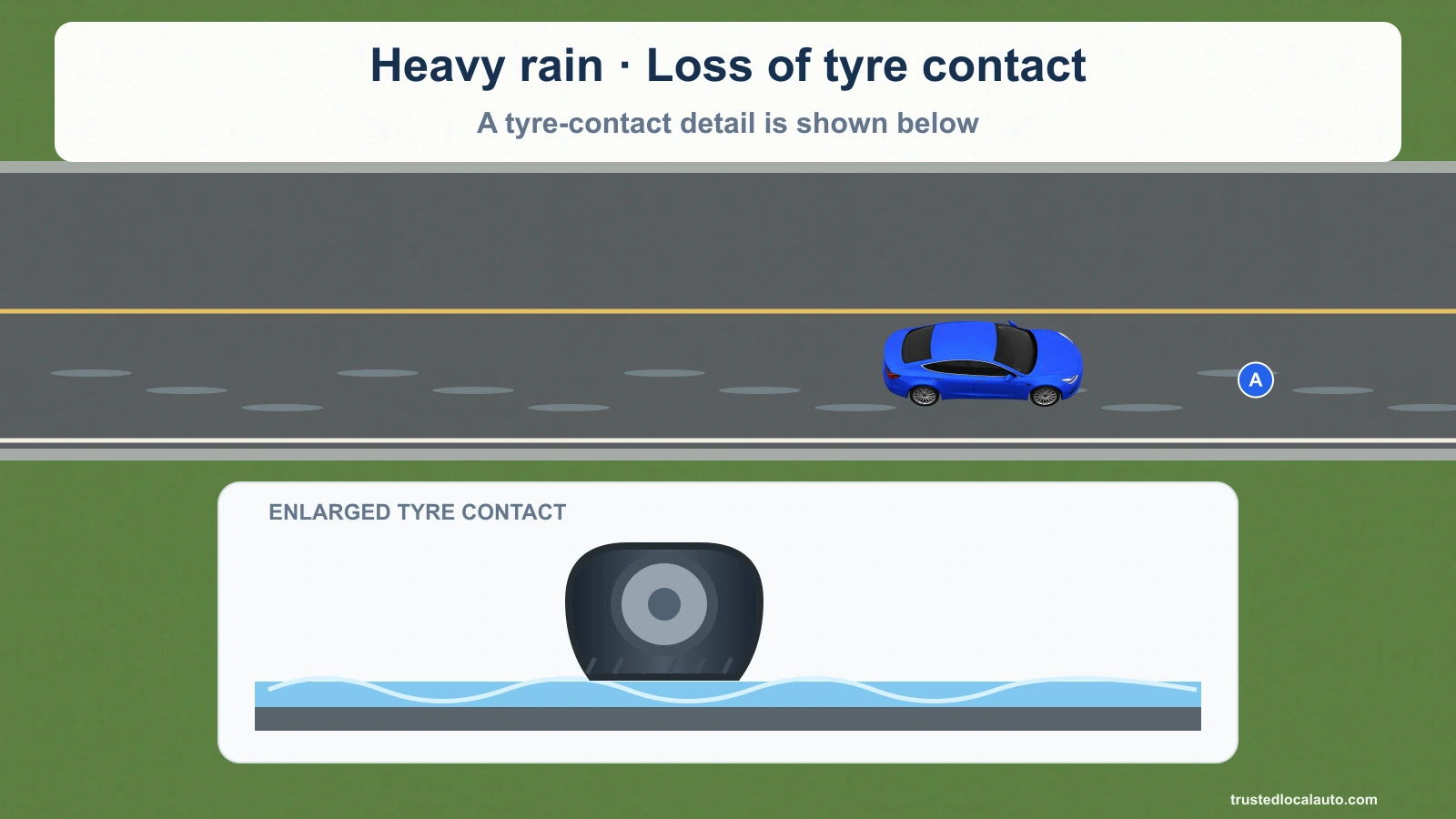 Recovering from hydroplaningYour tires begin to ride on water and steering feels light. What should you do first?Try this question
15 text questions
More questions in this topic
- The brake pedal suddenly loses normal pressure. What should you try while keeping control?
- What is the safest general technique on a snowy or icy road?
- Your car has working anti-lock brakes and you need an emergency stop. How should you use the brake pedal?
- The engine stops while the vehicle is moving. What should you expect?
- When are Connecticut drivers required to display the vehicle's required lights during weather?
- At night, when must you dim headlights to avoid glare for an oncoming vehicle or a vehicle you approach from behind?
- A tire suddenly blows out while you are moving. What should you do?
- The accelerator sticks and the car keeps gaining speed after you lift your foot. What should you do?
- The weather is dry, but it is 45 minutes after sunset. May you drive on a highway using only daytime running lights if they do not illuminate all required lamps?
- Your car has anti-lock brakes (ABS), and they work. A hazard appears ahead, and you need an emergency stop. How should you brake? Hard
- Your engine stops while your car moves along a road. Which statement is correct? Hard
- At night, within what distance must you dim your high beams for an oncoming vehicle, and for a vehicle that you follow? Hard
- At night, your high beams are on. An oncoming car is 400 feet away. No vehicle is ahead of you in your lane. Which statement is correct? Hard
- It is 40 minutes before sunrise. The road is dry, and you can see far ahead. Your car's daytime running lights do not light the rear lamps. Which statement is correct? Hard
- It is noon and the road is dry. Smoke from a fire lets you see people and vehicles only about 200 feet ahead. Which statement is correct? Hard
Connecticut Class D Knowledge
More Class D Knowledge topics
Road rules · 12 topics
- Licensing & Test Readiness19 questions
- Traffic Signals & Road Markings18 questions
- Observation, Speed & Space11 questions
- Intersections & Right-of-Way14 questions
- Turns, Lanes, Passing & Merging19 questions
- Parking, Reversing & Roadside Stops15 questions
- Sharing the Road23 questions
- Freeways & High-Speed Roads10 questions
- School Zones, Railways & Work Areas30 questions
- Weather, Visibility & Emergencies18 questions · This topic
- Vehicle Safety, Documents & Towing21 questions
- Safe & Responsible Driving19 questions
Each question page shows the answer, the explanation and the official source of the question.