
Connecticut Class D Knowledge topic
Connecticut Class D Knowledge Turns, Lanes, Passing & Merging
Choose the correct lane and position for turns, lane changes, passing, merging and shoulder use.
19 questions, free with an account. 6 of them are hard. Each one has its answer, an explanation and its official source.
- 10 picture questions
- 9 text questions
- 6 of them hard
10 picture questions
Questions in this topic
Select a question to answer it. The answer and the explanation show after you answer.
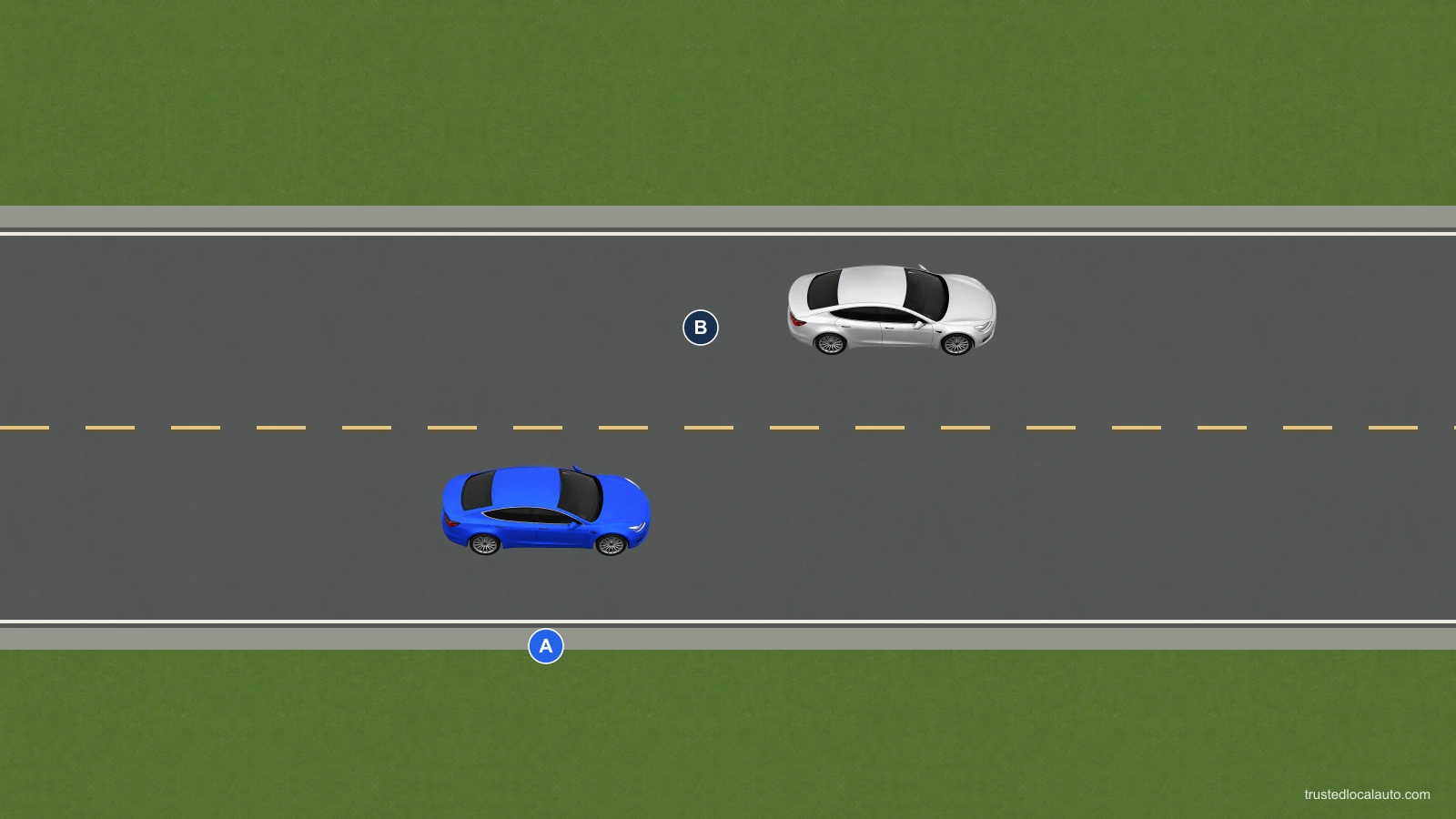 Being overtakenAnother vehicle is lawfully passing you. What should you do?Try this question
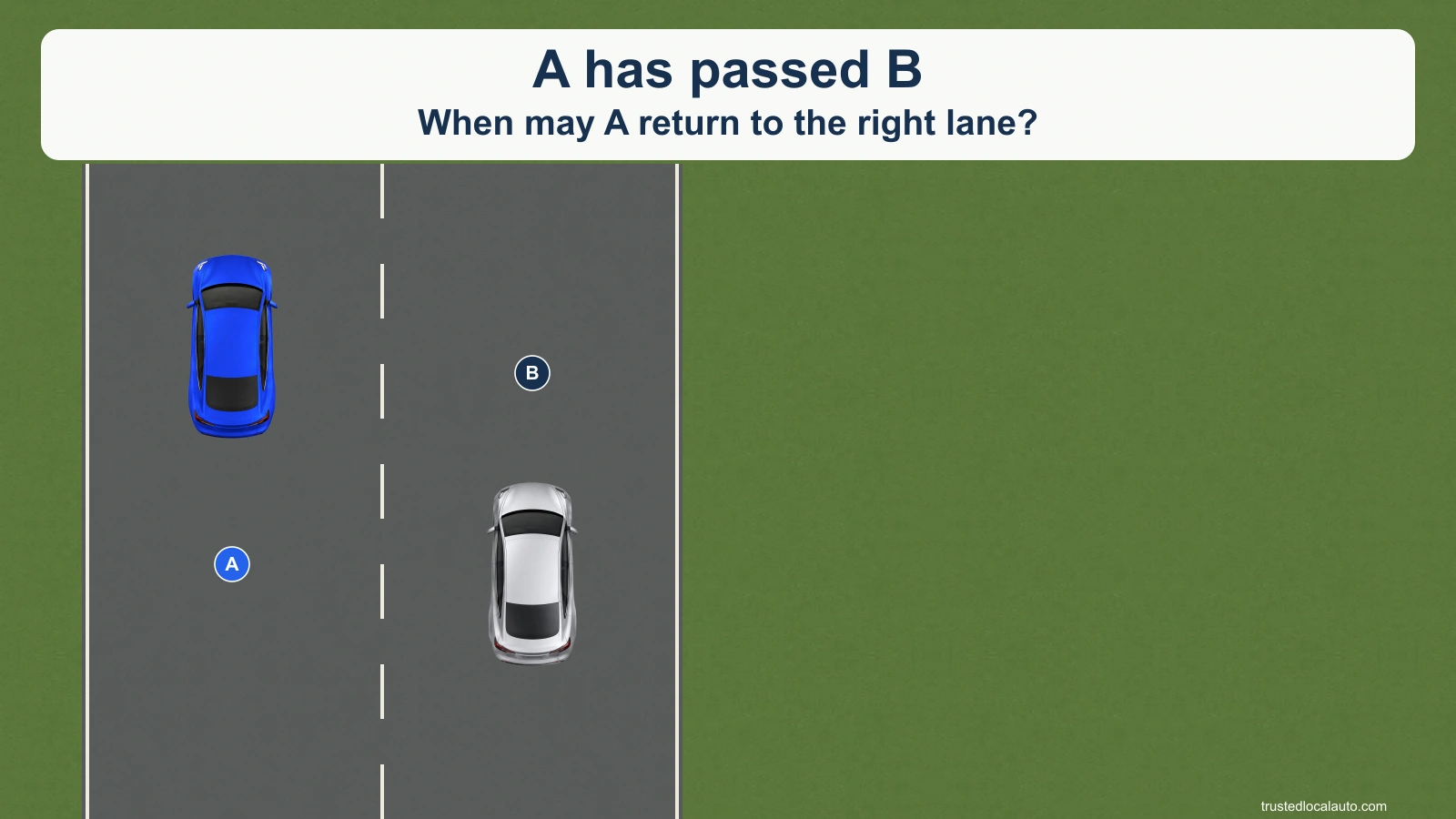 Completing a left-side passAfter passing another vehicle on the left, when may you return to the right lane?Try this question
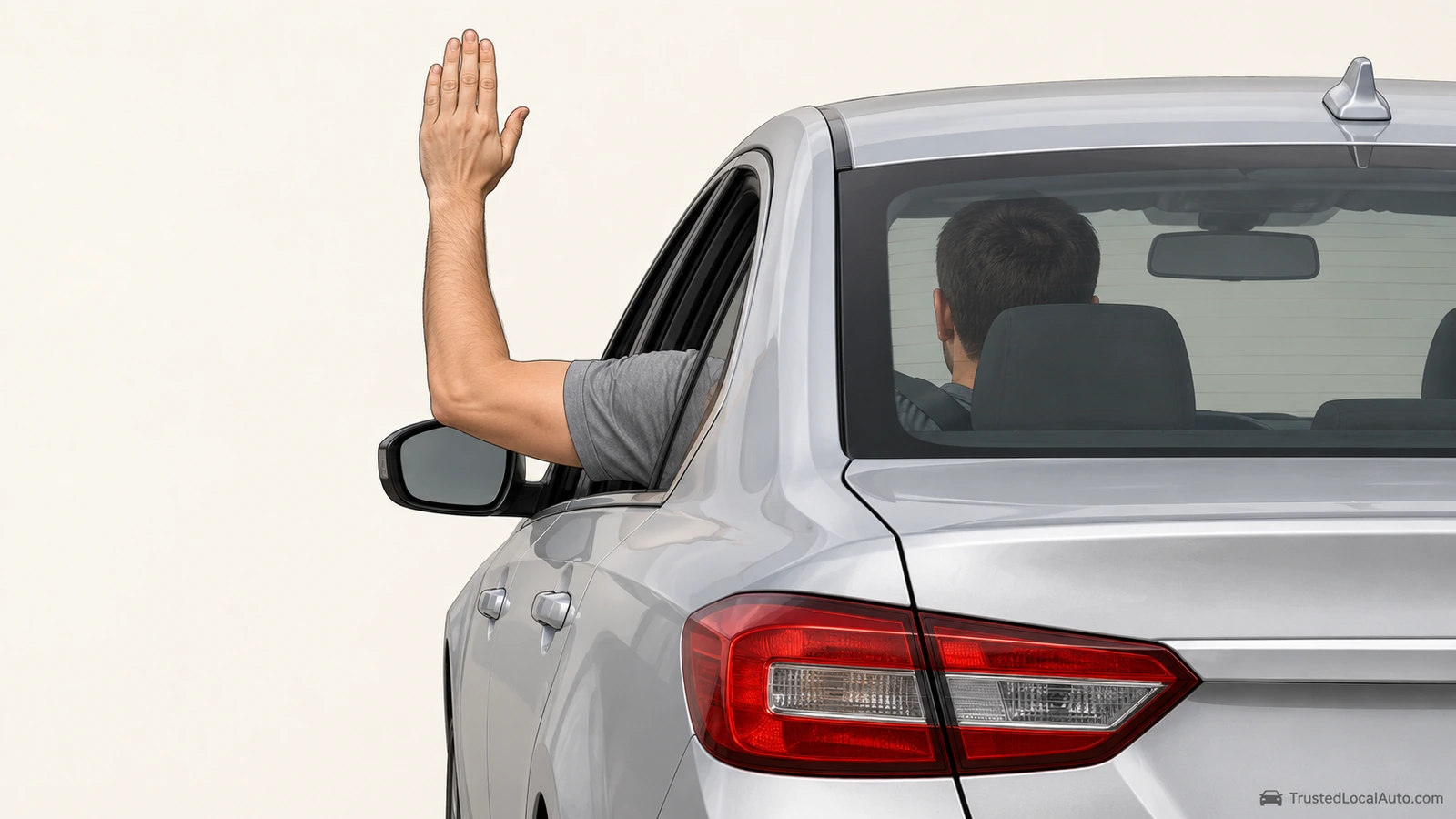 Hand signal for a right turnA driver uses the left arm to give a hand signal, with the arm bent upward. What movement does this signal indicate?Try this question
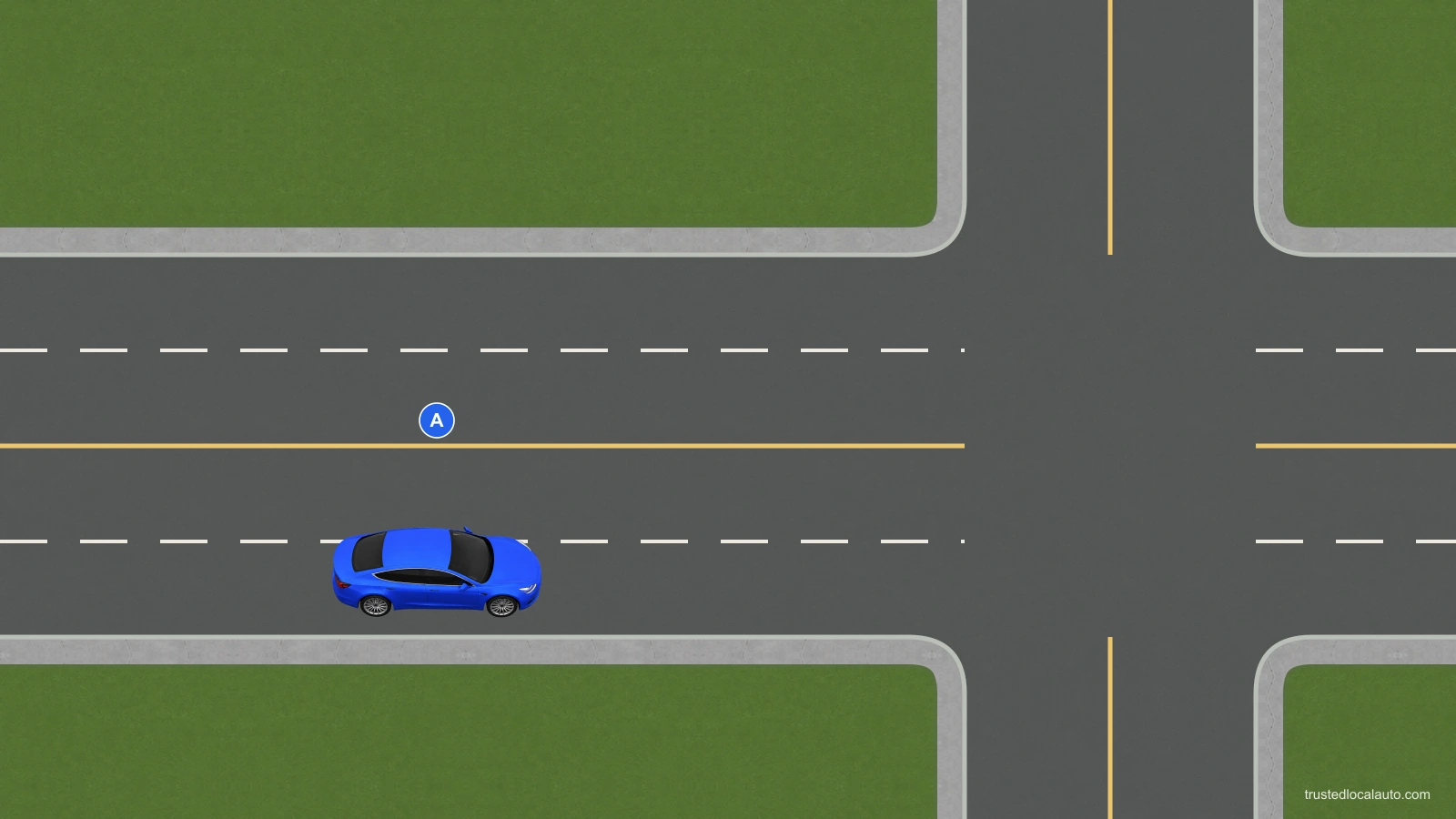 Left-turn approach laneOn a two-way road, where should you normally position your vehicle before a left turn?Try this question
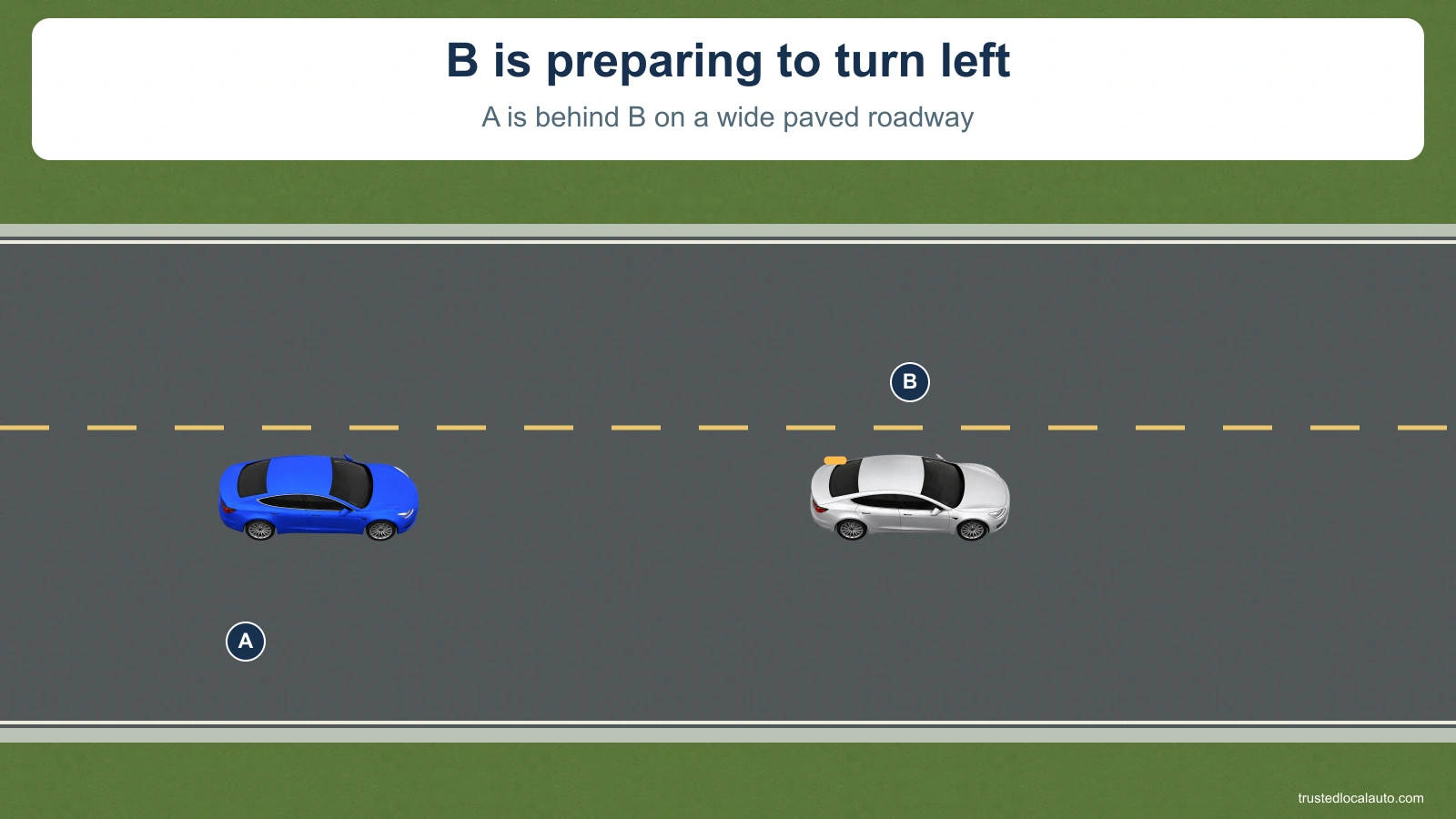 Passing a left-turning vehicle on the rightA vehicle ahead signals a left turn. There is enough safe space in a lawful traveled lane to its right, without using the ordinary shoulder. May you pass on the right?Try this question
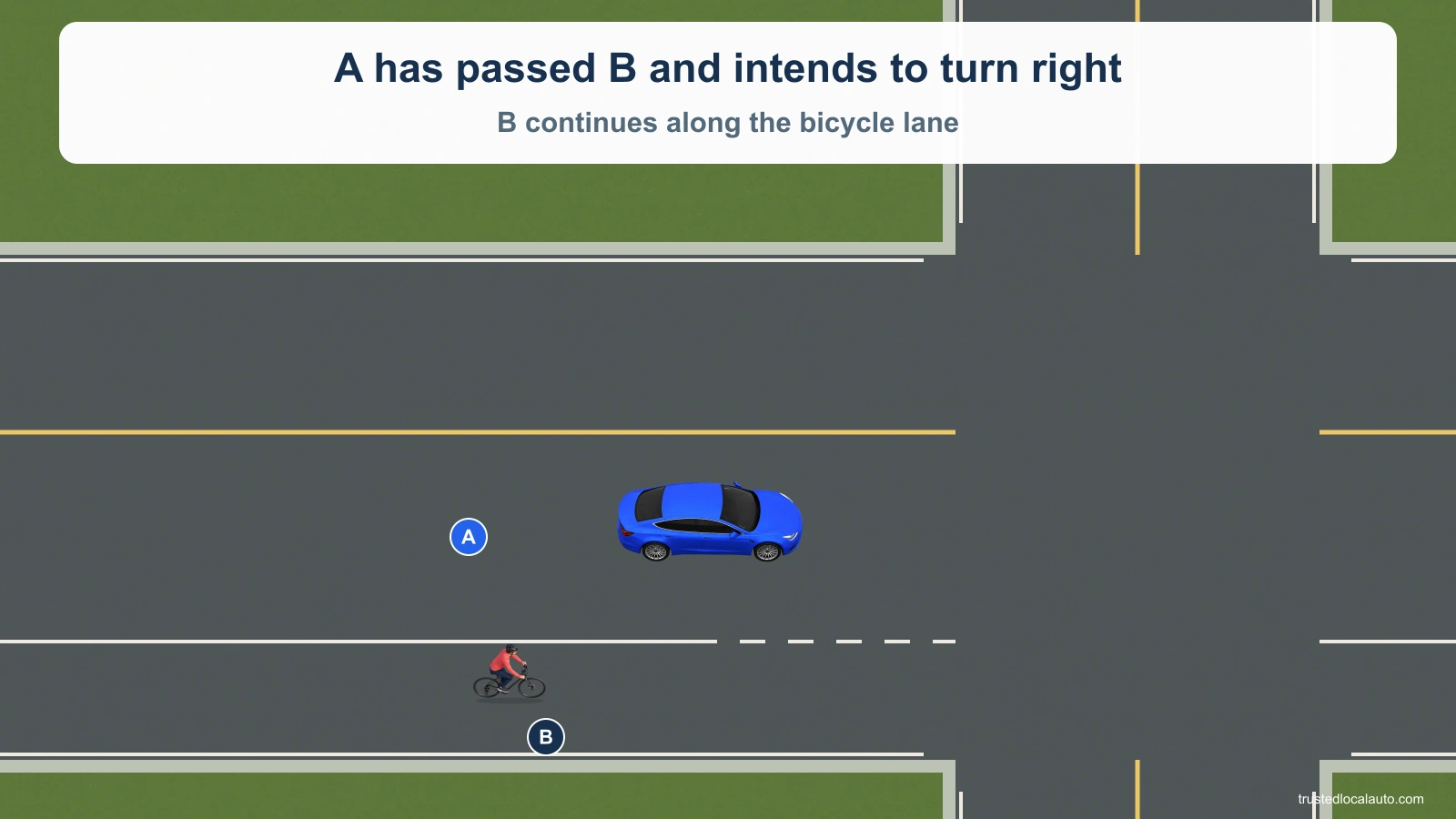 Right turn after passing a bicycleYou have just overtaken a bicycle and want to turn right across the cyclist’s path. What must you do?Try this question
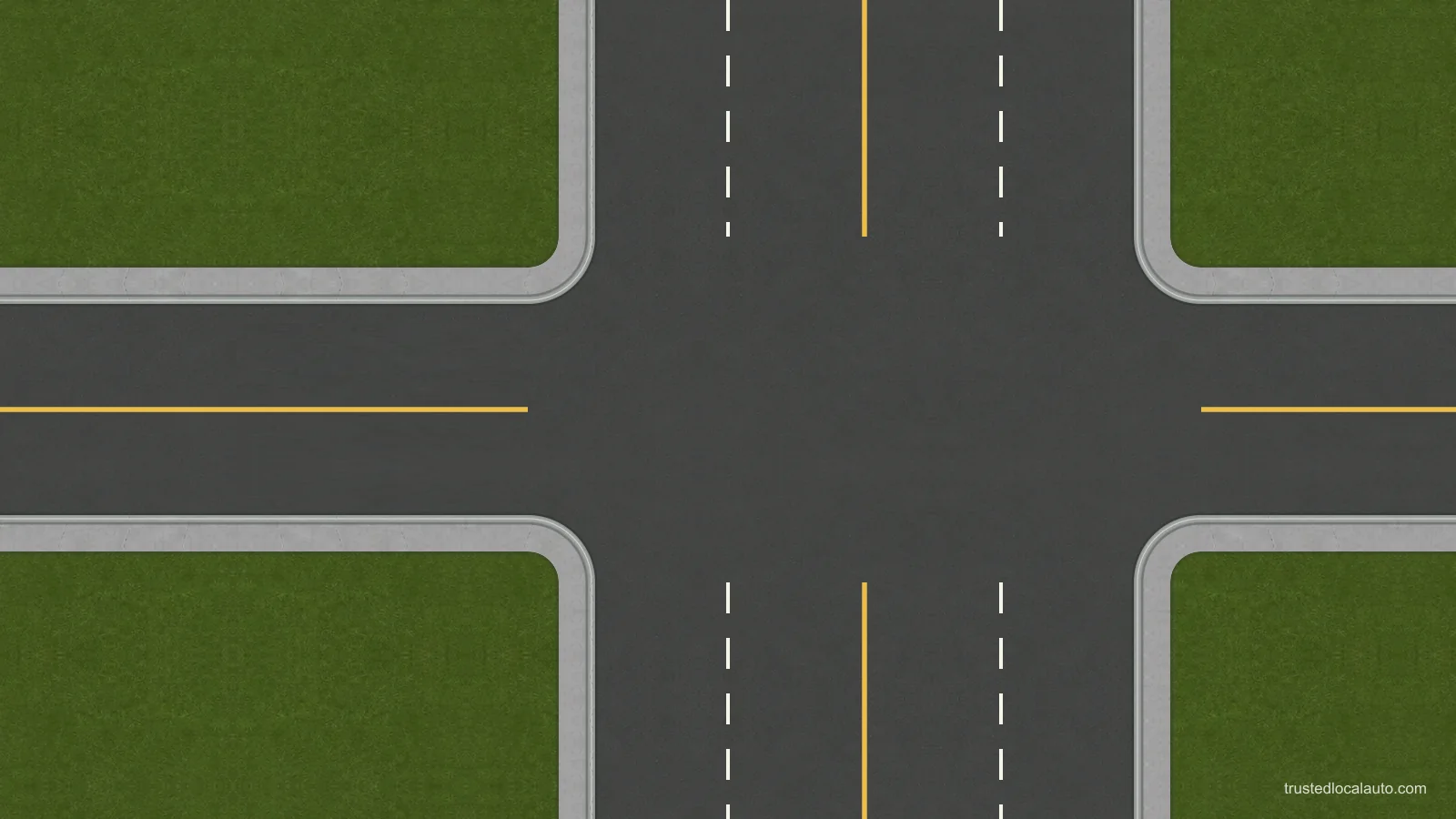 Right-turn approach laneWhere should you normally begin a right turn?Try this question
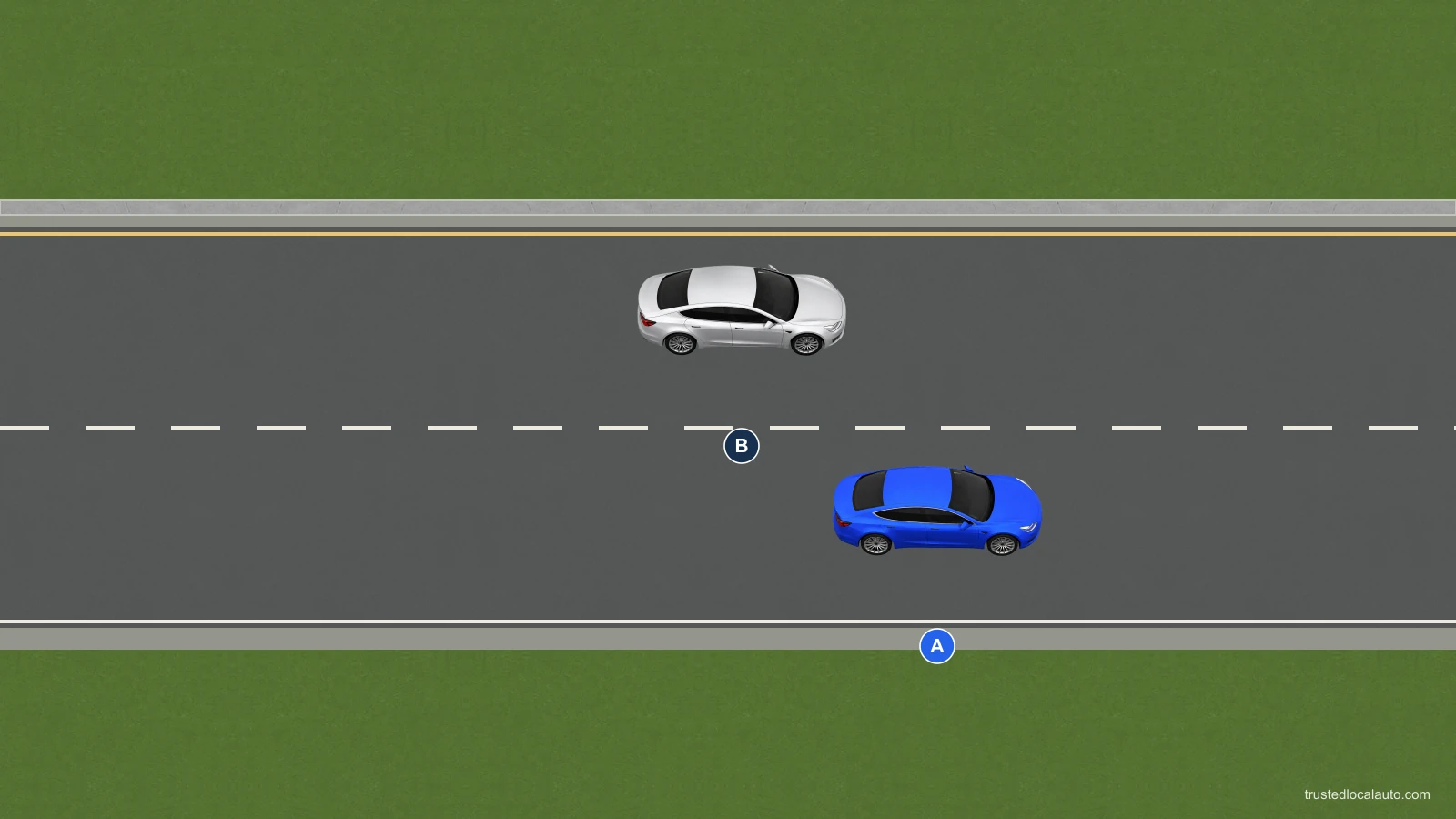 Safe lane-change sequenceWhat checks belong before a lane change?Try this question
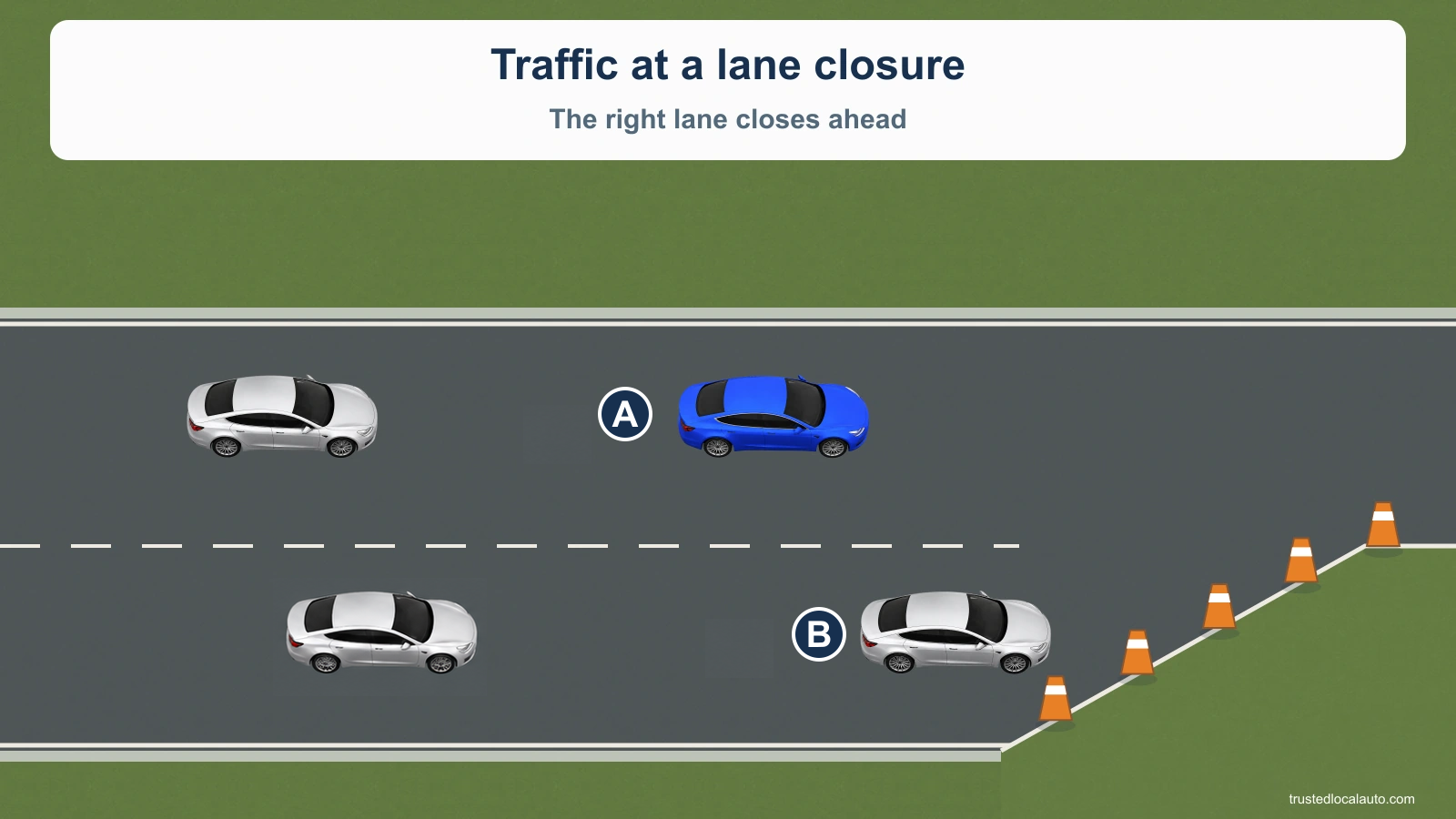 Two lanes becoming oneTwo lanes are becoming one. What is the safest general approach?Try this question
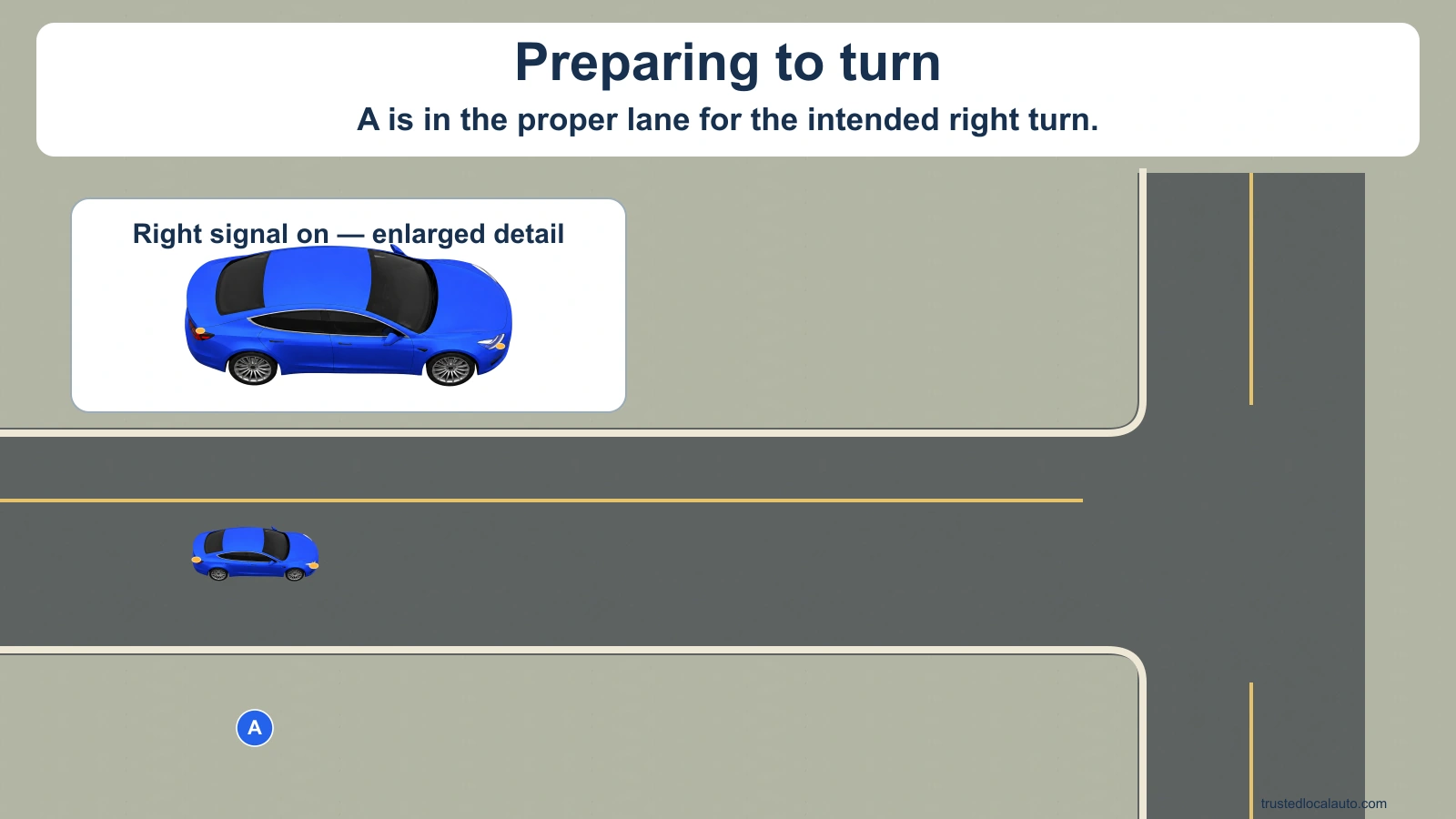 Turn-signal distanceFor how far before a turn must a Connecticut driver continuously signal?Try this question
9 text questions
More questions in this topic
- A bicycle is ahead where a solid yellow no-passing line applies. What is required before you use Connecticut’s bicycle-passing exception?
- May you cross left of center to pass when a curve blocks a clear view ahead?
- You approach the crest of a hill where your vehicle cannot be seen from 500 feet in both directions. May you make a U-turn there?
- A bicyclist rides ahead of you where a solid yellow no-passing line is on your side. You can see far ahead, no oncoming traffic is in sight, and you can leave more than 3 feet of room. Which statement is correct? Hard
- On a two-way road, the vehicle ahead signals a left turn and slows. To its right there is only a paved shoulder, not a lane. No sign or marking permits travel on the shoulder. Which statement is correct? Hard
- A driver turns on the right turn signal 60 feet before a right turn and keeps it on until the turn. Which statement is correct? Hard
- You want to make a U-turn on a curve. Drivers from both directions can see your car from 600 feet away. A NO U-TURN sign is posted at this place. Which statement is correct? Hard
- You want to make a U-turn near the crest of a hill. Drivers from each direction can see your car only when they are within 400 feet of it, not farther away. No sign about U-turns is posted. Which statement is correct? Hard
- Which of these Connecticut driving rules uses a distance of 100 feet? Hard
Connecticut Class D Knowledge
More Class D Knowledge topics
Road rules · 12 topics
- Licensing & Test Readiness19 questions
- Traffic Signals & Road Markings18 questions
- Observation, Speed & Space11 questions
- Intersections & Right-of-Way14 questions
- Turns, Lanes, Passing & Merging19 questions · This topic
- Parking, Reversing & Roadside Stops15 questions
- Sharing the Road23 questions
- Freeways & High-Speed Roads10 questions
- School Zones, Railways & Work Areas30 questions
- Weather, Visibility & Emergencies18 questions
- Vehicle Safety, Documents & Towing21 questions
- Safe & Responsible Driving19 questions
Each question page shows the answer, the explanation and the official source of the question.