
Back to Nebraska
Nebraska Class O Learner's License Practice Test
Full test preview Question 1 of 25
0 answered 25 remaining
Passing target: 80% (20/25)
Traffic Signals & Road MarkingsStandalone practice
You are in a right-turn lane. The signal for your lane shows a steady red arrow pointing right, and no cars or pedestrians are coming. What may you do?
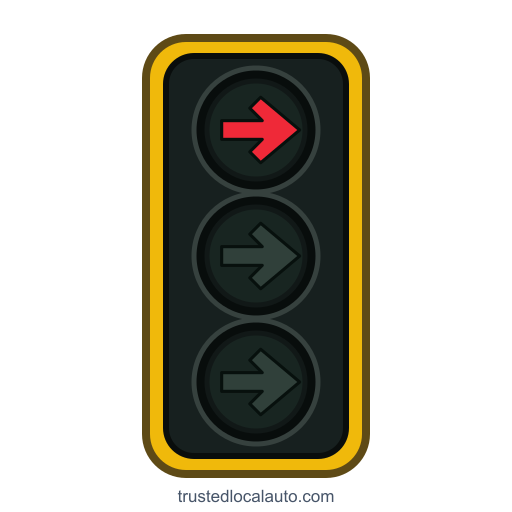
Correct answer: Stop and stay stopped until the arrow changes; you may not turn on a red arrow.
Why
A steady red arrow means you must stop at the stop line, crosswalk or edge of the intersection and stay stopped; you may not make the turn it points to until a green arrow or other signal allows it. This is different from a steady circular red, where a right turn is allowed after a full stop unless a sign forbids it. Wait for the arrow to change even when the way looks clear.
Verified against Nebraska Class O Driver's Manual · Traffic Signal Colors and Types · p. 40
Report a question issueContinue learning
Related Nebraska questions
You are driving on a one-way street with two lanes. A broken white line separates your lane from the lane on your left, and you want to move into that lane. What does the broken white line tell you?You are on a two-lane road marked with two solid yellow center lines. A car ahead is going 10 mph below the limit, and the oncoming lane looks clear for a long way. What do the lines mean for you?You approach a railroad crossing that has flashing red lights but no gate and no stop line. The lights begin to flash, but you cannot see or hear a train. What must you do?You approach an intersection where the traffic light is flashing red in your direction. What must you do?You are first in line at a red light. The light turns green, but a pedestrian is still finishing the crossing in front of you, and a car from the cross street is still clearing the intersection. What should you do?You are driving on a two-lane, two-way street with no traffic signal. A pedestrian who started from the far curb is walking in a marked crosswalk ahead and is now in the lane for oncoming traffic, next to your lane. What does Nebraska law require you to do?