
Back to Nevada
Nevada Class C Instruction Permit Practice Test
Full test preview Question 1 of 25
0 answered 25 remaining
Passing target: 80% (20/25)
Weather, Visibility & EmergenciesStandalone practice
You are using your high beams on a dark two-lane road when a vehicle comes toward you. When must you switch to low beams?
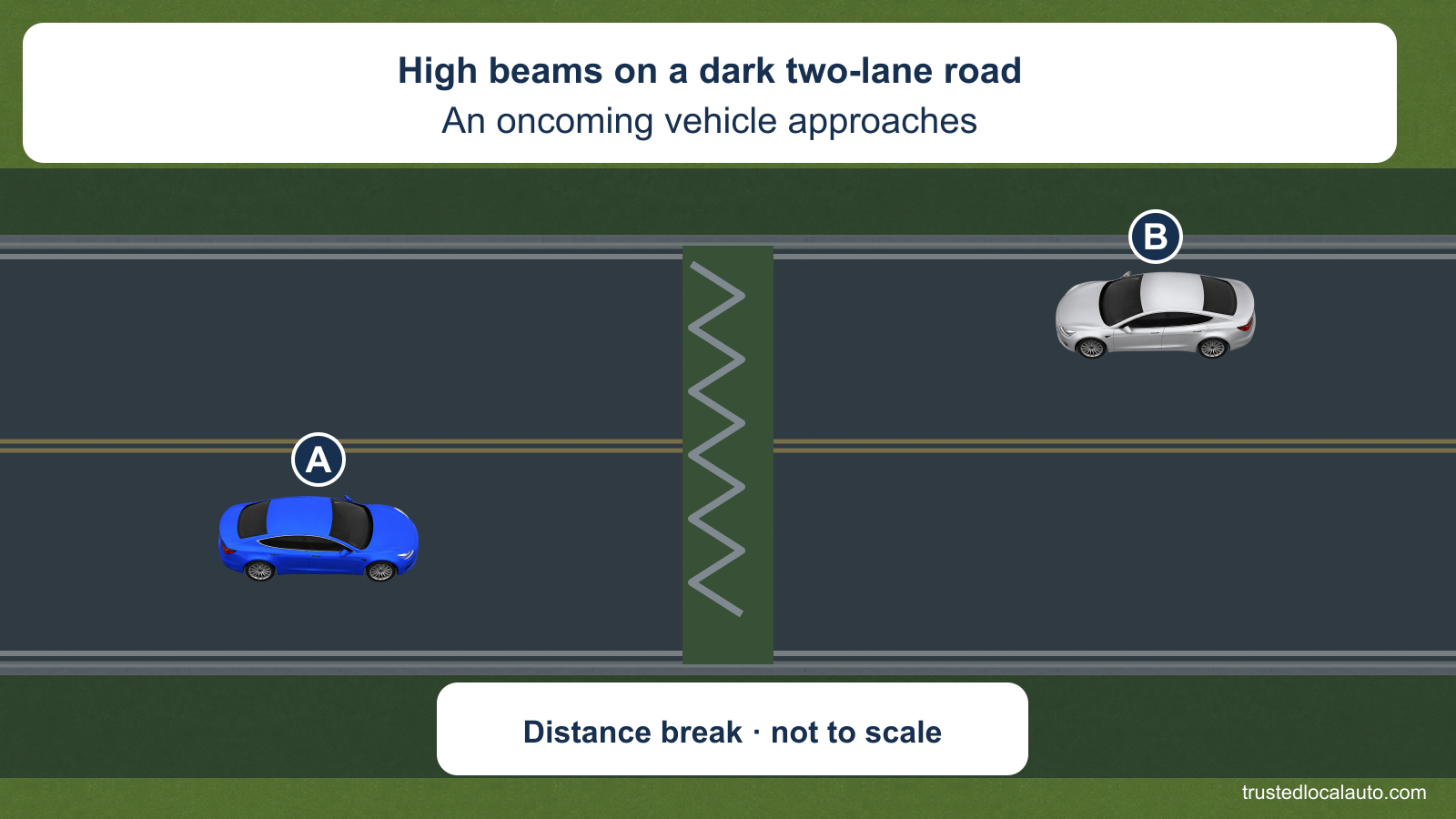
Blue A meets oncoming silver B on a dark two-way highway. A conspicuous break between the two road segments is labeled as not to scale.
Correct answer: When the vehicle is within 500 feet of you.
Why
High beams shine into the eyes of the other driver and can blind them for a few seconds. Also use low beams when you are within 300 feet behind a vehicle that you follow. Use high beams in open country at night when no other vehicle is near.
Verified against Official Nevada Driver Handbook · Night Driving · p. 56
Report a question issueContinue learning
Related Nevada questions
Your gas pedal sticks while you drive. You press it hard and release it, but it stays stuck. What should you do next?Your car has four-wheel anti-lock brakes (ABS). A car ahead stops suddenly, and you must brake as hard as you can. What should you do?You drive in the right lane of a freeway that has two lanes in your direction. A police car with flashing lights is stopped on the right shoulder ahead. The left lane is clear. What should you do?You press the brake pedal and it suddenly sinks to the floor with little braking. What should you try first?It is 10 a.m. on a highway. You drive into dense fog, and now you can see only about 300 feet ahead. What should you do about your lights?Light rain starts to fall after several weeks of dry weather. Why is the road especially slippery at this time?