
Practice question, Question 1 of 30
Passing target: 80% (24/30)
You pass a slower car on a two-lane road where passing is allowed. The oncoming lane stays clear. When may you move back into the right lane?
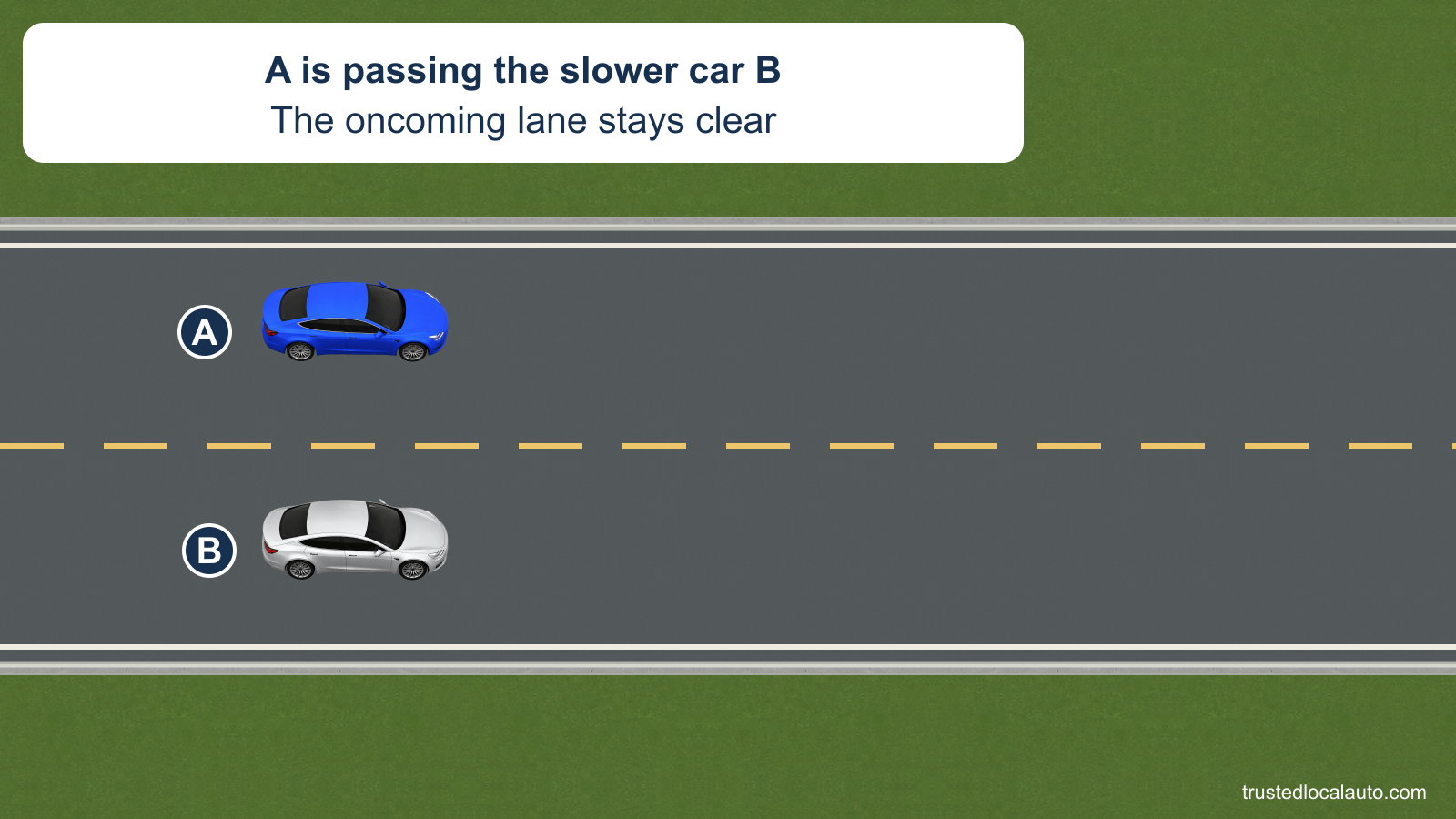
Correct answer: When you are safely clear, so the other car need not slow down for you
Why
A safe pass follows a plan: look ahead and behind, signal, and tap the horn to alert the driver ahead, as the handbook describes. Pass at least two feet to the left of the other vehicle and keep a steady speed. Before you start, make sure that you can see far enough ahead to finish the pass and return before you meet oncoming traffic.
Verified against North Carolina Driver Handbook · Passing · p. 57
Is this question correct and clear?
Continue learning
Related North Carolina questions
- On a two-lane road, the driver behind you signals, sounds the horn and moves into the left lane to pass you. What must you do?
- Your car's turn signal lights stop working, and you need to turn right at the next corner. How do you give a right-turn hand signal?
- You drive in the right lane of a highway with three lanes in your direction. You want to move into the center lane. Which lanes should you check before you move?
- You drive in the right lane of a four-lane street with two lanes in each direction. You notice that you need to turn left at the intersection just ahead, but the left lane is full of cars. What should you do?
- You drive down an interstate entrance ramp that has a ramp meter signal. The signal is dark and shows neither red nor green. What should you do?
- On a two-lane road you follow a slow truck. A curve ahead lets you see only about 350 feet of road, and no sign or solid yellow line prohibits passing. What is the least clear view ahead that North Carolina law requires before you may pass on this curve?