
Back to Ontario
Ontario G1 Practice Test
Full test preview Question 1 of 40
0 answered 40 remaining
Passing target: 16 correct signs and 16 correct rules (TLA practice targets)
Pedestrians, cyclists, school buses and other road usersStandalone practice
What is a "blind spot"?
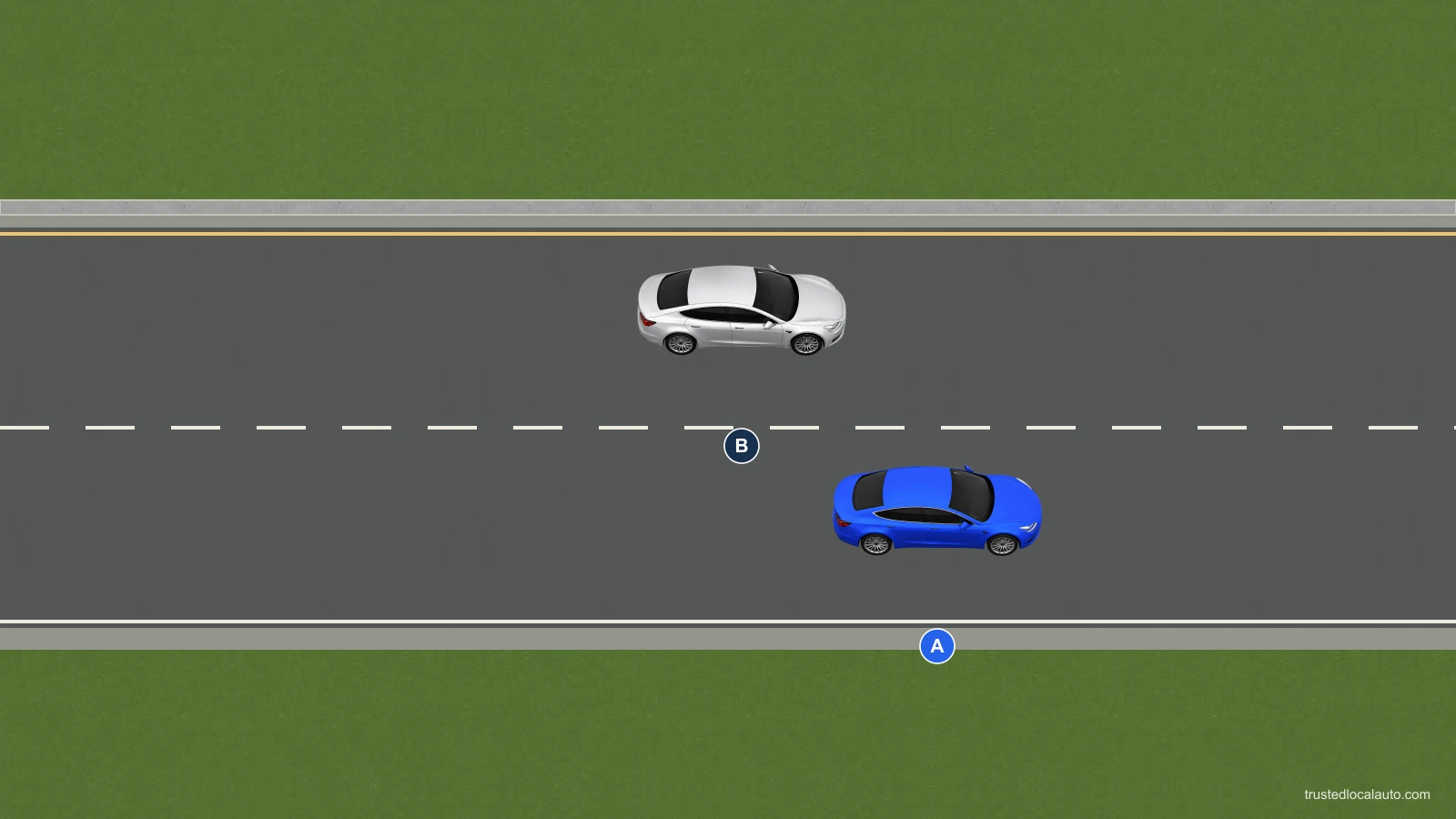
Blue car A faces east in the right lane. Silver car B occupies the neighbouring left lane beside A’s rear quarter. Both cars face the same direction.
Correct answer: Areas beside and behind you that mirrors do not show.
Why
Blind spots are areas around your vehicle that your mirrors do not capture. You must physically check your blind spots by turning your head before changing lanes or turning.
Verified against The Official Ministry of Transportation (MTO) Driver’s Handbook · Pedestrians, cyclists, large vehicles, buses and horse-drawn vehicles · p. 37, 47
Report a question issueContinue learning
Related Ontario questions
When you approach a streetcar that is stopped to let passengers on or off, and there is no safety island, you must:When approaching a railway crossing with flashing red lights and a lowering gate, when are you legally allowed to cross?You approach a railway crossing with its warning lights flashing and gates lowered. What should you do?You are in the lane beside a stopped emergency vehicle with flashing red or red-and-blue lights. The Ontario highway has at least two lanes in your direction. What does the move-over rule require?On an Ontario highway with at least two lanes in your direction, you approach a stopped emergency vehicle or tow truck from the lane beside it. The emergency vehicle has flashing red or red-and-blue lights; a tow truck has flashing amber lights. What must you do?What is 'dooring', and how can you avoid it?