
Practice question, Question 1 of 40
Passing target: 16 correct signs and 16 correct rules (Trusted Local Auto practice targets)
You are in the lane beside a stopped emergency vehicle with flashing red or red-and-blue lights. The Ontario highway has at least two lanes in your direction. What does the move-over rule require?
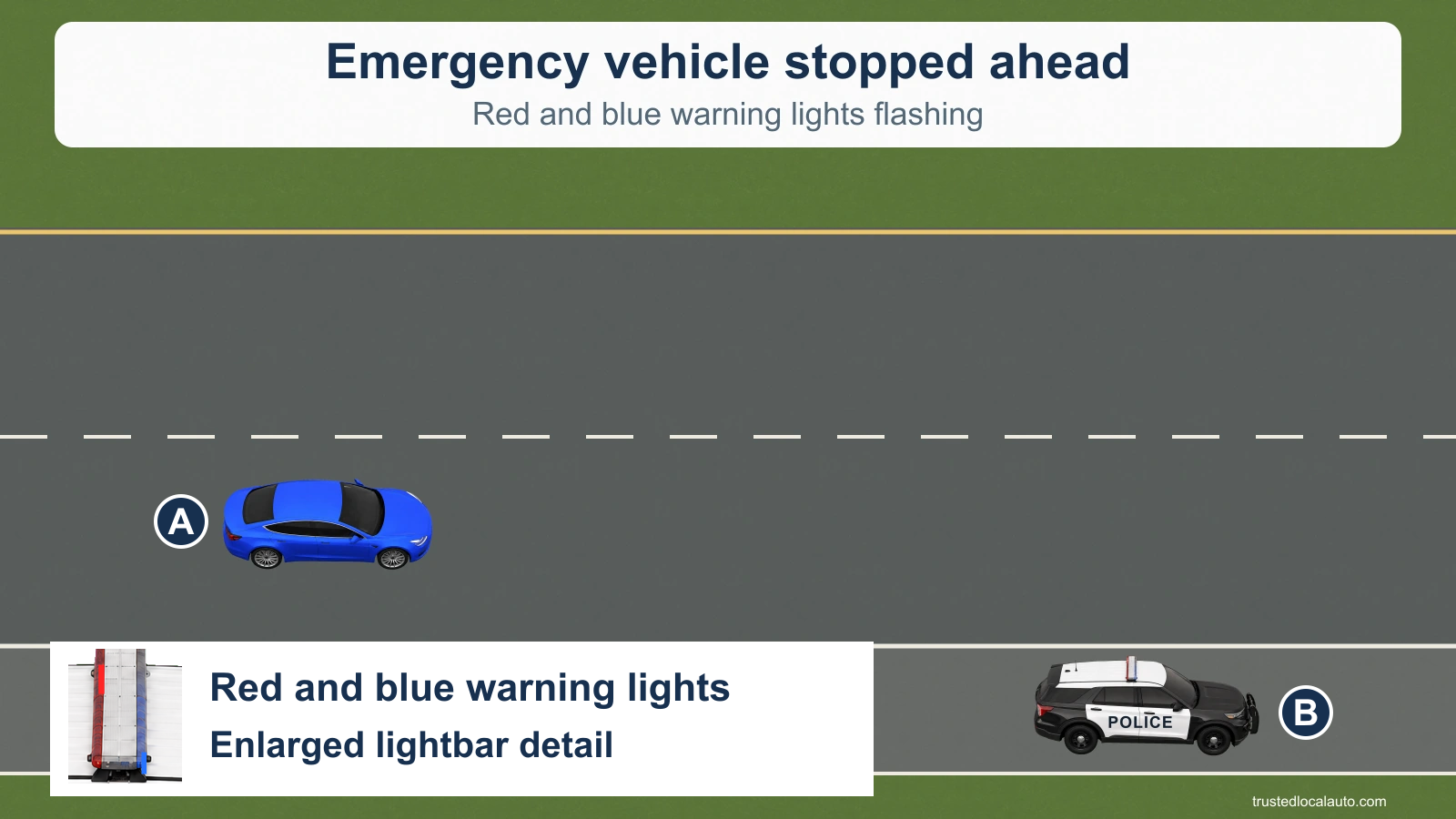
Correct answer: Slow down, proceed cautiously and move into a lane farther away if safe.
Why
For a stopped emergency vehicle with flashing red or red-and-blue lights on your side of the highway, slow down and proceed cautiously. With two or more lanes in your direction, move away from its lane or the adjacent lane when that movement is safe. The same current provisions cover a stopped tow truck displaying flashing amber lights. Amber lights alone do not turn a vehicle into an emergency vehicle.
Verified against Highway Traffic Act, R.S.O. 1990, c. H.8 · Approaching stopped emergency vehicles and tow trucks
Is this question correct and clear?
Continue learning
Related Ontario questions
- When you approach a streetcar that is stopped to let passengers on or off, and there is no safety island, you must:
- When approaching a railway crossing with flashing red lights and a lowering gate, when are you legally allowed to cross?
- You approach a railway crossing with its warning lights flashing and gates lowered. What should you do?
- On an Ontario highway with at least two lanes in your direction, you approach a stopped emergency vehicle or tow truck from the lane beside it. The emergency vehicle has flashing red or red-and-blue lights; a tow truck has flashing amber lights. What must you do?
- What is a "blind spot"?
- A highway railway crossing has no gates, no railway signal lights and no STOP sign. No train is approaching and no flagperson is there. Which statement about a stop at least 5 metres from the nearest rail is correct?