
Oregon Class C Passenger Permit Practice Test
Full test preview Question 1 of 35
0 answered 35 remaining
Passing target: 80% (28/35)
On a dry, level road, you increase your speed from 30 mph to 60 mph. What happens to the total distance that you need to stop after you see a hazard?
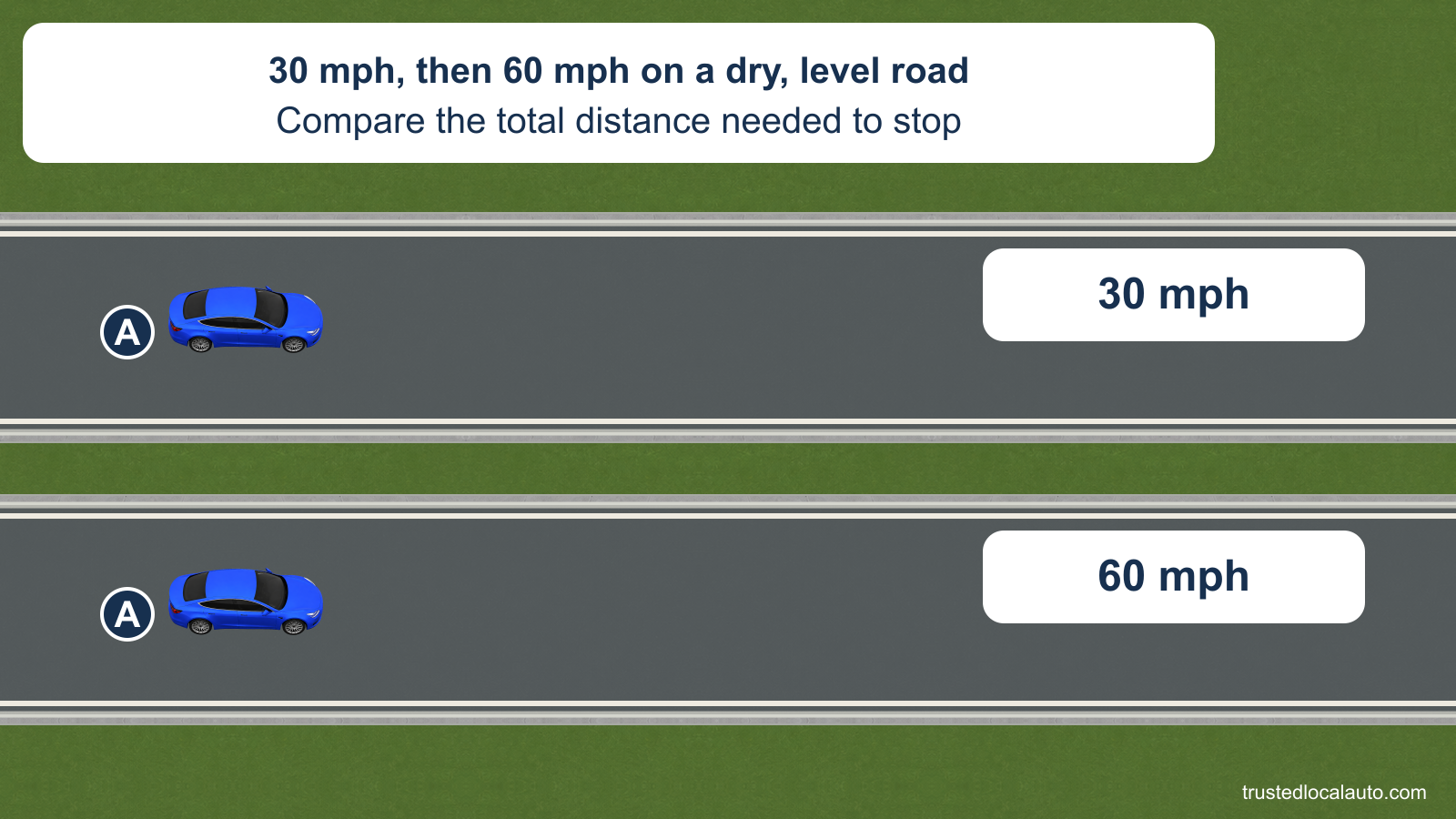
Two separate views show the same blue car A on a dry, level road, first at 30 mph and then at 60 mph. Neither view shows a stopping distance or a chosen stop point.
Correct answer: It more than doubles; at 60 mph it is longer than a football field
Why
Total stopping distance is the distance that you travel while you react plus the distance that the brakes need. The road surface, the weather, the load in your vehicle, how fast you react and how well your brakes work all change it. This is why a small increase in speed can turn a near miss into a crash.
Verified against Oregon Driver Manual · Stopping distance · p. 37
Report a question issueContinue learning