
Practice question, Question 1 of 50
Passing target: 20 correct signs and 20 correct rules
What do yellow centre lines and white lane-divider lines tell you about traffic direction?
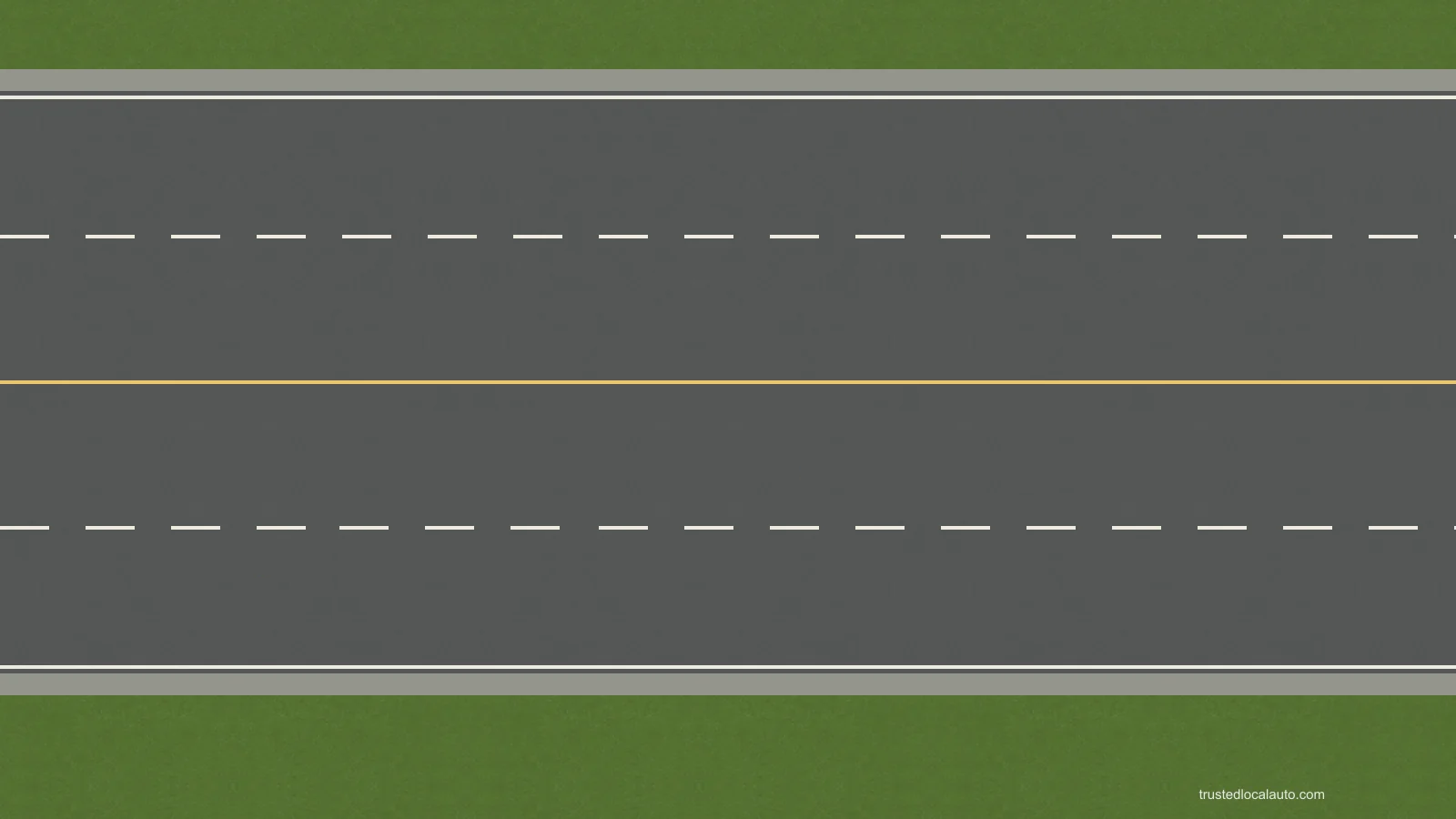
Correct answer: Yellow divides opposing traffic; white divides same-direction traffic.
Why
Yellow directional dividing lines separate opposing traffic. White lane-divider lines separate lanes travelling in the same direction. The colour tells you about direction; the solid or broken pattern and other controls determine whether you may cross a line. White road-edge lines have a different function from the lane dividers asked about here.
Verified against Saskatchewan Driver's Handbook: A Guide to Safe Driving · Basic information and rules of the road · p. 54, 55
Is this question correct and clear?
Continue learning
Related Saskatchewan questions
- You are on a highway in a rural municipality, outside a hamlet, with one lane in each direction. You can see only 200 m ahead. May you begin passing another vehicle just because no oncoming vehicle is visible?
- When more than one lawful travel lane is available for your route, what should guide your lane choice?
- You plan to turn right at a diverging diamond interchange. How should you choose your approach lane?
- You drive on a highway in a rural municipality, outside a hamlet, with one lane in each direction. You can see 300 m ahead, and no oncoming vehicle is in sight. Before you begin to pass, what minimum clear view of the highway ahead does The Traffic Safety Act require on this road?
- You drive on a highway in a rural municipality, outside a hamlet. The highway has two lanes in your direction. You want to use the left lane to pass a slower vehicle. Which statement is correct?
- You have checked that the gap is safe and are almost completely in the new lane. Where should you direct your main view as you finish the lane change?