
Saskatchewan Class 7 topic
Saskatchewan Class 7 Turns, Lanes, Passing & Merging
Choose the correct lane and position for turns, lane changes, passing, merging and shoulder use.
31 questions, free with an account. 9 of them are hard. Each one has its answer, an explanation and its official source.
- 13 picture questions
- 18 text questions
- 9 of them hard
13 picture questions
Questions in this topic
Select a question to answer it. The answer and the explanation show after you answer.
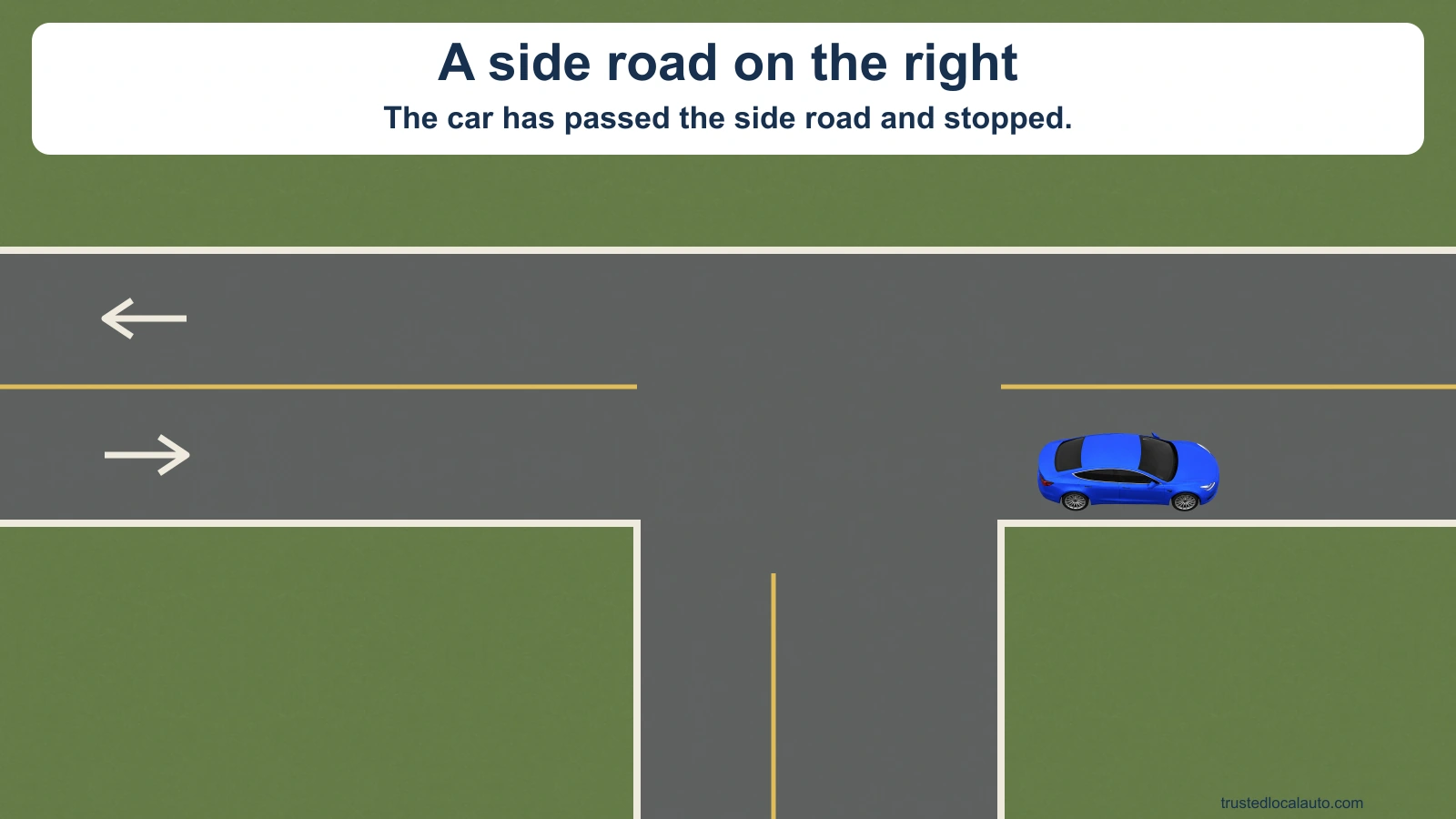 Using a side road to turn aroundIn SGI's two-point-turn method using a side road on your right, which sequence changes your direction after you safely pass that road and stop?Try this question
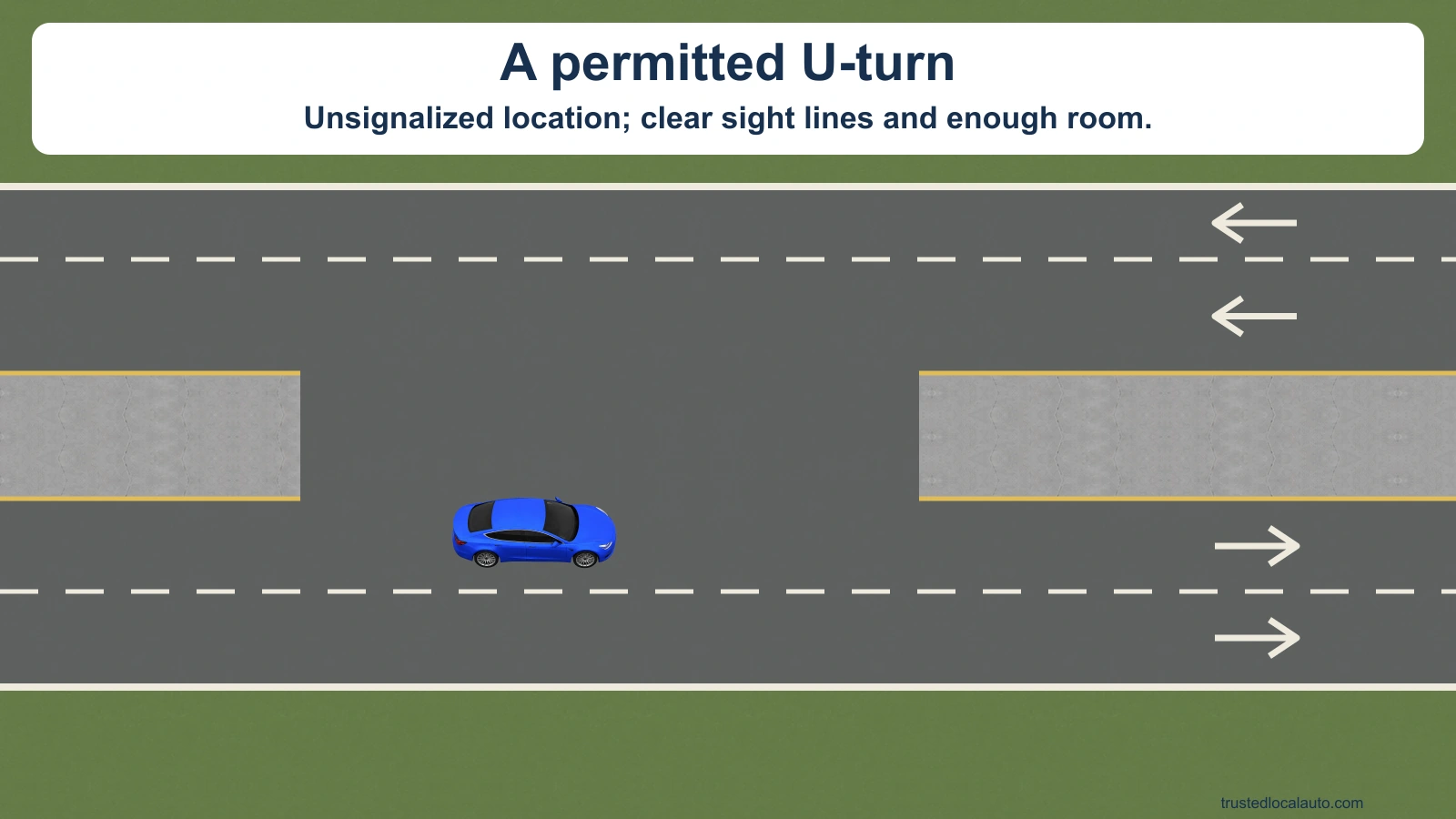 Lane choice after a U-turnYou are making a safe, permitted U-turn at an unsignalized location onto a road with several lanes in your new direction. Which receiving lane does SGI say to make every effort to finish in?Try this question
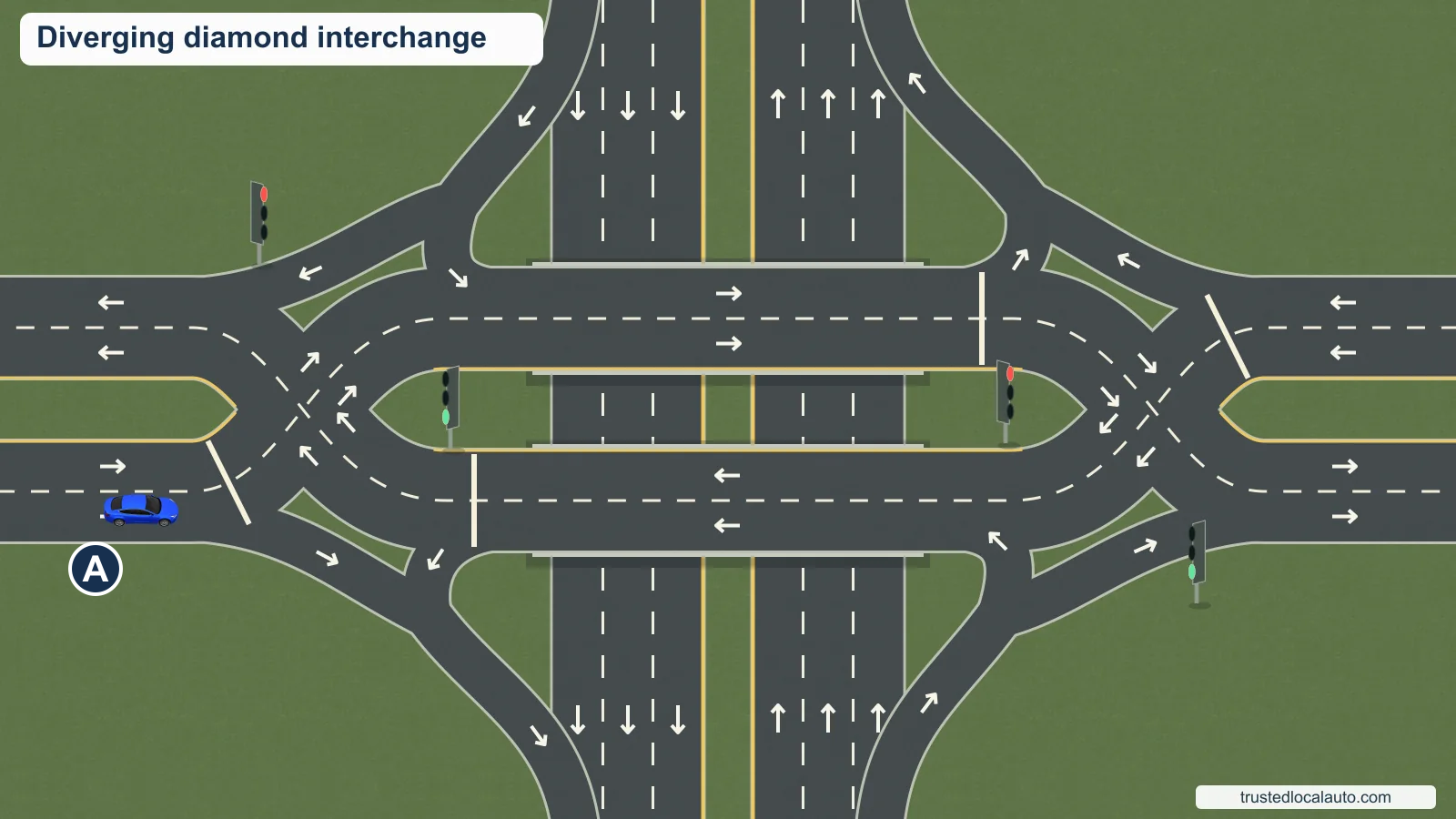 Continuing through a diverging diamondYou are going straight through a diverging diamond interchange. After the first traffic lights, your marked lane crosses to the opposite side of the overpass. What should you do?Try this question
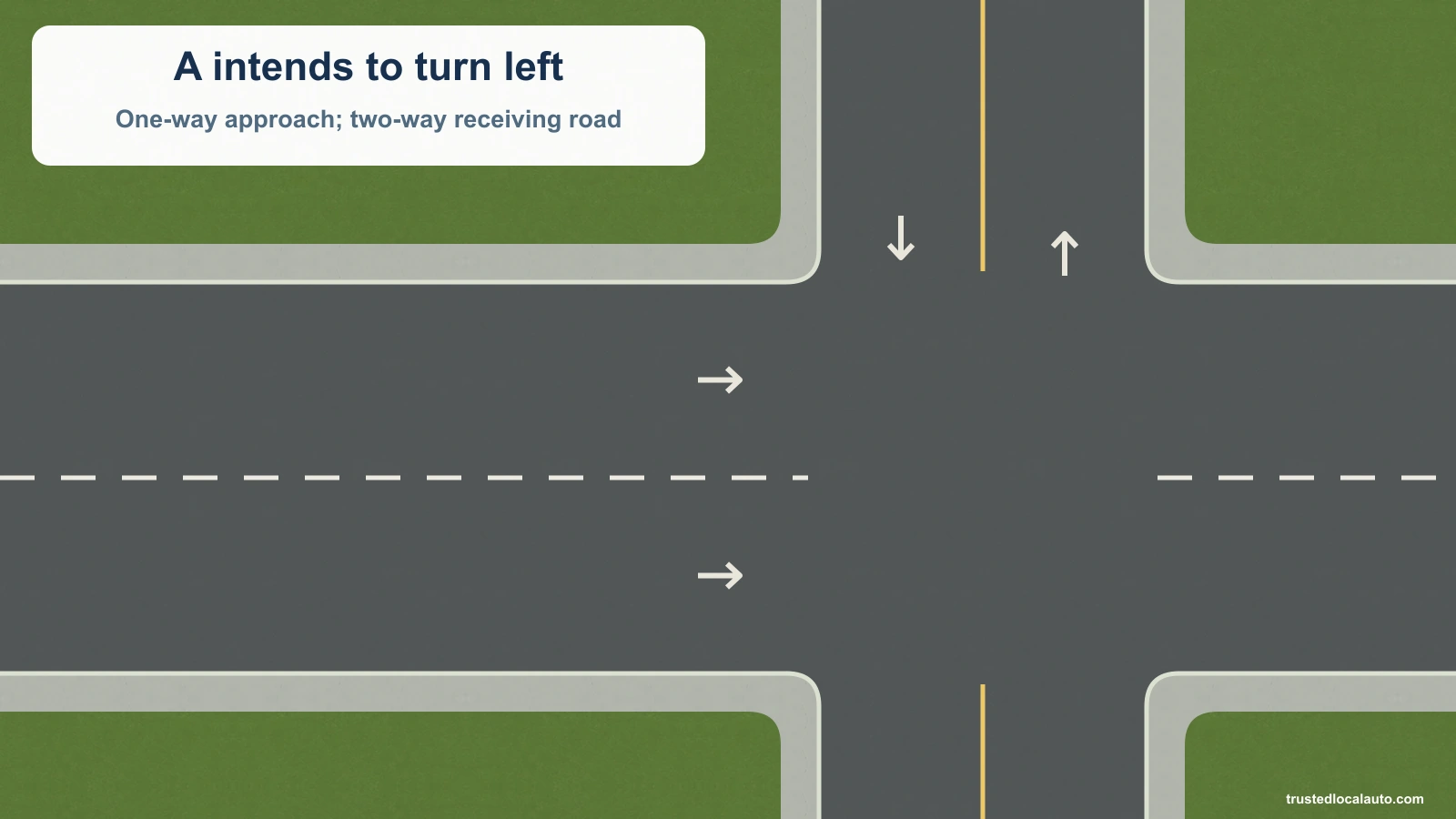 A left turn onto a two-way streetA is turning left from a one-way street onto the two-way street shown. Which approach and receiving path should A use?Try this question
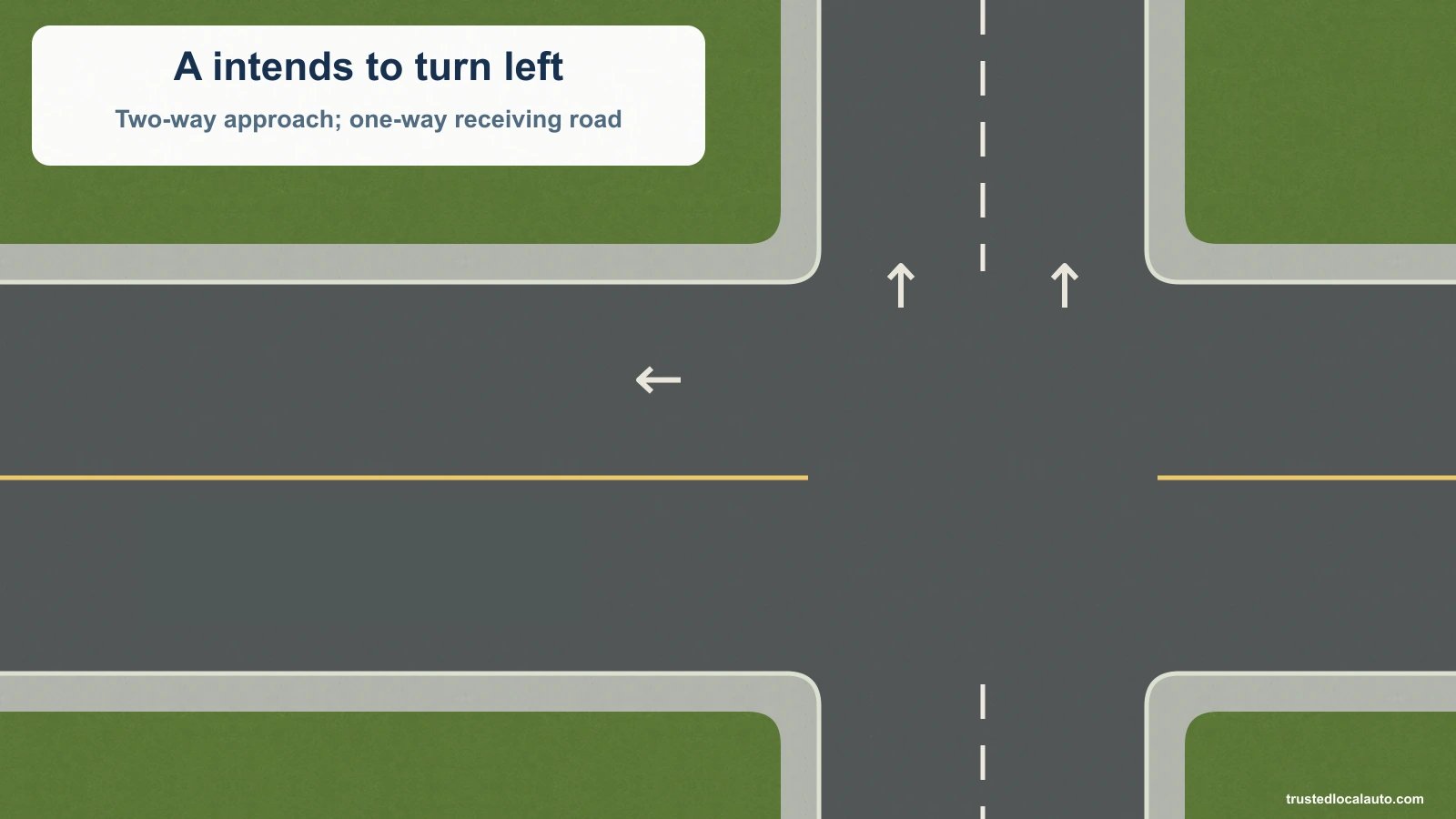 A left turn onto a one-way streetA is turning left from the two-way road onto the one-way road shown. The nearest receiving lane is clear. Which path should A use?Try this question
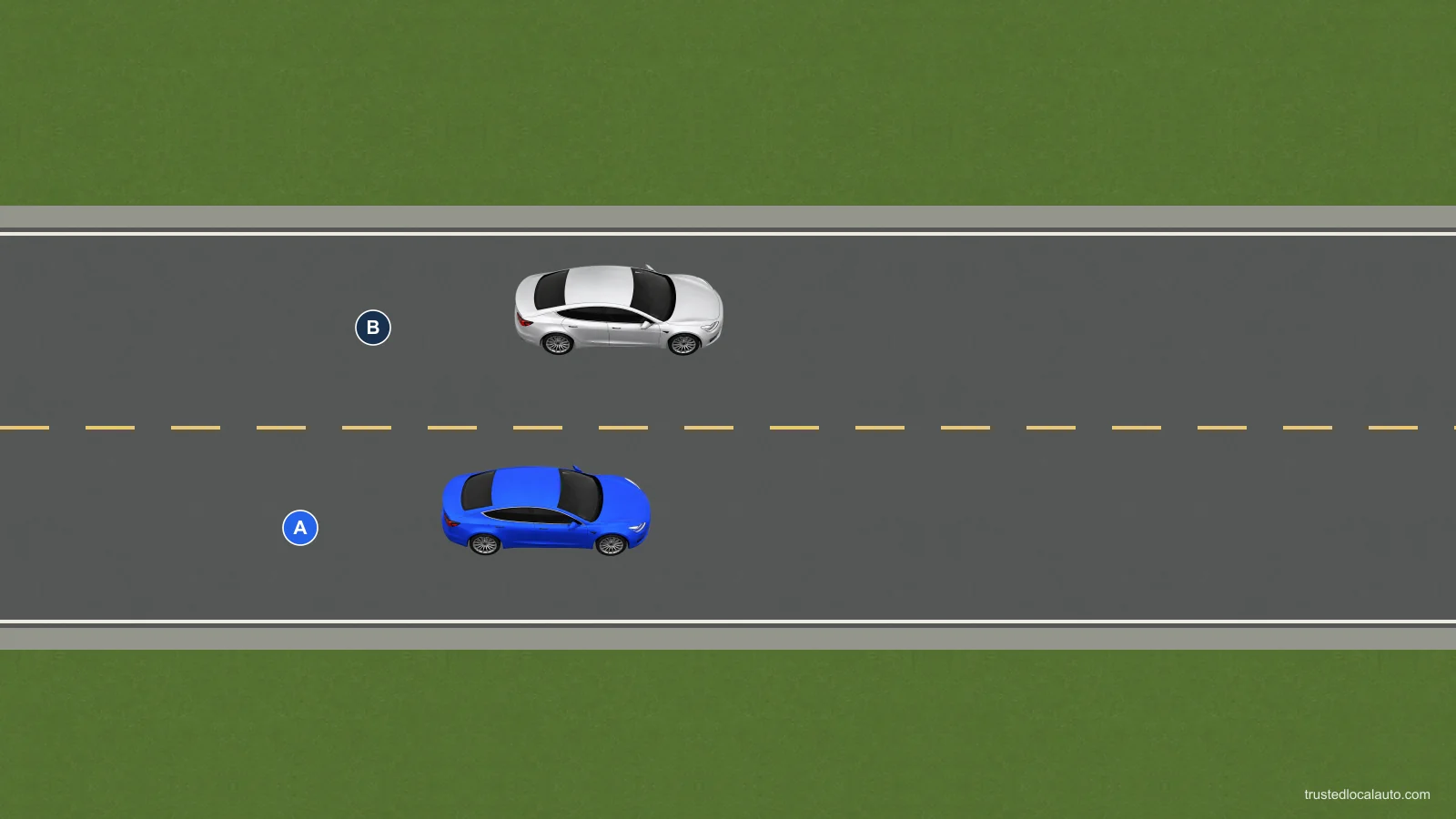 While another vehicle passesB is passing A on the left. What should the driver of A normally do during the pass?Try this question
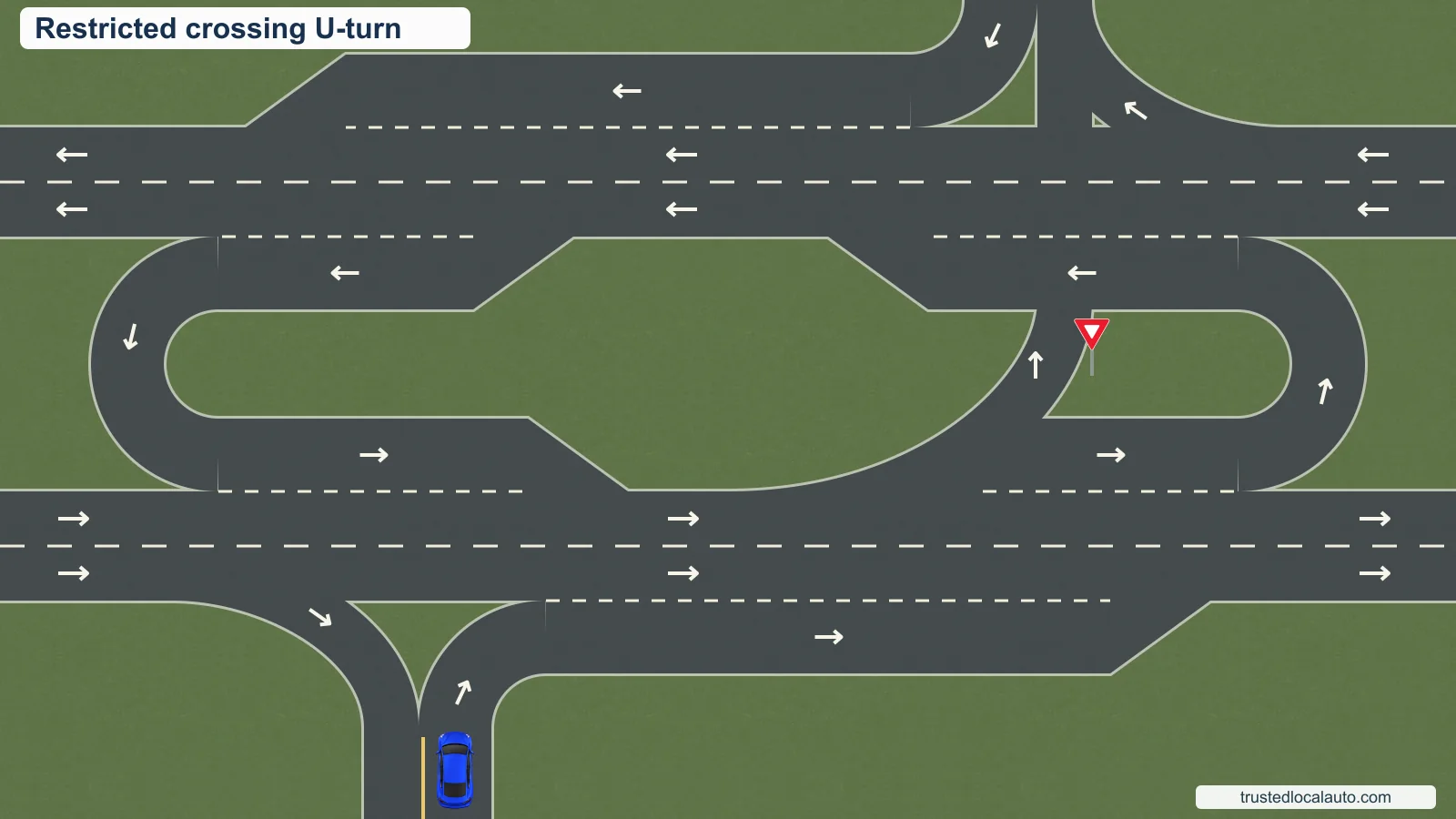 Entering at a restricted crossing U-turnYou approach a divided highway from a side road at a restricted crossing U-turn intersection and want to travel left along the highway. Which route must you use?Try this question
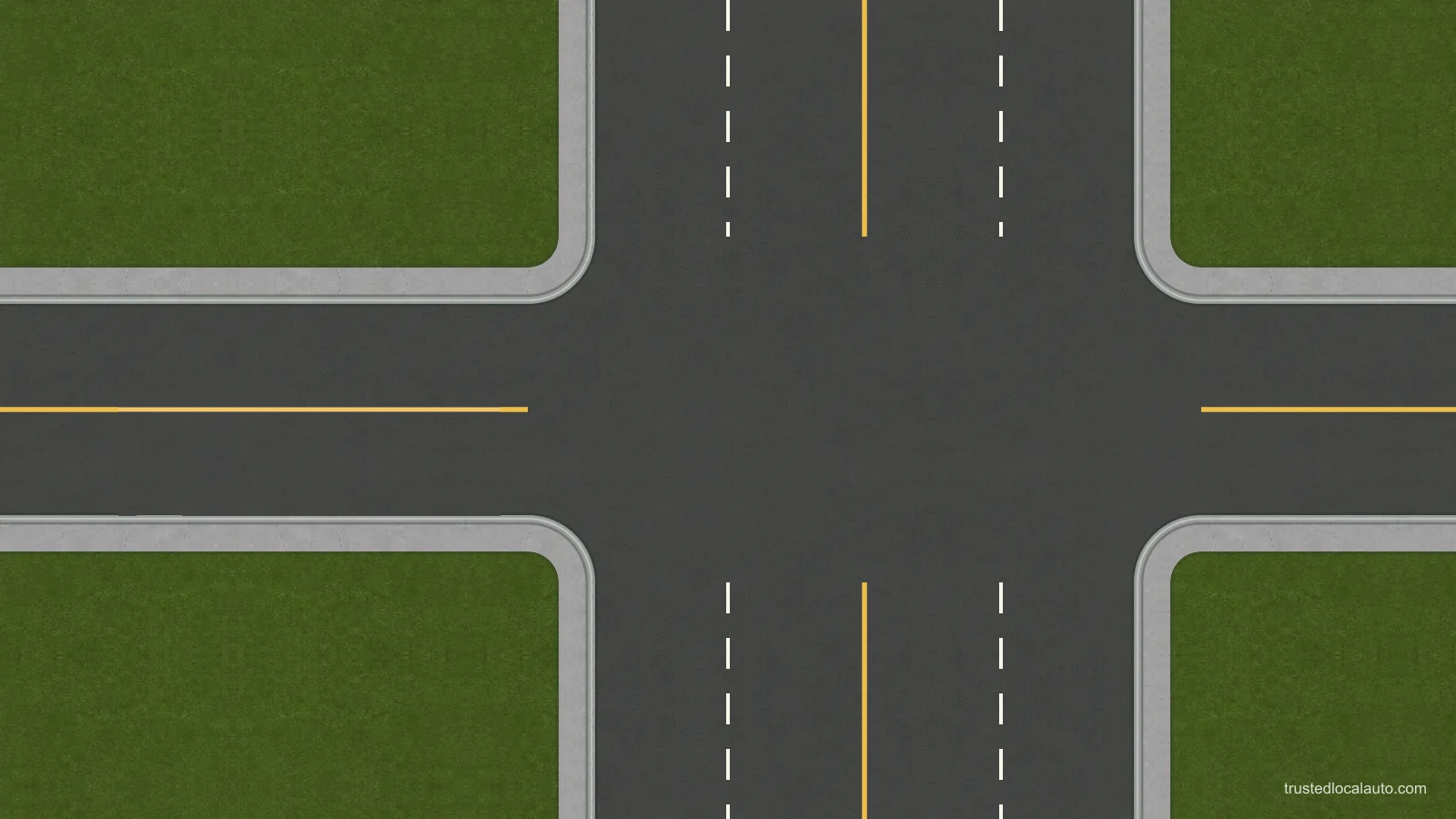 Approaching an ordinary right turnAt an ordinary intersection with one right-turn path, where should A position the car before turning right?Try this question
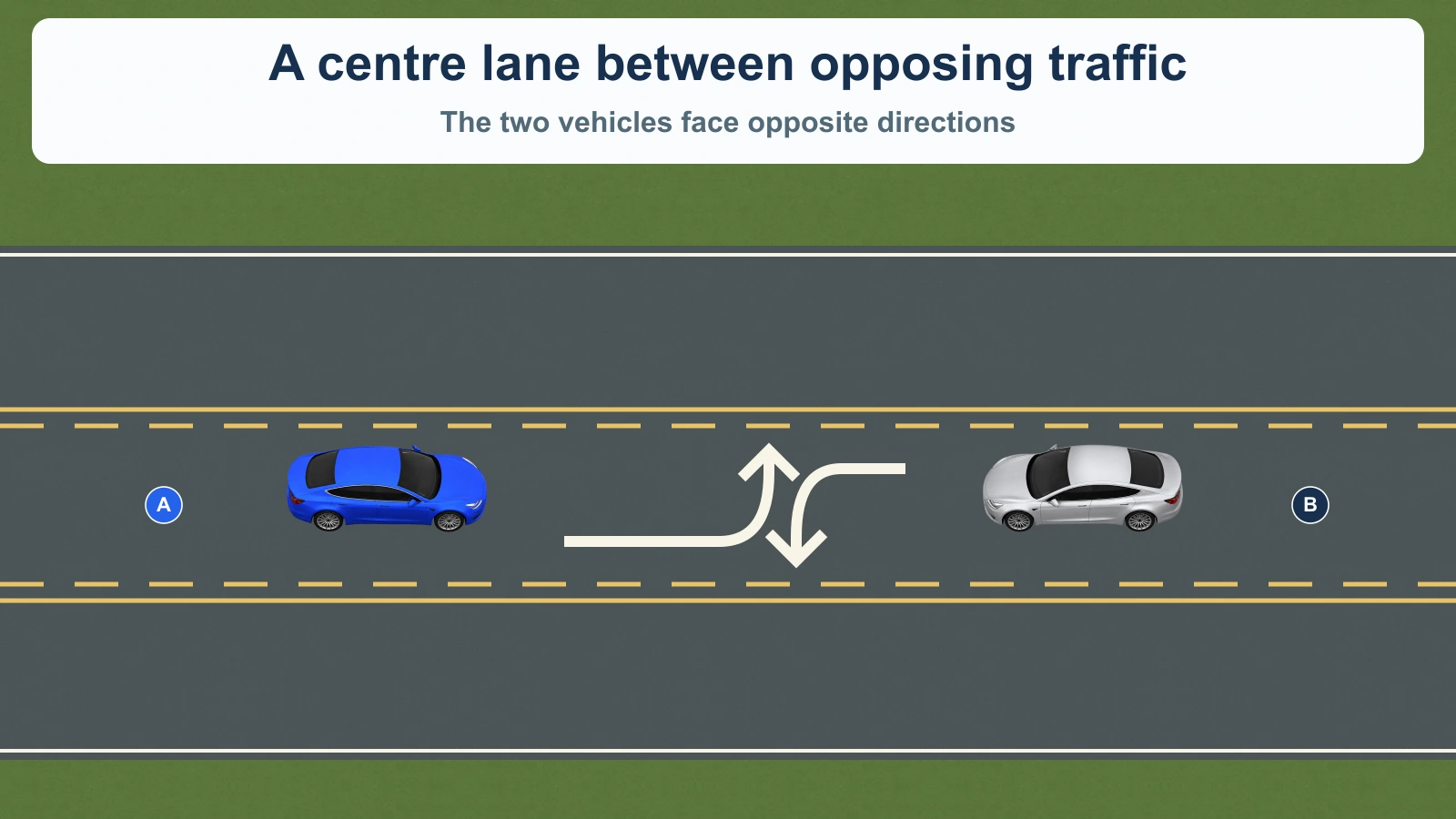 The marked centre laneWhat is the centre lane with opposing left-turn arrows used for?Try this question
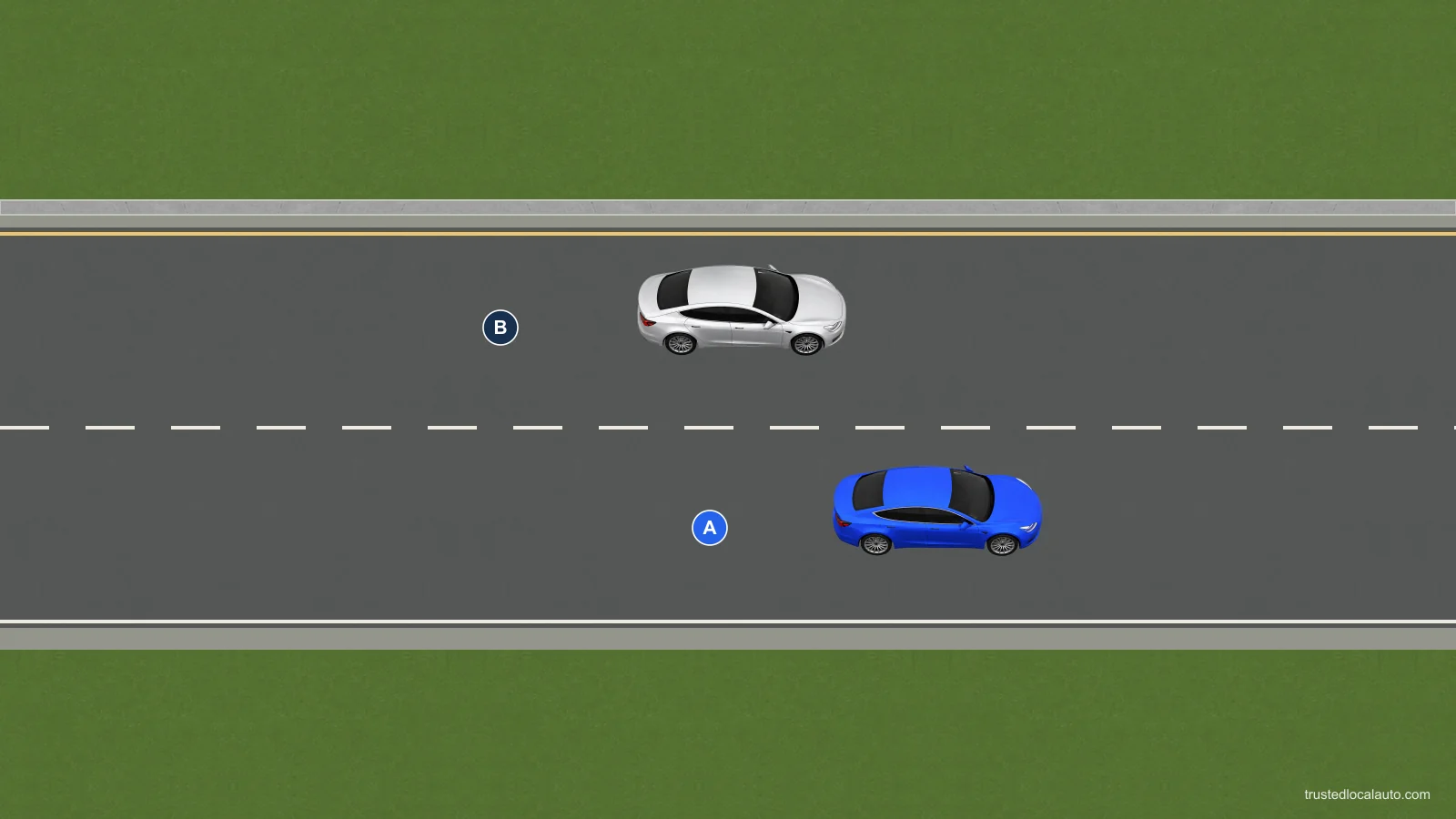 Checking the neighbouring laneBefore A moves left, why is a shoulder check needed as well as a mirror check?Try this question
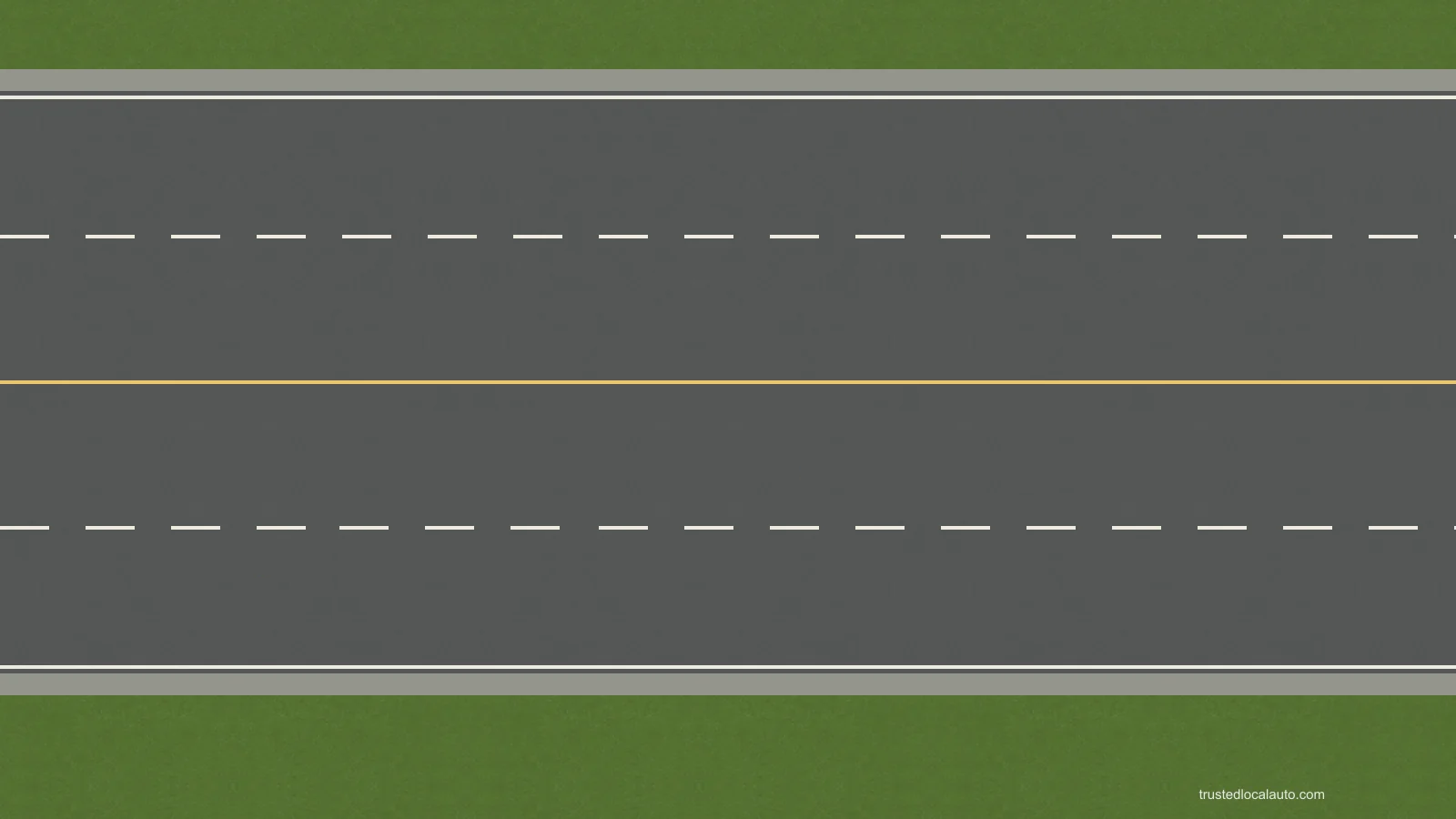 Pavement line coloursWhat do yellow centre lines and white lane-divider lines tell you about traffic direction?Try this question
- Left turn from a one-way street HardA is turning left from the one-way street onto the two-way street shown. Which path should A use?Try this question
- Two-point turn with a side road on the right HardYou make SGI's two-point turn with a side road on your right. You have passed the side road, stopped far right, signalled and checked traffic. Now you back slowly toward the side road. When should you start to turn the steering wheel to the right?Try this question
18 text questions
More questions in this topic
- You are on a highway in a rural municipality, outside a hamlet, with one lane in each direction. You can see only 200 m ahead. May you begin passing another vehicle just because no oncoming vehicle is visible?
- When more than one lawful travel lane is available for your route, what should guide your lane choice?
- You plan to turn right at a diverging diamond interchange. How should you choose your approach lane?
- You have checked that the gap is safe and are almost completely in the new lane. Where should you direct your main view as you finish the lane change?
- How does SGI suggest checking your judgment of an approaching vehicle's closing time before you start making actual passes?
- During a reserved bus lane’s posted hours, which use by an ordinary car does SGI’s handbook permit?
- In SGI's passing-time example, a pass takes 15 seconds. After adding SGI's minimum five-second safety margin, what safe passing time should be used for that example?
- On an ordinary highway or rural road, where does SGI advise you to position your vehicle within its lane?
- Your route requires a left turn ahead, but you are not yet in the proper approach lane. What should you do?
- You are travelling at 80 km/h and preparing to turn at an upcoming corner. Under SGI’s signalling guideline, how far before the corner should you signal?
- You are at an unsignalized location where a U-turn is permitted, but you are unsure there is enough room to finish it safely in one swing. What does SGI advise?
- You drive on a highway in a rural municipality, outside a hamlet, with one lane in each direction. You can see 300 m ahead, and no oncoming vehicle is in sight. Before you begin to pass, what minimum clear view of the highway ahead does The Traffic Safety Act require on this road? Hard
- You drive on a highway in a rural municipality, outside a hamlet. The highway has two lanes in your direction. You want to use the left lane to pass a slower vehicle. Which statement is correct? Hard
- SGI gives a usual position within your lane on two kinds of road. Which pair is correct? Hard
- Which statement about the left lane of a multi-lane divided highway is NOT correct? Hard
- In SGI's passing-time example, a pass takes 15 seconds. What safe passing time does SGI's method give for this example? Hard
- You drive at 50 km/h on a city street and plan to turn right at the next corner. Under SGI's signalling guideline, what is the minimum distance before the corner at which you should signal? Hard
- SGI gives a guideline for how far before a turn you should signal. The distance depends on your speed. Which pair of minimum distances is correct? Hard
Saskatchewan Class 7
More Class 7 topics
Road rules · 10 topics
- Licensing & Test Readiness50 questions
- Observation, Speed & Space48 questions
- Intersections & Right-of-Way22 questions
- Turns, Lanes, Passing & Merging31 questions · This topic
- Parking, Reversing & Roadside Stops14 questions
- Sharing the Road18 questions
- Freeways & High-Speed Roads4 questions
- School Zones, Railways & Work Areas11 questions
- Weather, Visibility & Emergencies32 questions
- Vehicle Safety, Documents & Towing25 questions
Each question page shows the answer, the explanation and the official source of the question.