
Practice question, Question 1 of 20
Passing target: 80% (16/20)
You drive at highway speed through heavy rain, with water pooled on the road. Suddenly the steering feels light, as if the tires are riding on the water. What should you do?
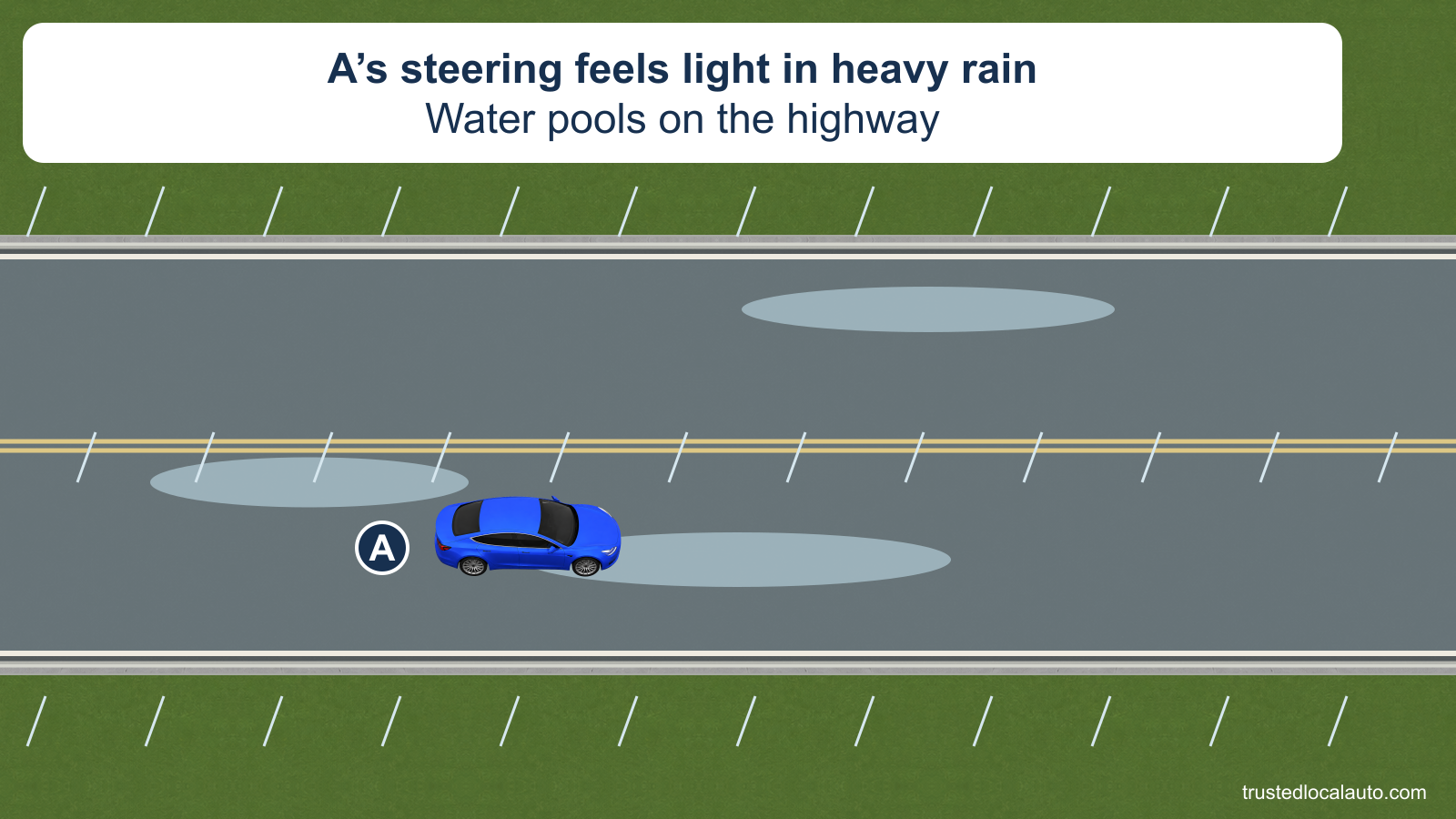
Correct answer: Ease your foot off the gas and hold the wheel steady until the tires grip again.
Why
When water builds up under the tires, they can lose contact with the pavement, and the car can start to skid. The manual links most skids to a speed that is too high for conditions such as rain. Roads are also very slippery when rain first starts, because oil and dirt mix with the water. Drive slower in heavy rain, keep good tread on your tires, and do not use cruise control.
Verified against Vermont Driver's Manual · Skidding · p. 49, 27
Is this question correct and clear?
Continue learning
Related Vermont questions
- On a wet road, the traffic ahead of you stops suddenly, and you must brake hard. Your car has anti-lock brakes (ABS). What should you do?
- After a storm, a barricade and a sign stand at the start of a bridge on your usual route. The sign says the bridge is closed, but the bridge looks fine to you. What should you do?
- For a few days, you notice that your brake pedal goes down much farther than it used to before the car slows. What does the Vermont manual tell you to do?
- Sunset is at 7:10 p.m. You start driving at 7:45 p.m. on a clear evening, and it still seems fairly light outside. What does Vermont law require?
- On a wet road, the traffic ahead of you stops suddenly, and you must brake hard. Your car has anti-lock brakes (ABS). How should you use the brake pedal?
- On a clear morning, sunrise is at 6:20 a.m. You start to drive at 5:40 a.m., and it already looks fairly light outside. Which statement is correct?