
British Columbia Class 7 topic
British Columbia Class 7 Weather, Visibility & Emergencies
Handle darkness, poor weather, loss of traction, breakdowns, collisions and emergencies.
42 questions, free with an account. 12 of them are hard. Each one has its answer, an explanation and its official source.
- 10 picture questions
- 32 text questions
- 12 of them hard
10 picture questions
Questions in this topic
Select a question to answer it. The answer and the explanation show after you answer.
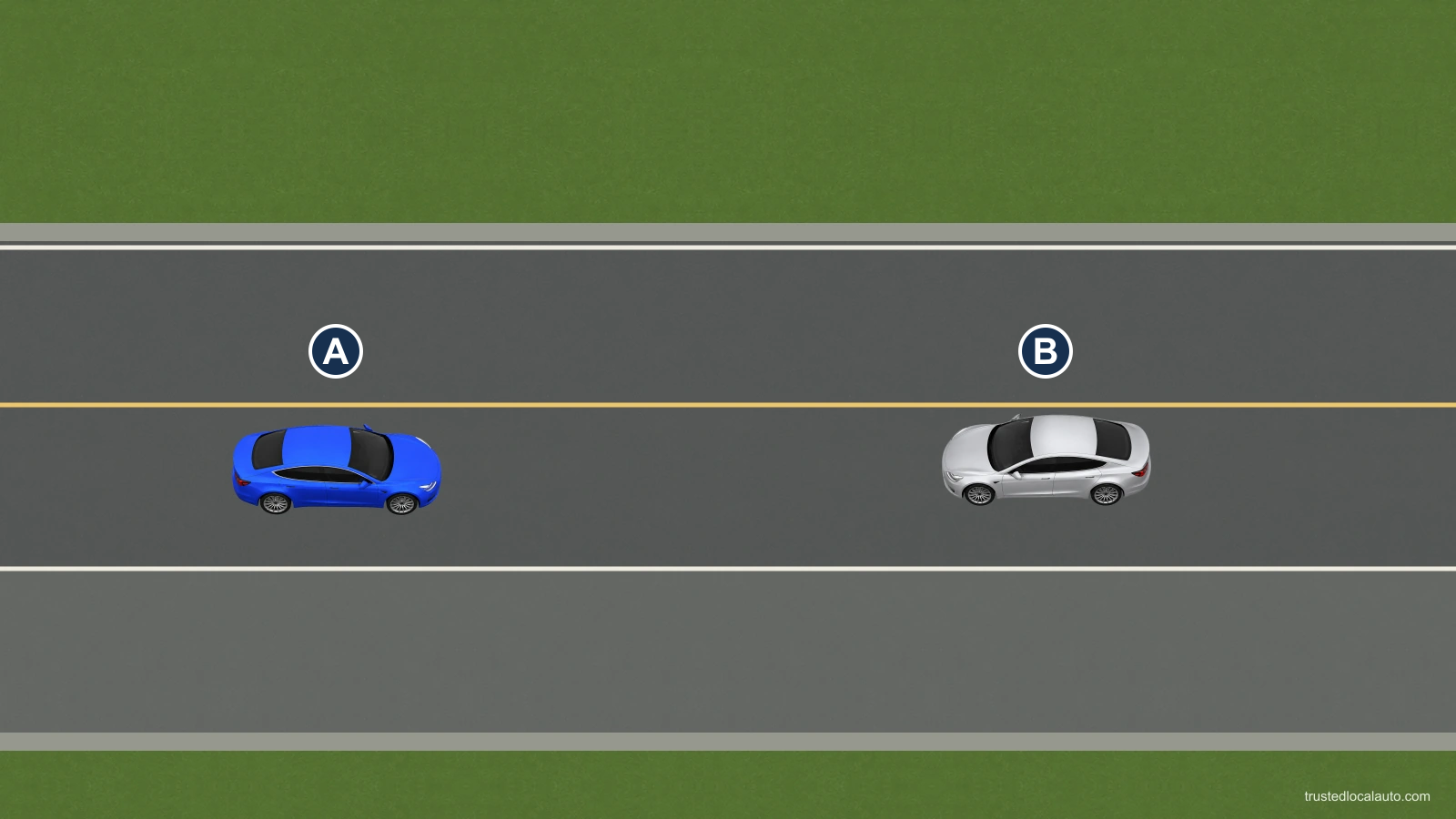 Avoid Head OnB is approaching head-on in A's lane. A has a clear, usable paved shoulder on the right. What response does ICBC recommend?Try this question
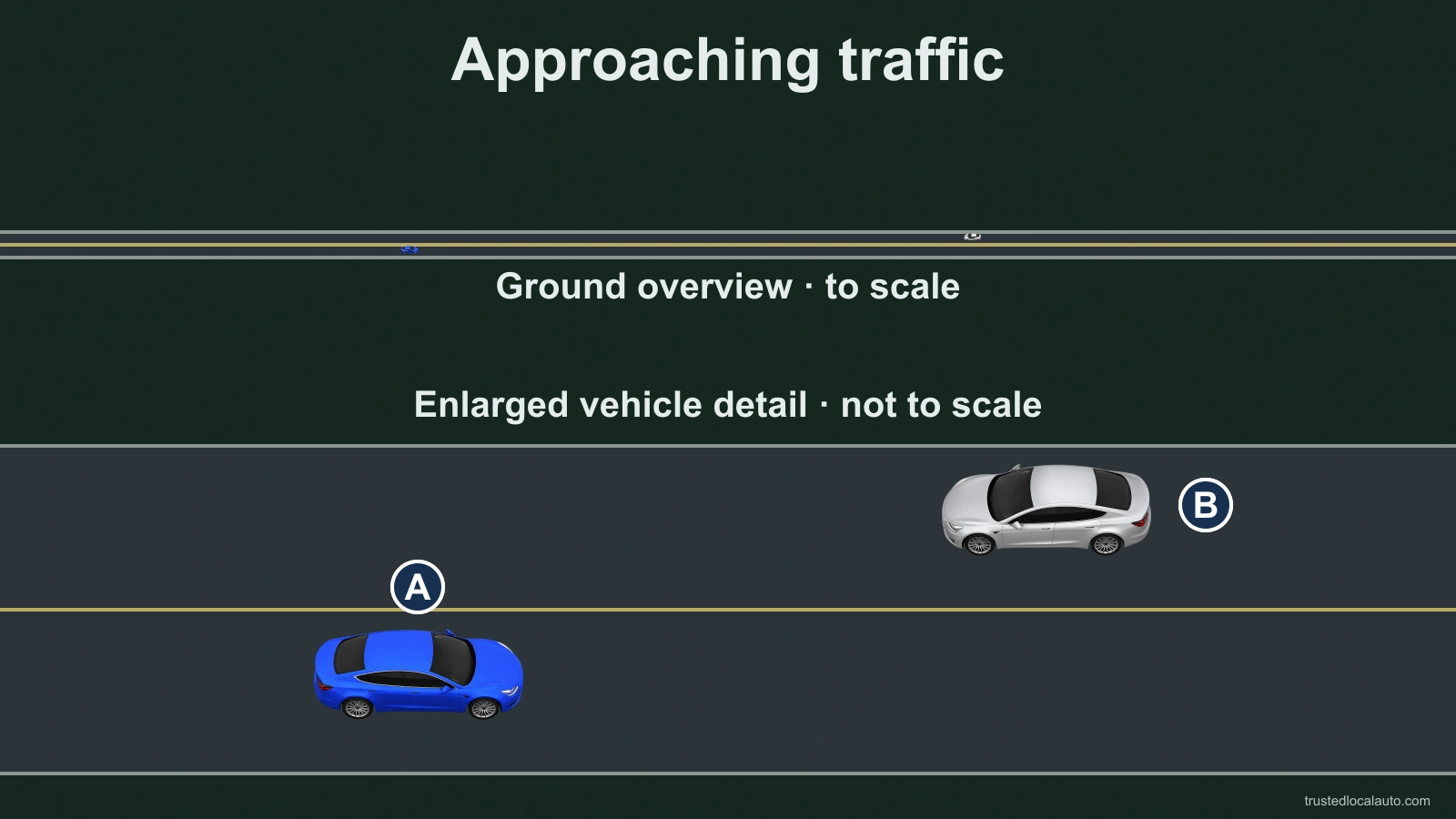 Dim High Beams DistanceAt what distance must you have dimmed high beams when meeting an approaching motor vehicle in B.C.?Try this question
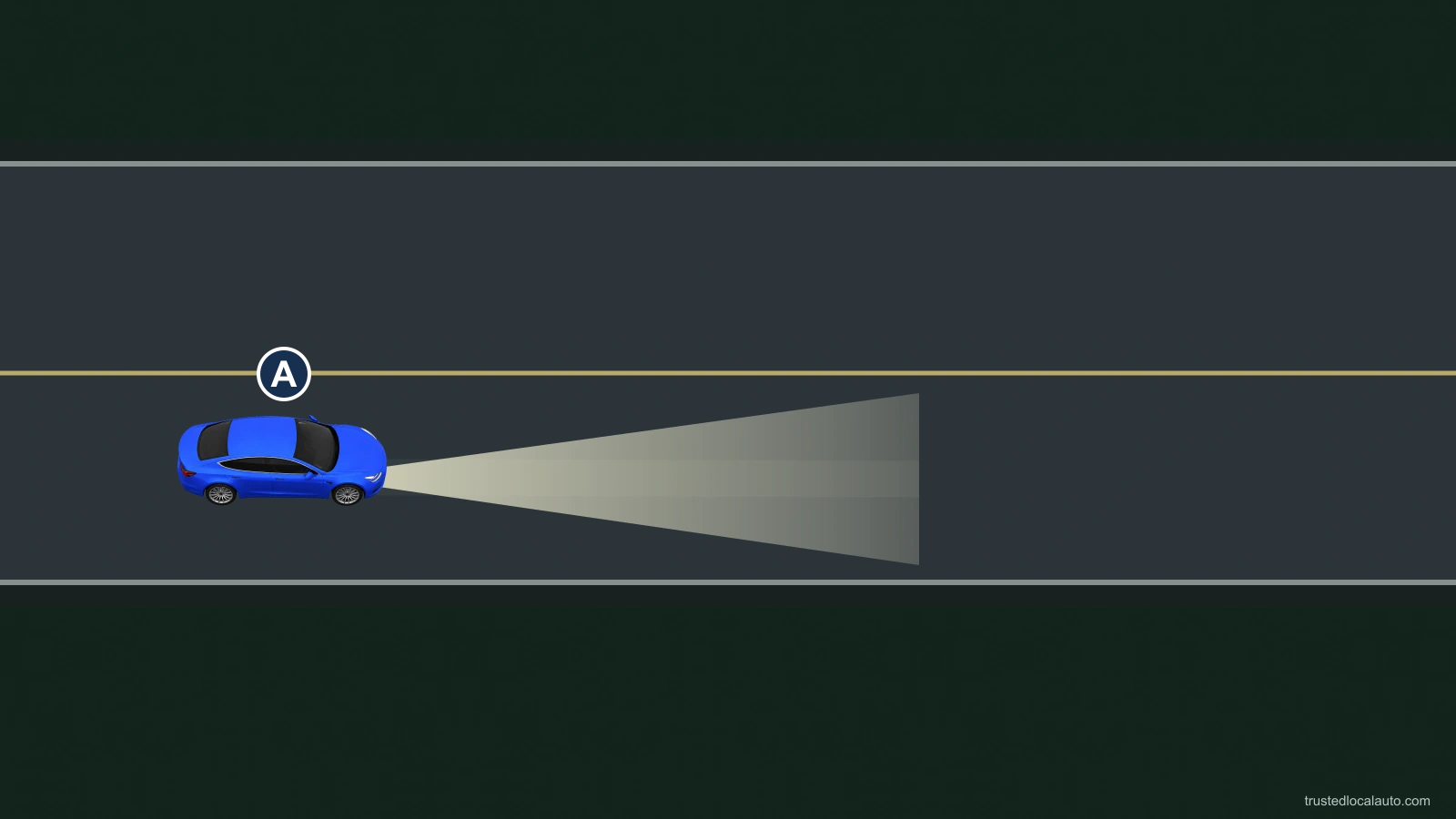 Do not overdrive your headlightsWhat does it mean to overdrive your headlights?Try this question
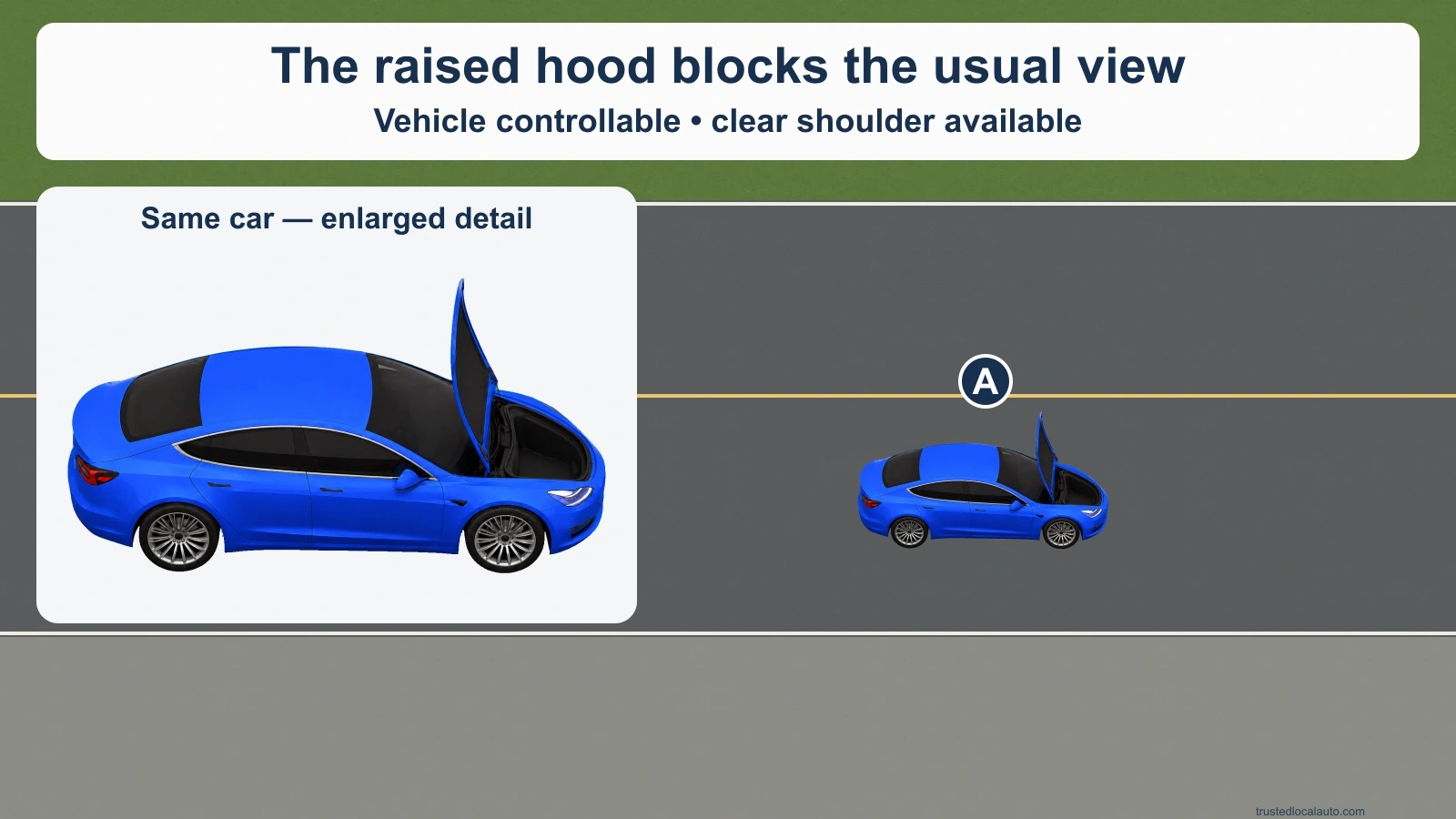 When the hood blocks your viewThe hood flies up and blocks your usual forward view. The car remains controllable and a safe place to pull over is available. What should you do?Try this question
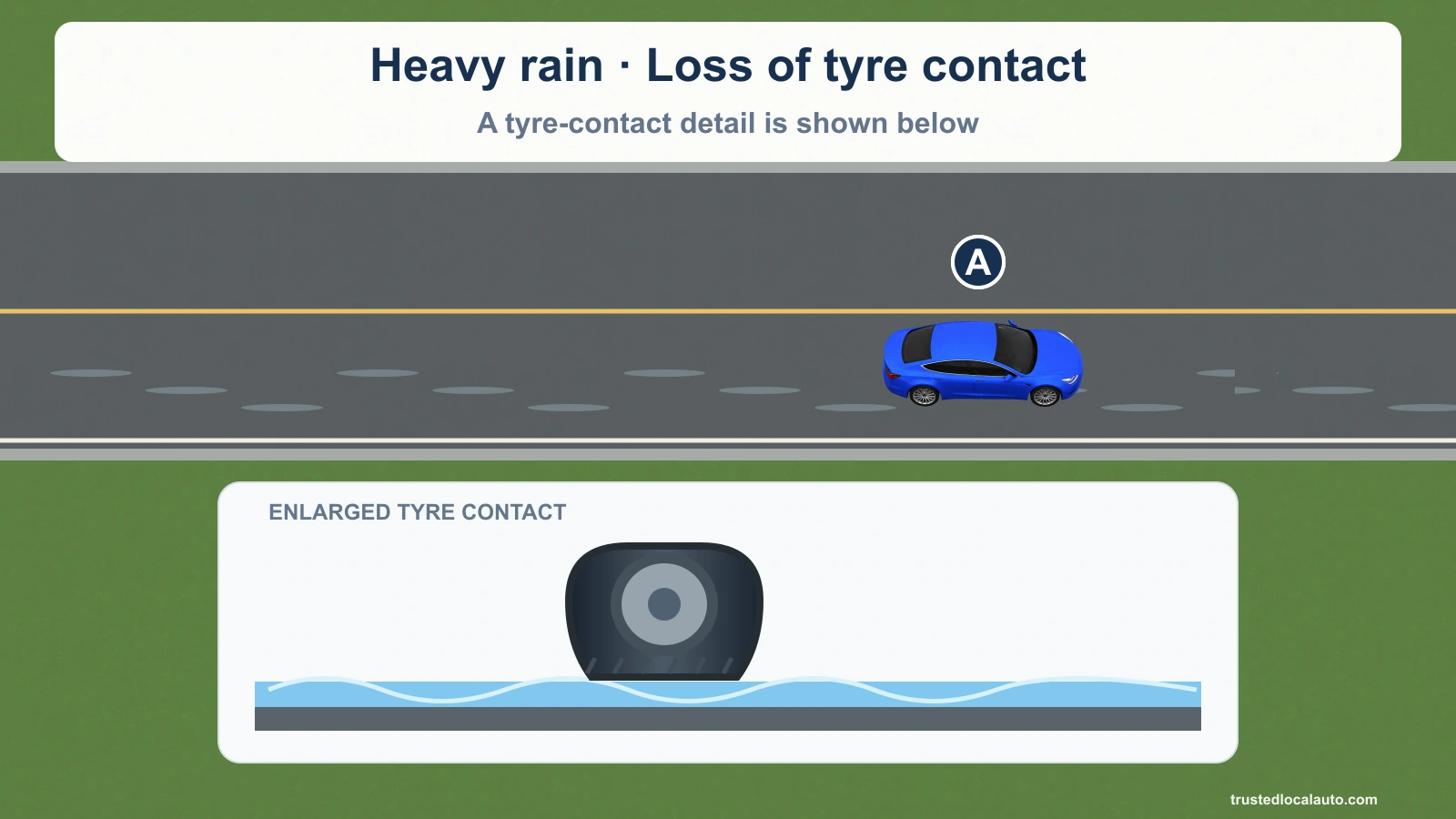 Hydroplaning ResponseA begins to hydroplane on a straight wet road. What response does ICBC recommend?Try this question
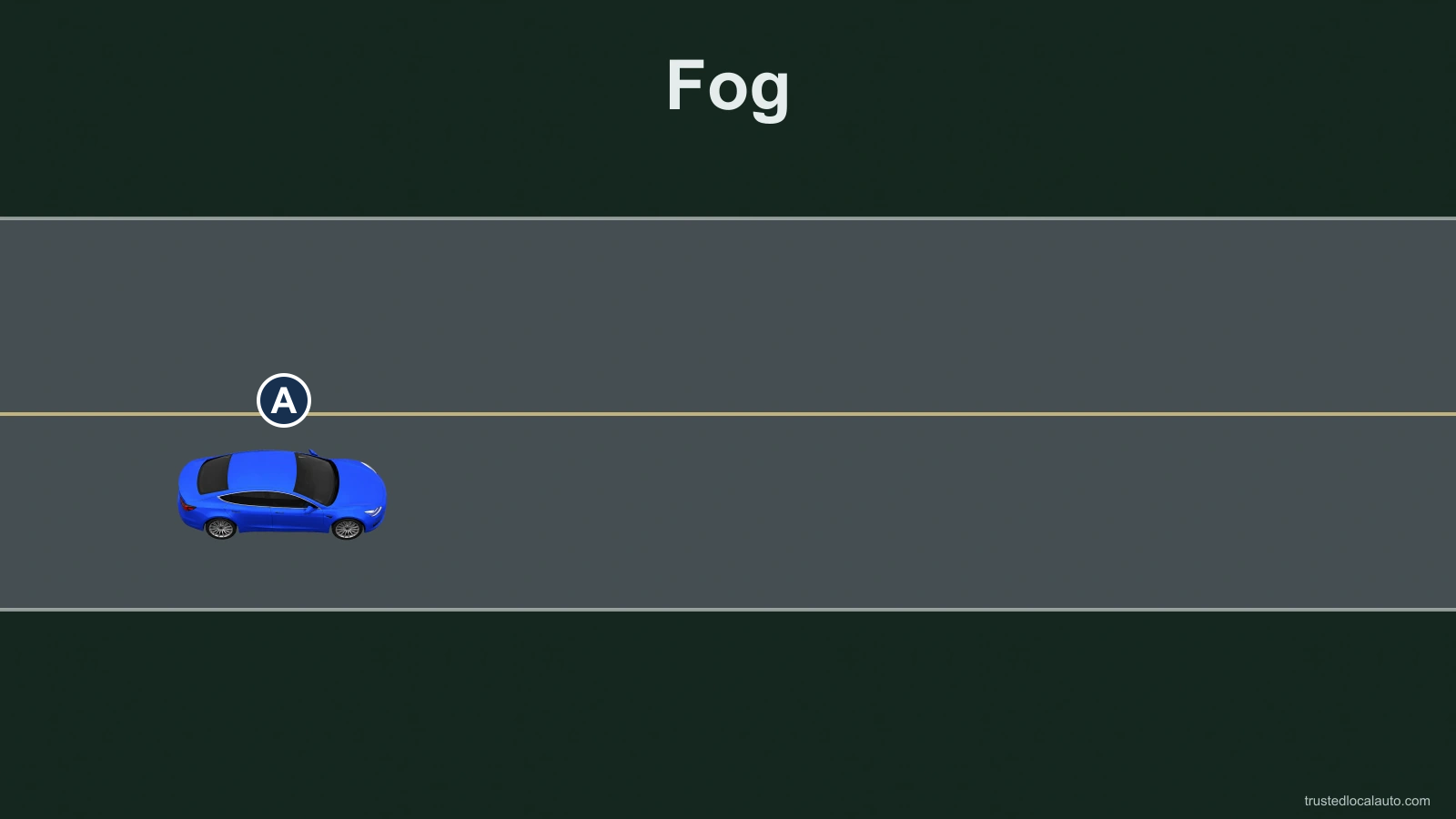 Drive safely in fogYou are using headlights in fog and can still continue safely at a reduced speed. Which approach does ICBC recommend?Try this question
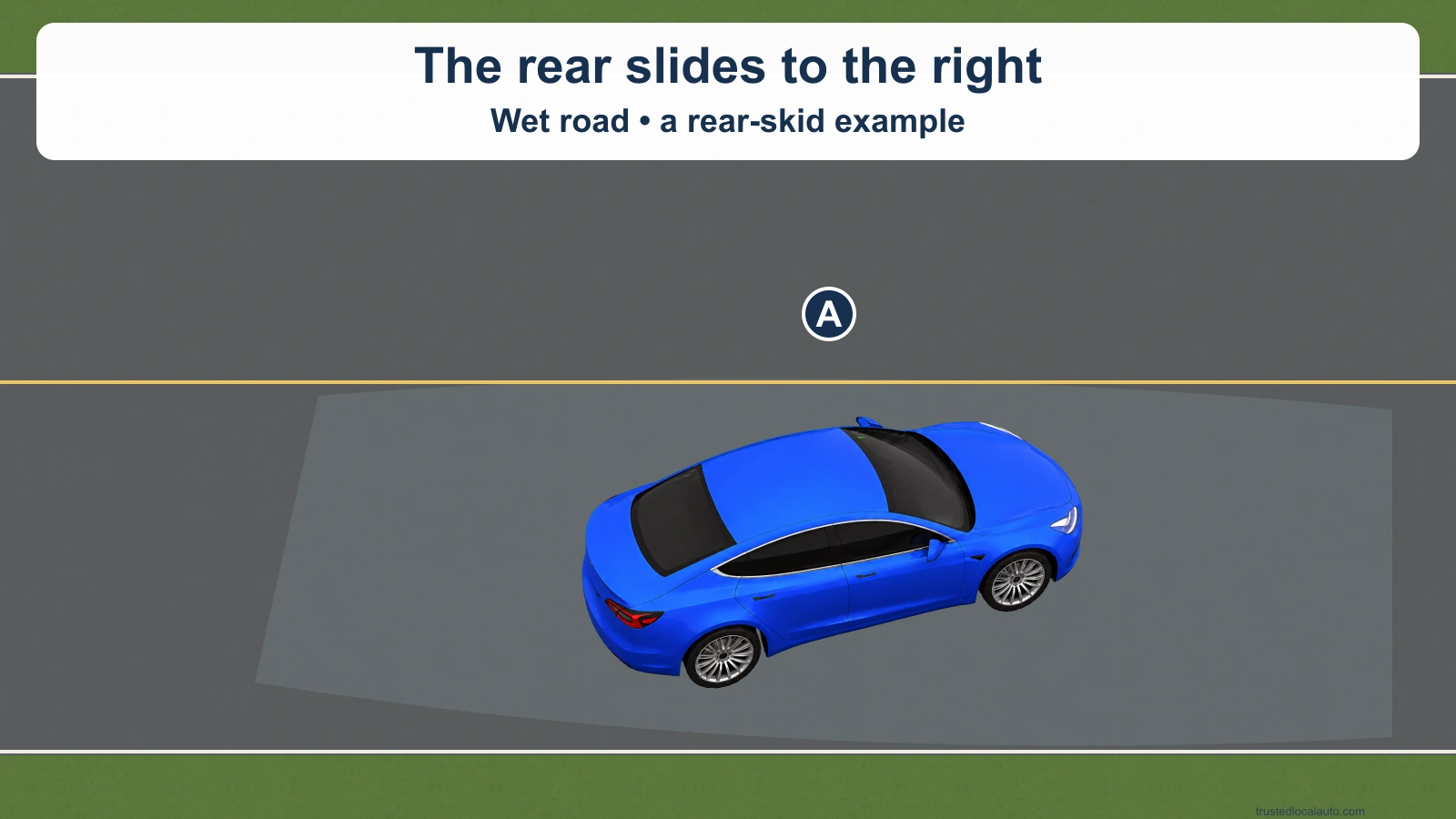 Skid RecoveryThe rear of A slides to the right on a slippery road. What should the driver do?Try this question
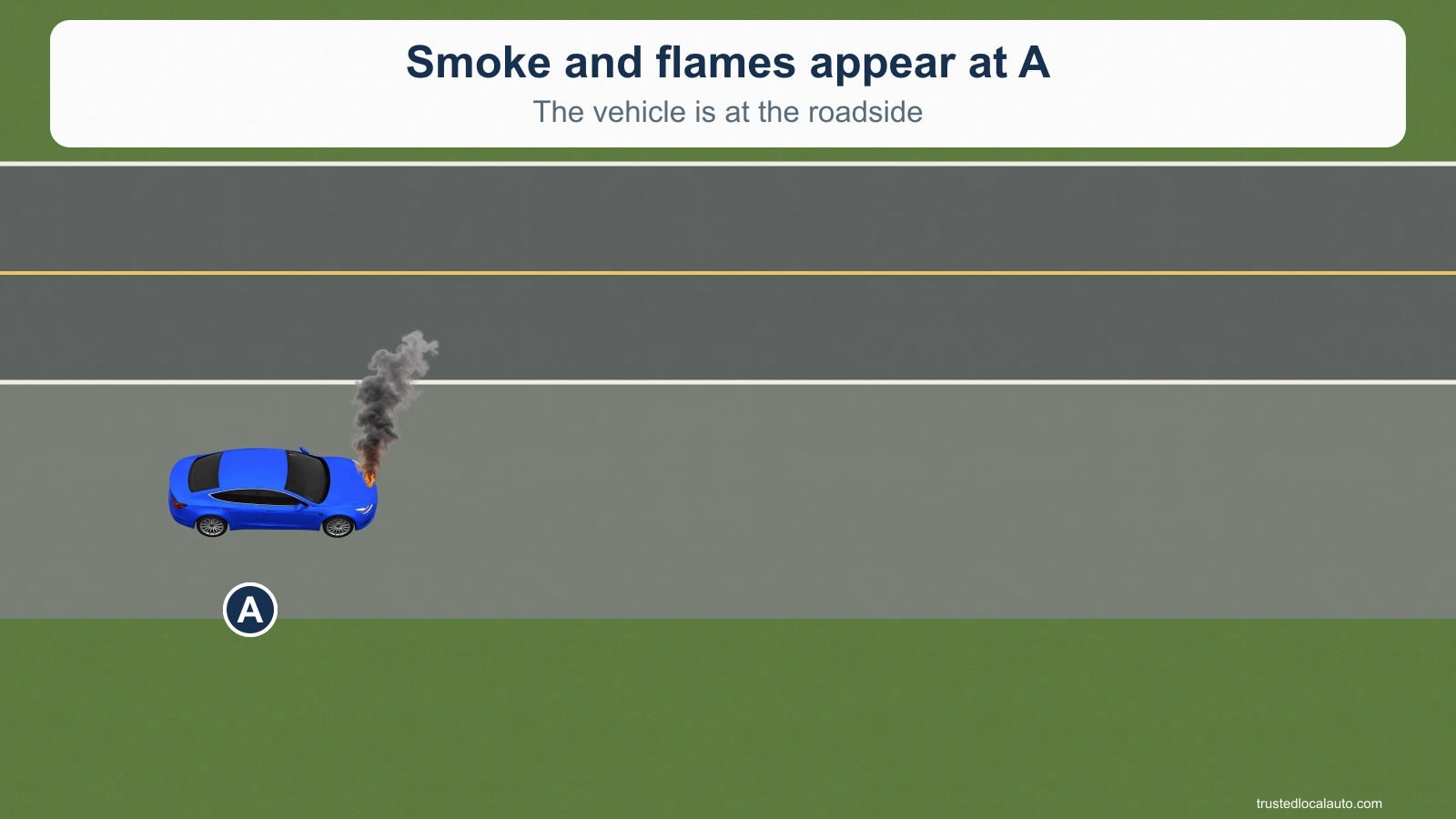 Vehicle FireSmoke and flames appear from A after it reaches the roadside. What should the occupants do?Try this question
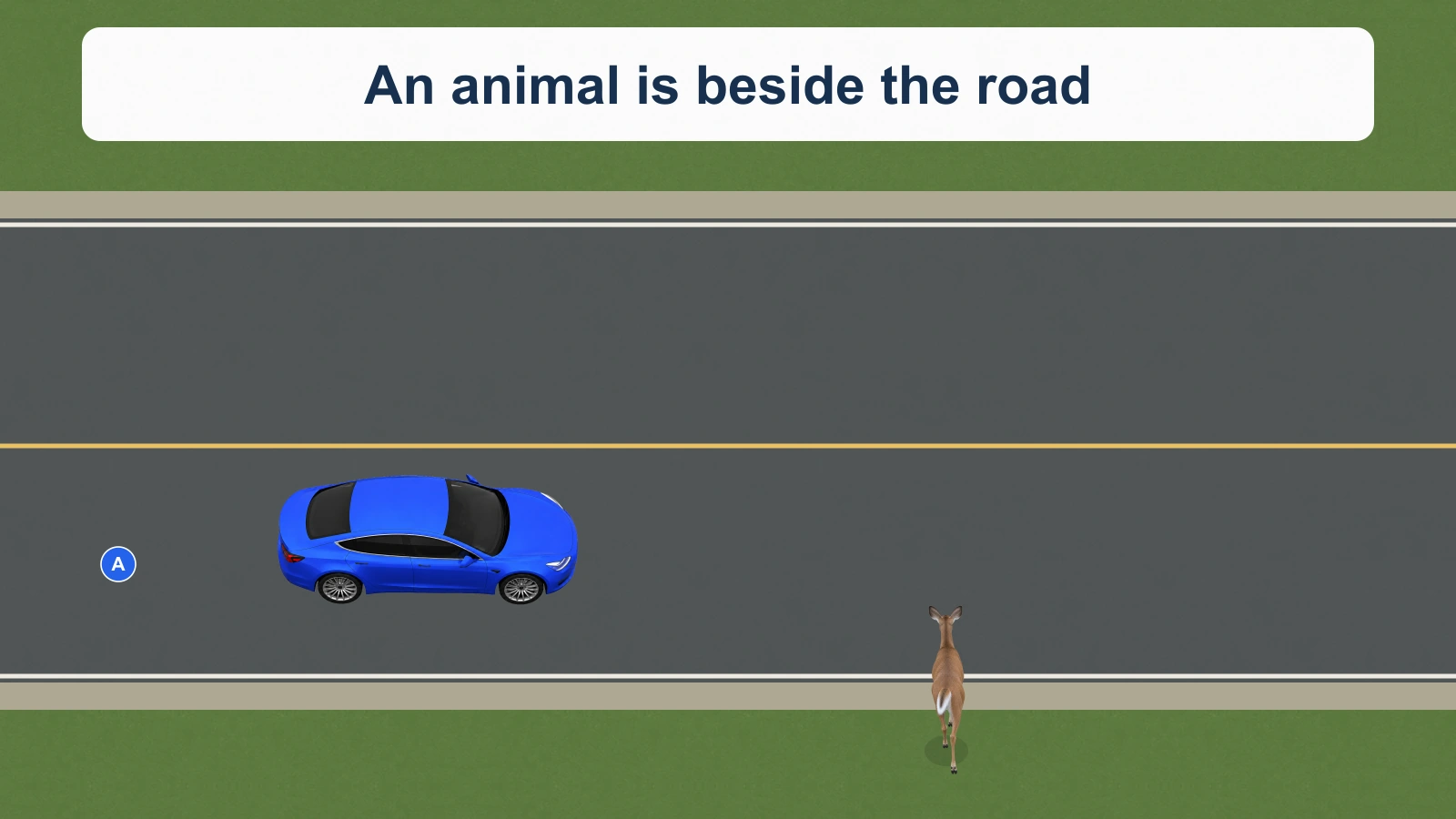 Animals in farming or wooded areasWhich habit best helps you anticipate animals when driving through farming or wooded areas?Try this question
- Rear slides right: the first correction HardOn a slippery road, the rear of car A slides to the right. What should the driver of A do first?Try this question
32 text questions
More questions in this topic
- How should you brake in an emergency with ABS?
- An animal enters the road with enough time for you to assess the available options. What should you do?
- Near freezing, which clues and locations deserve extra caution for hidden ice?
- The foot brake fails to slow a vehicle with a conventional mechanically operated parking brake. Which response follows ICBC's emergency guidance?
- How can you reduce carbon monoxide risk while snowbound?
- How should you assist at a crash scene?
- Deep or unknown flood water covers the road ahead. What should you do?
- What should you do if the engine fails?
- What should you do if headlights fail at night?
- How should you drive on ice or snow?
- When must a vehicle on a B.C. highway have its required lamps illuminated?
- Without ABS, how should you brake in an emergency when you need to retain steering control?
- You have not started a non-essential trip and winter conditions are extremely bad. What may be the safest choice?
- How can a driver prepare for emergencies?
- What is the best way to prevent a skid?
- What should you do if visibility becomes too poor to continue?
- What should you usually do if stranded in snow?
- What should you do if the accelerator sticks?
- How should you respond to a tire blowout?
- How should you prepare your eyes for a tunnel?
- How should driving change on wet roads?
- At noon on a B.C. highway, fog is so thick that you can see objects on the road clearly only about 100 metres ahead. Must your vehicle's required lamps be on? Hard
- Your car has working anti-lock brakes (ABS). A hazard appears, and you must make an emergency stop while you keep steering control. How should you brake? Hard
- At night you drive on an unlit road. Fog has formed. No other vehicle is ahead of you or coming toward you, and you can still continue safely at a reduced speed. Which approach does ICBC recommend? Hard
- You press the brake pedal, but the foot brake fails to slow your car. The car has a conventional mechanically operated parking brake. Which response follows ICBC's emergency guidance? Hard
- At night, your high beams are on. A car ahead of you in your lane is 90 metres away. An oncoming car is 400 metres away. Which statement is correct? Hard
- At night on a B.C. highway, your high beams are on. A motor vehicle approaches you from the other direction. By law, you must have dimmed your high beams by the time it is within a set distance. What is that distance? Hard
- Your car does not have ABS. In an emergency stop, you press the brake firmly and the wheels lock, so the car starts to skid. What should you do? Hard
- B.C. law sets a night period when a vehicle's required lamps must be on. At other times, they must also be on when objects on the highway are not clearly seen at a set distance. Which pair is correct? Hard
- You are stranded in snow and stay with your car. Snow now covers the exhaust pipe. You want to run the engine for heat. What should you do? Hard
- You drive on a wet road. Compared with the normal braking distance, what is the minimum braking distance that ICBC tells you to allow? Hard
- You drive on a wet, slippery road. ICBC gives a minimum braking distance compared with normal, and a minimum following time. Which pair of minimums is correct? Hard
British Columbia Class 7
More Class 7 topics
Road rules · 9 topics
- Licensing & Test Readiness37 questions
- Traffic Signals & Road Markings43 questions
- Observation, Speed & Space59 questions
- Intersections & Right-of-Way44 questions
- Turns, Lanes, Passing & Merging41 questions
- Sharing the Road59 questions
- Weather, Visibility & Emergencies42 questions · This topic
- Vehicle Safety, Documents & Towing41 questions
- Safe & Responsible Driving52 questions
Each question page shows the answer, the explanation and the official source of the question.