
British Columbia Class 7 topic
British Columbia Class 7 Observation, Speed & Space
Build safe scanning, speed choice, following distance, hazard awareness and communication habits.
59 questions, free with an account. 16 of them are hard. Each one has its answer, an explanation and its official source.
- 12 picture questions
- 47 text questions
- 16 of them hard
12 picture questions
Questions in this topic
Select a question to answer it. The answer and the explanation show after you answer.
 Shoulder Check MovementsWhen does ICBC tell you to make a shoulder check?Try this question
- Blind-spot detectors and camerasDo cameras and blind-spot detectors replace shoulder checks?Try this question
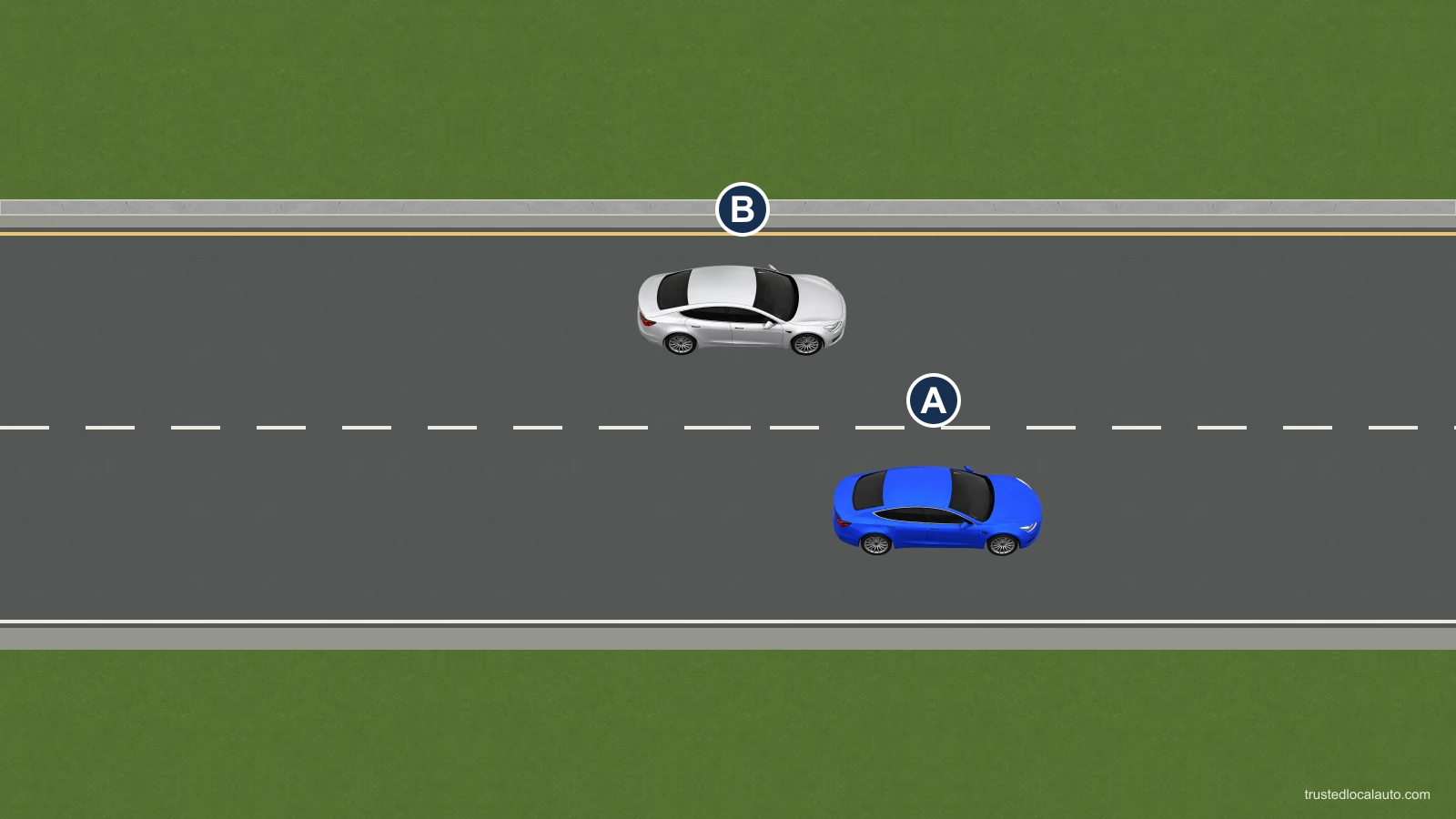
- Position near another vehicleWhere should you avoid travelling relative to another vehicle?Try this question
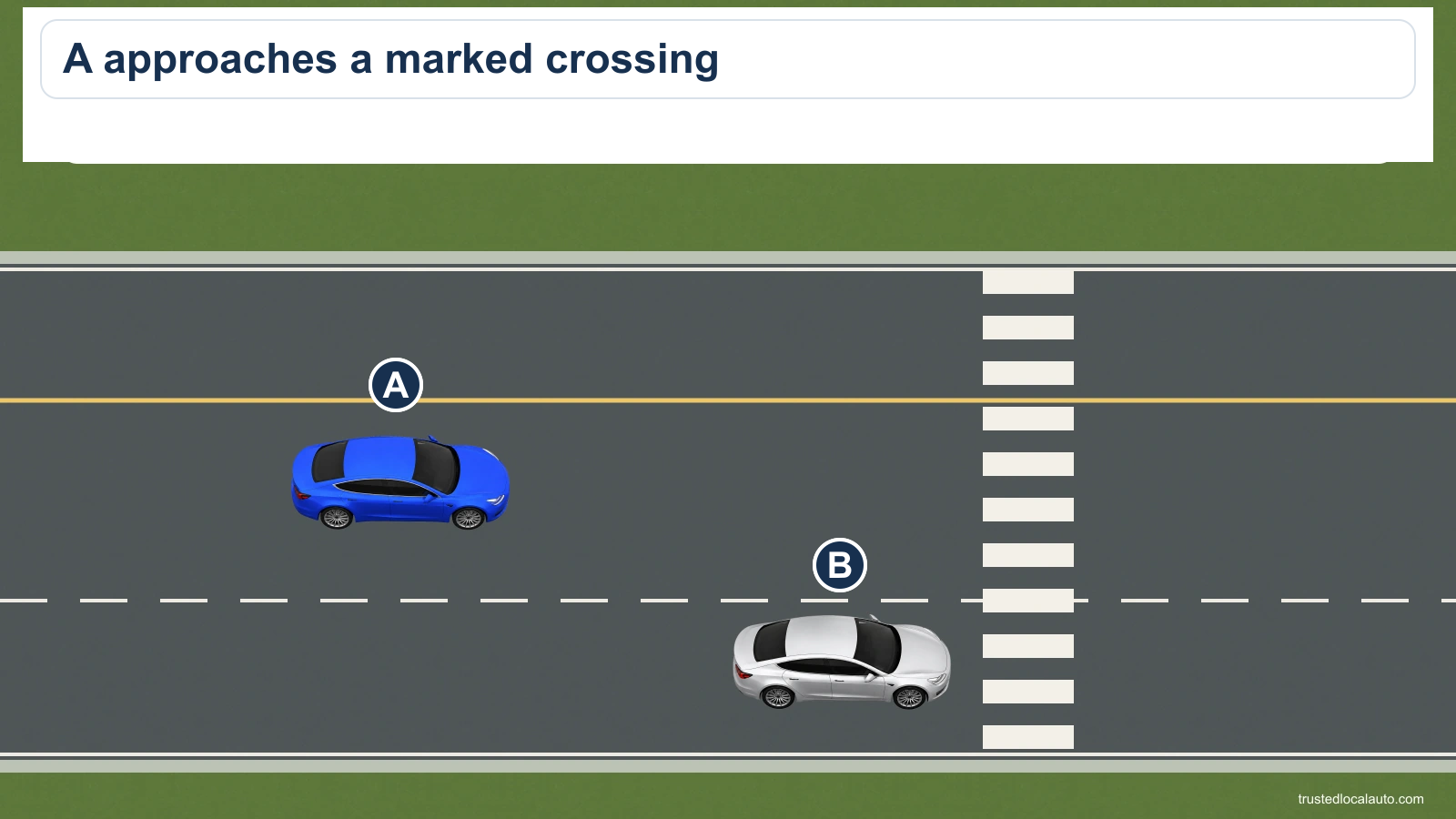 Do Not Wave ThroughWhy should you avoid waving another road user through?Try this question
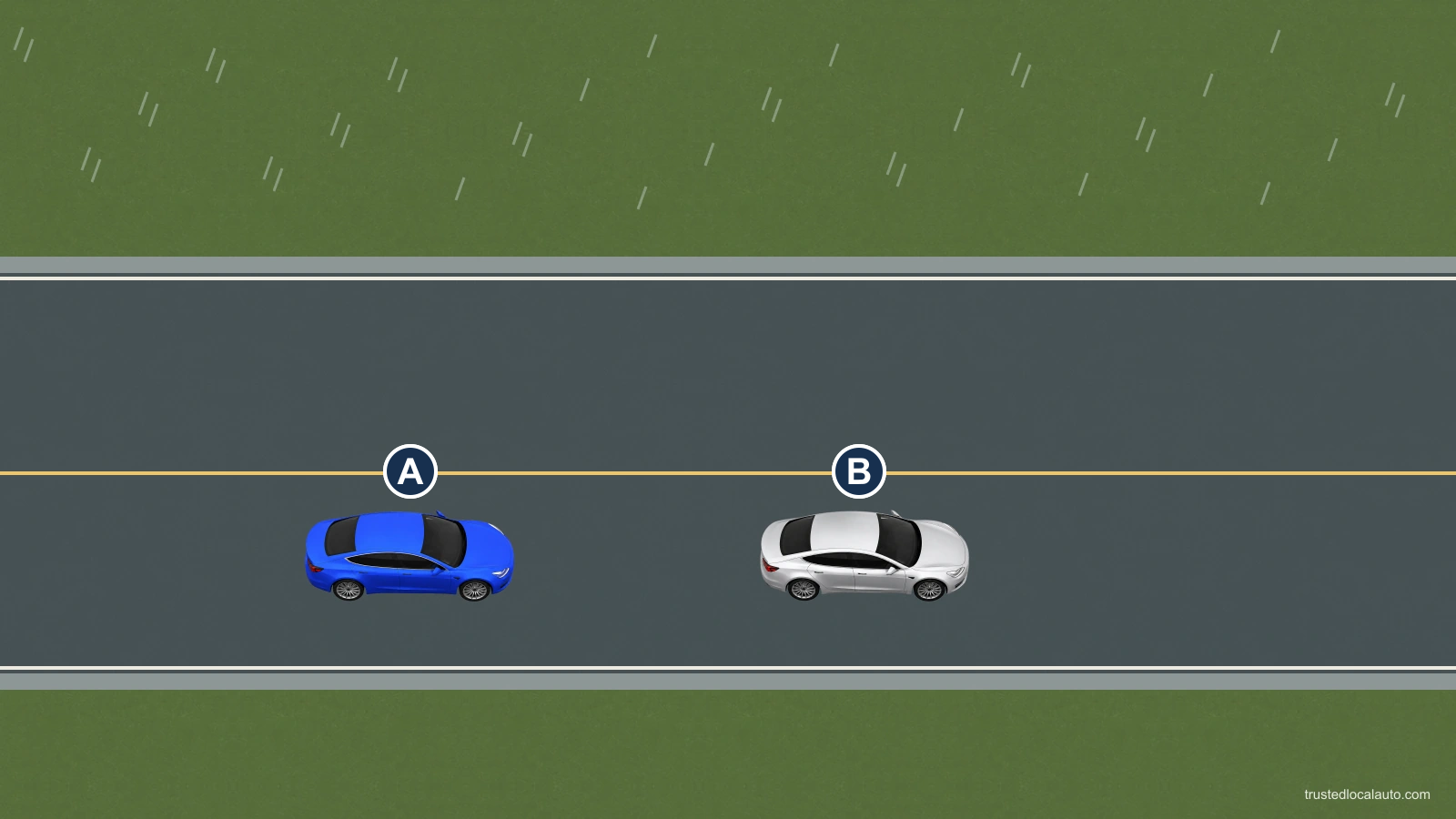 Following time on a wet roadThe road is wet and slippery, as in this example. Which following-time recommendation should replace the ordinary two-second minimum?Try this question
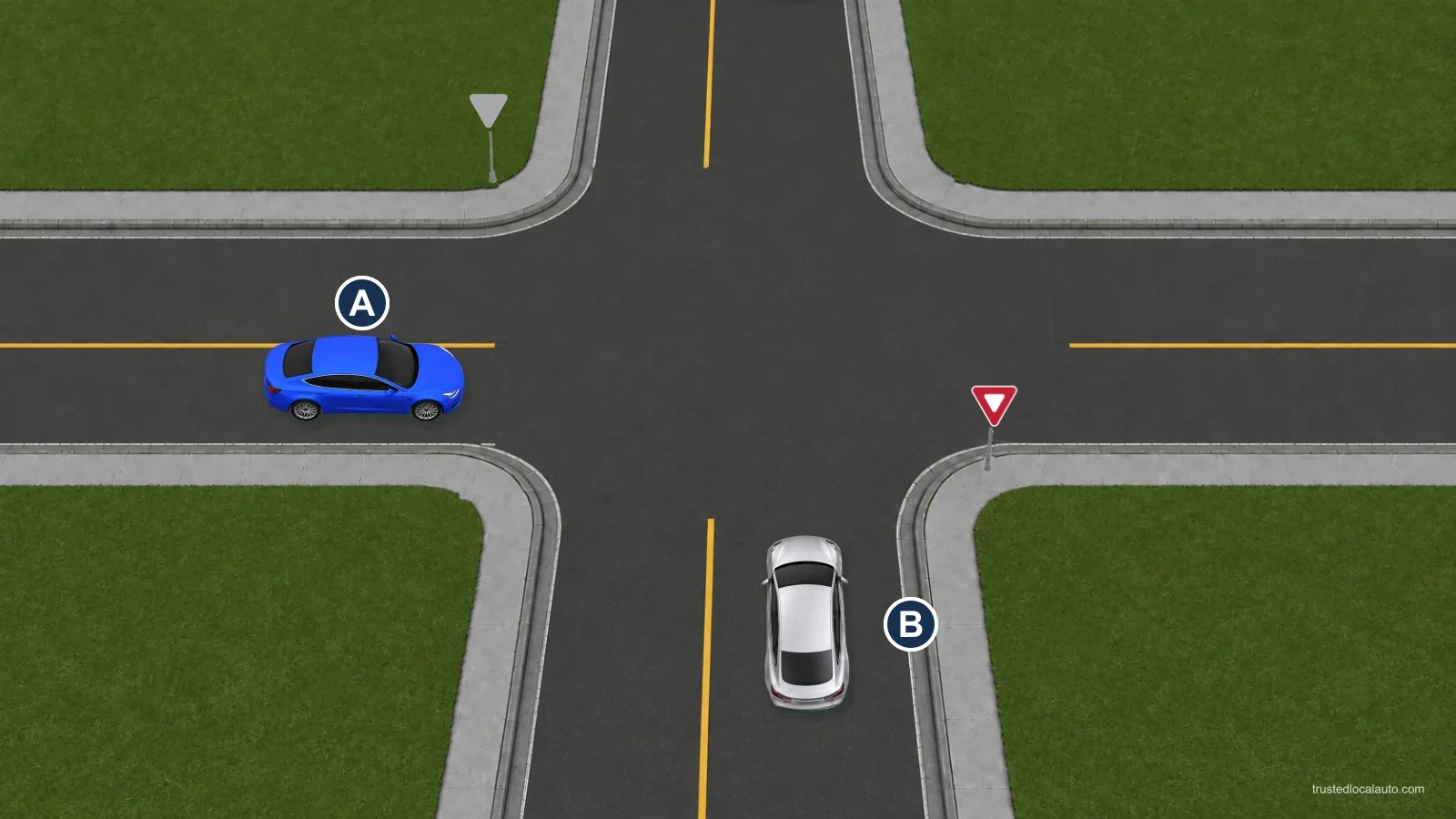 Safe Gap FactorsWhat determines whether a traffic gap is safe?Try this question
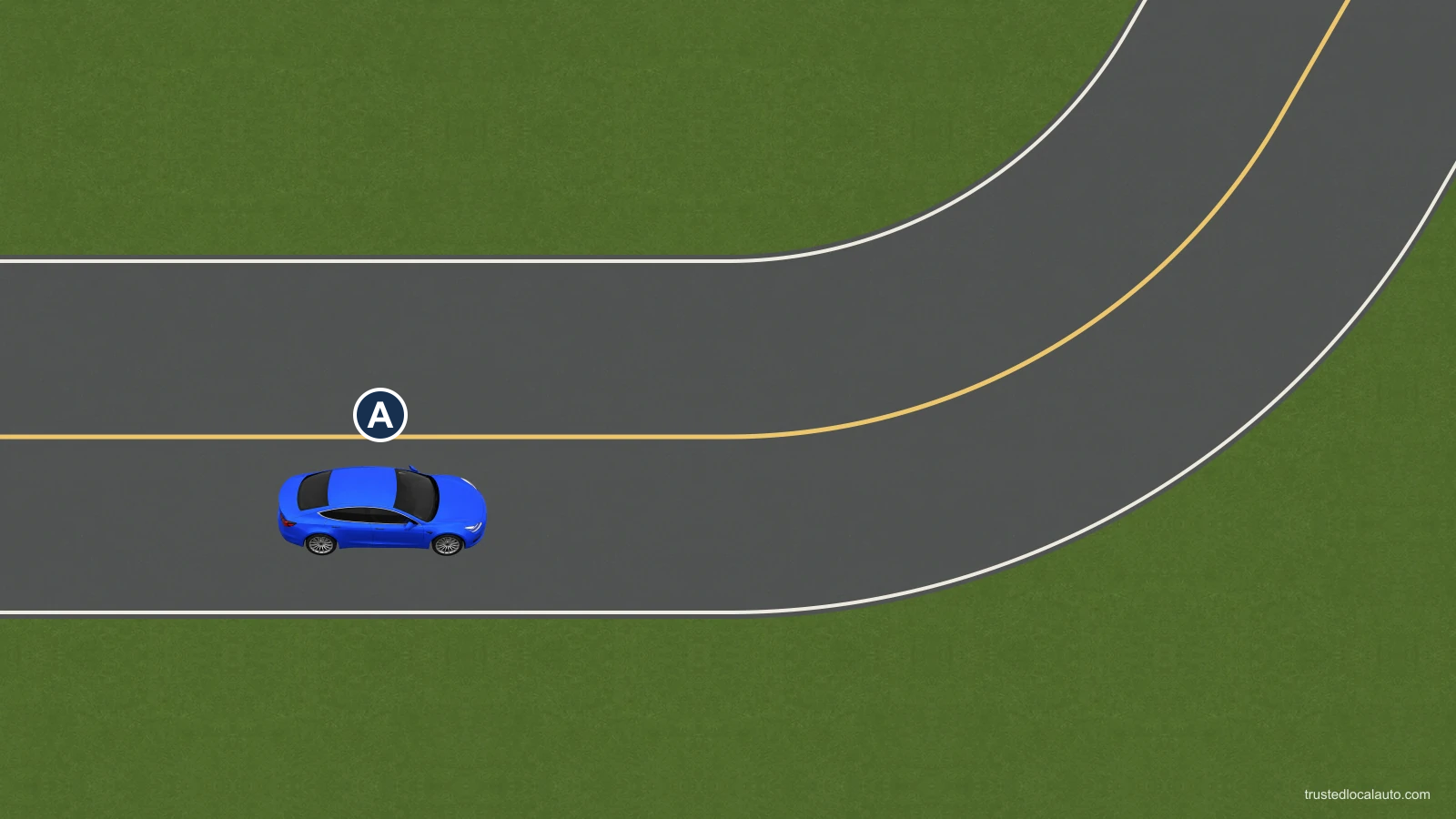 Speed for a curveWhat is the safest speed strategy for a curve?Try this question
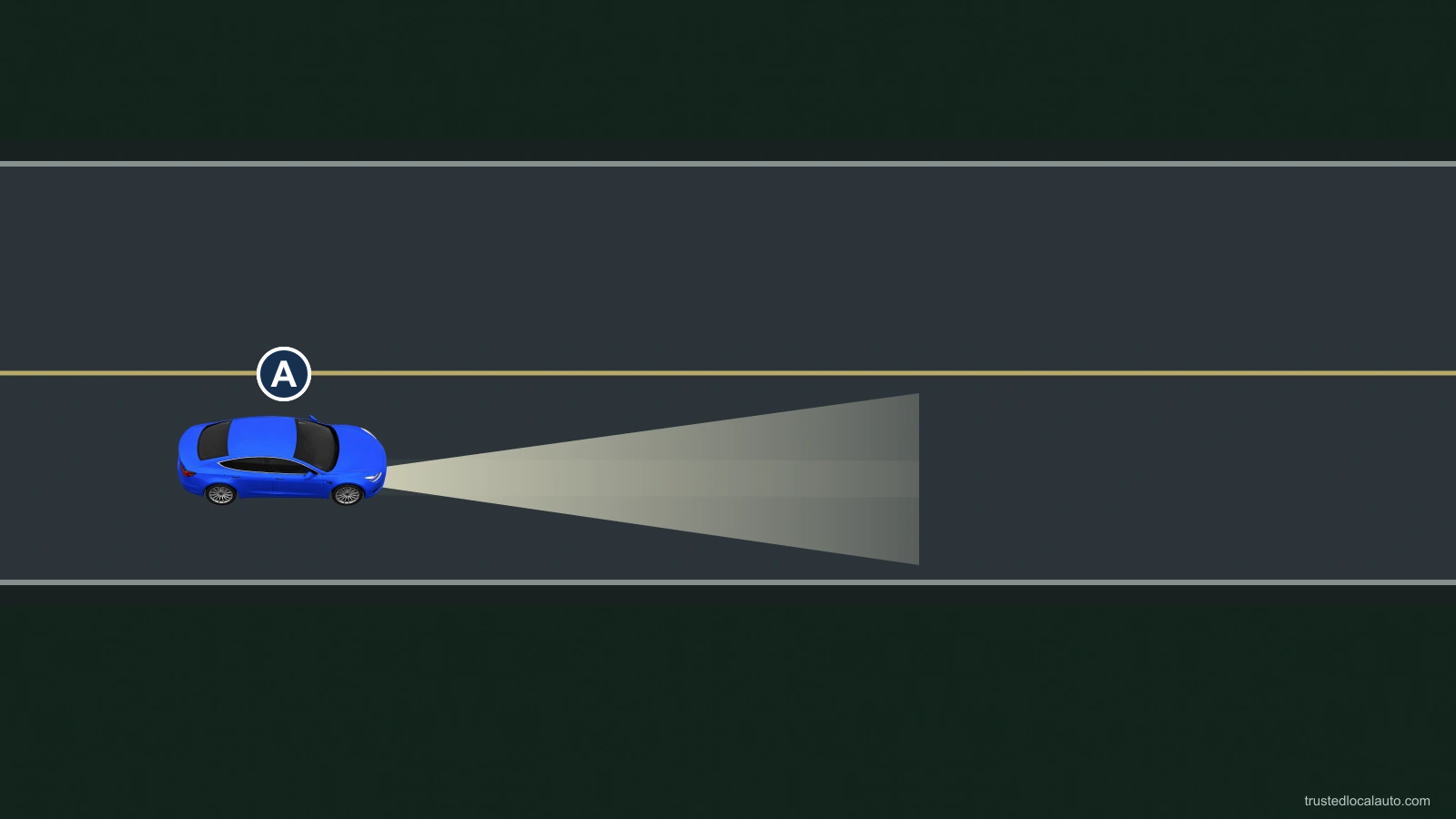 Posted speed and safetyIs the posted speed always the safest speed?Try this question
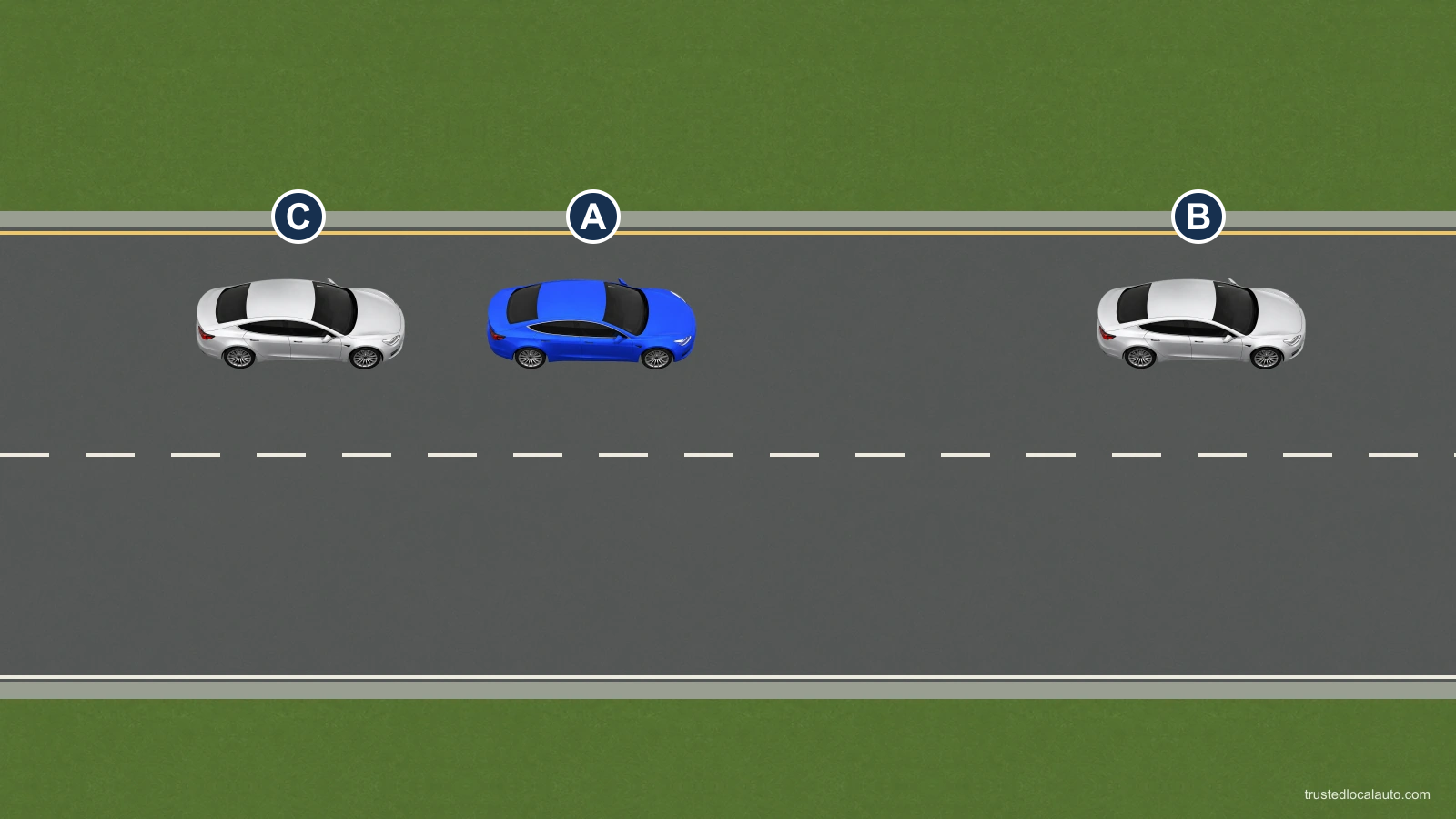 Respond safely to a tailgaterC is following A too closely. What is a safe response by A?Try this question
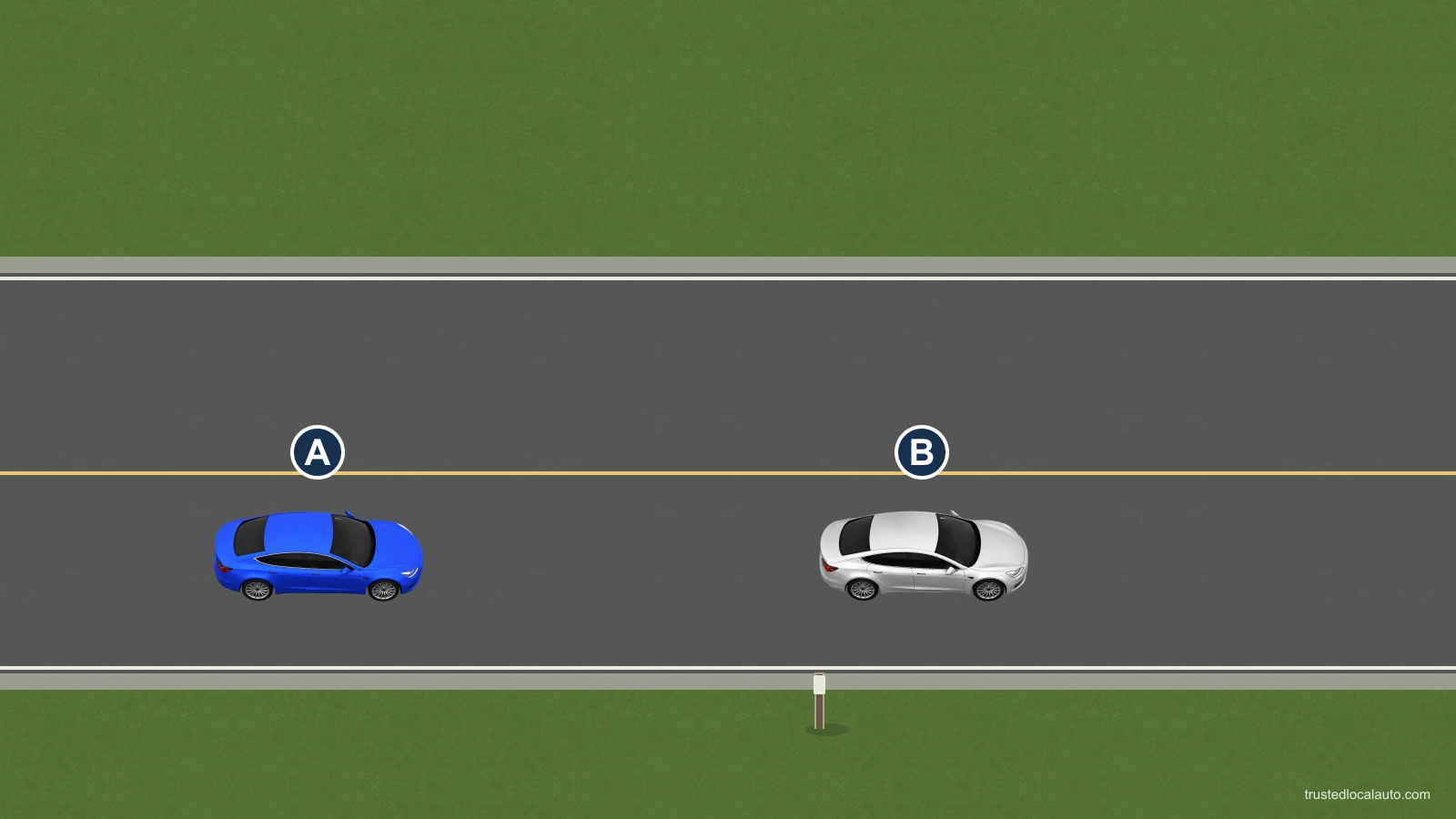 Following time in good conditionsIn good weather and road conditions on an ordinary road, rather than a high-speed road, what minimum following time does ICBC recommend behind a passenger car?Try this question
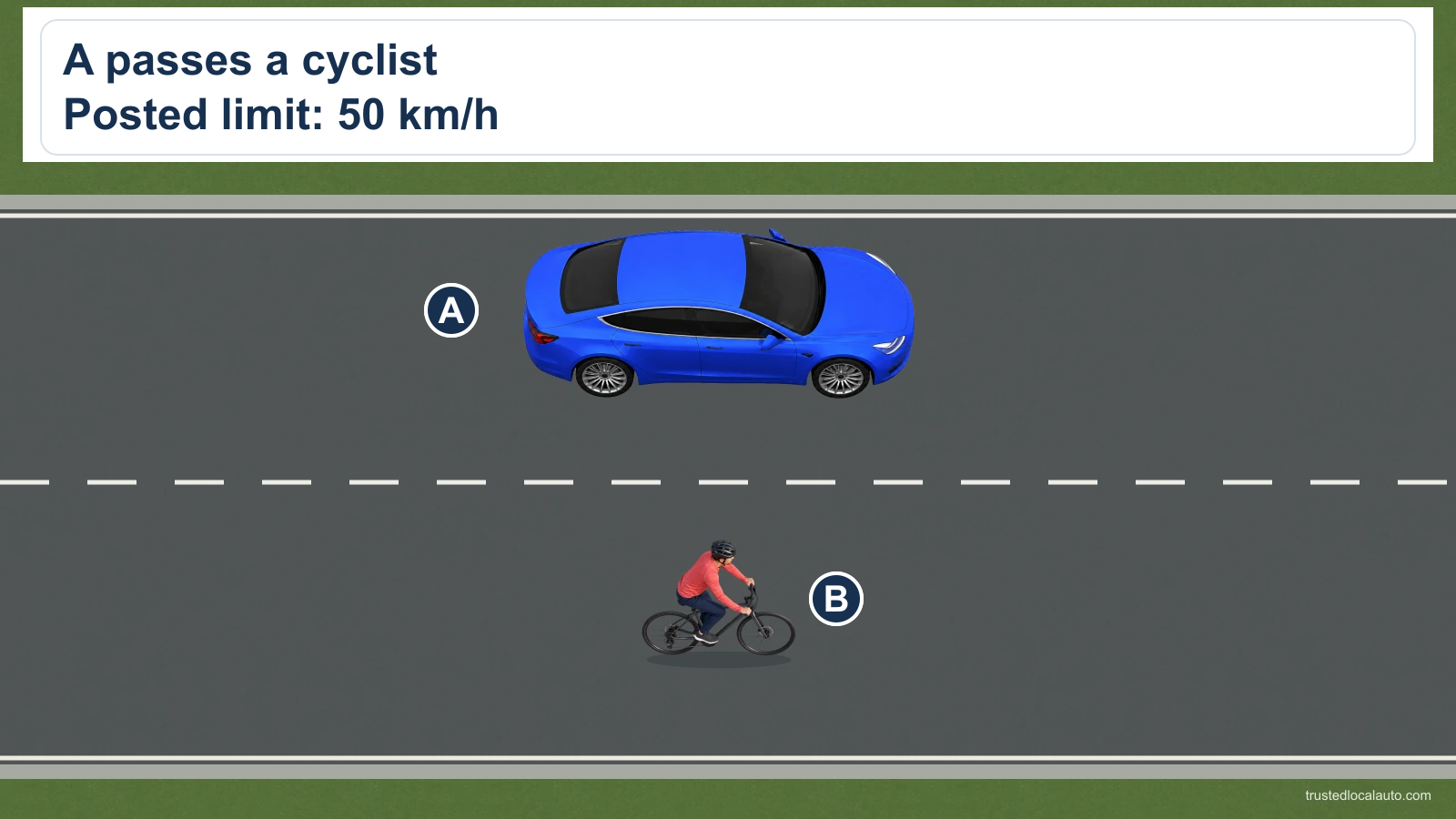 Vulnerable Passing SpaceWhich statement describes BC passing-clearance minimums? In the illustration, the cyclist is on a road limited to 50 km/h.Try this question
- Following time on a slippery road HardYou follow a car on a wet, slippery two-way road. What is the minimum following time that ICBC recommends here?Try this question
47 text questions
More questions in this topic
- When several hazards appear, what should you do first?
- In a car with a usable rear window, what observation does ICBC recommend before and while backing?
- After completing the required stop at a stop-controlled intersection, your view of cross traffic is blocked. What should you do?
- What often determines the safest emergency solution?
- What is a driving hazard?
- Which scan does ICBC recommend as you approach an intersection?
- Why check the rear-view mirror before slowing or stopping?
- How often should you check mirrors during normal driving?
- Which observation routine does ICBC recommend repeating about every five to eight seconds?
- What should you do on loose gravel, ice or wet pavement?
- What helps a driver predict what may happen next?
- How far ahead does ICBC recommend scanning to prepare for developing hazards?
- What are the three steps of the see-think-do strategy?
- What is a space conflict?
- How should speed relate to how far you can see?
- What should you check just before turning?
- How should you respond when a bus, hill, curve or weather blocks your view?
- What does it mean to cover the brake?
- If traction begins to break in a curve, what should you do?
- How does a downhill grade affect stopping?
- When can a hand signal add useful communication?
- Where should your hands normally be on the steering wheel?
- What risk increases with a higher vehicle centre of gravity?
- When should you use the horn?
- What helps maintain a smooth road position?
- A vehicle signals a turn but its speed and lane position suggest it will go straight. What should you do?
- May you coast downhill in neutral or with the clutch in?
- What can a vehicle's lane position, wheel angle and speed tell you?
- Why is tailgating dangerous?
- How should turn signals be used?
- What reduces tire traction?
- Which statement correctly summarizes BC’s general municipal and outside-municipality unposted speed rules?
- Your car has a usable rear window. It has been parked in a driveway for several hours, and you are ready to back out to the street. What does ICBC recommend? Hard
- Your car has a blind-spot detector, a rear camera and well-adjusted mirrors. In slow city traffic at about 20 km/h, you want to move into the lane on your left. What must you do before you move? Hard
- During normal highway driving, about how often does ICBC recommend that you look in each mirror? Hard
- You have made the required stop at the stop line of a two-way stop. A truck parked near the corner blocks your view of cross traffic. What should you do? Hard
- You are parked at the right curb and want to pull out into the traffic lane. You see no vehicles in your left mirror. Which shoulder check does ICBC tell you to make? Hard
- In busy city traffic, you want time to see hazards develop before you reach them. What is the minimum time ahead that ICBC recommends you scan? Hard
- ICBC gives a minimum time to scan ahead and a rough distance for that time on a highway. Which pair is correct? Hard
- You drive a car with a manual transmission down a long hill. Which statement is correct? Hard
- You pass a cyclist who rides on the roadway. On one road the speed limit is exactly 50 km/h; on another road it is 60 km/h. What are the minimum passing clearances on these two roads? Hard
- No speed sign is posted on a BC highway, and no special limit applies. Which pair gives BC's general default speed limits? Hard
- In good weather and road conditions, you follow a passenger car. Which pair of minimum following times does ICBC recommend for an ordinary road and for a high-speed road? Hard
- In a BC municipality, you drive on a municipal lane that is 6 metres wide. No speed sign is posted. The required municipal bylaw applies to this lane. What is the speed limit? Hard
- The speed limit of a road is 70 km/h. A cyclist rides ahead of you on the roadway. You slow to 40 km/h to pass. What is the minimum passing clearance? Hard
- You drive through a curve, and your tires begin to lose traction. What does ICBC advise? Hard
- On an ordinary road in good conditions, you keep a two-second gap behind the car ahead. Now a driver behind you starts to follow you too closely. Which response follows ICBC's advice? Hard
British Columbia Class 7
More Class 7 topics
Road rules · 9 topics
- Licensing & Test Readiness37 questions
- Traffic Signals & Road Markings43 questions
- Observation, Speed & Space59 questions · This topic
- Intersections & Right-of-Way44 questions
- Turns, Lanes, Passing & Merging41 questions
- Sharing the Road59 questions
- Weather, Visibility & Emergencies42 questions
- Vehicle Safety, Documents & Towing41 questions
- Safe & Responsible Driving52 questions
Each question page shows the answer, the explanation and the official source of the question.