
Idaho Class D Knowledge topic
Idaho Class D Knowledge Turns, Lanes, Passing & Merging
Choose the correct lane and position for turns, lane changes, passing, merging and shoulder use.
17 questions, free with an account. 6 of them are hard. Each one has its answer, an explanation and its official source.
- 6 picture questions
- 11 text questions
- 6 of them hard
6 picture questions
Questions in this topic
Select a question to answer it. The answer and the explanation show after you answer.
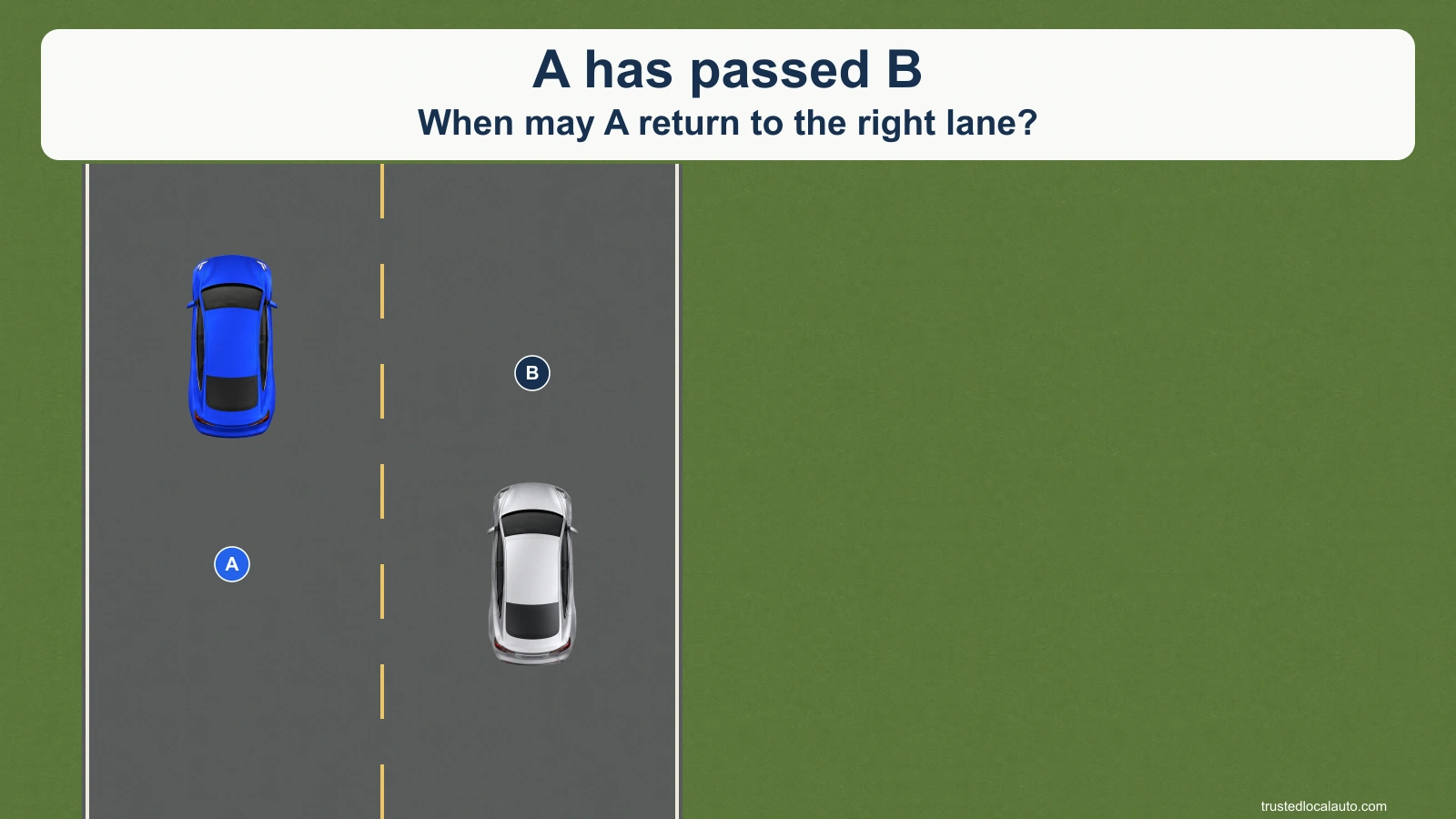 Completing a passBefore moving back into the right lane after passing, what should you verify?Try this question
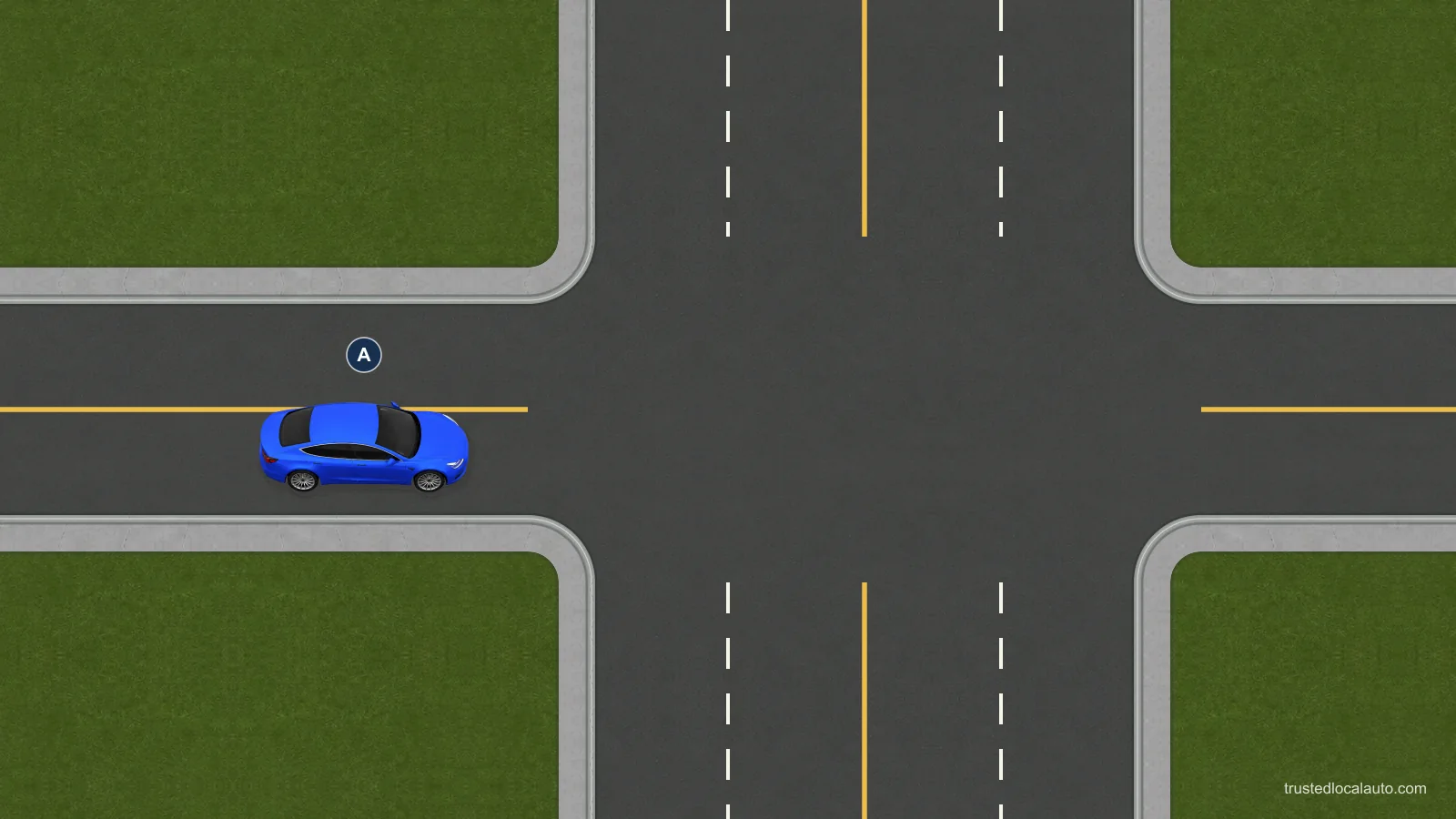 Completing a right turnFrom a normal two-way street, where should a right turn usually finish?Try this question
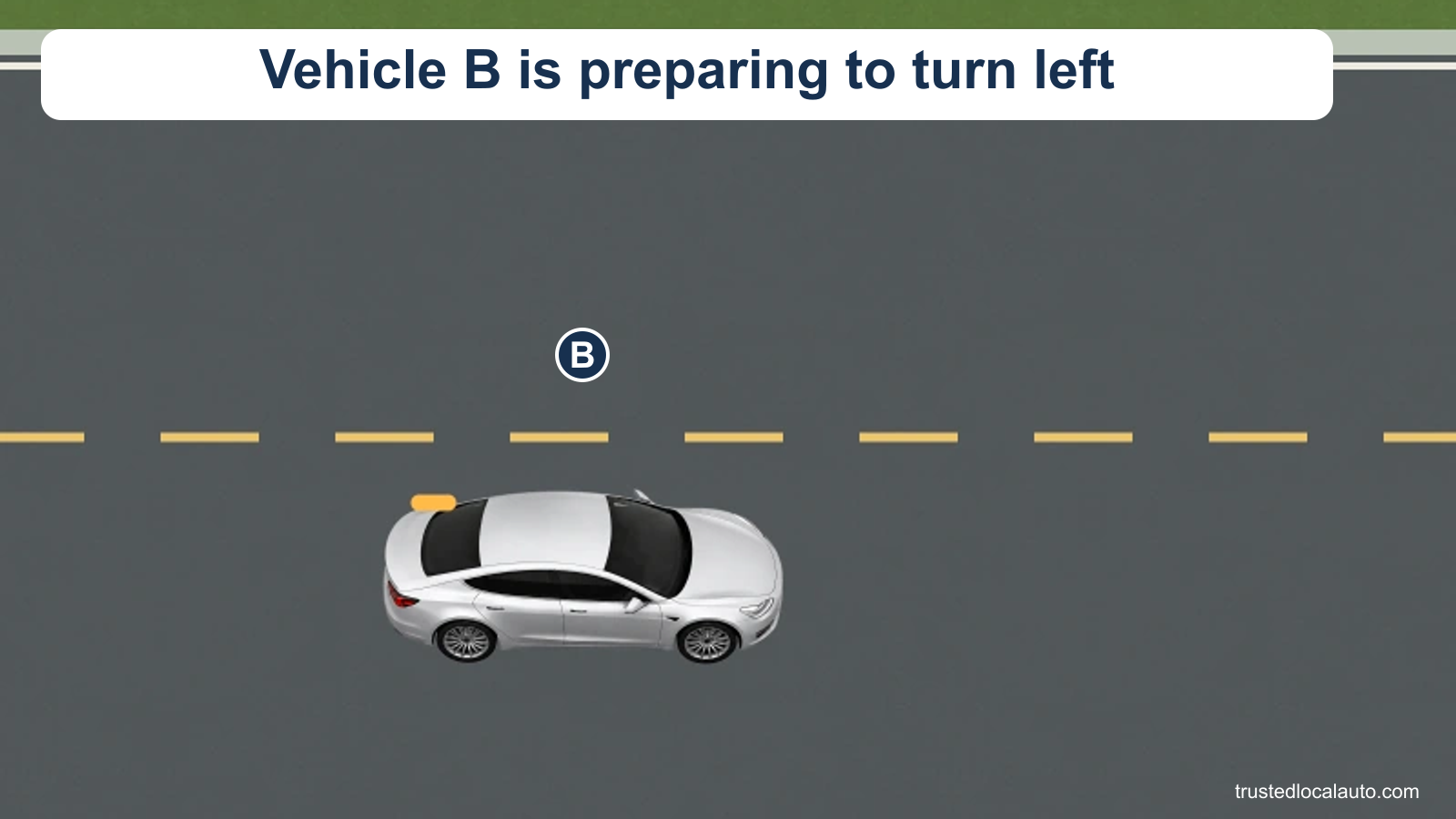 Lawful right-side passOn a two-lane, two-way road, the vehicle ahead is making or about to make a left turn. When may you pass it on the right?Try this question
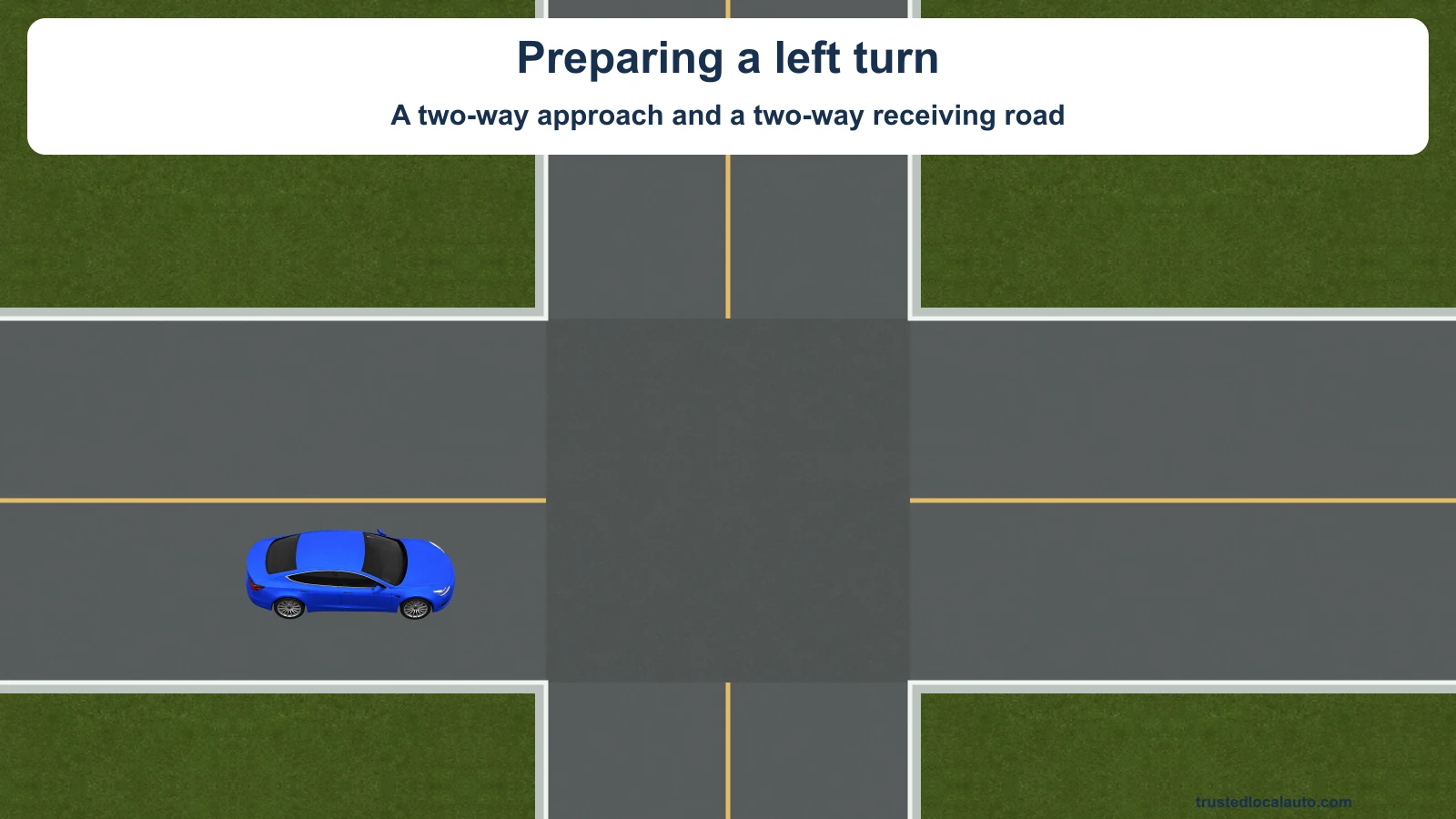 Left-turn entry laneAt an ordinary intersection with one left-turn lane and no special turn markings, which lane should you enter after turning left?Try this question
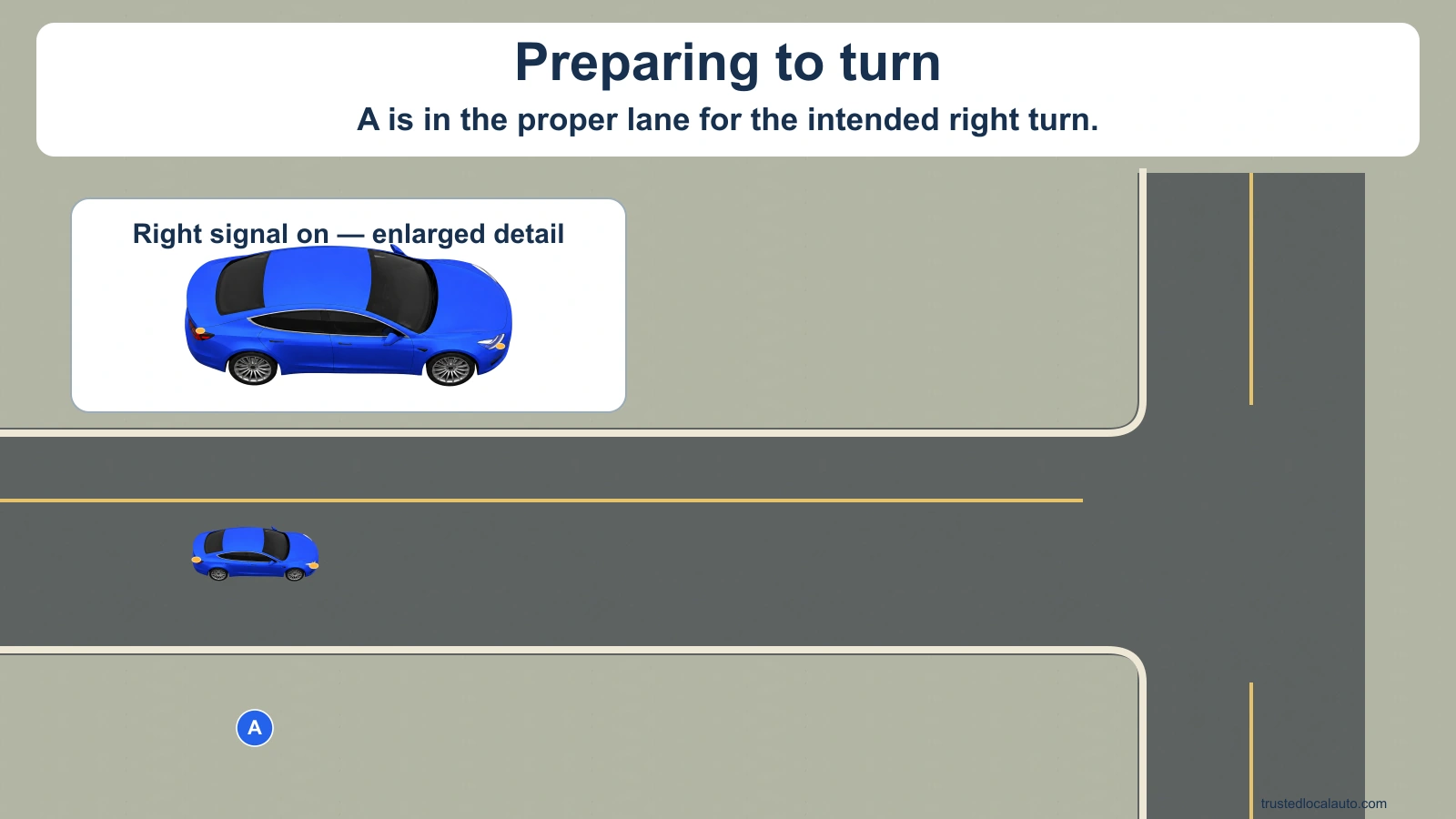 Urban signal distanceWhile already moving on an ordinary city street, how far before a turn must you begin signaling?Try this question
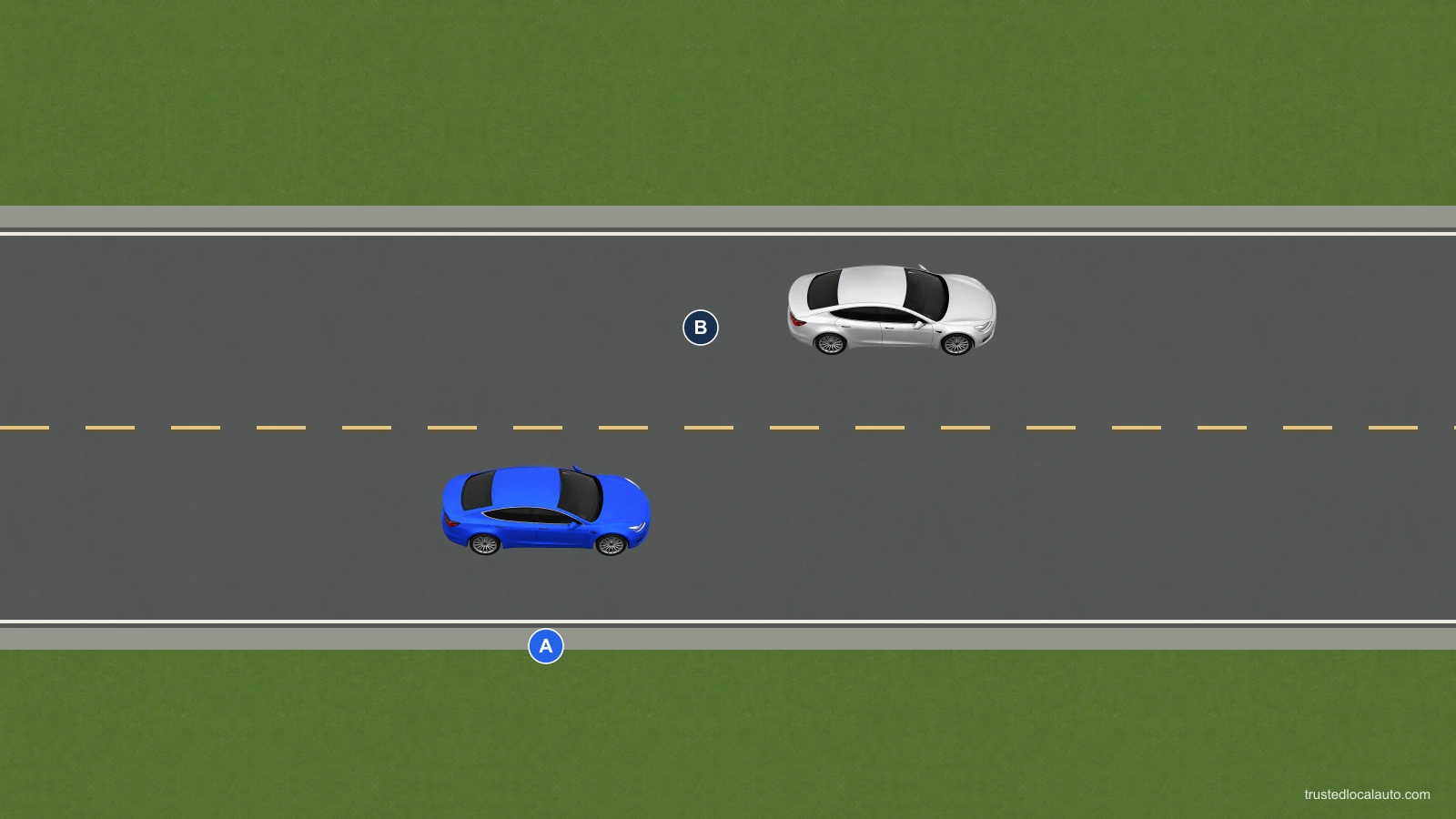 When another driver passesWhat should you do while another vehicle is passing you on a two-lane road?Try this question
11 text questions
More questions in this topic
- Outside an incorporated city, a road posted 55 mph widens to add a passing lane. Your passenger car is not towing. Which pass may qualify for Idaho’s temporary 15-mph allowance?
- May you make a U-turn near a hill crest when approaching drivers cannot see you within 500 feet?
- On a two-lane, two-way road, when is driving left of center to pass generally prohibited near an intersection?
- Before moving a parked car into traffic on a public road, how long must you signal continuously?
- You drive a passenger car without a trailer on a two-lane highway, one lane each way, posted 55 mph. Outside a construction zone, you can lawfully pass on the left a vehicle going below 55. What temporary allowance may apply?
- On a two-lane, two-way road, you want to pass a slow vehicle. A railroad crossing is 80 feet ahead, and no traffic control permits a pass there. Which statement is correct? Hard
- On a two-lane, two-way road with no traffic control, you may not drive left of center within a set distance of an intersection. When you pass in the opposing lane, you must return before you come within a set distance of an approaching vehicle. Which pair of distances is correct? Hard
- You drive a passenger car with no trailer on a two-lane highway, one lane each way, posted 50 mph. Outside a construction zone, you lawfully pass on the left a vehicle going below 50. Which statement is correct? Hard
- Your passenger car pulls a small utility trailer on a two-lane highway, one lane each way, posted 55 mph. Outside a construction zone, you can lawfully pass on the left a vehicle going below 55. Which statement about Idaho's temporary passing speed allowance is correct? Hard
- You drive on a curve, not near a hill crest. Drivers who approach from either direction cannot see your car within 500 feet. No vehicle is in sight, and your hazard lights are off. Which statement about a U-turn here is correct? Hard
- You want to make a U-turn near the crest of a hill. Drivers who approach from either direction can see your car only from 300 feet away. Which statement is correct? Hard
Idaho Class D Knowledge
More Class D Knowledge topics
Road rules · 12 topics
- Licensing & Test Readiness20 questions
- Traffic Signals & Road Markings23 questions
- Observation, Speed & Space14 questions
- Intersections & Right-of-Way20 questions
- Turns, Lanes, Passing & Merging17 questions · This topic
- Parking, Reversing & Roadside Stops20 questions
- Sharing the Road27 questions
- Freeways & High-Speed Roads11 questions
- School Zones, Railways & Work Areas35 questions
- Weather, Visibility & Emergencies24 questions
- Vehicle Safety, Documents & Towing20 questions
- Safe & Responsible Driving23 questions
Each question page shows the answer, the explanation and the official source of the question.