
Ontario G1 topic
Ontario G1 Sharing the Road
Drive safely around pedestrians, cyclists, buses, trucks, motorcycles and emergency vehicles.
46 questions, free with an account. 16 of them are hard. Each one has its answer, an explanation and its official source.
- 32 picture questions
- 14 text questions
- 16 of them hard
32 picture questions
Questions in this topic
Select a question to answer it. The answer and the explanation show after you answer.
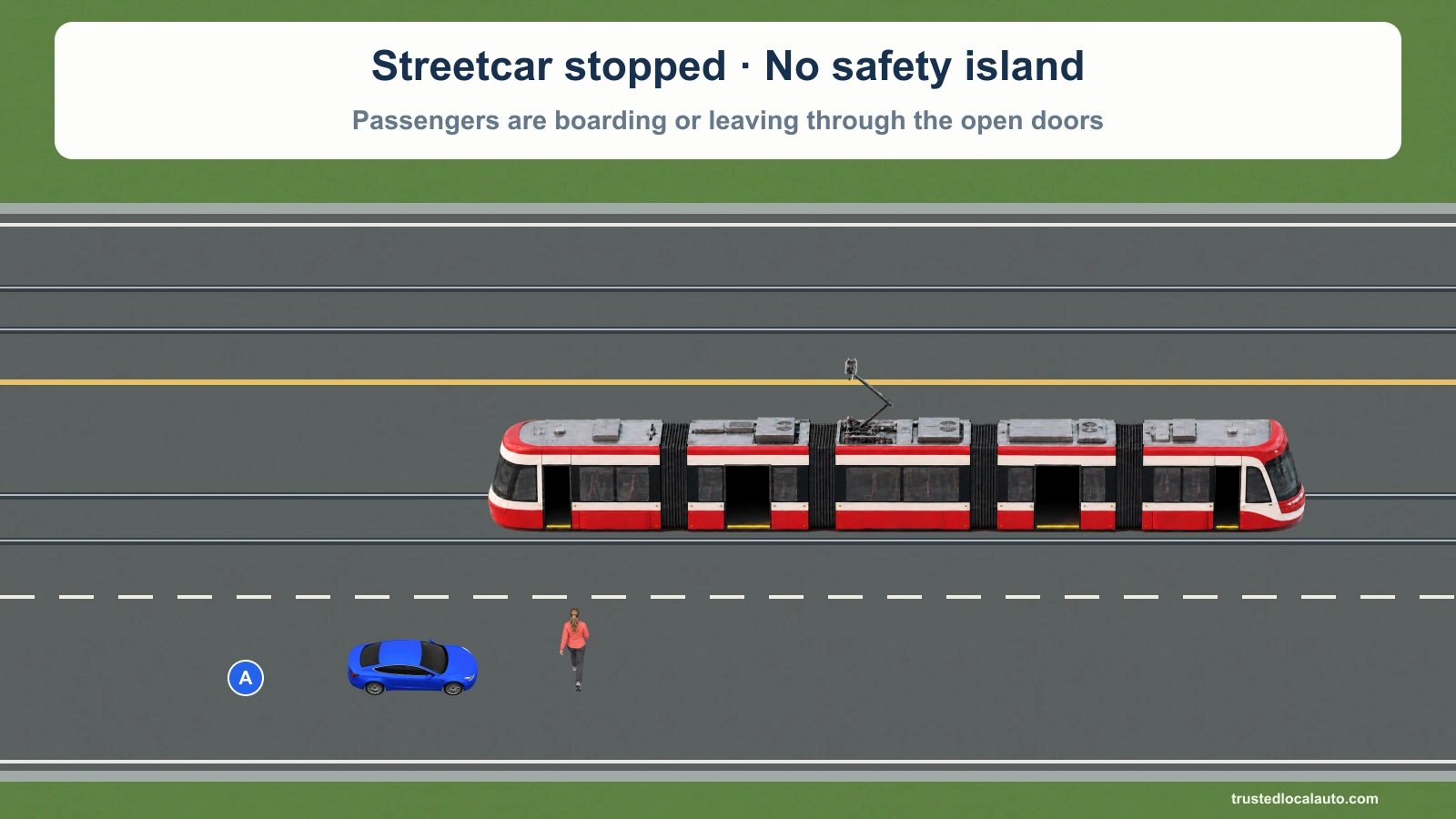 Stopped streetcar with no safety islandWhen you approach a streetcar that is stopped to let passengers on or off, and there is no safety island, you must:Try this question
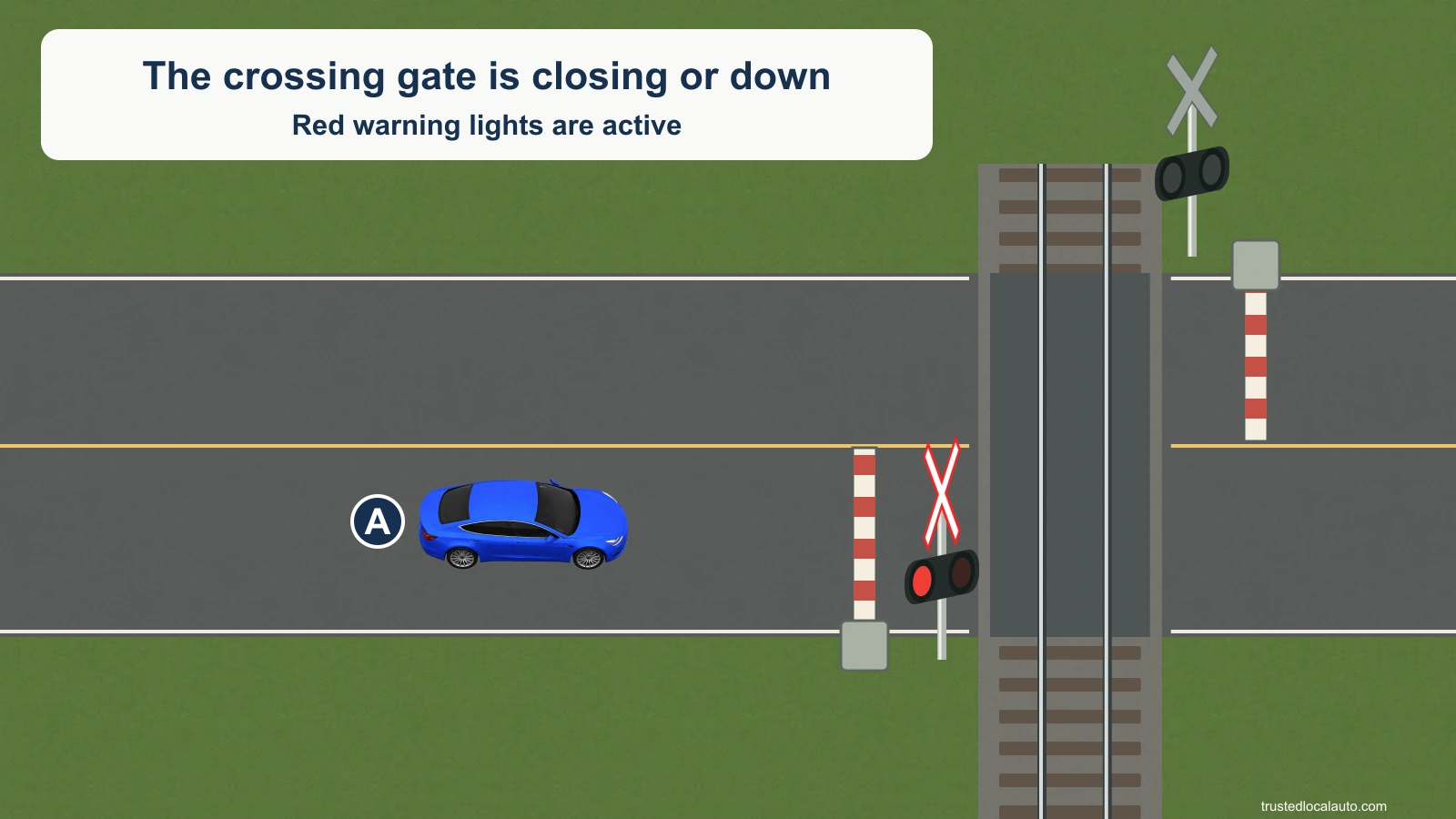 Flashing lights and a lowering railway gateWhen approaching a railway crossing with flashing red lights and a lowering gate, when are you legally allowed to cross?Try this question
- Lowered railway crossing gatesYou approach a railway crossing with its warning lights flashing and gates lowered. What should you do?Try this question
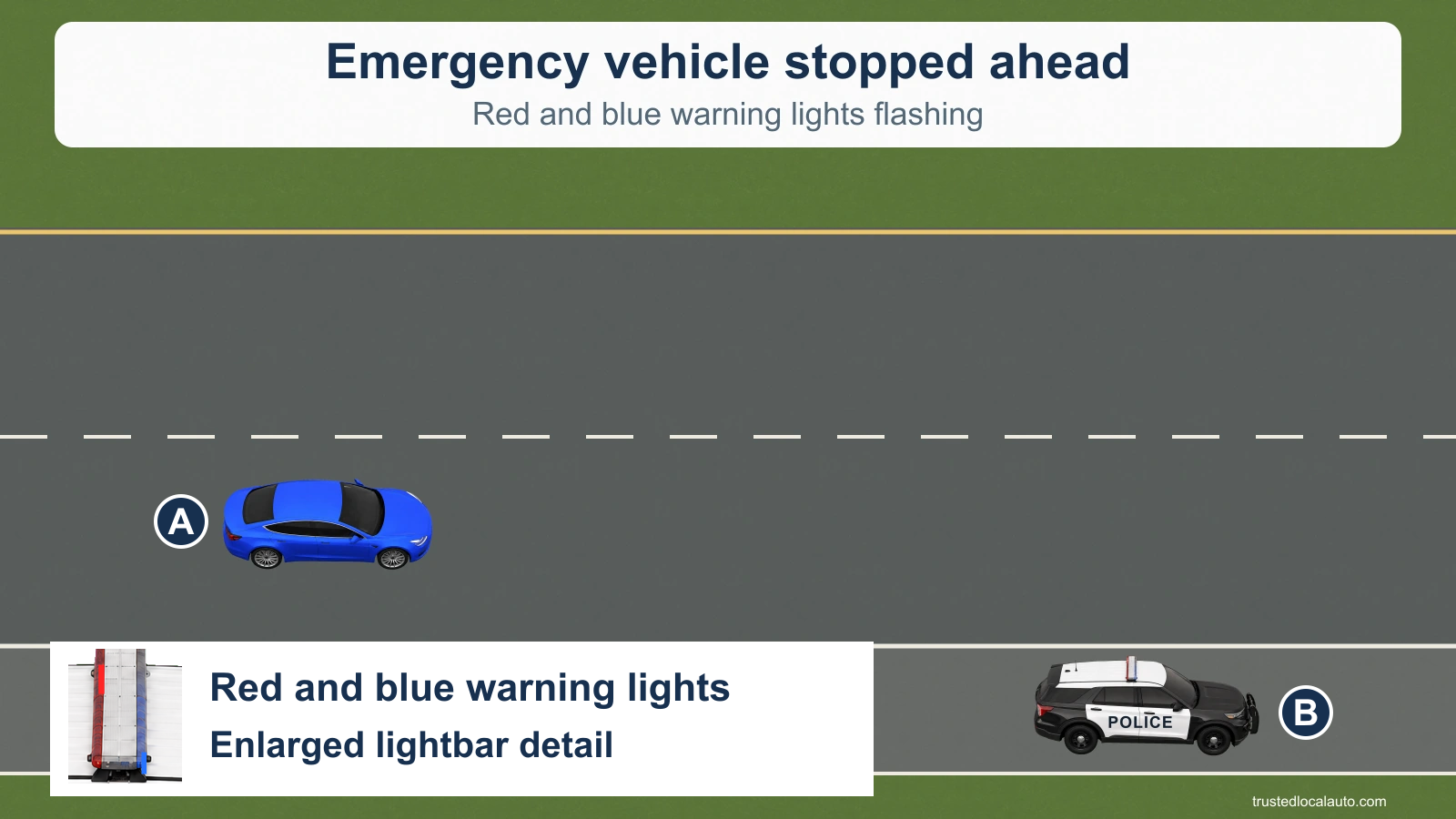 Moving over for a stopped emergency vehicleYou are in the lane beside a stopped emergency vehicle with flashing red or red-and-blue lights. The Ontario highway has at least two lanes in your direction. What does the move-over rule require?Try this question
- Passing stopped emergency vehiclesOn an Ontario highway with at least two lanes in your direction, you approach a stopped emergency vehicle or tow truck from the lane beside it. The emergency vehicle has flashing red or red-and-blue lights; a tow truck has flashing amber lights. What must you do?Try this question
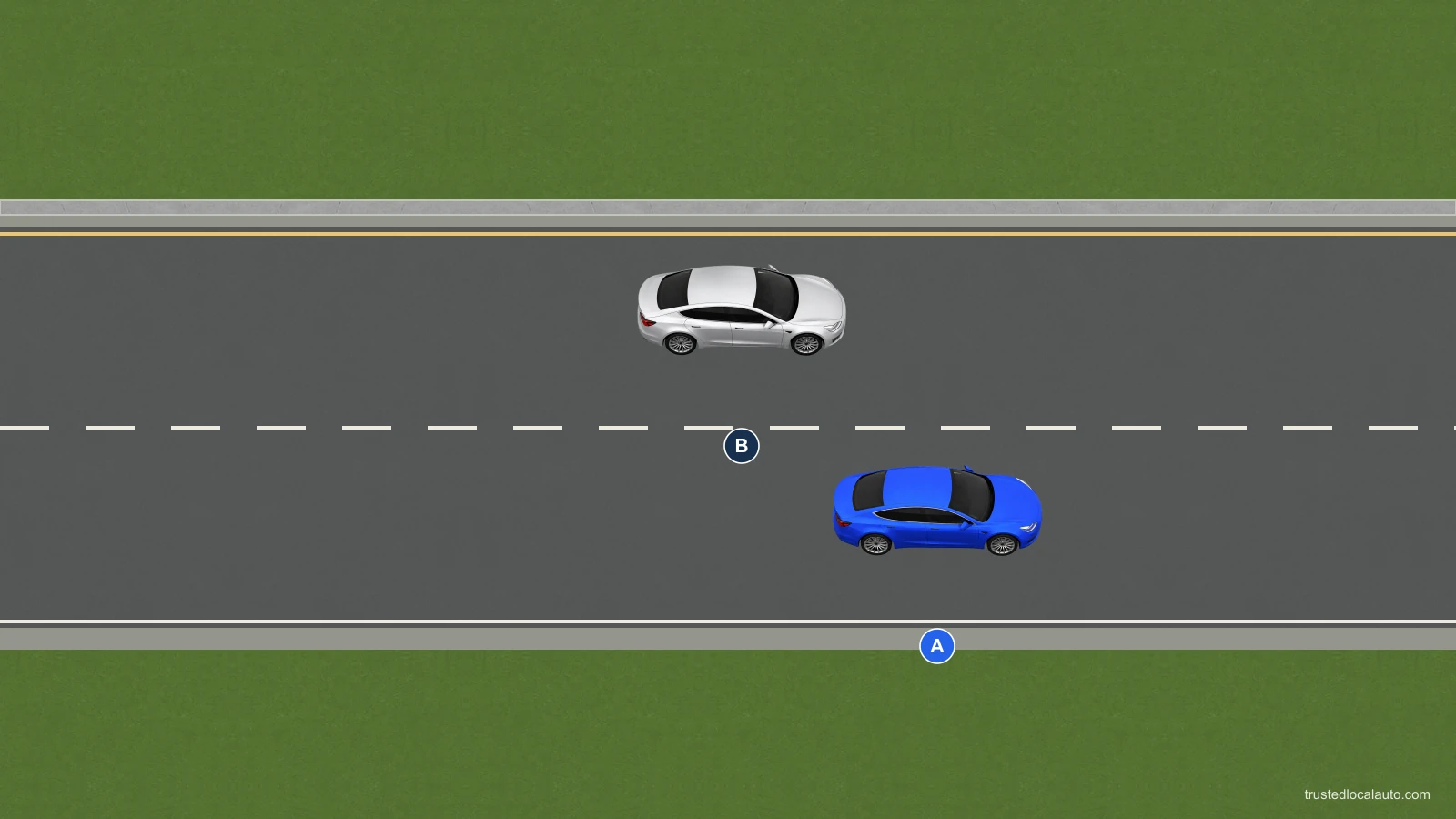 Blind spotWhat is a "blind spot"?Try this question
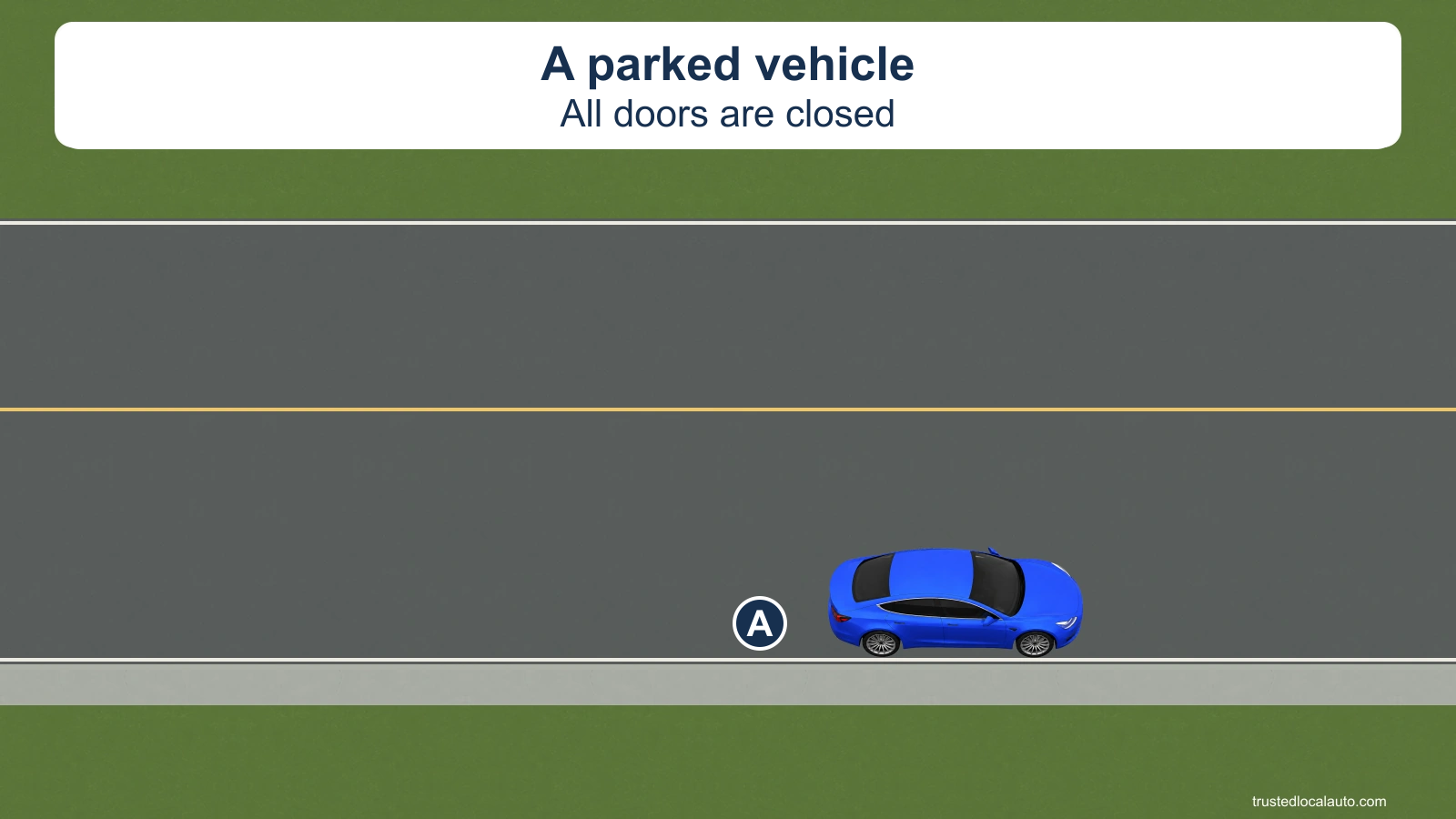 Dooring and how to avoid itWhat is 'dooring', and how can you avoid it?Try this question
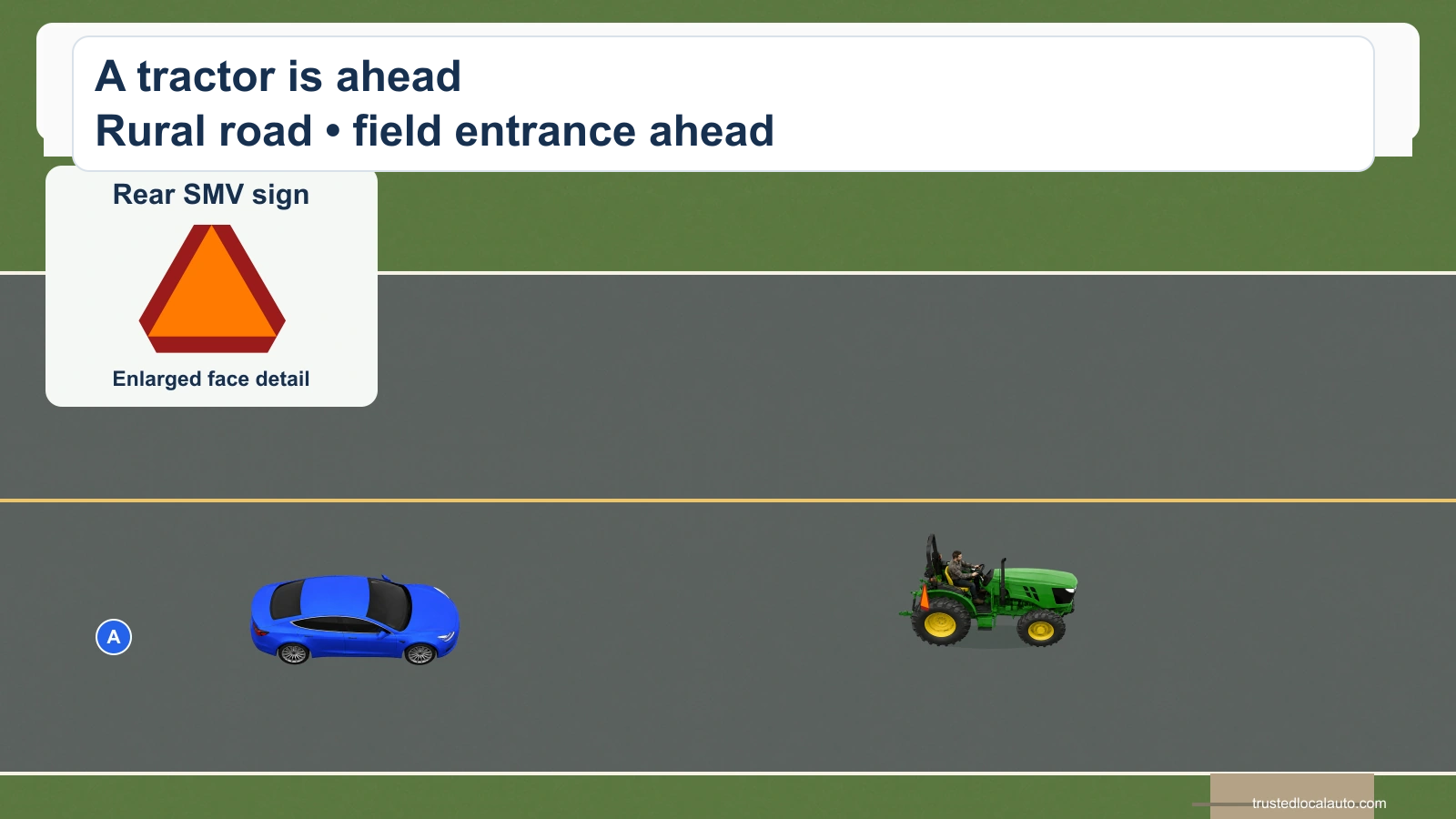 Behind farm machinery on a rural roadWhen driving behind farm machinery on a rural road, what should you keep in mind?Try this question
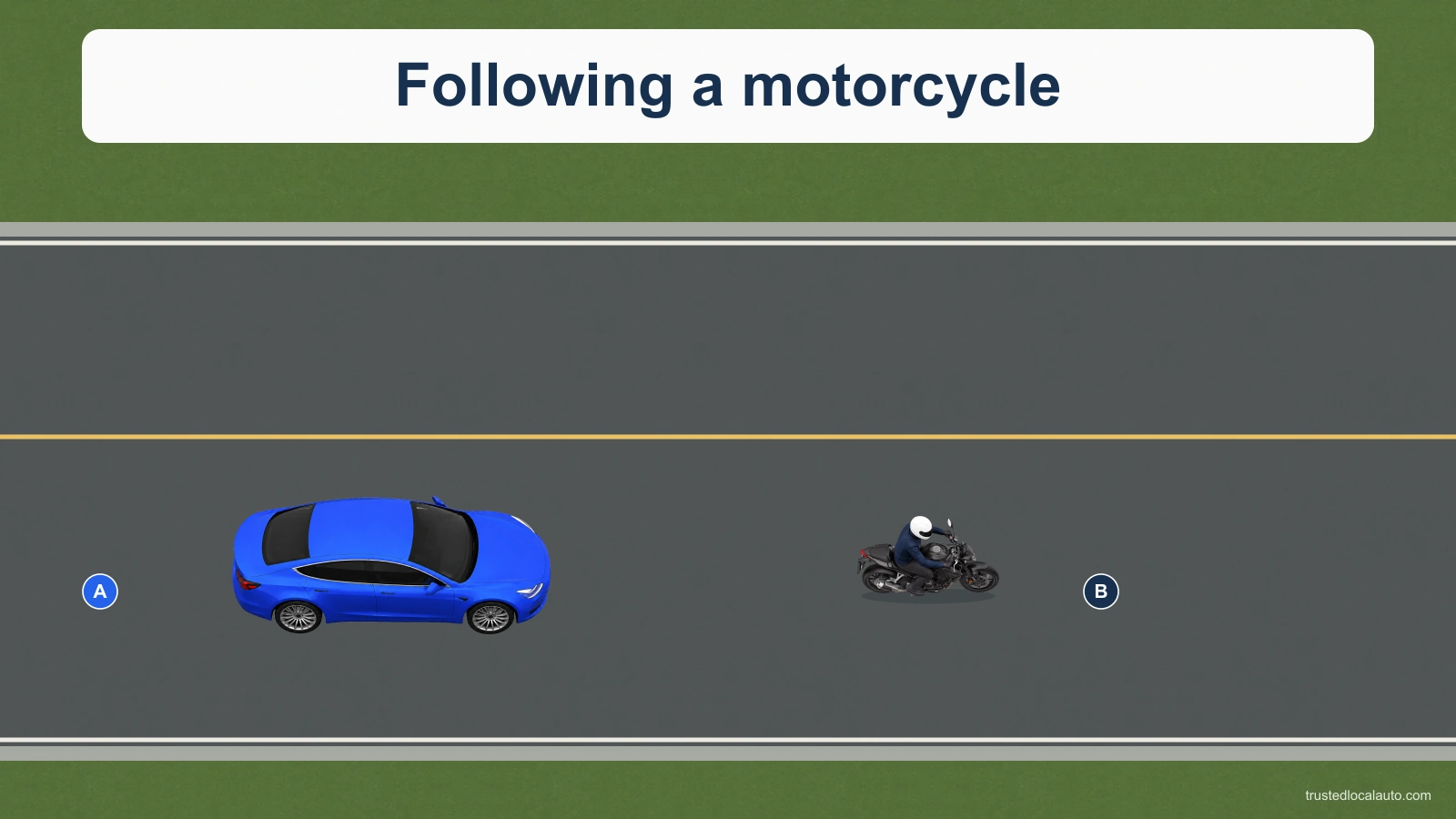 Driving behind a motorcycleWhen driving behind a motorcycle, what should you do?Try this question
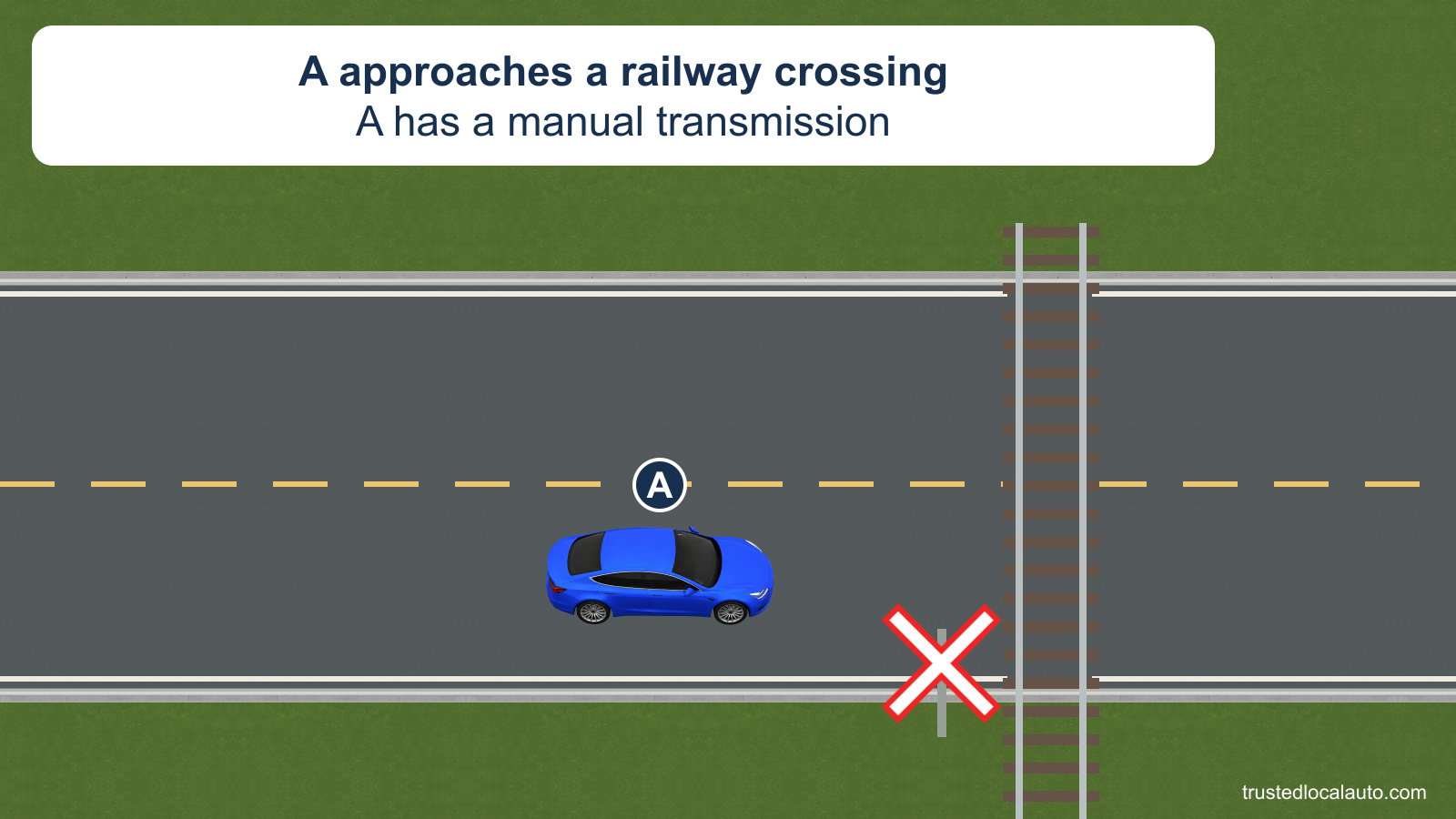 Crossing tracks with a manual transmissionWhen driving a vehicle with a manual transmission across railway tracks, what is a crucial safety rule?Try this question
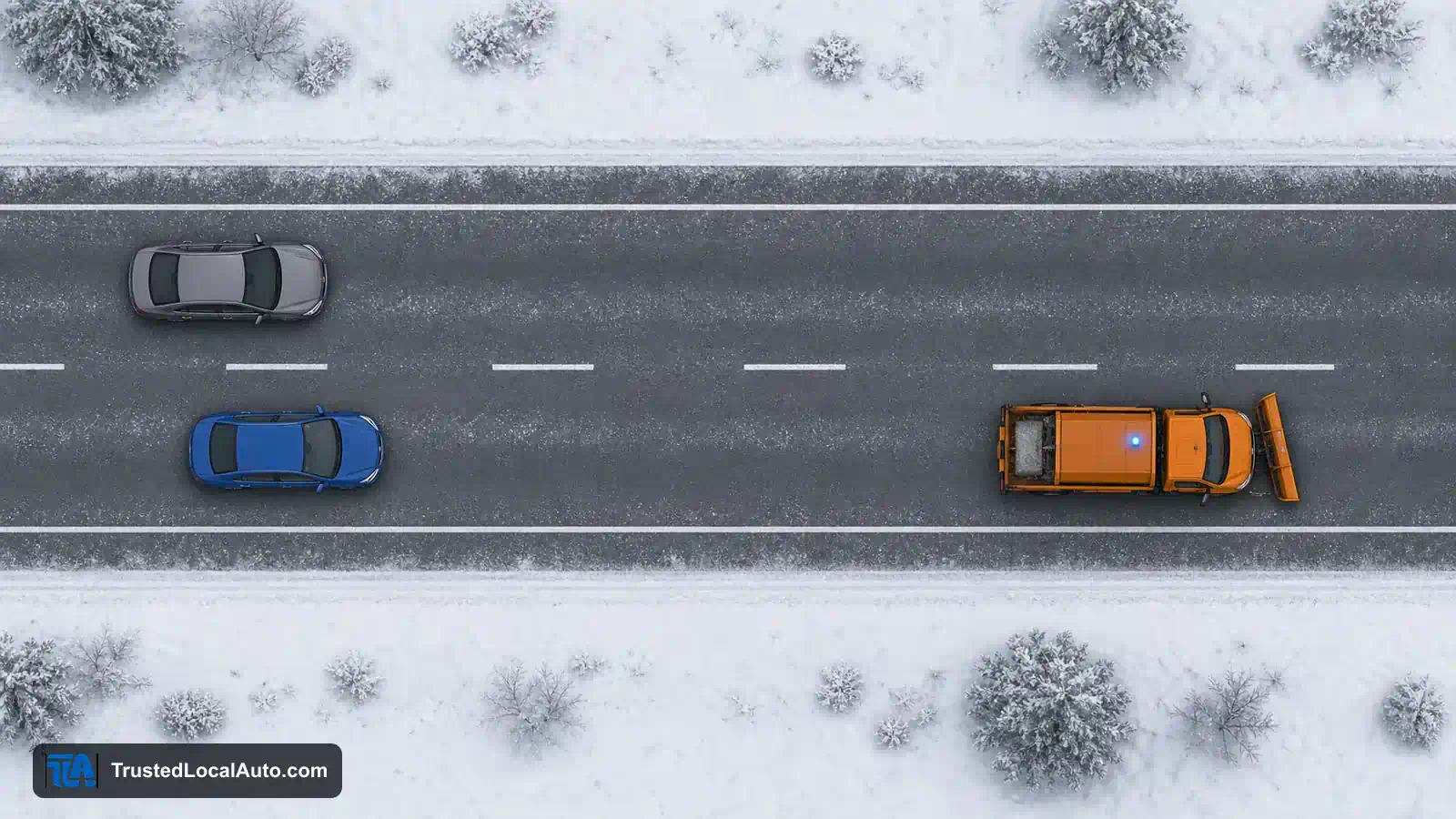 Following snow-removal equipmentOn a snowy road, a snow-removal vehicle ahead displays a flashing blue light. What should you do?Try this question
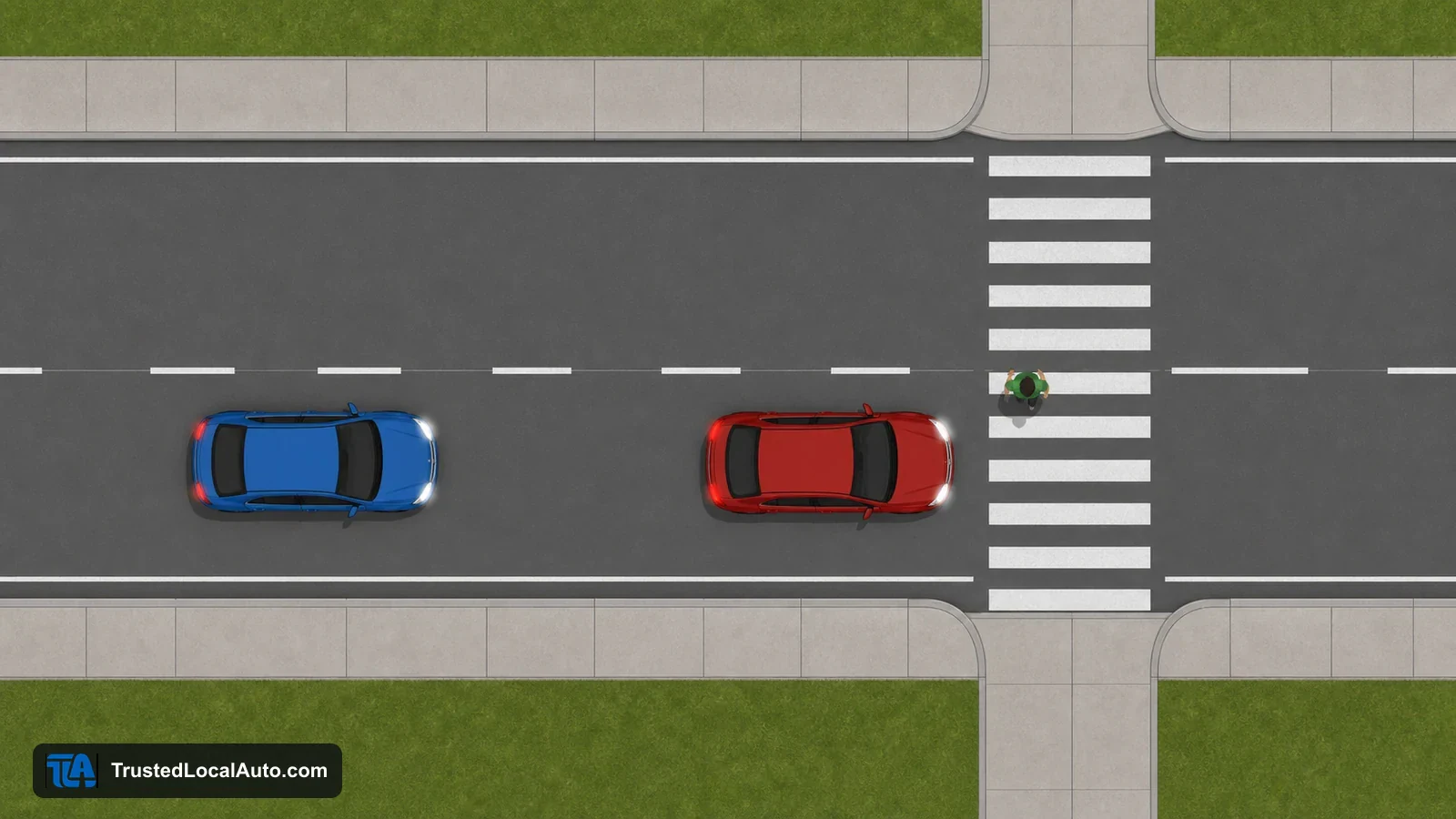 Vehicle stopped at a marked crosswalkA vehicle ahead has stopped at a marked crosswalk and may be hiding a pedestrian. According to the MTO handbook, what should you do?Try this question
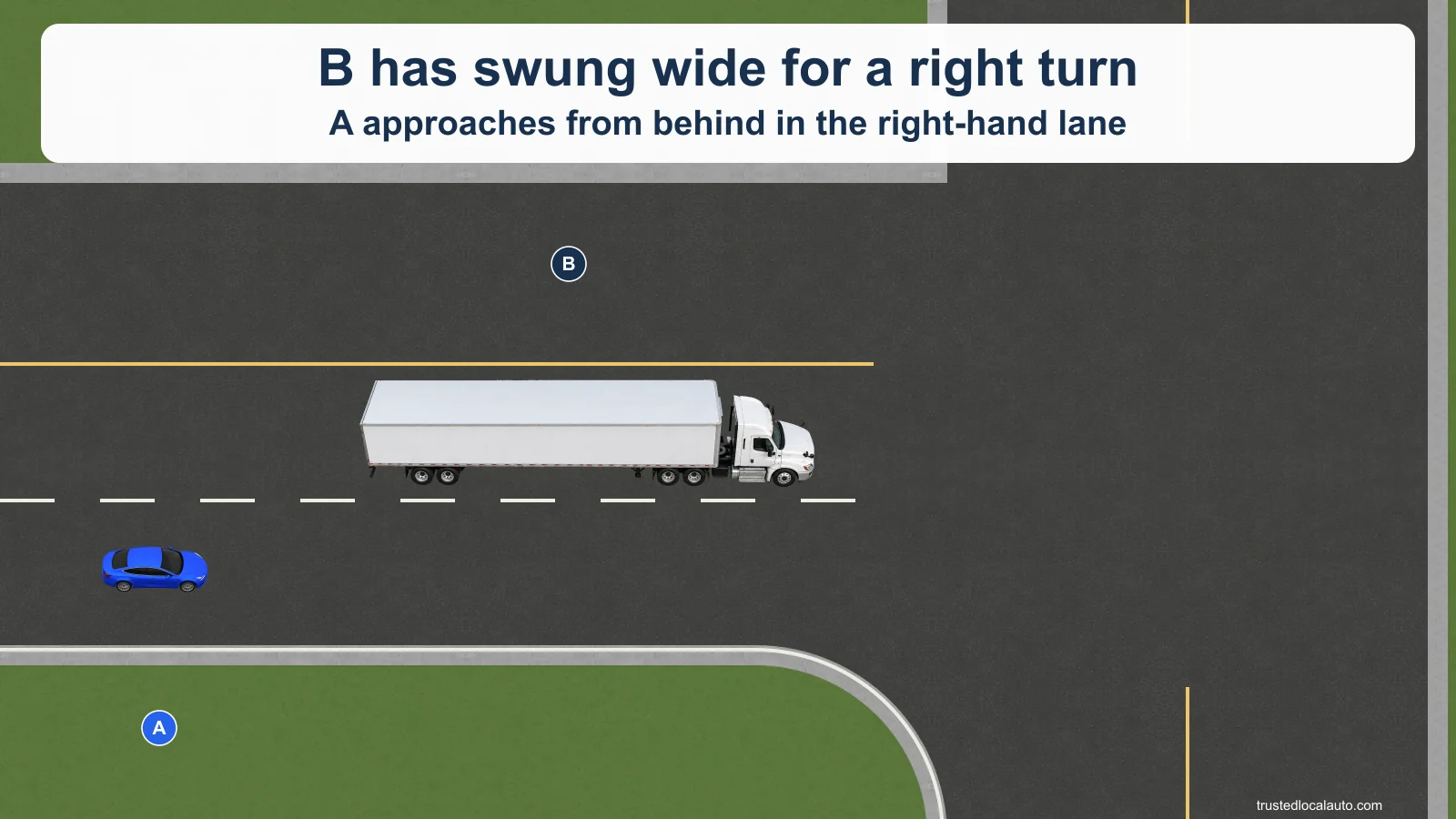 Large truck ahead making a right turnA large truck ahead is making a right turn and swings left first. What should you do?Try this question
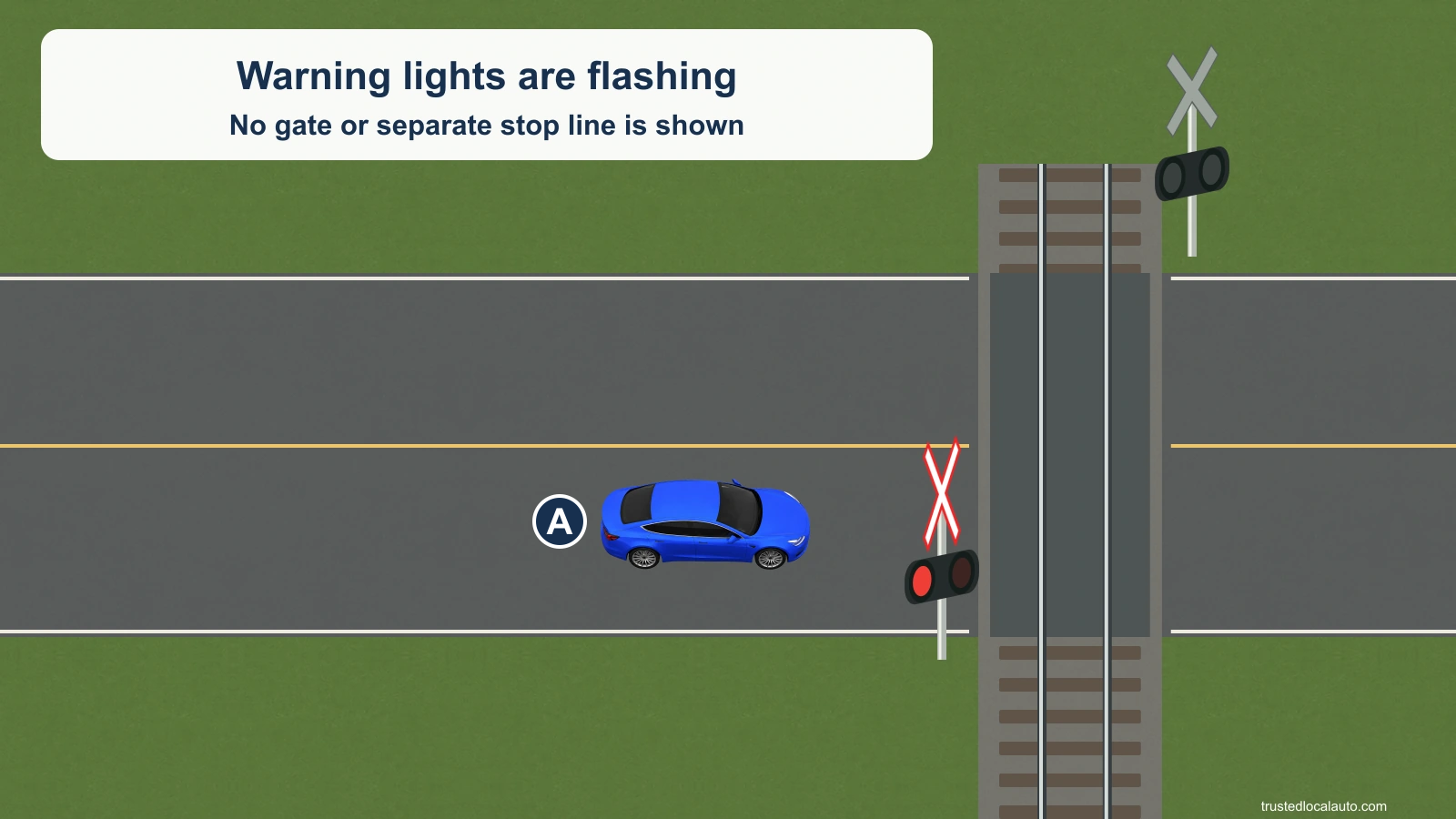 Stopping distance from the rail at a crossingBy law, how far must you stop from the nearest rail of a railway crossing when the warning signals are flashing?Try this question
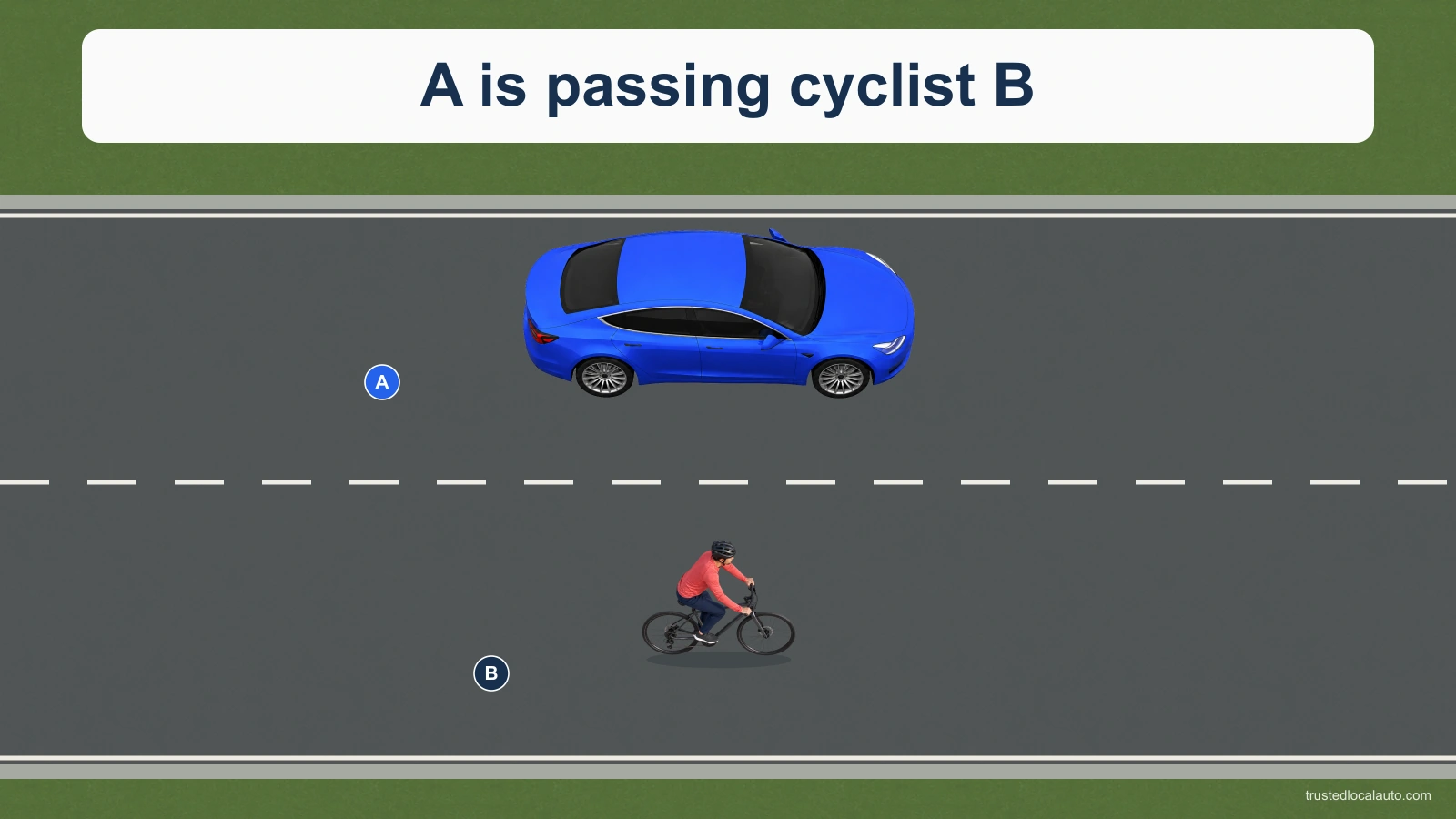 Clearance when passing a cyclistWhen practicable, what minimum side-to-side clearance must a motor-vehicle driver leave while overtaking a bicycle on an Ontario highway?Try this question
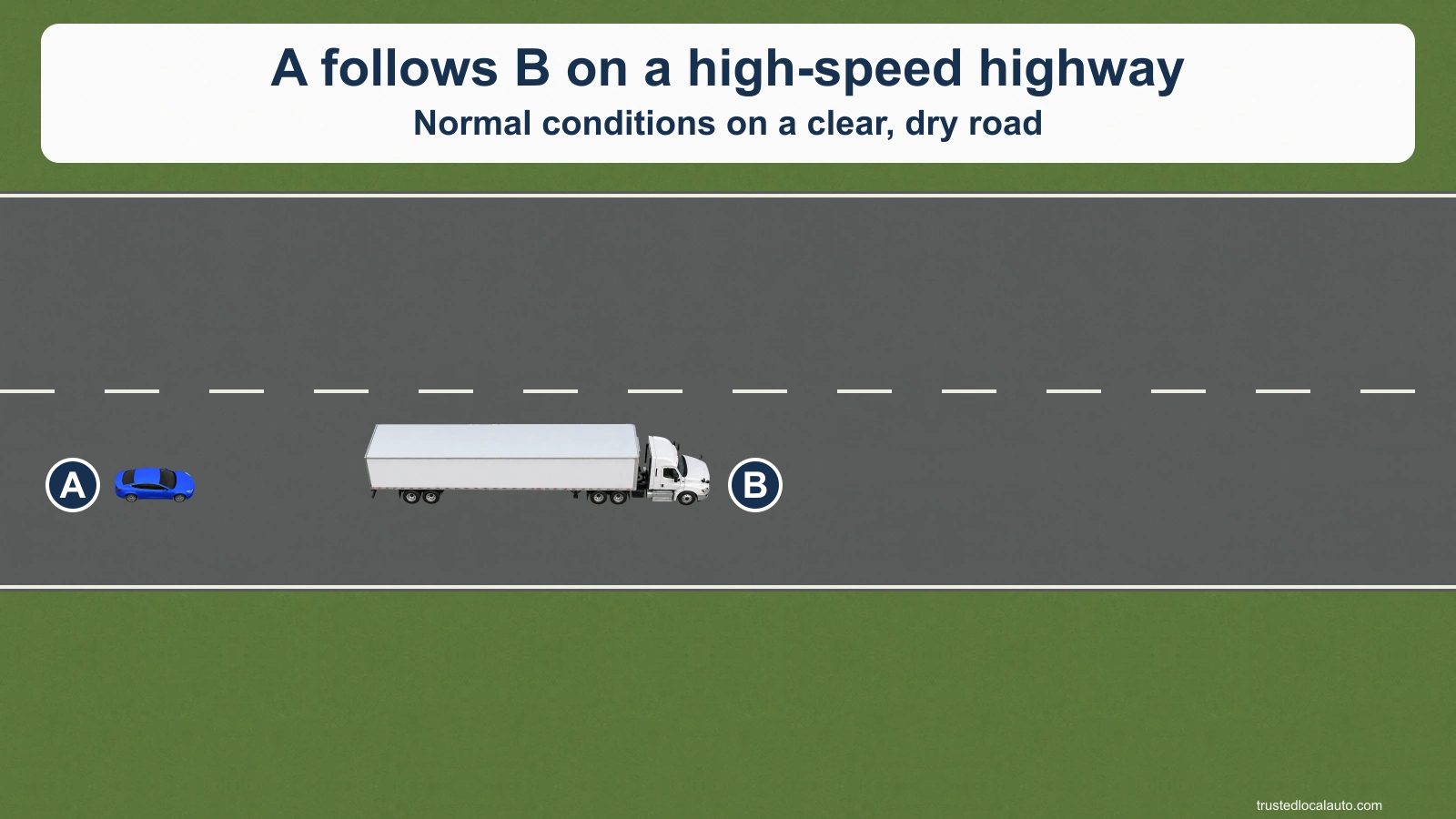 Following a large truck safelyWhat is the safest way to follow a large commercial truck on a highway?Try this question
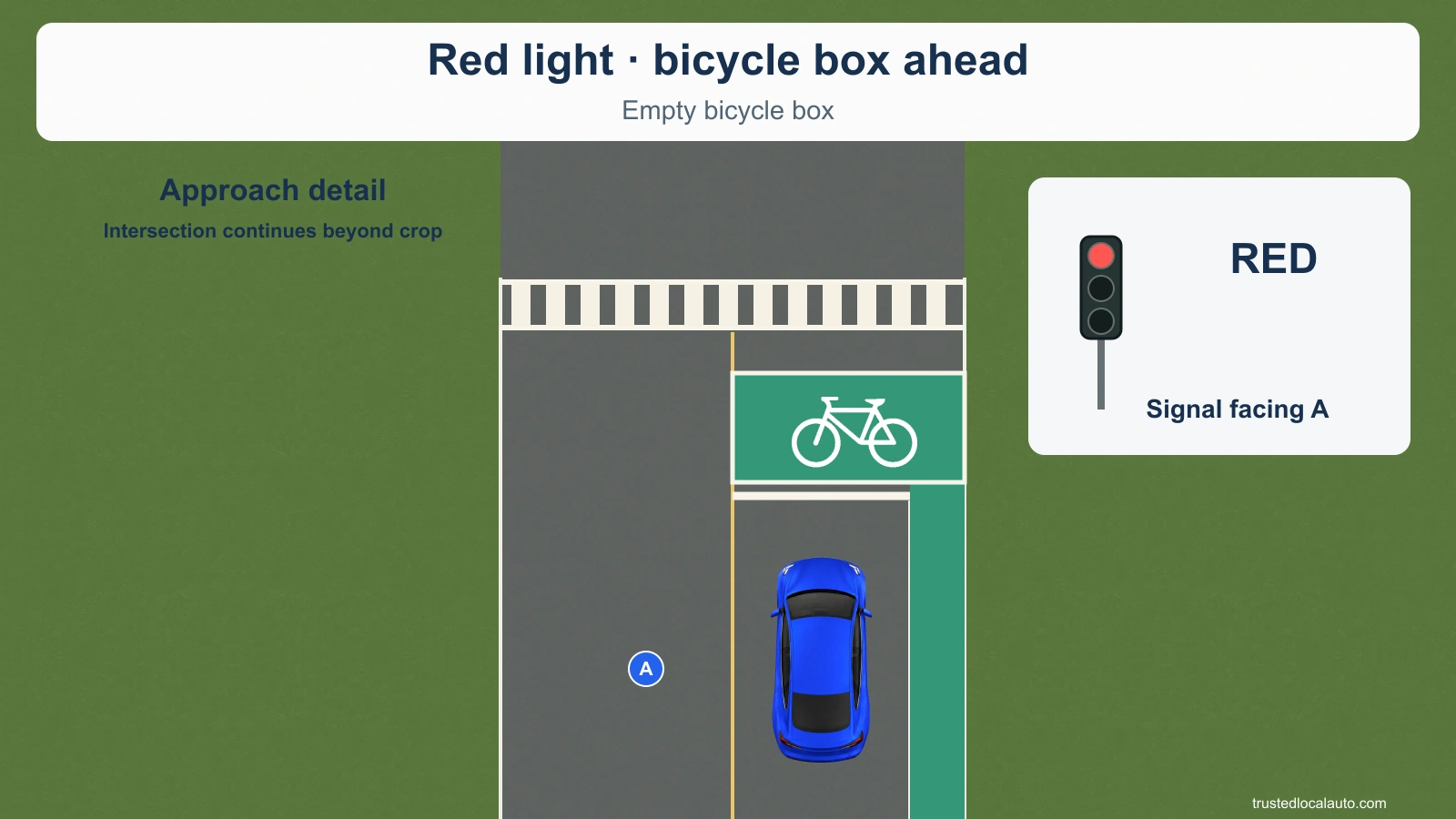 Red light with a bicycle box aheadWhere must a driver stop at a red light when a bicycle box is marked ahead of the intersection?Try this question
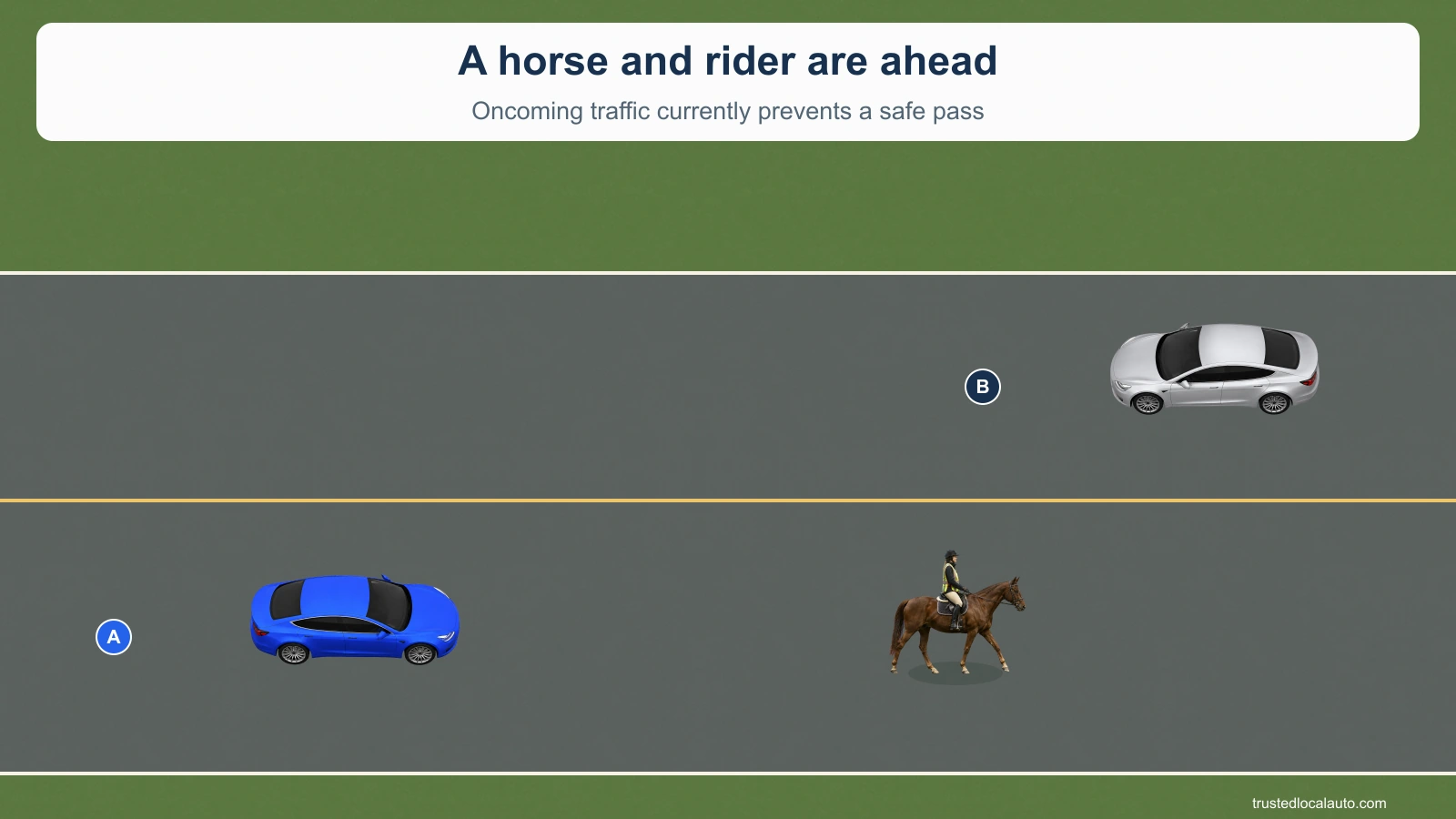 Passing horse-drawn vehicles or ridersWhen passing a horse-drawn vehicle or horseback riders, what is the most important precaution?Try this question
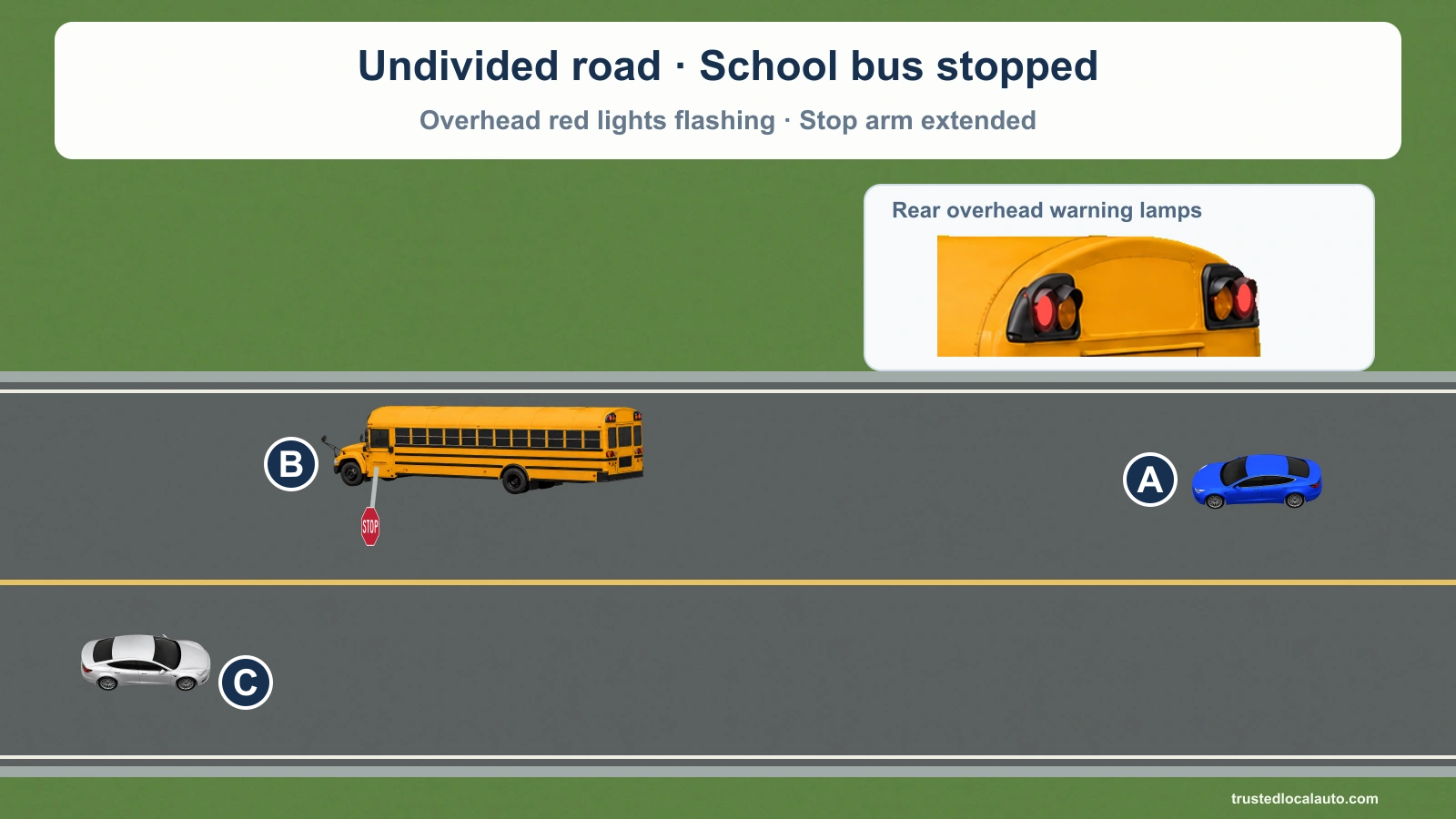 Road without a median: school bus red lightsOn a road without a median, what must you do when a school bus has red lights flashing?Try this question
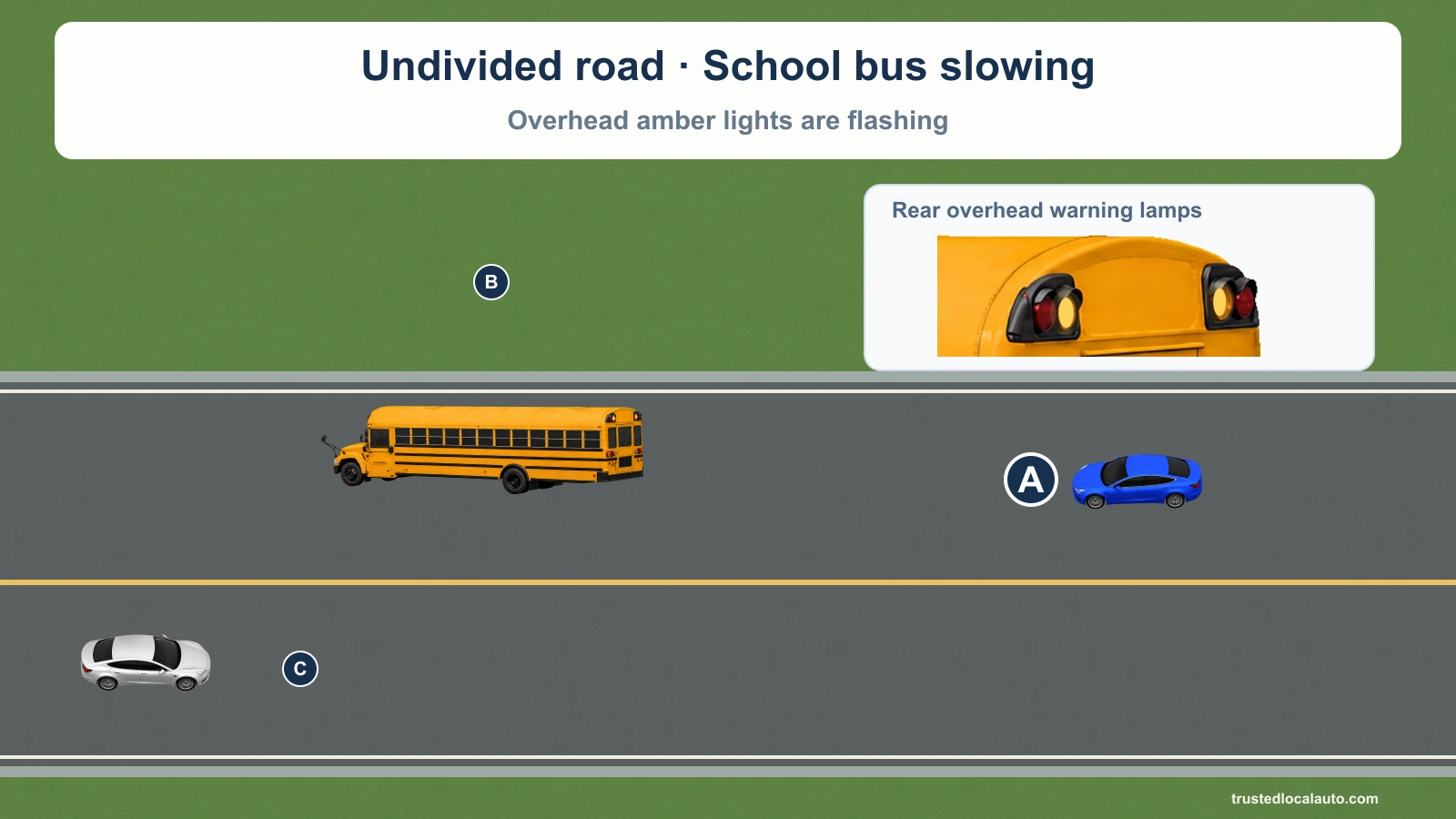 School bus with flashing overhead amber lightsWhat should you do when a school bus has its overhead amber lights flashing?Try this question
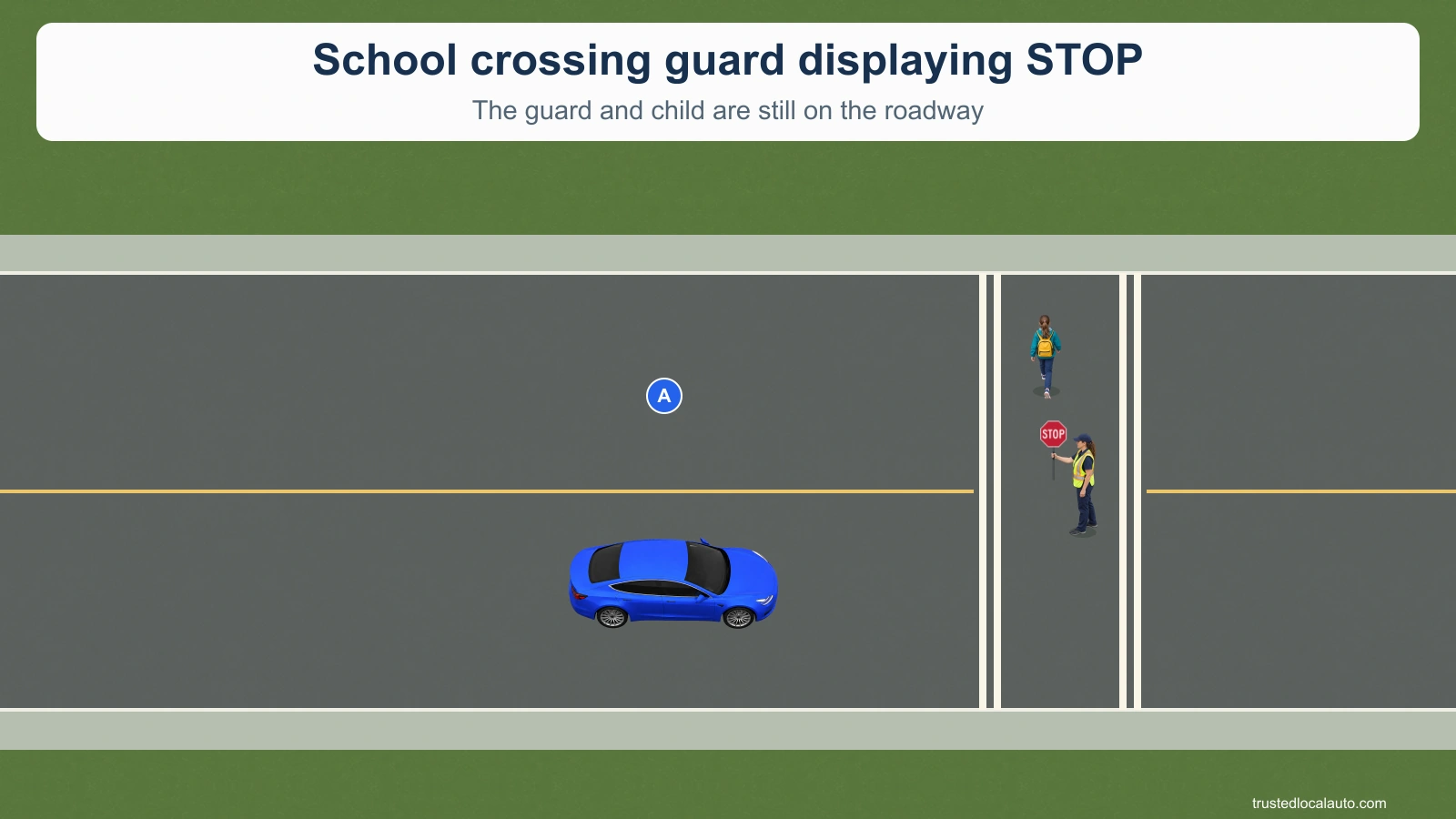 School crossing guard showing a stop signA school-crossing guard is displaying a stop sign. When may you proceed?Try this question
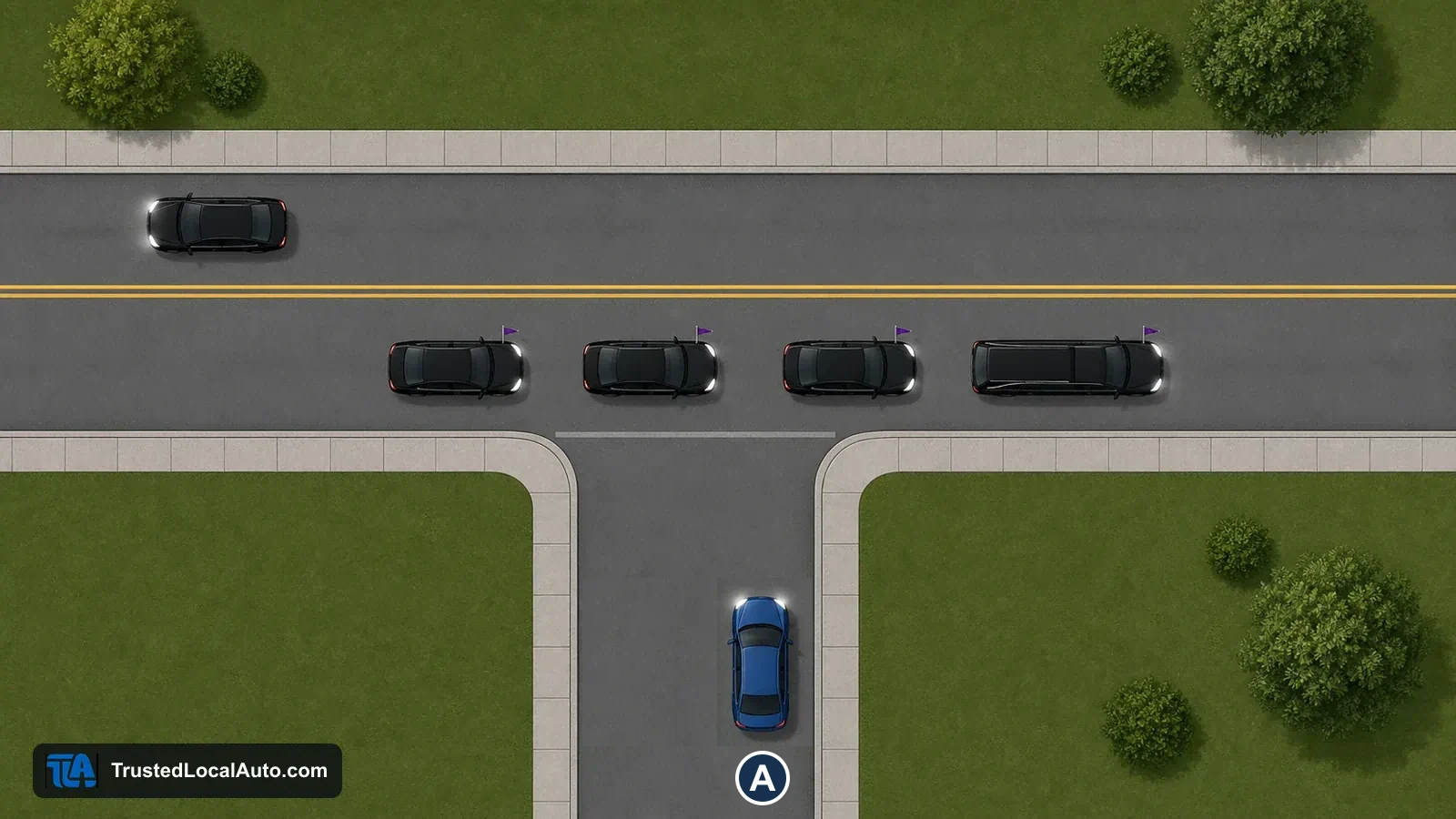 Respond safely to a funeral processionA funeral procession is already crossing ahead of you at a side-road intersection. No police officer is directing you to proceed. What is the safest response?Try this question
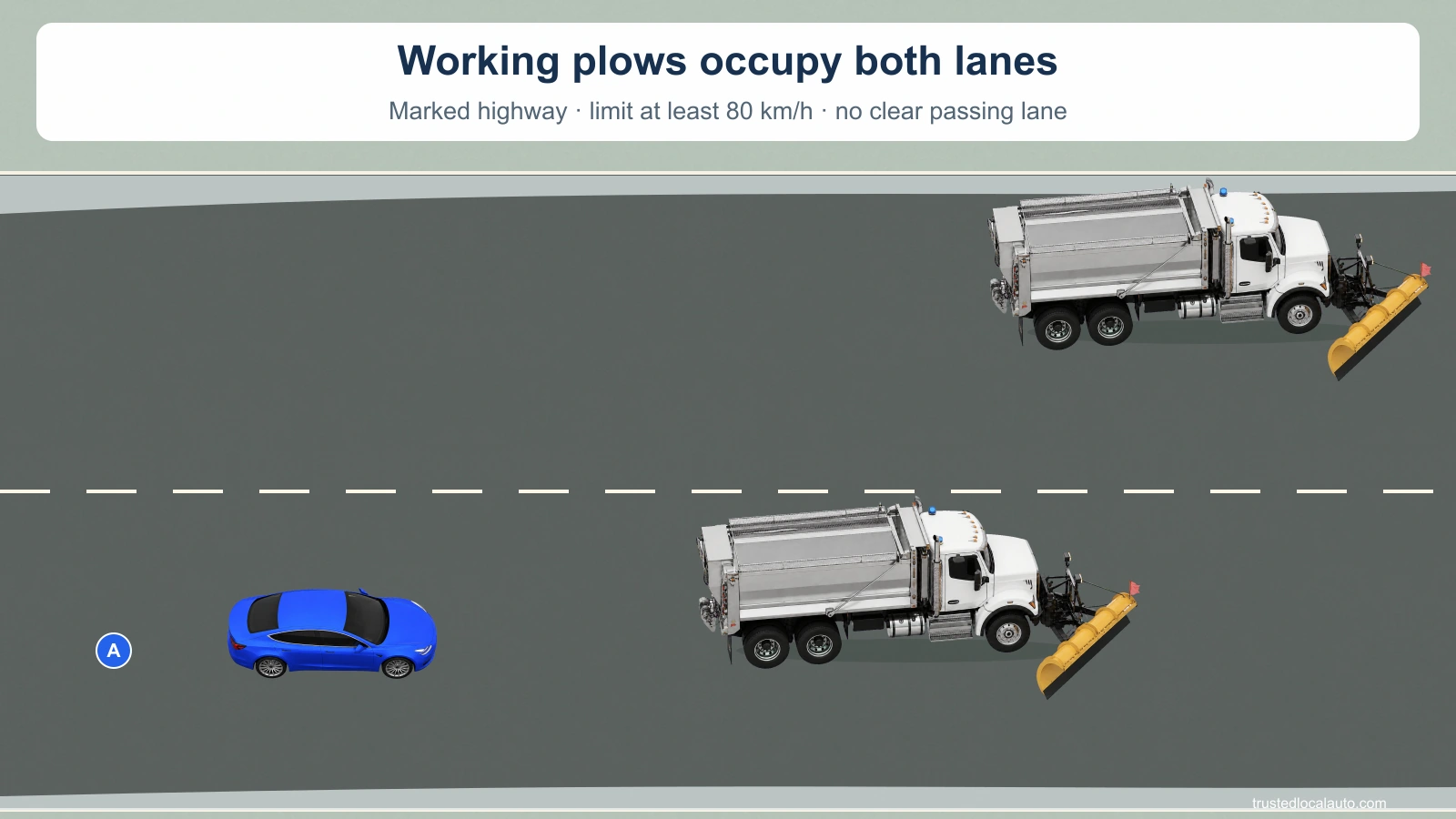 Snowplows working in a staggered echelonOn a highway with a speed limit of at least 80 km/h and at least two clearly marked lanes in your direction, snowplows are working in a staggered echelon. Their plows and attachments occupy every available passing lane. What should you do?Try this question
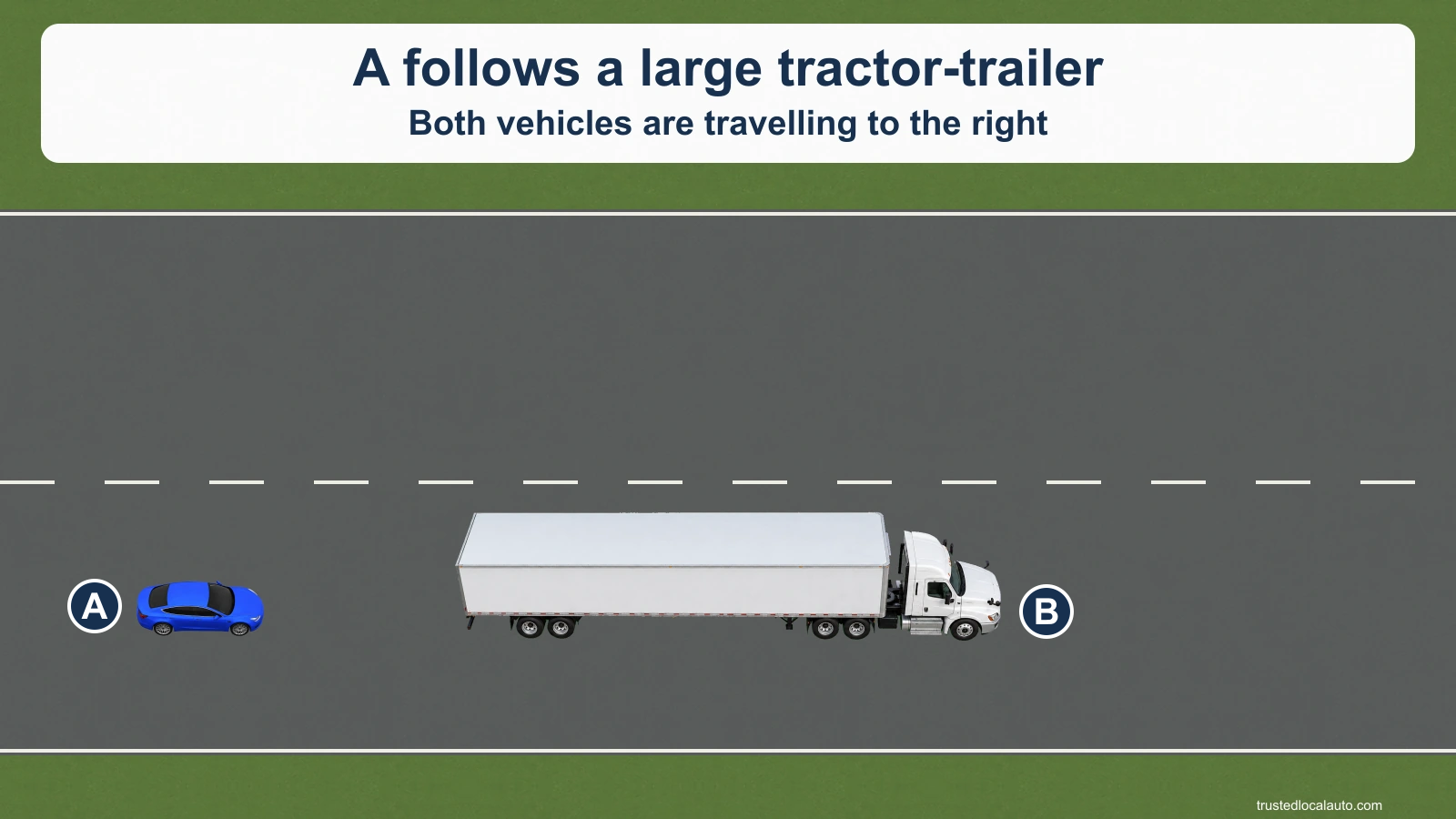 No-Zones of large trucksWhen sharing the road with large commercial trucks, you should be aware of their 'No-Zones'. What are No-Zones?Try this question
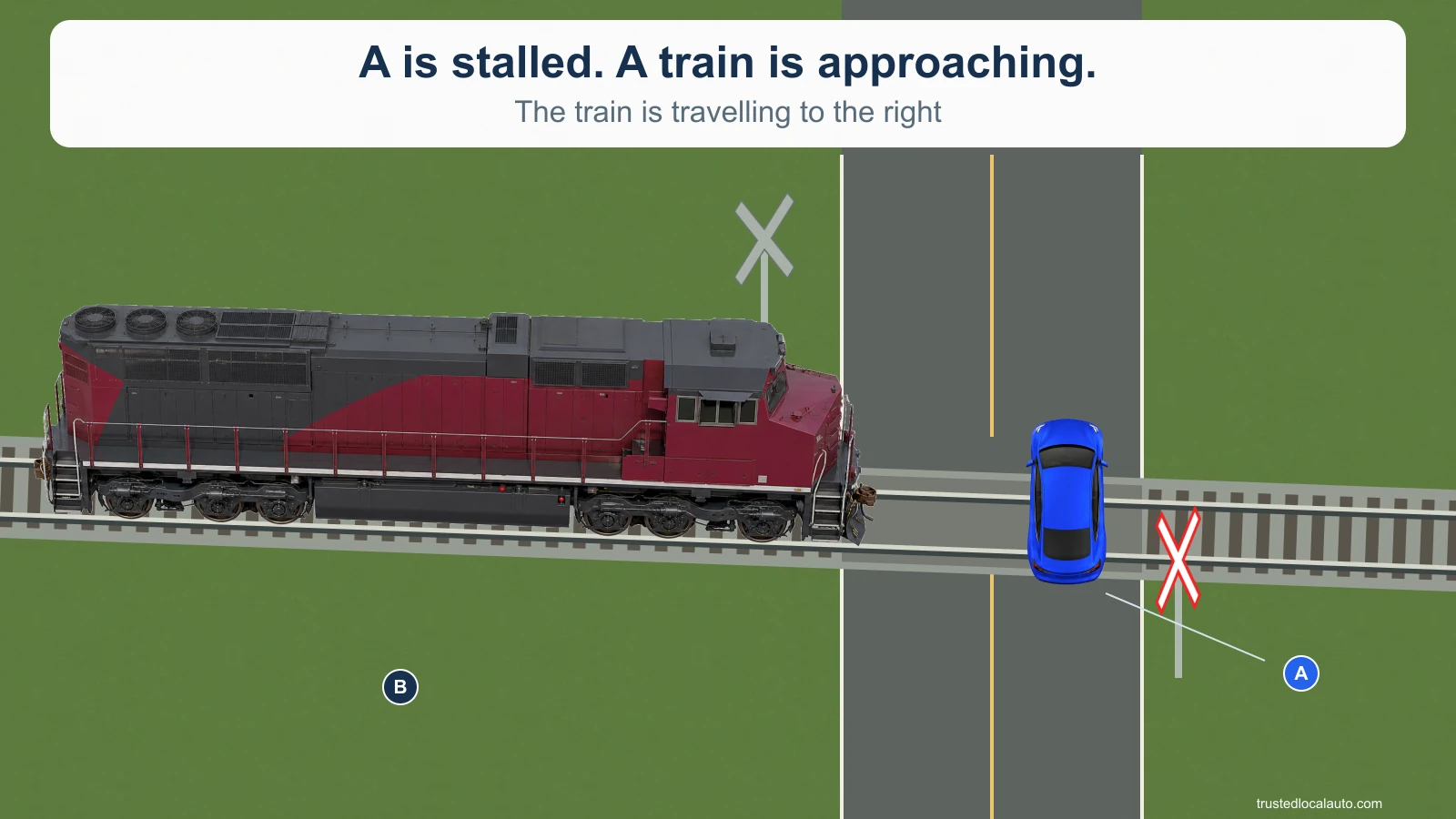 Stalled on a railway crossing as a train comesYour vehicle is stalled on a railway crossing and a train is approaching. What should everyone in the vehicle do immediately?Try this question
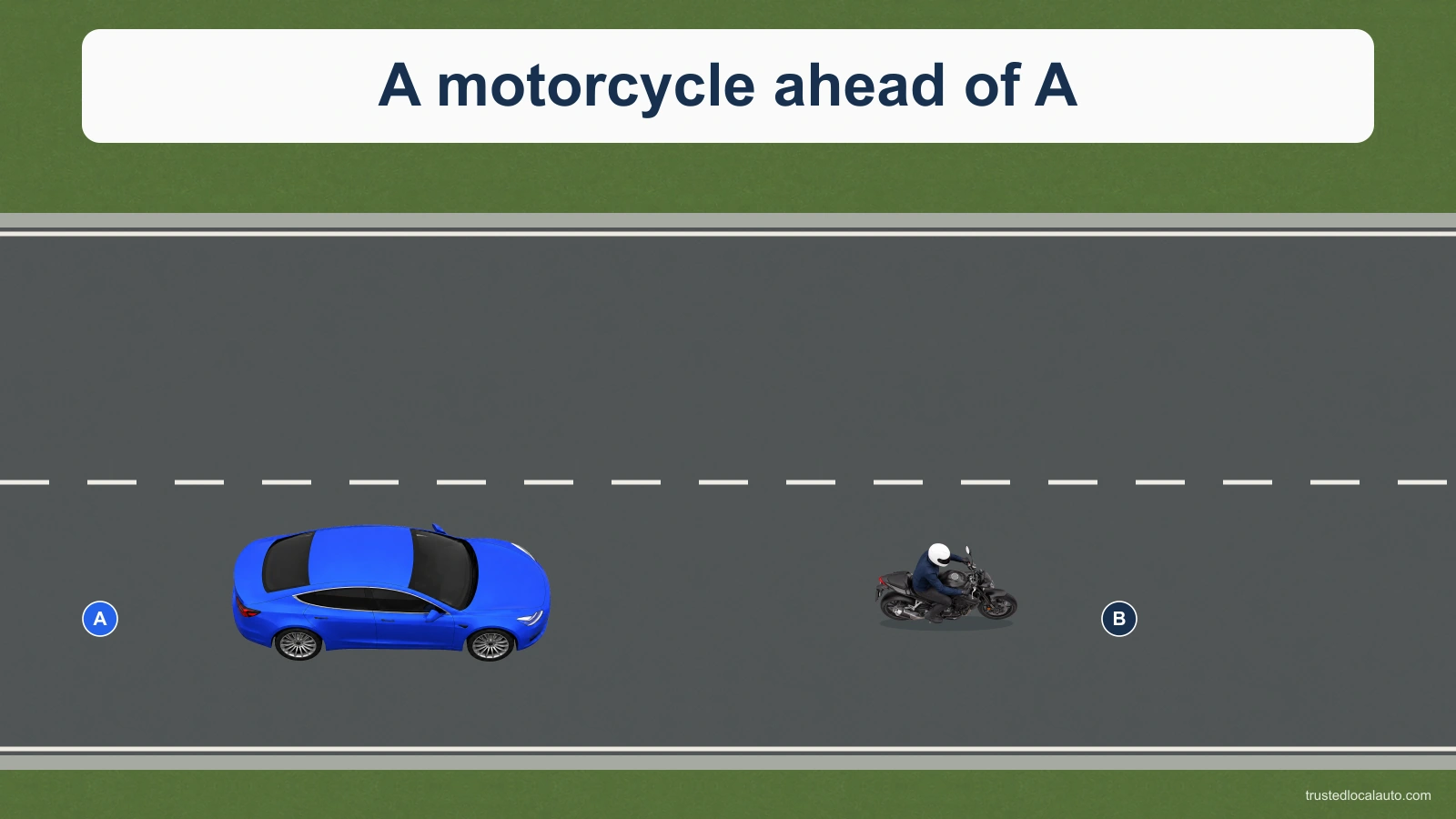 Motorcycle travelling in front of youHow should you treat a motorcycle travelling in front of you?Try this question
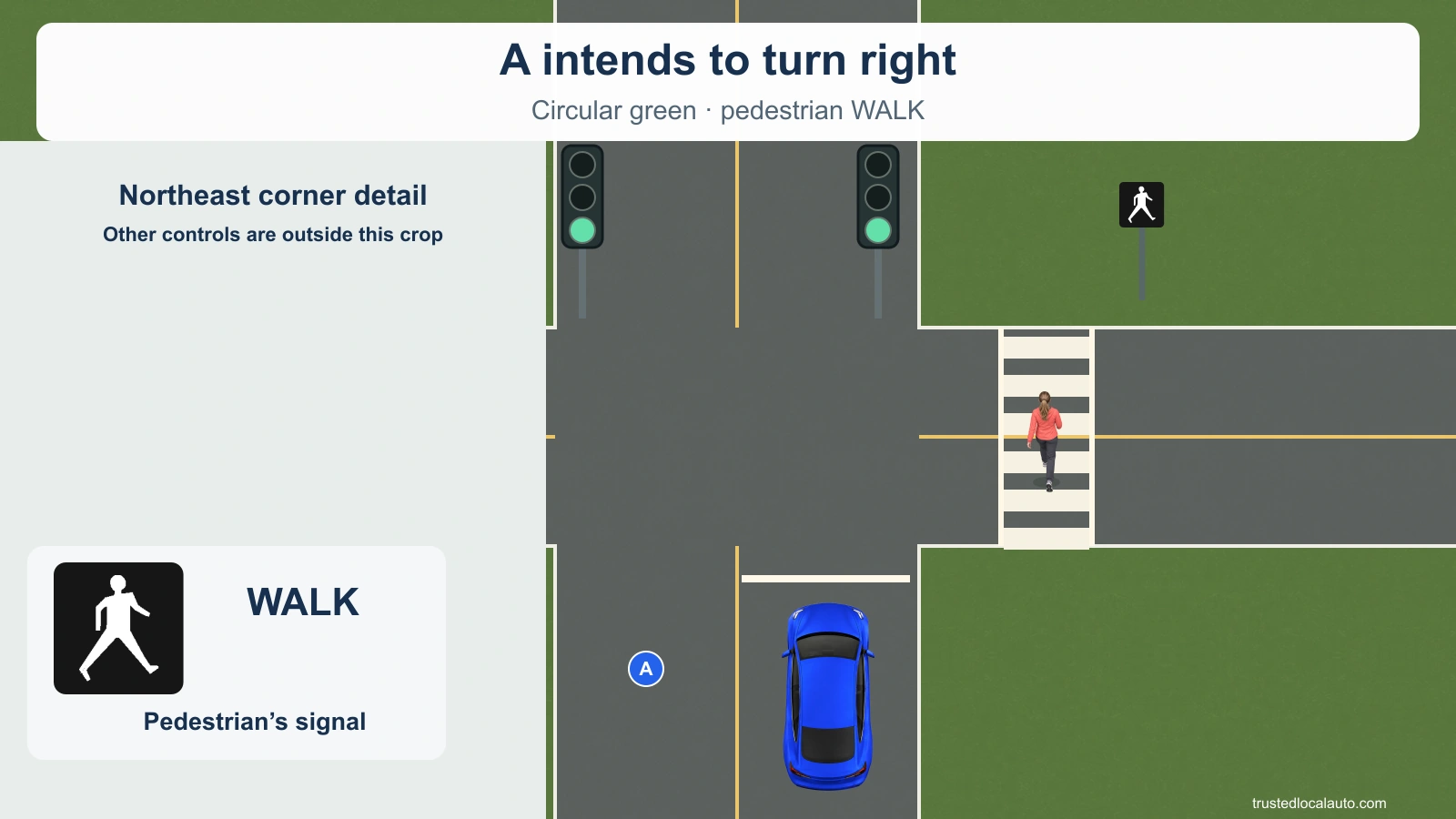 Pedestrian crossing on a walk signalA pedestrian has a walk signal and is crossing your path. What must you do?Try this question
- Echelon snowplows across both lanes HardYou drive on a highway with a posted limit of 80 km/h and two clearly marked lanes in your direction. Ahead, two snowplows work in a staggered line, and their plows and blades occupy both lanes. What should you do?Try this question
- Flashing railway signals: distance from the rail HardYou approach a railway crossing, and its warning signal lights start to flash. Which statement about where you must stop is correct?Try this question
- Passing a cyclist: minimum side clearance HardYou overtake a cyclist on an Ontario highway. The side gap is measured from your car's extreme right side, mirror included, to the bicycle's extreme left side, handlebar included. Where it is practicable, which statement about this gap is correct?Try this question
- Stalled on the tracks: why move toward the train HardYour vehicle stalls on a railway crossing, and a train is coming. Which statement is correct?Try this question
- Streetcar stop with no safety island HardA streetcar ahead stops to let passengers on and off. There is no safety island. What does the law require?Try this question
14 text questions
More questions in this topic
- At a highway railway crossing with no gates or railway signal lights, which ordinary vehicles must stop at least 5 metres from the nearest rail, unless a flagperson directs otherwise?
- What is the penalty for opening a vehicle door without first ensuring it will not endanger another road user?
- What should an X-shaped railway crossbuck tell a driver approaching the tracks?
- A highway railway crossing has no gates, no railway signal lights and no STOP sign. No train is approaching and no flagperson is there. Which statement about a stop at least 5 metres from the nearest rail is correct? Hard
- On a two-lane road, you come up behind a cyclist. A steady line of oncoming cars means that you cannot move left. If you pass now, only about half a metre would be left beside the bicycle. What should you do? Hard
- On a two-way road with no median, a school bus comes toward you in the opposite lane. It stops, and its upper red lights flash. Which rule applies to you? Hard
- Two Ontario rules set a minimum stopping distance: at a railway crossing with flashing signal lights, measured from the nearest rail; and behind a stopped school bus with its red lights flashing. Which pair of minimums is correct? Hard
- You drive on a road that has a median. On the other side of the median, a school bus that faces you has stopped with its red lights flashing. What must you do? Hard
- A school bus approaches a railway crossing that has gates and railway signal lights. The gates are up, the lights are not flashing and no train is approaching. No flagperson is there. What must the school-bus driver do? Hard
- At a stop with no safety island, passengers are getting on and off a streetcar. You are the first vehicle behind it. Which statement about the distance to its rear doors is correct? Hard
- You drive in the right lane of an Ontario highway that has two lanes in your direction. A tow truck with flashing amber lights is stopped on the right shoulder. The left lane is clear. What must you do? Hard
- Two offences each give 3 demerit points: opening a vehicle door when it can endanger another road user, and failing to slow down and move over under the Move Over law. Which pair of fine ranges for a first offence is correct? Hard
- A first conviction for which offence carries a $300 to $1,000 fine and 3 demerit points? Hard
- Two snowplows work in a staggered echelon on a highway with a speed limit of 80 km/h or more and two clearly marked lanes in your direction. Their plows and blades cover both lanes. Which statement is correct? Hard
Ontario G1
More G1 topics
Road rules · 12 topics
- Licensing & Test Readiness100 questions
- Traffic Signals & Road Markings37 questions
- Observation, Speed & Space15 questions
- Intersections & Right-of-Way14 questions
- Turns, Lanes, Passing & Merging42 questions
- Parking, Reversing & Roadside Stops30 questions
- Sharing the Road46 questions · This topic
- Freeways & High-Speed Roads25 questions
- School Zones, Railways & Work Areas42 questions
- Weather, Visibility & Emergencies54 questions
- Vehicle Safety, Documents & Towing28 questions
- Safe & Responsible Driving30 questions
Each question page shows the answer, the explanation and the official source of the question.