
Back to Ontario
Ontario G1 Practice Test
Full test preview Question 1 of 40
0 answered 40 remaining
Passing target: 16 correct signs and 16 correct rules (TLA practice targets)
Pedestrians, cyclists, school buses and other road usersStandalone practice
When passing a horse-drawn vehicle or horseback riders, what is the most important precaution?
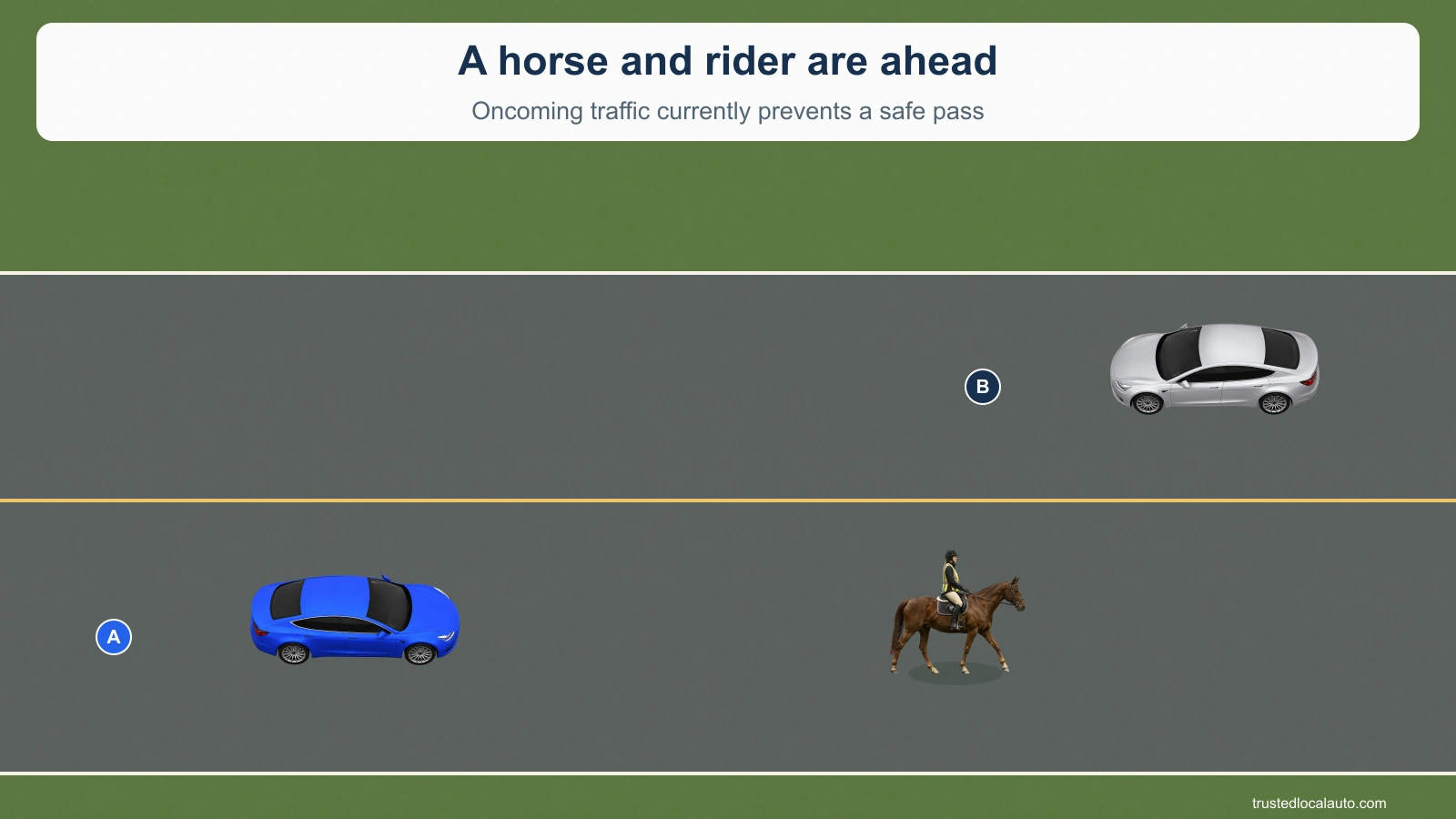
A is behind a calm horse and helmeted rider near the right side of the lane. An oncoming silver car occupies the opposing lane, so there is no current passing route.
Correct answer: Slow down and give them plenty of room
Why
Loud noises (like honking) or sudden movements can spook a horse, causing an accident. You must slow down and pass them with extreme care.
Verified against The Official Ministry of Transportation (MTO) Driver’s Handbook · Pedestrians, cyclists, large vehicles, buses and horse-drawn vehicles · p. 37, 47
Report a question issueContinue learning
Related Ontario questions
When you approach a streetcar that is stopped to let passengers on or off, and there is no safety island, you must:When approaching a railway crossing with flashing red lights and a lowering gate, when are you legally allowed to cross?You approach a railway crossing with its warning lights flashing and gates lowered. What should you do?You are in the lane beside a stopped emergency vehicle with flashing red or red-and-blue lights. The Ontario highway has at least two lanes in your direction. What does the move-over rule require?On an Ontario highway with at least two lanes in your direction, you approach a stopped emergency vehicle or tow truck from the lane beside it. The emergency vehicle has flashing red or red-and-blue lights; a tow truck has flashing amber lights. What must you do?What is a "blind spot"?